I Only Lived For Three Chapters In A Campus Romance Novel! - Reviews

I Only Lived For Three Chapters In A Campus Romance Novel!
+Add to Custom List
Sort
Add review
... Read More
“STT” on that scrap paper—Su Tiantian, Mo Juecheng, and... Time? Or is it displacement, time, and something else entirely? The physics metaphor isn't just clever wordplay; it's the novel's operating system. Lin Shen understands stories as graphs: if he can plot the right trajectory, he can reach the ending and go home. But displacement-time diagrams don't account for velocity changes, for resistance, for the fact that some forces are invisible. The recurring imagery of wrists—Yan Shuo's grip in the dream, Mo Juecheng's hand on the paper, Lin Shen's own fingers touching his pulse—suggests that connection is always physical, always measured, always temporary. And the nine novels Lin Shen has read? They're not just references; they're templates he's trying to escape. I keep wondering if the real theme here isn't about getting back to the original world but about who gets to write the ending. The family opposition, the five-year timeline, the tutoring arrangement—these are all variables in an equation Lin Shen didn't choose to solve. The symbolism works because it's layered: physics equations, romantic plots, and transmigration all share the same underlying structure of people trying to control their trajectories.
... Read More
The stakes hit me like a truck when Lin Shen realizes Yan Shuo is four years older and might already have children by the time he returns. “Who knows, maybe Yan Shuo would already have kids of his own!” That line stopped me cold. This isn't just about saving a romance novel's ending; it's about racing against loss in a world where time moves differently for everyone. The conflict is triple-layered: external (getting Mo Juecheng and Su Tiantian together before graduation), internal (Lin Shen's confusion about his feelings for two different men), and meta (the transmigration plot itself is a cage he's trying to break). Every tutoring session is a bet—if he fails, the family opposition wins, the five-year timeline extends, Yan Shuo moves on. And yet Lin Shen offers to tutor both leads for free, like sacrifice is just another variable he can manipulate. The suspense isn't whether they'll get together—it's whether Lin Shen will lose himself in the process of saving them. I'm terrified he'll succeed and realize he doesn't want to leave anymore. The emotional stakes are higher than any academic competition or family drama. When Mo Juecheng smiles wickedly and asks about tutoring, I felt the ground shift beneath me—this isn't a story about saving a plot, it's about surviving it.
... Read More
I need to talk about the setting because it hit different this chapter. The scene where Mo Juecheng corners Lin Shen against the tree is beautifully written and I'm still not over it. 'The tree's shade cut the autumn sunlight into patchy golden rays, falling on Lin Shen's fair and handsome face.' That line alone is enough to make this a five-star atmospheric moment. I could literally see the cinematography — the dappled light, the physical trapping, the close proximity. It reads like a film still. Every time Mo Juecheng steps closer, the description gets tighter and more intense, until the only thing you're aware of is breath and heartbeat and the impossible closeness of two bodies that have no business being this close. But the school environment as a whole is also doing heavy lifting here. XingShang High School feels like a real place with real social hierarchies. There's the Rolls-Royce Phantom parked outside the teaching building. There's the contrast between Lin Shen, dead last in every subject, and Mo Juecheng, who turns in blank tests and still commands absolute attention. There's Su Tiantian, the transfer student who somehow ends up in the middle of everything. These aren't just characters in a vacuum — they exist in a world that has rules about who matters and who doesn't, and the whole story is about disrupting those rules. The classroom scenes feel authentically academic too. The physics test, the ninety-minute duration, the homeroom teacher frowning at graded papers — it's mundane enough to ground the more dramatic moments. When Su Tiantian sneaks a peek at Lin Shen's paper and sees full marks, it hits harder because we understand the context of what that means in this school system. I also appreciate that the author doesn't over-describe. The world feels lived-in without needing pages of exposition. You know exactly where you are and who these people are through action and dialogue, not through manual.
... Read More
“Why didn't it feel like anything in the dream?” Lin Shen whispers this after Mo Juecheng's hand is still on his paper, and I lost it. The contrast between Yan Shuo's dream-embrace and Mo Juecheng's classroom-tension is devastating. In the dream, Yan Shuo treats him with warmth and comfort; in the waking world, Mo Juecheng corners him with suspicion and cold anger. Yet Lin Shen finds himself wondering about Mo Juecheng's heartbeat, whether his palm is as burning hot as the dream-figure's. That's the moment I knew the novel was doing something dangerous—it's blurring the line between what Lin Shen wants and what he's been conditioned to want. The romantic tension isn't just about getting the male and female leads together anymore; it's about who gets to hold Lin Shen's wrist when he's trying to escape a story that isn't his. I want to know if Yan Shuo's love is real or just a ghost of what Lin Shen misses from his original world. And I want to know if Mo Juecheng's obsession with Su Tiantian is actually obsession with the idea of someone needing him. The emotional calculus here is brutal and beautiful.
... Read More
That classroom scene—three people squeezed behind Lin Shen's not-very-spacious single desk, Class F turning their heads in unison, the homeroom teacher's complicated expression—it felt like the entire novel could exist within that awkward geometry. The setting isn't just background; it's pressure-cooker. Lin Shen can't hide his transmigration anxiety here. Mo Juecheng can't hide his jealousy. The physics teacher can't hide his surprise at a student who scored zero last semester. Every glance, every shift of weight on that small desk, adds layers to a world that should feel generic but doesn't. I keep thinking about how the author uses academic space as emotional space: the exam paper becomes a battlefield, the scrap paper becomes a confession, the XY-axis graph becomes a wall between desire and duty. When Lin Shen strides out of the classroom “under the watchful eyes of everyone,” I felt like he was escaping more than a room—he was escaping a story that was written without him in it. The teaching building, the shade tree outside, the way light falls on Mo Juecheng's cold expression—these details make the world feel alive in a way that's rare for translated web novels.
... Read More
I need to talk about how this chapter moves. We start with Lin Shen observing Mo Juecheng—that's setup, character establishment, the calm before the storm. Then BAM, Mo Juecheng grabs his wrist and pins him to the wall. Immediate escalation, no warning. The tension peaks in what must be thirty seconds of real time, and then Lin Shen does the most unexpected thing: he starts asking a physics question. "For a regular cubic object with a linear coefficient of a, what is its volume expansion ratio?" FOUR OPTIONS. And he counts down from ten. The pacing here is genius because it mirrors Lin Shen's panic—he's trying to distract himself, to control the uncontrollable, to turn this violent confrontation into something academic, something safe. The author uses this absurd detour to release tension while simultaneously building it again: what will Mo Juecheng do? Will he hit Lin Shen? Will he answer? And when Mo Juecheng subconsciously says "C"—the wrong answer—there's this tiny moment of relief before Lin Shen launches into his lecture about why D is correct. The chapter ends with two cliffhangers: the dream revelation about Yan Shuo becoming harsh, and the homeroom teacher appearing. Two threads, both emotional and both threatening, converging. The structure moves from observation to confrontation to absurd deflection to reflection to new threat. It's chaotic, it's fast, and it's completely gripping.
... Read More
Mo Juecheng pressing his hand on Lin Shen's exam paper and whispering “Su Tiantian?” in that cold voice—this scene cracked something open for me. He's clearly obsessed with her, yet when Lin Shen deflects with a physics diagram, Mo Juecheng's confusion reads as something almost vulnerable. And Lin Shen? Offering tutoring not for altruism but to accelerate a plot he's trying to rewrite? That's a transactional kindness that somehow feels more honest than the novel's usual romance tropes. The dynamic between these three is electric: Mo Juecheng's pride makes him dismiss the idea of copying answers, yet he's sitting behind Lin Shen's desk like someone who wants proximity without admitting it. And Yan Shuo—the dream version, the four-years-older figure who pins him against the wall—what is that? A placeholder for the intimacy Lin Shen craves but can't have in this fabricated world? I keep coming back to the wrist-touching. Both Mo Juecheng and Yan Shuo grasp his wrist, but one does it in anger and the other in longing. Which one gets Lin Shen back to his real life? I haven't decided.
... Read More
Lin Shen knows exactly what he is: a catalyst who appears in three thousand words, a nameless obstruction in the romance between the male and female leads. But here's the thing—he's not passive. When Mo Juecheng pins him against the wall, when the hostility is radiating off him like heat waves, Lin Shen could break. He could beg. He could accept his fate as plot device. Instead, he pulls out a physics problem and forces his attacker to engage with it. This is conflict as performance, as survival tactic, as sheer audacity. The stakes are huge but invisible: if Lin Shen fails, he's not just hurt physically, he's erased narratively. He's the cannon fodder who couldn't even distract the male lead long enough to escape. But watch what happens—Mo Juecheng, the school's most formidable figure, gets disarmed not by fighting back but by being made to feel stupid. "You can't even answer such a simple question, yet you still have the heart to fall in love?" THAT LINE. It flips the entire power dynamic. The physical threat becomes a critique of intellectual deficiency. The stakes shift from bodily harm to existential humiliation. And then there's the deeper conflict underneath: Lin Shen's dream where Yan Shuo—the gentle neighbor, his only comfort—becomes the one pinning him to the wall. Is the real danger coming from the boy who wants to bully him, or from the person he trusted? The text leaves this hanging, and I am HERE for it. Every conflict in this chapter operates on at least three levels: physical, social, and psychological.
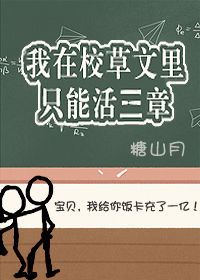
... Read More
I have never felt so visually and emotionally conflicted in my entire reading life. So here's the thing about Mo Juecheng — this guy walks around like a walking rejection letter, cold as ice, and yet he traps Lin Shen against a tree, pins his chin with these long elegant fingers, and says 'You've successfully caught my interest' like he's just won some kind of game. Which, honestly, in a way, he has. But at what cost to Lin Shen's dignity? Zero. Because Lin Shen was just trying to tutor him. This entire interaction is built on a foundation of pure misunderstanding that I am HERE FOR. The dynamic between these two is absolutely electric and terrifying. Lin Shen clearly sees Mo Juecheng as an obstacle to his real goal (saving Su Tiantian's future), but Mo Juecheng sees Lin Shen as the most interesting thing to happen to him in eighteen years. The power imbalance is wild — literally and figuratively. Lin Shen has all this knowledge and determination, but physically he gets absolutely dominated every time Mo Juecheng decides to get personal. And yet Lin Shen doesn't back down! That's the thing I love most about him. He's the worst student in school but he walks into this situation with unshakable conviction and genuinely believes that knowledge is power. The contrast between his internal desperation and his external confidence is honestly hilarious and kind of beautiful. And then there's Su Tiantian standing there completely confused in the background while all of this happens. She just took a physics test and found out Lin Shen got full marks, only to come outside and find him being aggressively charming to the school's most dangerous person. Her life must be exhausting. But what really got me is Mo Juecheng's motivation for agreeing. He says it himself — 'he's feeling bored lately.' Lin Shen isn't a project to him, he's entertainment. And yet there's something so human in that admission. Who wants to admit they're just using someone to kill time? Mo Juecheng doesn't even pretend otherwise, and that raw honesty is kind of endearing in a deeply messed up way.
... Read More
'Don't be afraid!' — I need to talk about this. This one line just wrecked me in the best way. You have Lin Shen, this ridiculously handsome top-ranked guy, completely caught off guard and physically stumbling into someone. And that someone doesn't just steady him; they 'extended an arm protectively, shielding him.' That's not a casual gesture; that's a full-body boundary set around another person. Then the voice, clear and pleasant, calling him 'Ge.' The intimacy in that single syllable is insane. It implies a history, a hierarchy, a deep personal connection that bypasses all the school gossip and elite-status posturing. For a split second, Lin Shen goes from being the center of attention to being someone's responsibility, someone's 'ge' who needs protection. It's tender and urgent and weirdly quiet amidst all the commotion. I kept replaying the physicality of it: the tug, the stumble, the firm chest, the shielding arm. This isn't just action; it's emotional shorthand for 'I've got you.' Whoever this young man is, the bond between them feels immediate and profound. My heart actually did a little flip. What kind of past just connected these two in a hallway? I'm obsessed.
... Read More
The atmospheric shift in this passage is everything. We start in a highly curated world: 'elite class of second year,' 'ridiculously handsome,' 'ranked number one,' a 'Rolls-Royce Phantom parked not far away.' This is a scene painted in wealth, status, and careful public image. The author establishes the setting almost clinically—students watching, gossip spreading, the trio walking in synchronized confidence. It feels like a poised moment right before a storm. Then the environment changes in real-time. 'Hurried footsteps from behind' rupture that calm. The focus zooms from wide shots of onlookers to a close-up of a physical collision: an arm being yanked, stumbling, a wince, a chest impact, a protective arm encircling. The Rolls-Royce disappears from view; it's all sensory now—sound of feet, touch of a pull, pressure of a body. That contrast is brilliant. The story moves from the external social world (how others see the trio) to an intensely private, physical world (one person shielding another). The school hallway becomes a stage for both public performance and sudden, hidden drama. It makes the world feel layered and alive, where prestige and peril exist side by side.
... Read More
camping!

Leave a comment

You must be logged in to leave comments. or
