Summary

... Read More
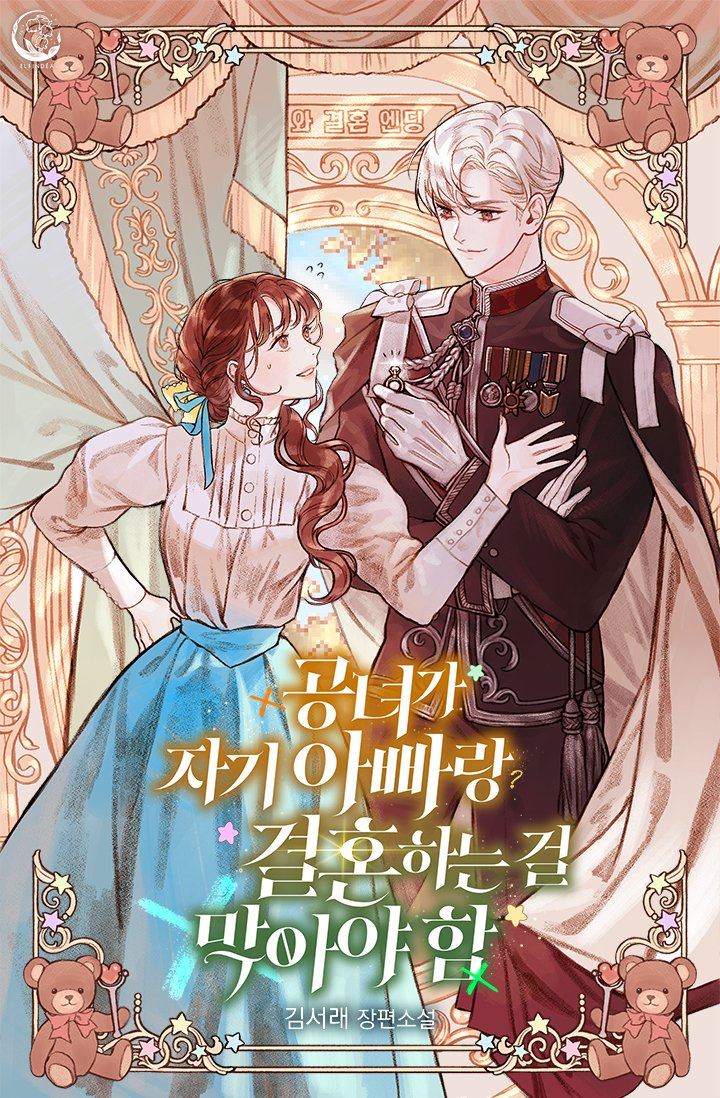
A woman who spent ten hours playing the frustrating mobile game "Bling Bling: Raising A Noble Lady" finds herself transported into the game world upon unlocking a hidden quest. In the game, the player assumes the role of a nanny tasked with raising the Duke's daughter, but the protagonist is tormented by the game's illogical narrative. Specifically, she repeatedly encounters the "Marry Daddy Ending," where the daughter, Anastasia, proposes marriage to her own father, Duke Jeremiah Cromwell, on her coming-of-age day. After witnessing this ending ten times consecutively, a hidden quest appears: achieve the Imperial Princess Ending within three years. The difficulty is set to Extreme, meaning no save states are allowed, and failure carries an unknown penalty. Upon accepting the quest, the protagonist wakes up as Lorelai Keith, the game's default nanny character, holding the newborn Anastasia in the Cromwell mansion.The reality of being trapped in the game is immediately harsh. Unlike the simplified gameplay of the digital version, the newborn's crying constantly depletes Lorelai's health and mental strength, forcing her to manage her physical condition meticulously. She discovers that she can view status windows and profiles for NPCs, a feature not available in the standard game. Her first ally is Mary, a maid who gives her a recovery potion. Lorelai learns that the Duke rarely interacts with his daughter, appearing only for quarterly evaluations, which contributes to the bizarre emotional disconnect that leads to the incestuous ending. Determined to change the trajectory of Anastasia's life, Lorelai resolves to make Duke Cromwell a present and involved father, thereby preventing him from being viewed as a romantic prospect.Conflict arises quickly when Lorelai discovers that the head maid, Miriam Lynch, is embezzling the child support funds meant for Anastasia. When Lorelai confronts the head maid in the hallway, Miriam lies and manipulates the situation. Duke Cromwell arrives, but his overwhelming presence triggers a status ailment that freezes Lorelai, preventing her from defending herself. She is fired and ordered to leave the mansion within an hour. However, before she departs, Duke Cromwell investigates the financial records and uncovers Miriam's fraud. He dismisses Miriam and reinstates Lorelai, restoring her wages and providing a substantial amount of gold for Anastasia's upbringing.Lorelai then requests that the Duke name his daughter, a crucial step in establishing a paternal bond. Duke Cromwell names the baby Anastasia, granting Lorelai access to her profile window. He also agrees to have breakfast with Anastasia and Lorelai each morning. During the first breakfast, Lorelai attempts to facilitate bonding by encouraging the Duke to hold and feed the baby. However, Anastasia becomes distressed only when the Duke holds her, calming down immediately when Lorelai takes her back. The Duke interprets this as the baby preferring the nanny and grows increasingly impatient. Despite the awkward interaction, Lorelai secures a promise for daily breakfasts. As the tutorial period ends, Lorelai anticipates future challenges, including an assassination attempt scheduled for the first spring, and begins preparing protective measures by seeking out the mansion's mage in the library.

Latest Release
DateGroupRelease
2026-10-03dusk blossoms c106
2026-10-03dusk blossoms c105
2026-10-03dusk blossoms c104
2026-10-03dusk blossoms c103
2026-10-03dusk blossoms c102
2026-10-03dusk blossoms c101
2026-10-03dusk blossoms c100
2026-10-03dusk blossoms c99
2026-10-03dusk blossoms c98
2026-10-03dusk blossoms c97
2026-10-03dusk blossoms c96
2026-10-03dusk blossoms c95

Community Reviews

Rating(0 / 5.0, 43votes)
5 stars
0(0%)
4 stars
0(0%)
3 stars
0(0%)
2 stars
0(0%)
1 stars
0(0%)

Popular reviews

... Read More
I genuinely did not expect this novel to pull a fast one on me this early, but day seventeen of being trapped? The slow realization that the 'tutorial' is actually the hardest part of the entire game? That hit different. The structure here is genius in its simplicity. On the surface it looks like a mundane isekai nanny story, but underneath there's this ticking clock—the level-up system, the mental health notifications every dawn, the decreasing energy bar. The author is basically telling us: your character is dying by inches and no one else can feel it but you. "In just a week, I've become Mary's VIP customer." That line when she mentions Mary's potions is such a throwaway detail but it says everything about how broken her situation is. She's not leveling up. She's not completing objectives. She's just surviving. And the Duke's breakfast meetings? That subplot where she's trying to gather information and all she gets is silence and food pushed toward her? It's not just atmospheric—it's a plot device. The Duke won't engage until he has a reason to, which means the protagonist has to figure out what triggers his interest before she can progress. Meanwhile baby Anastasia is crying nonstop, which adds this extra layer of time pressure. Every hour spent soothing the baby is an hour not solving the bigger mystery. The cleverest part though? The Veros encounter. She needs Caligo—the Supreme Mage—but can't get past the library door because Lorelai blacklisted herself. So she has to navigate this grumpy romance option just to access information. It's a side quest that's actually the main quest in disguise. Who else is as exhausted reading this as the protagonist is living it?
... Read More
The narrative voice in this book is everything. Lorelai's internal monologue is basically a separate character with its own personality, and I am HERE for it. The way she narrates her own thoughts in all caps and ellipses and self-interruptions gives the whole thing this frantic, caffeinated energy that somehow matches the stress of her situation. Take the breakfast conversation with the Duke. Outwardly she's being polite and sycophantic—'thank you for opening the library' 'the lady seems happy to see her father' 'her eyes are wide open to see her father'—while internally she's like 'I hope this effort pays off someday......... Making up these lies is reaching its limit.' The contrast between her sugary external dialogue and her screaming internal monologue is comedy gold. And the dialogue tags! 'Hahaha. An awkward laugh filled the dining room.' That's not a dialogue tag—that's a narrator comment breaking the fourth wall. The author knows this is ridiculous and leans into it. Even the Duke's lines are perfect in their brevity. 'Guards?' 'Are you doubting the security of the mansion?' Short. Sharp. Every word weighted. You can hear the icy baritone just from reading it. Lorelai's fake fairy tale to Anastasia ('A very old dragon, twenty years older than the princess, suddenly appeared and, not acting his age, kidnapped the princess and the hero!') was peak voice. She's literally narrating her own situation through child-appropriate metaphor while a baby nods along. That's not just good dialogue—that's narrative layering.
... Read More
"Everyone has their preferences, but as the lady's nanny, you should refrain from romancing minors." — Okay, I need to process this for a moment. So the whole scene where Lorelai is internally panicking about liking younger men? Duke Cromwell literally heard it. Like, actually heard it. This is the kind of plot twist that makes you want to throw your phone across the room because you immediately start second-guessing every interaction these two have had. Was he ALWAYS aware? Or did he just catch snippets? The text says "the lullaby had drawn all the aggro, making me forget there were several other scenes that shouldn't have been discovered" — plural scenes. MULTIPLE scenes. She's been broadcasting her inner thoughts like a walkman tape and the Duke has been collecting them like trading cards. And the fact that he brings it up during a meal, of all places, with a deadpan serious face? That's not accidental. That's someone who sat on this information and chose the exact moment to deploy it. What was he planning? And what's his endgame with all of this? Meanwhile, Lorelai's internal panic about being treated as a potential predator while simultaneously trying to deny her actual preferences (she LIKES younger men, by the way, full confession right there) creates this hilariously layered dramatic irony where the reader knows way more than either character is letting on. The plot is weaving itself into a pretzel at this point and I am HERE for it.
... Read More
'I've never seen you eat.' This line hit me like a truck. Not because it was romantic or whatever, but because it showed that Duke Cromwell is OBSERVING her. Like, really paying attention. He's been absent from breakfasts, sure, but the fact that he noticed Lorelai doesn't eat there means he's been watching from a distance. That's either deeply concerning or deeply interesting—I'm still deciding which. And the whole scene where he gazes at Anastasia and she thinks 'are those tender father eyes or are they calculating the dowry?' was peak character writing. The man is complicated. He's a villain in the game, yes, but here he is just... existing. Not doing anything evil. Standing there like a normal dad who happens to have crimson eyes that make everyone nervous. The fact that Lorelai internally cusses at herself for momentarily thinking his gaze was warm because of the sunlight? That's the transmigration brain doing its thing, and I love it. Veros too—ugh this man is such a side character with serious main character energy. He created a children's book section AND follows Lorelai around like a paranoid bodyguard. 'I'll trust you for now' after five days of watching her? What kind of threshold is that? Meanwhile she's like 'it takes five days to feel at ease. What a tiresome man.' And I'm over here like... yeah, they're both exhausting in different ways and I'm here for it.
... Read More
"He's holding the baby like a hotdog." I literally snorted out loud. But honestly, this detail says SO MUCH about Duke Cromwell as a character. He's twenty years old, a duke, reportedly handsome with silver hair and ruby-red eyes—but he has zero experience with human warmth. The fact that he carries Anastasia "like a hotdog" isn't just visual comedy; it's the image of someone who has never had to hold anything gently in his entire life. And yet—he takes her. Despite the obvious awkwardness, despite looking annoyed, despite being clearly out of his depth, he accepts the baby. That moment when he finally takes Anastasia from the protagonist? There's something there. Maybe it's obligation, maybe it's a flicker of something else, but he doesn't refuse. Later he hands the baby back as if he'd been waiting for that exact moment, and his expression shows "weariness"—not anger, not rejection, just exhaustion. This is a man who is genuinely struggling with something he doesn't understand. Then there's the baby herself, Anastasia. The cruel joke that she goes quiet the moment she's back in the protagonist's arms and screams the second the Duke touches her again. The protagonist trying to spin this as "crying is also an expression of affection!" while everyone in the room knows it's complete nonsense—this is heartbreaking in a dark comedy way. A baby who will only calm down with her current caretaker, not her own father. Ouch. The protagonist's internal monologue reveals so much about HER too. She genuinely wants this family to bond. She's not just doing this for money (though she needs money). She says things like "family love and attention shouldn't have to be fought for—they should be enjoyed as a matter of course." That's not a mercenary thought. That's someone who cares deeply, who has been invested in Anastasia from day one, and who sees this Duke as the missing piece their daughter needs.
... Read More
On the surface this is a transmigration story about a woman trapped in a video game. But reading between the lines, I keep coming back to how much this story mirrors real dynamics of powerlessness and systemic absurdity. The name "Let's Divorce" that Lorelai chose in the game is the most powerful symbol in these opening chapters. She picked it as an act of defiance — a mental protest against a story that rewards incestuous endings. But in the game, the system ignores her intention and the characters treat it as a cute name. Sound familiar? When you're a small person in a big system, your voice gets twisted into whatever the system wants it to be. The recurring imagery of names losing their meaning is everywhere. Lorelai names herself and the system accepts it. The baby has no name yet — she's literally a blank slate in a world that will assign her a destiny she never chose. Jeremiah's daughter will grow up in a world where marrying your father is considered acceptable — and Lorelai is the only one who remembers that it shouldn't be. "Human potential is limitless" is the game developer's philosophy, but in this story it reads almost ironically. Lorelai's potential is limited by sleep deprivation, by a three-year deadline, by a world that doesn't care whether she survives. The system tells her there are hundreds of endings but also punishes her for trying. It's a commentary on how systems — whether fictional games or real-life expectations — promise freedom while quietly trapping you in their logic.
See all reviews

Custom lists

See all custom Lists