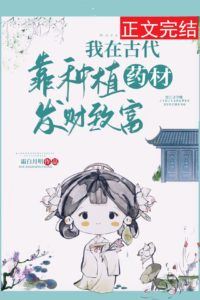
I Made My Fortune in Ancient Times by Growing Medicinal Herbs
+Add to Custom List
Genres:
Novel Info

Summary

... Read More

Li Xiaohan is a thirteen-year-old girl living in Pingshan Village during the Taihe era. She lives with her parents, Li Xiandong and Madam Wang, under the control of her grandfather Li Shengli and step-grandmother Madam Chen. The family is part of a larger clan that prides itself on a scholarly tradition, though no member has achieved the rank of xiucai in over a decade. Li Xiandong is the eldest son but has been treated as a mere laborer while resources are diverted to support his cousin, Li Changrong, who has recently been accepted as a disciple by a local scholar. The family dynamic is strained, with the main branch bearing the heaviest workload and receiving the poorest treatment.

The central conflict erupts when Li Shengli decides to divide the family household. In a move that violates traditional norms, he separates Li Xiandong, the eldest son, from the main family. Li Xiandong is given only two mu of paddy field, three mu of dry land, and five strings of coins, a fraction of what tradition would dictate. This decision is driven by Madam Chen and Li Changrong, who fear that if Li Xiandong were to produce a male heir, the family property would remain with the main branch, threatening Changrong’s status as the heir apparent. Left with insufficient resources to survive, let alone afford medicine for Madam Wang’s chronic illness, Li Xiandong breaks down crying at his mother’s grave, contemplating desperate measures.

While at the grave, Li Xiaohan experiences a sudden headache and realizes she has transmigrated into a novel she read in her previous life. She recalls that her family are minor characters whose purpose is to serve as a foil to the male supporting character, Li Changrong. In the original story, Li Xiandong dies searching for ginseng in the mountains, and Li Xiaohan and her mother eventually freeze to death. Armed with memories from her past life as a herb cultivation base director, Li Xiaohan recognizes the danger and resolves to change their fate. She fabricates a story that her deceased grandmother appeared in a dream to reveal that the so-called fake ginseng in the mountains is actually Sanqi, a valuable medicinal herb.

Li Xiaohan leads her parents to the mountains and successfully identifies wild Sanqi plants. She harvests the roots and takes them to the Renhetang medicine hall in the city. There, Doctor Zhang appraises the herbs and offers seventy-six taels of silver, a sum far exceeding their expectations. This windfall provides the family with their first real hope. Li Xiaohan uses the money to negotiate a better division of assets with her grandfather, securing four mu of paddy field, six mu of dry land, and two additional strings of coins. She also ensures that the household division document is signed, with herself stamping it as a placeholder heir to protect her family’s interests.

With the immediate crisis averted, Li Xiaohan focuses on long-term survival. She plants the Sanqi seeds they collected in their new mountain plot, aiming to establish a sustainable source of income. She also observes the local market in the city, noting commercial opportunities and planning to potentially start a food business if farming fails. When her father begins building their new house, he faces social isolation because he lacks the connections to summon help. Li Xiaohan proactively invites her second great-uncle, Li Shengyi, who brings a group of relatives to assist, thereby restoring the family’s standing in the village. The chapter ends with the family beginning to rebuild their lives, supported by the wealth from the Sanqi and Li Xiaohan’s strategic guidance.

Latest Release
DateGroupRelease
2026-08-11shanghai fantasy c45
2026-08-11shanghai fantasy c44
2026-08-11shanghai fantasy c43
2026-08-11shanghai fantasy c42
2026-08-11shanghai fantasy c41
2026-08-11shanghai fantasy c40
2026-08-11shanghai fantasy c39
2026-08-11shanghai fantasy c38
2026-08-11shanghai fantasy c37
2026-08-11shanghai fantasy c36
2026-08-11shanghai fantasy c35
2026-08-11shanghai fantasy c34

Community Reviews

Rating(3.1 / 5.0, 8votes)
5 stars
0(0%)
4 stars
1(13%)
3 stars
7(88%)
2 stars
0(0%)
1 stars
0(0%)

Popular reviews

... Read More
The breakfast shop scene is genuinely one of the most vivid sensory moments I've read in a while. Let me just... the description of that big pot of thick soup boiling, sending out a delicious smell, and those steamers with buns that have opened at the top like they're smiling. Like, the author literally personified the buns. I could smell that shop. I could feel the steam on my face. And then Xiaohan's whole food critique—she's analyzing the meat sauce, noting that the Li family raises pigs so she knows about castration techniques meaning the meat wouldn't have a strong odor, judging the broth as slightly bland due to cost. This is such a natural way to build the world. She's not just eating, she's using her modern knowledge to evaluate everything around her, and the reader learns about the era's cooking practices without it feeling like a textbook. The city itself feels alive too. That golden business district with crowded streets and shops lining both sides—she immediately starts observing consumer behavior like it's second nature. And those carts loaded with cooking tools, vendors planning to set up stalls? The author drops these details like breadcrumbs. You're not just told "it was a busy city." You see it. Even the medicine hall scene had this grounded quality—Doctor Zhang's stove room, the well platform, the sieves all showing signs of long-term use. These small environmental details make the world feel like it existed before the story started and will continue after. That's good worldbuilding. It doesn't announce itself, it just... works.
... Read More
Okay so I need to talk about this family dynamic because honestly it's the thing that kept me coming back. Li Xiaohan, her father, her mother—they just got separated from the main family and they're starting from nothing. And yet... there's something really tender about how they move through this world together. The scene where they go to eat at that noodle shop? That hit me harder than I expected. Her parents are practically shocked they're about to spend money on food in a city restaurant. Li Xiandong is paying with that money that was literally just in his pocket an hour ago, and he looks pained. But Xiaohan says, "This money was spent on us—it's not a loss." And I just... that's such a small moment but it carries so much weight. She's basically telling them they deserve to eat well now. They deserve it. And then her mother's reaction—she's just watching her daughter with this mix of awe and something softer, like she's seeing her child become someone new. "She carried herself like our mother—so dignified." That line about the grandmother appearing in a dream and choosing Xiaohan specifically? It made me teary. Not because it's dramatic, but because it feels like the family is trying to make sense of this sudden shift, this daughter who's become their anchor. What really got me though was when they're planting those seeds together. All three of them, backs nearly broken, planting a thousand seeds. And her father says they'll water them tomorrow morning. That's hope. That's a family building something together. Not just surviving, but actually planting for the future. I don't know why that made me feel so warm but it did.
... Read More
I need to talk about the tension here because it's simmering under almost every scene and I love it. On the surface, the conflict is simple: this family needs money to survive after splitting from the main clan. But the real stakes are so much higher than that. If anyone finds out about the Sanqi, their secret source of income is compromised. Madam Wang's desperation is palpable—she refuses to see a doctor even though she's been sick for over ten years, because going to a medicine hall means risking exposure. "The more desperate she was, the less she could afford to take a risk." That line alone raised the stakes for me. And then there's the main family. Li Xiandong was held back because his nephew hadn't passed the county exam yet. The elders dumped all the hard labor on them. They're not just poor—they're exploited. And now they've left, which means the main family probably doesn't know they're suddenly wealthy. What if they find out? What if they come after them? The planting scene is where the stakes really crystallize for me. They've already made seventy-six taels—that's life-changing money. But it's a one-time windfall. The seeds are their only bet on sustainability, and they've planted them without water, hoping rain will come. They're vulnerable. They're exposed. And the author keeps reminding us that this world is unforgiving—war, disaster, famine, clan politics. Every small decision they make carries the weight of survival. I was literally holding my breath when they went back to the mountain. One wrong step, one person asking questions, and everything could fall apart. The suspense isn't about dramatic confrontations—it's about whether three ordinary people can build a future when the ground beneath them is this fragile.
... Read More
The dialogue in this passage is remarkable for what it does not say. Li Xiaohan speaks most of her lines with a sorrowful, concerned tone, but the reader understands she is wielding a weapon. When she says her father is very filial and will have no objections, she is lying to protect him. When she suggests her family might join their dead grandmother, she is threatening her grandfather without using a single threatening word. The gap between her spoken words and her true intent is where the passage's power lives. Li Shengli's voice is utilitarian and direct. He speaks in declarations, not questions. His offer of five diaoqian is stated as fact, not negotiation. His final agreement—Fine, we will do it that way—is gritted through teeth, which the narrator tells us rather than showing through dialogue. The author trusts the reader to understand that this is a man who has been outmaneuvered. Li Xiandong's voice is the quietest in the passage. He speaks only twice, and both times with despair. I will listen to Father. The simplicity of his dialogue reflects the simplicity of his character. He is a man who has been broken by duty and cannot find the words to resist. Madam Wang speaks with emotional volatility. Her conviction that their deceased mother-in-law guided them is expressed with growing intensity, her eyes brightening as she speaks. Her dialogue is raw and unfiltered, which makes her feel real. The narrative voice itself is a character. It is omniscient but closely aligned with Xiaohan's perspective. It describes her thoughts, her calculations, her memories, but it does not judge her. When she rolls her eyes inwardly at her grandfather's promise that Changrong will lift them all, the narrative gives us her private reaction without breaking the third-person distance. This close third-person perspective is what makes the dialogue feel so intimate. The passage also contains one of the most striking narrative voices in the text: Xiaohan's internal explanation of why she borrows her dead grandmother's name. She knows it would not change her father's thinking, so she uses the grandmother as leverage. This is not manipulation in a negative sense—it is survival. The narrative voice honors her choice without moralizing.
... Read More
The relationship between Li Xiaohan and her cousin Li Changrong is the passage's most fascinating character study, and it is only sketched in, which makes it all the more intriguing. Changrong is thirteen, dressed in a blue cotton robe, hair tied neatly, with the refined appearance of a scholarly family. But his face is pale, his lips pressed tight, and his eyes reveal unreadable emotions. The author gives us a portrait of someone who is performing calm while calculating ruthlessly. Xiaohan's realization about her cousin is a turning point in how she understands her world. She thought he was just another rural boy, a background character. Now she sees he is a named character—more significant than her entire family. The shift is subtle but devastating. It means the story's power structure is larger and more dangerous than she initially perceived. Her father Li Xiandong is drawn with heartbreaking economy. He kneels at his mother's grave, knocks his head until it bleeds, and can only cry. He is a man crushed by filial piety, unable to resist his father's authority even when that authority has wronged him. Xiaohan loves him but knows words are useless. She borrows her dead grandmother's name to give her father permission to resist, which is both tender and tragic. Madam Wang, the mother, exists in a space between grief and hope. When Xiaohan mentions the fake ginseng and real Sanqi, Madam Wang's eyes grow brighter with conviction. She wants to believe her deceased mother-in-law is guiding them. The author does not mock this hope; she honors it as a mother's love made desperate by poverty. The grandfather Li Shengli is the most complex antagonist. He is not evil—he is practical. He wants to support Changrong's studies because he believes it will lift the entire family. His offer of five diaoqian to Xiandong is not cruel; it is calculated. He assumes his eldest son will accept because Xiandong is too honest to fight. The fact that Xiaohan sees through this and negotiates four mu of paddy and six mu of dry land instead makes her the true strategist of the family. The step-grandmother Madam Chen is sketched in a single paragraph but her resentment is palpable. She holds a water ladle, feigns calm, and her eyes betray undisguised delight. She wants the household divided because their branch represents outsiders in her eyes. Every relationship in this passage serves the central conflict, and every character reveals their nature through action rather than exposition.
... Read More
This passage is a masterclass in layered tension. On the surface, it is a family drama about household division, but beneath that runs a current of something far more unsettling: Li Xiaohan is not who she appears to be. The ghost-seeing moment with her deceased grandmother is the story's first major twist, and it recontextualizes everything that follows. When she identifies Sanqi with botanical precision—conical root, four stem scars, bitter-then-sweet taste—the reader realizes this girl carries memories from another life. That revelation transforms a simple herb-gathering scene into something mythic. The plot structure here operates on two tracks simultaneously. The external track is the household division, a familiar Chinese family drama setup. The internal track is Li Xiaohan's navigation of a world where she knows more than anyone else. Her grandfather Li Shengli believes he is orchestrating events, but the reader sees he is being played. Li Changrong's manipulation is revealed through Xiaohan's internal monologue rather than direct confrontation, which is a smart narrative choice—it makes the reader feel like a conspirator. What stands out most is how the Sanqi discovery functions as both plot device and turning point. Without it, the family has no leverage. With it, they have survival. The author uses the herb as a MacGuffin that happens to be genuinely valuable within the story's logic, not just a plot convenience. The moment Xiaohan pulls the narrowleaf fake ginseng from the soil and realizes her mistake, the tension spikes. She could have sold a worthless plant and doomed her family. Instead, she corrects course, finds the real Sanqi, and gains the upper hand. That sequence is tight, economical storytelling. The veiled threat Xiaohan makes at the dinner table—suggesting her family might join their dead grandmother rather than face poverty—is the passage's most chilling beat. It is not spoken as a threat but as sorrowful concern, which makes it infinitely more dangerous. The grandfather's reaction confirms it worked. The plot here does not rely on action set pieces; it relies on the reader understanding the power dynamics before the characters do. That dramatic irony is what makes the passage so compelling.
See all reviews

Characters

See all characters

Custom lists

See all custom Lists