I Lost My Memory and Gained a Husband (Please Understand My Feelings)
+Add to Custom List
Genres:
Novel Info
  • Author:
  • Status:Ongoing

Summary

... Read More

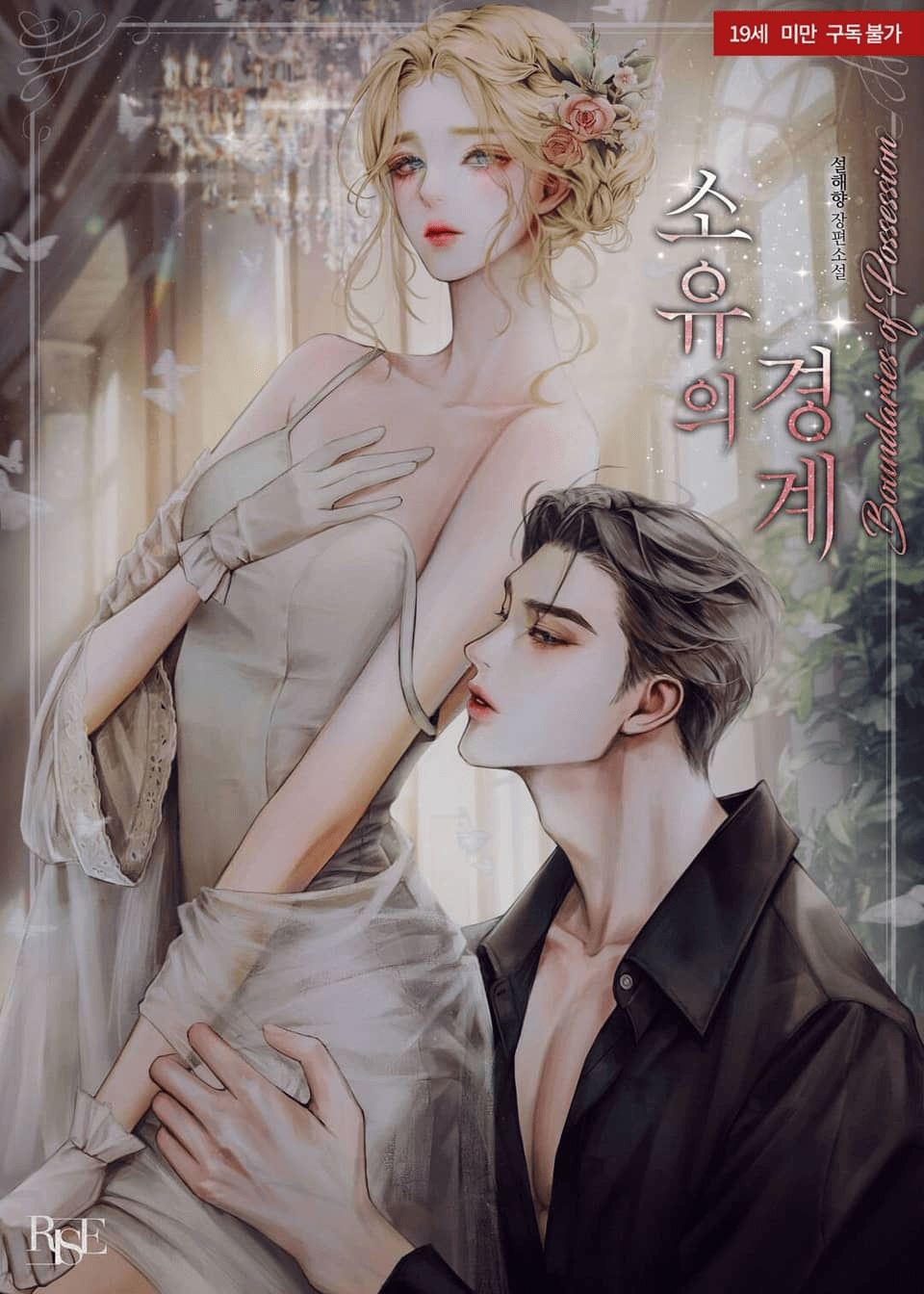
Roina Württi, daughter of the influential Marquis Württi, has harbored an unrequited love for Conrad Asheter, the young Duke of House Asheter, since their first encounter. The two families are bitter enemies due to Marquis Württi’s financial schemes that drove Conrad’s father and grandfather to their deaths. Despite this enmity, Roina and Conrad grew close during a period when their family identities were unknown to each other, leading Conrad to develop genuine feelings for her. However, their relationship shattered when Conrad discovered Roina’s true identity, believing she had deceived him. He rejected her with contempt, and she later learned that her father had arranged for her to approach Conrad as a spy for political gain.

Following a public confession of love that was coldly dismissed, Roina suffered a carriage accident that left her with partial amnesia, erasing the three years she spent married to Conrad. She awoke in the Asheter residence, confused to discover she is now the Duchess Asheter. Conrad informed her that their marriage was an imperial decree intended to balance political factions between his conservative house and her father’s progressive faction. The marriage has been miserable; Roina was secluded in the estate, labeled the "unfortunate duchess," while Conrad treated her with continued hostility and distrust, convinced she is an instrument of his family’s destruction.

As Roina attempts to navigate her new life and recover her memories, she faces numerous obstacles. Her father, the Marquis, summons her and demands she bear Conrad’s heir to secure political influence, providing her with an aphrodisiac. When Conrad discovers the bottle, he assumes it contains poison, deepening his mistrust. Roina proves her innocence by attempting to drink it herself, but Conrad intervenes, though he remains suspicious. She also learns from her younger sister, Aila, that another noblewoman, Daphne Clovis, actively isolated Roina from society due to jealousy, as Conrad had previously shown interest in her.

Roina tries to rebuild her life by managing the ducal estate and preparing for a major banquet. During this time, she accidentally discovers a divorce agreement bearing both their signatures, which she had seemingly authored before losing her memory. This revelation terrifies her, suggesting a catastrophic failure in their relationship that she cannot recall. When Conrad finds her in his study, he accuses her of theft and betrayal, referencing past events where she had also presented him with divorce papers. He reveals that he desired a wife in name only, further emphasizing his emotional detachment.

The narrative unfolds through Roina’s perspective as she grapples with the pain of Conrad’s persistent hatred and the lingering hope that he might still care for her. Flashbacks reveal their earlier courtship, where Conrad loved the woman he thought was of common birth, only to be devastated by her aristocratic lineage. Now, Roina must decipher the truth behind the divorce documents and her past actions while dealing with her father’s manipulative schemes and societal pressures. The story centers on whether Roina can penetrate Conrad’s hardened exterior, uncover the hidden realities of their past three years, and find a path toward redemption or separation.

Latest Release
DateGroupRelease
2026-10-03dusk blossoms c48
2026-10-03dusk blossoms c47
2026-10-03dusk blossoms c46
2026-10-03dusk blossoms c45
2026-10-03dusk blossoms c44
2026-10-03dusk blossoms c43
2026-10-03dusk blossoms c42
2026-10-03dusk blossoms c41
2026-10-03dusk blossoms c40
2026-10-03dusk blossoms c39
2026-10-03dusk blossoms c38
2026-10-03dusk blossoms c37

Community Reviews

Rating(0 / 5.0, 39votes)
5 stars
0(0%)
4 stars
0(0%)
3 stars
0(0%)
2 stars
0(0%)
1 stars
0(0%)

Popular reviews

... Read More
The stakes in these chapters are layered like an onion and I'm not sure I'm ready for how many levels there are. On the surface: Roina hosting her first banquet as mistress of the Asheter estate, trying not to give anyone ammunition against her. Simple enough, right? Wrong. Because she's the daughter of the progressive faction's leader, attending a banquet dominated by conservative nobles, and 'her every action will become fodder.' That line alone should have set off alarm bells. But then there's the political layer—she NEEDS to meet Emperor Cedric to uncover the truth behind the imperial decree that orchestrated her marriage. Without that truth, she's trapped in a situation she doesn't understand. The empress's appearance adds another dimension: she apologizes for Daphne's tea party incident with this calm, objective dignity, but the subtext is clear—Daphne won't be attending because the empress already knows, and she's managing the fallout. Meanwhile, Conrad is being summoned separately by the emperor. What are they discussing? What deal has already been struck? And beneath ALL of this is the personal conflict—Conrad lied about reading the book, lied about his dancing ability, and is now leading her through their first dance while she's trying to process the fact that the man she fell for as 'Eden' and the man she's married to as 'Conrad' might be doing something she doesn't fully understand. The tension isn't just rising—it's suffocating, and beautifully so.
... Read More
Let me tell you about the most loaded object in this entire passage: a folded envelope containing a divorce agreement with two signatures. It sits between other documents in Conrad's study like it's been there for a while—"something I hadn't opened for a while." Not something he'd just written yesterday. Something he'd tucked away and mostly forgotten about, until Roina's trembling hands brought it back into his视野. What is this symbol really saying? Here's what got me thinking: the divorce document represents the ghost of their past relationship. It's a physical manifestation of something that happened before her memory loss—something both of them apparently agreed to, something both of them carried forward in different ways. Conrad kept it like a secret wound. Roina signed it like someone who had already given up, even though she can't remember why. The theme of memory as both curse and shield runs through every page. Roina desperately wants to remember, to understand, to fix things. But her lost memory is also protecting her from whatever pain led to that signature. Meanwhile Conrad's perfect recall of every hurt is what torments him—he can't forget even if he wanted to. And the cigar he crumples instead of lighting at the end? That little detail about him almost smoking but stopping? That's Conrad in a single gesture—about to do something self-destructive, then choosing to crush it instead. The man consumes nothing, not even his own vices, because that would mean showing weakness.
... Read More
Okay can we just collectively lose our minds over Conrad's dialogue in this section because holy shit. The guy doesn't say much but when he does—BAM. Every line hits like a punch. Let me just lay out the most devastating exchanges: "Why do you have this?" — casual, cold, already assuming the worst before she even opens her mouth. "I'd prefer if you didn't enter my study carelessly from now on." — not even a real answer to anything she might have wanted to say. And then the memory one. When she finally works up the courage to ask about the divorce documents and he responds with: "Memory that disappears when inconvenient must be convenient for you." I literally gasped. That line carries the weight of every assumption he's ever made about her, every wound he thinks she caused, and it's delivered with such surgical cruelty. But here's what I love about the author's voice—Conrad's dialogue is so distinct from everyone else. Donovan speaks with formal deference. Harrison is flustered and polite. Conrad? Every sentence is clipped, layered with sneers, almost performative in its indifference. The flashback dialogue from their first meeting is a totally different flavor though. Eighteen-year-old Roina's internal monologue is so dry and bored—"Ugh, I should escape from here quickly." It's funny and human and immediately makes you want to root for her. The contrast between young Roina's voice and present Roina's desperation is masterful storytelling.
... Read More
The structural shift in these chapters is masterful. You start in this intimate, almost whisper-quiet space—the library, a woman browsing shelves, a librarian who remembers her patron from years ago. It's slow, deliberate, almost meditative. Roina finds the book loan register, sees the name Eden, and the pacing deliberately slows down further. She asks about the person's appearance. Black hair. Golden eyes. The confirmation comes in beats, not all at once, and each beat lands like a stone in still water. Then—cut to the terrace. Another quiet scene, but charged differently. A question asked through an object instead of words. And then the author absolutely pivots. Autumn afternoon, carriages lining up, the full machinery of a ducal banquet. The pace accelerates dramatically. Roina is nervous, checking the time, running through mental preparations. The banquet itself is a pressure cooker—conservative nobles, progressive faction bloodline, the emperor's summons pulling Conrad away, the empress appearing out of nowhere. Each scene transition feels intentional, like the author is winding a spring tighter and tighter until it snaps into that first dance. And the dance? It's both the release and the complication. Music plays, bodies move, memories surface. The chapter ends not with resolution but with a reminder of a promise made in another lifetime, and the reader is left aching for what comes next.
... Read More
Beneath the surface of this seemingly straightforward enemies-to-lovers setup, there's this really sharp commentary on how political structures destroy personal lives. The marriage between House Asheter and House Württi isn't just inconvenient — it's imposed by the Emperor as a tool of political balance. "His Majesty desired balance between two opposing political parties." Translation: two people's happiness was sacrificed for geopolitical strategy. This isn't romance, it's statecraft with a wedding veil. The father-daughter dynamic is where the symbolism gets really dark. Marquis Württi used Roina for business (lending money that destroyed the previous duke), then used her again for marriage (cementing political power), and now he's summoning her to a trading company under threat of harm to her sister Aila. The line "Aila's safety depends on your actions" is basically the thesis statement for everything wrong with this family system. Roina has never been a daughter — she's been a currency. And Conrad — his entire existence is shaped by his father's death, which was caused by Roina's father's financial cruelty. He inherited hatred the way other children inherit fortunes. When he looks at Roina, he doesn't see a person, he sees the daughter of the man who killed his family. But the text keeps undermining this — those golden eyes, the indescribable emotions, the way he offers her his name. He's fighting something he can't control, and that internal war is the real story. The amnesia itself is symbolic. Three years erased — maybe the universe recognized that whatever happened during those three years was unsustainable and wiped the slate clean. Or maybe it represents what Roina has ALWAYS felt: that her life has been happening to her, not by her. She's been passive in every major plot point so far — arranged marriage, carriage accident, memory loss. The question hanging over everything is when she stops being a symbol and starts being a person. "The Unfortunate Duchess in Seclusion" — that newspaper headline isn't just worldbuilding flavor text. It's the story society told about her, and now she has to live inside that narrative and rewrite it.
... Read More
I came into this chapter thinking Roina was just suffering quietly and Conrad was just being Conrad. But then Daphne showed up and everything shifted. The stakes here are interesting because they're not life-or-death—they're social, emotional, psychological. And somehow that's more terrifying. Roina is showing up to a room full of women who actively dislike her, wearing a necklace she thinks proves her worth, trying to recover memories that might destroy her. Meanwhile Daphne—blue hair, red eyes, the kind of beauty that makes people uncomfortable—looks at Roina like she's something that needs to be removed. But here's what got me: Roina isn't shrinking anymore. When Daphne's group tries to bring up the Württi family's merchant roots, Roina doesn't flinch. She reframes the entire conversation in two sentences. "My family's affairs are far beyond my authority." Translation: I'm a duchess now. You're not talking to a Württi girl. She weaponizes her title like a shield. And that private conversation in the greenhouse? The way the other ladies just... leave? They know. They feel it. Something dangerous is about to happen and they're not witnesses for that. What I'm most anxious about is Roina's memory. The physician said she needs to confront environments from her past. The tea party IS that confrontation. And whatever she remembers—or doesn't remember—about Daphne? That's going to change everything. Because right now Roina is operating on instinct and pain. Once she knows the truth, the power dynamic flips. I just hope she's ready for what she might find.
See all reviews

Custom lists

See all custom Lists