Summary

... Read More

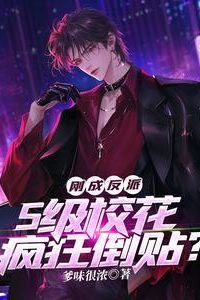
Bai Zhou transmigrates into the world of a popular novel, finding himself in the body of Bai Zhou, a wealthy young master and the story's designated villain. The narrative begins at his high school's Awakening Ceremony, where students publicly reveal their spiritual talents. Shen Qin, the campus belle and Bai Zhou's nominal girlfriend, awakens an S-Class spirit weapon, the Weeping Blood Scimitar. In a dramatic reversal of the original plot, she publicly humiliates Chu Yun, the novel's protagonist, declaring their relationship over and reaffirming her commitment to Bai Zhou. Bai Zhou, initially confused by his new identity, quickly realizes the danger he is in; in the original story, this wealthy but talentless villain meets a gruesome death at the hands of the protagonist. However, upon slapping Chu Yun for making too much noise, Bai Zhou receives a system notification. He has gained Destiny Villain Points, a currency that rewards him for causing mental and physical damage to the protagonist. This system allows him to spin a Villain Wheel for powerful rewards, transforming his role from a doomed antagonist into a strategic player.

Bai Zhou identifies a critical opportunity to alter the plot and secure his survival. He targets Lin Wei, Chu Yun's childhood sweetheart, who has only awakened an E-Class talent. Bai Zhou knows that Lin Wei possesses a hidden divine artifact, the Dragon-Gall Bright Silver Spear, which is destined to elevate Chu Yun to greatness. Using his family's immense wealth as leverage, Bai Zhou threatens to let Lin Wei's critically ill father die without proper medical care unless she signs a life-and-death Contract with him. Desperate and manipulated, Lin Wei agrees. Bai Zhou successfully signs the contract, triggering a system reward that grants him the Peerless Sword Casket, an item allowing him to sign unlimited life-and-death contracts, and the All-Knowing Mirror, which reveals the hidden attributes of spiritual artifacts. Upon contracting with Lin Wei, the hidden power of the Dragon-Gall Bright Silver Spear is instantly activated, elevating it to Super SSS-Class quality and granting Bai Zhou two formidable talent skills.

The conflict escalates when Chu Yun, having awakened an SSS-Class spirit master talent, challenges Bai Zhou to a duel to reclaim Lin Wei. Chu Yun partners with Shen Qin, who regrets being rejected by Bai Zhou and seeks to regain his favor by defeating him. The duel takes place in an automated barrier arena. Despite the overwhelming odds, with Chu Yun holding SSS-Class talent and Shen Qin holding S-Class power against Bai Zhou's A-Class talent and Lin Wei's E-Class rating, Bai Zhou emerges victorious. He utilizes the Frenzied Thrust skill of the Dragon-Gall Bright Silver Spear to instantly incapacitate Chu Yun and suppress Shen Qin, ending the fight in mere seconds. The crowd and the protagonist's allies are left stunned by the impossible defeat.

In the aftermath, Shen Qin desperately begs for Bai Zhou's forgiveness, attempting to blame Chu Yun for deceiving her. Bai Zhou coldly dismisses her, kicking her aside and continuing to accumulate villain points through her humiliation. He then escorts a grateful and emotionally conflicted Lin Wei away from the school. As they leave, Bai Zhou's bodyguards warn him that his father is furious about the life-and-death contract with an E-Class talent. Bai Zhou remains unfazed, confident in his new power and the strategic advantage he has gained. The story concludes with Lin Wei beginning to shift her allegiance away from Chu Yun, realizing that Bai Zhou's actions, though manipulative, have provided her with protection and care that the protagonist never offered. Bai Zhou continues to exploit the system, planning to further dismantle the protagonist's destiny while securing his own position as the dominant force in the school.

Latest Release
DateGroupRelease
2026-08-11shanghai fantasy c200
2026-08-11shanghai fantasy c199
2026-08-11shanghai fantasy c198
2026-08-11shanghai fantasy c197
2026-08-11shanghai fantasy c196
2026-08-11shanghai fantasy c195
2026-08-11shanghai fantasy c194
2026-08-11shanghai fantasy c193
2026-08-11shanghai fantasy c192
2026-08-11shanghai fantasy c191
2026-08-11shanghai fantasy c190
2026-08-11shanghai fantasy c189

Community Reviews

Rating(4.2 / 5.0, 12votes)
5 stars
4(33%)
4 stars
6(50%)
3 stars
2(17%)
2 stars
0(0%)
1 stars
0(0%)

Popular reviews

... Read More
Okay so let me just say this upfront: Bai Zhou is the most entertaining villain I have ever encountered and I need everyone to understand this immediately. The guy transmigrates into the body of a rich kid villain and his FIRST instinct is not to repent or be nice or whatever, his first instinct is to SLAP the protagonist in public and then chase after the childhood sweetheart to offer her his dad's medical bills as leverage. This man is unhinged and I respect it so much. The way he completely rewrites the script in chapter one is chef's kiss. Chu Yun walks in ready to do his whole 'we are not from the same world' thing and Bai Zhou just looks at him like 'can you shut the hell up' and SMACK. And then the system goes off and he's like 'oh wait I CAN do this' and suddenly he's slapping him AGAIN on the other cheek. The power dynamic shift in those first three chapters is absolutely delicious. But what really got me is how he treats Lin Wei. 'I'm not a bad person' right after cornering a terrified girl against a wall and threatening her father's life. The cognitive dissonance is so thick you could cut it with a knife. And yet—here's the thing—he's also kind of right? The original plot was going to ruin this girl too. She was just going to be the poor childhood sweetheart who gives away her SSS-class weapon to the male lead and then gets used. Bai Zhou at least sees her as a person with agency, even if his methods are absolutely vile. And Shen Qin! Oh my god, Shen Qin is such a fun character. She's the campus belle with an S-Class weapon who immediately distances herself from Chu Yun the second she awakens, and then she's the one throwing shade at Lin Wei like 'you can only pick up the trash I discarded.' That woman has zero filter and I love her for it. Their dynamic with Bai Zhou is so weirdly interesting—she's clearly into him, he's using her, and everyone knows it but nobody says anything about it out loud. Who else is reading this and not absolutely obsessed with how Bai Zhou is going to turn the entire original plot upside down? Because I have a feeling the original protagonist Chu Yun is about to have the worst life ever and I am living for it.
... Read More
Let me just be straight with you: I started reading this at 11 PM and it is now 3 AM and I have read seven chapters and I cannot stop. The pacing in these opening chapters is absolutely vicious in the best possible way. Every single scene ends with a hook so sharp it could cut glass. Chapter one starts with the awakening ceremony, Shen Qin gets her S-Class, immediately dumps Chu Yun, Bai Zhou slaps him twice, and we learn he's transmigrated into the villain body. That's it. That's the chapter. Three pages of pure plot propulsion and I was already screaming. Chapter two introduces Lin Wei, the childhood sweetheart with the hidden SSS-class weapon, and Bai Zhou immediately starts maneuvering to recruit her. The scene where he chases her down in that deserted corner—tension, threat, vulnerability, all in one breath. And then chapter three opens with her saying 'Can you really save my father?!' and Bai Zhou pulling out his phone like a villain with unlimited resources. The author just does not believe in downtime and I am so grateful. What's really impressive is how the author balances the internal monologue with the external action. Bai Zhou is constantly thinking—'Oh no I'm the villain,' 'Oh wait I have a system,' 'Oh god I just slapped the protagonist again'—and this inner chaos never slows down the plot. It actually accelerates it, because every thought leads to a decision, every decision leads to an action. The narrative momentum is relentless. The only tiny complaint I have—which is really just me being difficult—is that some of the system notifications feel a bit repetitive. 'Ding! Detected that you caused 9999 points of mental damage, Destiny Villain Points +100.' I get it, you're a villain, you slap people, you get points. But honestly, the repetition almost becomes a feature at this point. It's like a slot machine and I can't stop pulling the lever. Also, the transition from the public humiliation of Chu Yun to the private corner scene with Lin Wei is seamless. One moment you're in a crowded training field with everyone watching, the next you're in a tense one-on-one where a girl is backed against a wall. The shift in tone is jarring in the best way. This author understands scene structure on an instinctive level.
... Read More
The Peerless Sword Casket is such a rich symbol here. On the surface it's just a system reward—a cool ability that lets Bai Zhou contract spirit maidens. But the name itself suggests something deeper. A casket is a container, a vessel. And his is peerless, meaning it can hold what no other can. It's literally the tool that allows him to take everything the original protagonist was supposed to have. But the real symbolism is in how it functions as a metaphor for the story itself. The casket reveals hidden truths—Bai Zhou can see through Lin Wei's E-Class exterior to her Super SSS-Class true nature. It's about seeing what others miss, about looking beneath the surface. And in a story where everyone is performing (Bai Zhou pretending to be a normal student, Chu Yun pretending to be weak after the fight, Doctor Li pretending to be devoted), the ability to see through facades is the most powerful weapon of all. There's also the contract itself as a theme. Life-and-death contracts, no upper limit—these represent the ultimate transactional relationships in this world. People are commodities. Loyalty is purchased. And Bai Zhou, as the villain, understands this better than anyone. The system that gave him this power is itself a kind of contract, one he made without fully understanding the terms. The mental damage points accumulating with every scheme—that's almost a dark commentary on how villainy is quantified, gamified, reduced to numbers. Chu Yun's suffering becomes Bai Zhou's progress bar.
... Read More
Bai Zhennan's dialogue is genuinely hilarious. The man goes through so many emotional shifts in one conversation it's insane. He starts dead serious, grabs his son's shoulders, whispers about not telling the mother, then suddenly his voice sharpens with excitement, then he's blushing and acting flattering, then he's raving alone in the study. The dialogue captures this perfectly—his lines are all over the place because he can't contain himself. His line "Little Zhou, is your talent passive or active? If it's active, can it be used on other spirit masters?" is such a perfect reveal of character. He's not worried about his son's welfare or ethics—he's immediately calculating how to weaponize it. And when Bai Zhou says it's passive, you can practically hear the disappointment in "That's good... that's good..." The ellipses do so much work there. Then there's Doctor Li, whose dialogue is pure panic. "young master, please, don't kill me, I beg you, I really know I was wrong!" followed by the instant pivot to "young master, you are not scary! I'm just... I just felt genuine awe toward you!" The speed of his retraction is almost impressive. And then when Bai Zhou asks him to do something simple, the way he goes from "I'll go through fire and brimstone" to stammering and sweating? The dialogue writes the scene for you. Bai Zhou's own voice is cold, measured, always in control. Even when he's lying to his father about his talent being passive, his dialogue stays smooth. The contrast between his calm narration and everyone else's chaos is what makes the dialogue pop.
... Read More
The hospital scene is one of those moments where the setting itself becomes a character. No.3 Hospital goes from being just a medical facility to a contested territory overnight. Black vehicles, rows of people in black, roadblocks at two junctions—it's like a fortress. And the fact that you can leave freely but can't enter? That's such a specific, deliberate detail that tells you everything about who holds power here. I love how the author contrasts the main entrance (heavily guarded, checkpoints, inspections) with the back alley where Bai Zhou sneaks in through side doors. It's visual storytelling at its best—you can literally see the power structure in the geography. The bodyguard knowing these shortcuts shows how deep the Bai family's reach extends, even into places they shouldn't need to go. And then there's Doctor Li waiting "like an ant on a hot pan" outside. The imagery is almost cinematic. One second he's this arrogant man who looked down on Lin Wei and her father, the next he's dropping to his knees with a loud plop sound. The physical comedy of it is dark but effective. The VIP ward where Chu Yun lies unconscious, completely unaware that his rival is being smuggled into his sanctuary by a bribed doctor—there's a claustrophobic tension in that contrast. The hospital that was supposed to be Chu Yun's safe haven has become a prison, and Bai Zhou is the one holding the key.
... Read More
I need to talk about Shen Qin's dialogue because the woman is a FORCE of nature and I am obsessed. 'What are you even to me, to dare call me Qinqin?' — This line alone should be framed. The sheer casual cruelty of it, delivered with that icy disdain while everyone around them is watching. And then immediately after, she hooks Bai Zhou's arm like nothing happened. The tonal whiplash is incredible. 'You can only pick up the kind of trash I discarded!' — I literally laughed out loud. This woman has zero chill and I would watch her fight a dragon for fun. But what's really remarkable is how every character has a distinct voice. Chu Yun's dialogue is all wounded pride and simmering rage. 'Bastard!' 'You went too far!' 'Thirty years east of the river, thirty years west' — he's giving classic protagonist energy, the kind of guy who talks in proverbs when he's angry. The voice in his head is completely different—ancient, grandiose, full of cosmic promises. 'Your talent will surely shake the cosmos.' This guy sounds like he's reading from a mythology textbook. Bai Zhou's voice is the most interesting because it shifts constantly. His internal monologue is modern, panicked, full of internet slang and self-aware humor. 'Damn! I had actually transmigrated into the world of a popular novel and had become the villainous young master whose only trait was being rich?!' But his external dialogue is cold, calculating, deliberately villainous. 'That's right, I'm a big villain, but... I'm a wealthy big villain!' He's performing villainy and he knows it, and that meta-awareness makes every line he speaks double as both character dialogue AND authorial commentary. Lin Wei's dialogue is softer, more hesitant, but that's what makes her moments hit harder. 'Can you really save my father?!' — five words and you feel the entire weight of her desperation. The author doesn't need flowery language for her. Just raw, unfiltered need. The narrative voice itself is also worth discussing. It's third-person limited, mostly following Bai Zhou's perspective, and it has this wonderfully snarky tone that matches his internal chaos. The author isn't taking themselves too seriously, and that self-awareness permeates every paragraph. It's the kind of writing that makes you want to text your friends mid-chapter and go 'YOU NEED TO READ THIS RIGHT NOW'
See all reviews

Characters

See all characters

Custom lists

See all custom Lists