I Didn’t Particularly Want to Farm!
+Add to Custom List
Novel Info
  • Author:
  • Status:Completed

Summary

... Read More

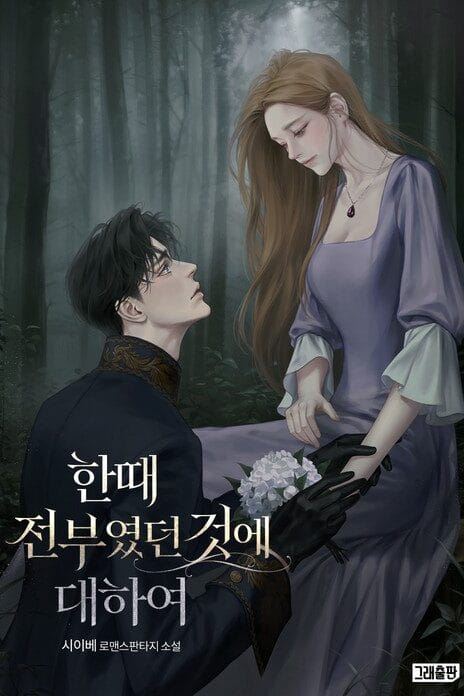
Stella grew up as the illegitimate daughter of King Philip of Amalrune and a deceased dancer. Rejected by her father and neglected by a mother consumed by alcoholism, she spent her childhood in profound loneliness. On her tenth birthday, she encountered small, mimic-like beings that appeared at her window. These creatures became her only companions, offering her a sense of connection she lacked in the human world. As she grew older, Stella learned to hide these sightings to avoid her mother's violent outbursts, and the creatures eventually faded from her sight until they reappeared during moments of stress. After her mother's death, Stella moved into the castle but remained an outsider, confined to a dark, damp room. Her only true friend was Rudina, a maid from a fallen noble family who treated Stella with genuine affection and remembered her birthday when no one else did.

The turning point arrived on Stella's twentieth birthday when Sir Lepard, a relative of Queen Eliza, summoned her to a formal dinner. The king, queen, and Princess Beatrice, who had previously ignored or mistreated her, welcomed her with unprecedented warmth and gifts. They presented Stella with a certificate of lineage, officially recognizing her as the king's legitimate daughter. Overwhelmed by this long-awaited acceptance, Stella signed the document, tears streaming down her face, believing she had finally found a family. However, the kindness was a deception. The true purpose of the recognition was to designate Stella as a political hostage to be sent to the Credion Empire. To avoid war, Credion demanded legitimate princesses from neighboring nations. Since Beatrice was the queen's favorite and too precious to send, Stella was chosen as the substitute, bearing the weight of her new legitimacy only to face exile.

Before her departure, Stella gave Rudina a pouch of jewels and begged her to flee the castle for her own safety. Though heartbroken, Stella accepted her fate. During the month-long voyage to Credion, she was treated as cargo by the escort knights but found camaraderie among the crew of the merchant ship, the Giant Ship. She bonded with the captain, Fooka, the cook Kukus, and the sailor Scutt, who treated her not as royalty but as a sister. This period of forced labor and shared meals provided Stella with the warmth and equality she had never experienced in the palace. Upon arrival, the sailors bid her an emotional farewell, giving her gifts to help her survive in the strange land.

Stella was taken to Verdura Castle, an old, ivy-covered building in the Plant District, which houses princesses from across the Western Continent. She was greeted by Milla Twelzen, a composed servant who informed her that she was not merely a hostage but a candidate for Empress. Stella was assigned a rigid schedule of etiquette studies and formal duties. That night, she encountered two human-like creatures, Esta and Ark, who spoke fluently and revealed they were searching for someone with a specific magical resonance. They left behind a magical carrot that tasted sweeter than any ordinary vegetable before fleeing. Stella realized these beings were different from the mimics of her childhood.

The next day, Stella attended a grand banquet in the Sun Hall to present her lineage and gift to Emperor Kai. Fourteen princesses from various nations competed for his attention, displaying wealth and beauty. When a fake hostage from Veradun was exposed, the emperor casually ordered her removal, revealing his cruel nature. When Stella's turn came, she approached the emperor with trembling hands, clutching the box containing her lineage certificate. She feared that her status as a bastard would be exposed, endangering not only herself but also those who had been kind to her. The story concludes with Stella standing before the emperor, uncertain of how her destiny will unfold in the hostile imperial court.

Latest Release
DateGroupRelease
2026-10-03dusk blossoms c210
2026-10-03dusk blossoms c209
2026-10-03dusk blossoms c208
2026-10-03dusk blossoms c207
2026-10-03dusk blossoms c206
2026-10-03dusk blossoms c205
2026-10-03dusk blossoms c204
2026-10-03dusk blossoms c203
2026-10-03dusk blossoms c202
2026-10-03dusk blossoms c201
2026-10-03dusk blossoms c200
2026-10-03dusk blossoms c199

Community Reviews

Rating(0 / 5.0, 25votes)
5 stars
0(0%)
4 stars
0(0%)
3 stars
0(0%)
2 stars
0(0%)
1 stars
0(0%)

Popular reviews

... Read More
This section of the story is a masterclass in controlled pacing. Let me break down why it works so well. We open with Stella arriving and settling in — slow, atmospheric, almost meditative. She explores the room, takes a bath, looks out the window. This is the breath-in phase. The reader is meant to absorb the setting alongside her. Then comes the Milla conversation, which raises the stakes dramatically with the Empress candidate reveal. That's the first breath-out. Then — and this is where I think the author is genuinely clever — the pacing SHIFTS again. The magical creatures appear almost as comic relief, lightening the mood right after that heavy political revelation. But they don't undercut the tension. Instead, they add mystery. Who are they? Why can they speak? Why did they leave a carrot? The narrative is doing double duty here — entertaning us while simultaneously planting questions that will pay off later. And then we CUT to the Sun Hall. The banquet preparations. The servant gossip about Veronica and Melissa. This is the breath-in before the storm. The text ends mid-sentence on the maid's explanation about politics, which is a classic cliffhanger technique but it works because we've been GIVEN enough context to care about the answer. The chapter transitions are seamless. We move from Stella's private room to the public banquet hall in a way that expands the scope naturally. No jarring jumps, no filler. Every scene either deepens character, advances plot, or builds world. The only part I might have shortened slightly is the unpacking sequence, but honestly it serves the purpose of making us feel Stella's disorientation and gradual comfort. Overall? Flawless pacing.
... Read More
There's a lot going on beneath the surface in this section and I want to pull at some threads. The lineage contract is the big one, obviously. It's not just a plot device — it's a symbol for how institutional power controls bodies. Stella read the contract when she signed it. She knew the words. But knowledge without experience is just paper. The contract becomes tangible when she tries to imagine escaping and realizes the magic would literally tear her apart. That's a powerful metaphor for how systems of power don't just rule you when you're compliant — they punish you for even thinking about leaving. And crucially, it punishes anyone who helps you. "Those who helped me wouldn't be safe either." This isn't just about her body. It's about collective responsibility as a control mechanism. Then there's the salt. Kukus can't stop adding it. Salt is preservation — it keeps things from spoiling. But too much makes everything inedible. I can't help but read this as a commentary on protection versus suffocation. The sailors protect Stella with salt (literally and figuratively), but there's a line. And Stella, who's spent her life being preserved like royalty — kept intact, kept untouched, kept on display — is learning what it means to be actual food. Real. Seasoned. Edible. She's becoming human through the crew's flawed, salty love. Verdura Castle itself is loaded with symbolism. Ivy climbing its walls, covering windows, holding onto cracked stone. Ivy is persistent — it doesn't build, it ADAPTS. It survives by attaching itself to whatever structure is there. Stella arriving at this ivy-covered ruin feels like the author is saying: she's going to do the same thing. She'll attach herself to this broken place and make it hers. The green against the faded grey, the living against the decaying — it's her story in architectural form. And Rudina. She appears only in memory and in the seagull cries that sound like her sobs. Rudina represents everything Stella lost — freedom, connection, the ability to leave. The seagulls crying overhead as Stella waves goodbye to the ship is the author turning her grief into something elemental. Birds don't belong to anyone. They fly wherever they want. Stella can only watch them.
... Read More
"A feeling of happiness welled up, almost as intense as when she held the pickaxe. It was such an overwhelming emotion that she almost burst into tears." I need to sit with this line for a moment. This woman has been through literal hell — her mother hitting her (never on the cheek, apparently, which is its own disturbing detail), being treated as an impurity, psychological torture from people who were supposed to care about her. And now the simple act of planting a seed, guided by cheerful little creatures who genuinely believe she's talented, brings her to the verge of tears. That's not just happiness. That's the emotional equivalent of someone who's been starving finally being handed a meal and not knowing how to process it. And the mother flashback hits even harder because of how casually it's woven in. Stella's thinking about earth fairies, remembering showing her mother one as a friend, and suddenly we get: 'Her mother had hit her many times, but never on the cheek.' The specificity of that detail — the author chose that particular boundary to mention — makes the abuse feel so much more real and intimate. Then 'In retrospect, it was quite an extreme reaction' said with this almost clinical detachment. Like Stella has somehow normalized violence to the point where she's analyzing it like a scientist. The moment with Ark's small hand touching her fingertips and the genuine warmth she feels from their encouragement — these tiny connections are what she's been starved of. And the earth fairies, these tiny creatures, give her more genuine affection in one scene than her entire family ever did. I'm not okay.
... Read More
I need to talk about Milla because the way this chapter handles her is actually devastating and I wasn't ready for it. On the surface, Milla is just Stella's helpful attendant — bringing books, taking notes, staying composed. But then we get this whole sequence where she goes back to her room, can't stop thinking about Stella letting her off the hook for the wrong book, and suddenly we're in her head and it just BREAKS my heart a little. She remembers her old room. The silk wallpaper, the jewelry box, the perfume bottles, her MOTHER smiling at her. All gone. Everything bright and colorful replaced by this austere room with nothing on the walls. And then she pulls out a music box — a wooden doll in a red dress that plays a tune that occasionally stops, that creaks and almost breaks, and the text says it reminds her of herself. SNAP. The box closes. The music stops. And then she goes back to writing in her diary like nothing happened, treating each letter like money, recording everything with desperate thoroughness. Meanwhile Stella, who is also performing for her life among these princesses who are all wearing innocent smiles while being genuinely cruel underneath, shows Milla unexpected kindness by accepting the farming book out of consideration. And Milla is confused by it. She thought a princess from Amalrune would regard her as dirt beneath her nails. These two are both trapped in this empire, both playing roles, both carrying grief they can't show. And they're starting to see each other as actual people. That moment where Stella tells Milla to go rest? I felt that. It was small and quiet and meant everything.
... Read More
I have to talk about the dialogue in this section because it's genuinely excellent and I don't throw that word around. Kukus is a DIALOGUE DEMON. "When did I ever do that? Besides, food tastes better when it's a bit salty. You wouldn't understand." He is the type of person who deflects, grumbles, and then immediately obeys anyway. The scene where Stella yells at him not to dump the whole bag of salt and he FREEZES and sheepishly shakes the ladle inside the bag — this is comedy gold written with perfect economy. Three lines and we understand an entire personality. He's a former warrior turned terrible cook who still has no impulse control around seasoning. Captain Fooka's dialogue is similarly distinct. His voice is heavier, more deliberate. When he says "Run away, Princess. We'll help you," it lands differently because of how he speaks — not dramatically, just stating it like it's the most reasonable thing in the world. And then his panic when he realizes he called her lineage "cursed": "Oh! I didn't mean your lineage is cursed, Princess!" — that's the kind of clumsy sincerity that makes him feel like a real person. He's not polishing his words. He's just... speaking. Stella's voice is the most interesting because it shifts depending on who she's talking to. With the crew, she's casual, teasing, practical. With Fooka in the captain's cabin, there's this weird layer of formality that slowly cracks. The tea scene is dialogue as performance — she's drinking from a teacup that looks like a toy in his hand, maintaining royal posture while sitting across from a man who could crush her skull. And then she says "I didn't expect to become so close to you, Fooka" and the mask drops for exactly one second. The escort knights don't speak a single word across four chapters. Not one. That silence is ALSO dialogue — it's the author making a statement about power and invisibility through what's NOT said.
... Read More
Okay so I just finished this chunk and honestly my brain is still spinning. Let me try to process what just happened because this section is doing SO MUCH. The entire arc from Chapter 14 to 20 is basically Stella's exile story, but it's structured in the most clever way — it's not just sad princess gets treated poorly, it's the opposite. She gets dumped on a merchant ship like literal cargo, right? King Philip couldn't be bothered to send her properly, just threw her on Captain Fooka's ship with two escort knights who... I mean, WHO DOES THAT? And yet — and YET — this becomes the warmest, most alive part of her story. The ship becomes home. Verdura Castle, her "gift" from the Credion Empire, is this crumbling ivy-covered ruin. She literally thinks she might end up in an underground prison and instead gets... a decrepit castle. Which, you know, is an improvement in her mind. What's brilliant is how the author sets up the emotional math here. The sailors treat her like family despite her being royalty. Kukus, this huge burly man who can't cook to save his life, keeps her in line about the salt. Scutt crying rivers when they arrive. Captain Fooka offering her a real escape plan — "Run away, Princess" — and both of them knowing it's impossible because of that lineage contract. The contract is such a nasty little plot device. She READ it, she KNEW about it, but apparently didn't grasp the full weight until now. That's not bad writing, that's actually really sharp character work — she's royal, she had privilege, she thought she understood her chains. She didn't. The ending of this section hits different because the narrative deliberately contrasts two worlds. Amalrune = cold palace, Rudina crying, being ignored. The ship = chaotic but warm, food on the table, people giving her gifts. Verdura Castle = isolation again, but this time she has Milla and the servants to figure out. The author is setting up something, I can feel it. That whisper she hears at the end — "Who are you?" — is either a trick of the wind or the first hint of something ELSE. The plot is moving toward something bigger and I'm here for it.
See all reviews

Custom lists

See all custom Lists