I Didn't Mean to Get It Up
+Add to Custom List
Novel Info
  • Author:
  • Status:Completed

Summary

... Read More

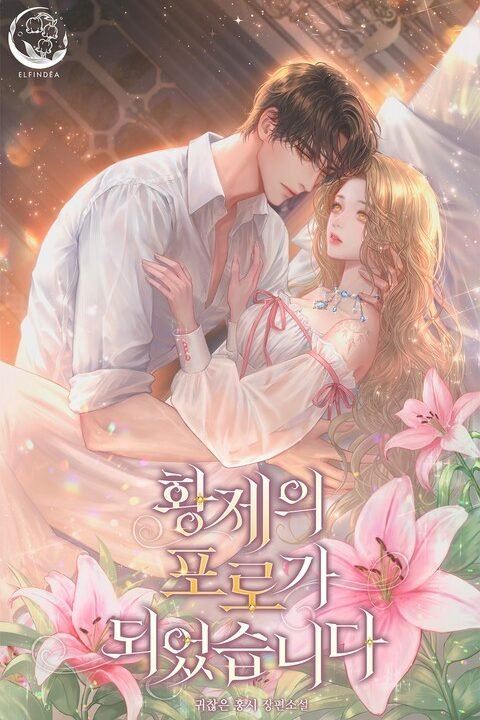
Clara Belle has harbored a long-standing infatuation with Baron Lucius Tempe, a notoriously promiscuous nobleman she admired since childhood. Her devotion remained unwavering despite the constant stream of women leaving his chambers. When she finally gathered the courage to propose marriage, Lucius cruelly rejected her, mocking her modest chest and dismissing her romantic intentions. Heartbroken and humiliated, Clara retreated to the safety of her family home, only to find that her best friend Liz was concocting a scheme to force Lucius to recognize her worth as a woman.

Liz brewed an herb known to heighten sexual desire and slipped it into Lucius’s nightly tea. Under its influence, Lucius fell into a feverish state, unable to control his urges. Following Liz’s instructions, Clara sneaked into his room late at night, hoping to confront him or perhaps exact revenge. Instead of fleeing, she witnessed his vulnerability and, driven by a mix of residual love and spite, decided to intervene. She approached the distressed baron, who was desperate for release, and agreed to help him despite the irreversible consequences of their actions.

The encounter was intense and rough, marking Clara’s transition from a naive admirer to a woman consumed by passion. Lucius, initially blinded by lust, discovered that Clara had been hiding a surprisingly voluptuous figure beneath her binds. The revelation ignited a fierce obsession within him. After their night together, Clara fled the manor before dawn, traumatized yet fulfilled. Lucius, expecting her to cling to him, was left alone and bewildered. His subsequent visits to the Earl’s residence were met with Clara’s refusal to see him, deepening his frustration and confusion.

As weeks turned into months, Lucius found himself unable to satisfy his desires with any other woman. His reputation as a playboy crumbled, as he experienced functional impotence whenever Clara was not present. This physical inability forced him to confront his emotional dependency on her. Meanwhile, Clara, attempting to move on, accepted an engagement to Aiden Sky, the second son of the Sky Earldom. Her family viewed this union as a suitable match, and Clara convinced herself that marrying Aiden was the correct path to erase her memories of Lucius.

At a pre-engagement party hosted by Aiden, Clara hoped to keep a low profile and avoid drawing attention. However, Lucius, having tracked her down, infiltrated the event with singular determination. He bypassed social norms and located Clara in a ladies’ lounge, forcibly engaging her in a passionate confrontation. There, he revealed that he had rejected all other women and remained devoted solely to her, arguing that his condition was a direct result of her influence. He demanded that she take responsibility for his state, refusing to accept her engagement to Aiden.

The narrative explores the shifting power dynamics between Clara and Lucius. Initially, Clara sought validation through submission, but her withdrawal and impending marriage forced Lucius into a position of emotional vulnerability. His aggressive pursuit highlights his inability to accept loss, while Clara’s resistance stems from a desire to protect herself from further humiliation. The story sets the stage for a complex struggle where physical intimacy serves as both a weapon and a bridge, challenging the characters to redefine their relationship beyond traditional societal expectations.

Lucius’s public display of possessiveness at the party signaled the end of his detached lifestyle. By isolating himself emotionally and physically from other potential partners, he placed all his hopes on Clara’s return. The engagement to Aiden Sky represents a threat not just to Lucius’s pride, but to his very sense of self, as Clara is the only source of his vitality. The tension culminates in a standoff where Clara must decide whether to maintain her facade of a respectable future with Aiden or acknowledge the undeniable, albeit complicated, connection she shares with the baron.

As the story progresses, the external pressure from society and family expectations clashes with internal desires. Clara’s mother and father remain oblivious to the true nature of her past with Lucius, viewing Aiden as a safe and honorable choice. In contrast, Lucius operates outside these moral boundaries, willing to scandalize himself to claim what he desires. This dichotomy creates a fertile ground for conflict, as Clara navigates the space between duty and passion.

The resolution of their immediate confrontation leaves Clara physically overwhelmed but emotionally resolute in her initial decision to reject Lucius’s advances. Yet, the biological and psychological tie between them is undeniable. Lucius’s presence looms large over Clara’s new life, suggesting that her engagement may be more of a rebellion than a genuine romantic choice. The narrative arc points toward a gradual unraveling of Clara’s defenses, as Lucius persistently chips away at her objections through continued contact and revelations about his devotion.

Latest Release
DateGroupRelease
2026-10-03dusk blossoms c27
2026-10-03dusk blossoms c26
2026-10-03dusk blossoms c25
2026-10-03dusk blossoms c24
2026-10-03dusk blossoms c23
2026-10-03dusk blossoms c22
2026-10-03dusk blossoms c21
2026-10-03dusk blossoms c20
2026-10-03dusk blossoms c19
2026-10-03dusk blossoms c18
2026-10-03dusk blossoms c17
2026-10-03dusk blossoms c16

Community Reviews

Rating(0 / 5.0, 41votes)
5 stars
0(0%)
4 stars
0(0%)
3 stars
0(0%)
2 stars
0(0%)
1 stars
0(0%)

Popular reviews

... Read More
Okay, the scene construction here is wild. The author doesn't just write a bedroom encounter—they build an entire sensory world. Let me walk through why this works. First, the lighting. Opening with "scorching sunlight crept through the window" sets a harsh, almost clinical tone for the morning after. Not romantic golden hour—something more raw. Then flashback to the night scene: the bed itself becomes a character. It creaks. It shakes. "Afraid they might fall through the bed"—this detail turns furniture into something precarious, alive, dangerous. The physical descriptions map out a terrain. Her light brown hair scattered on the pillow. Cheeks going from peach to rosy to... well, you know. Emerald eyes darkening. These aren't just beauty shots—they track her transformation in real-time, like watching a landscape shift during a storm. And the temperature! The text keeps coming back to heat: his body burning, her lower half flooding, the "unfamiliar heat spreading from below." This isn't just erotic writing—it's environmental. The room feels different after every exchange,升温,冷却,再升温. By the end when he wakes alone, the absence of her warmth in that same bed is almost painful to imagine. One specific image I can't stop thinking about: "the plush fabric of the blanket" where her body should be. That's worldbuilding at its most economical—three words and you feel the entire emptiness of that side of the bed.
... Read More
'The room reeked of his scent, so much so that it stung her nose. It was clear he had been at it for a while before she arrived.' I need to talk about this sensory writing because the author absolutely nails atmosphere through olfactory and tactile detail. Most romance novels treat the bedroom as this vague romantic space, but here the room is ACTUAL—it's sticky with humidity, thick with pheromones, haunted by the evidence of everything Lucius does in it. The hallway scene is my favorite environmental moment. 'In the empty hallway, only Clara's footsteps and his groans could be heard. It felt as if she was sneaking around doing something bad, just like when she was a child.' This is gorgeous writing because it connects the physical setting to Clara's emotional history. The same house where she once played as a child—where he once carried her and grumbled about it—has now transformed into a landscape of adult transgression. The architecture hasn't changed but the meaning has completely inverted. And Lucius's bedroom itself becomes this character. We know from earlier chapters that this room has been a revolving door of female visitors, and now Clara is entering it as the final act. The description of him—silver hair drenched in sweat, pale skin flushed red, that Adam's apple bobbing as he gulps—creates this almost cinematic close-up quality. The author films him like a camera would, lingering on physical details that signal both vulnerability and danger. What really sets this scene apart is how the environment reflects the power dynamics. The grand mansion, with its empty hallways and locked doors, feels oppressive rather than luxurious. Every creak of the door, every shadow, every breath of hot air creates this claustrophobic tension. You don't just understand Clara's fear—you feel it in your own chest. The author made me forget I was reading about fantasy nobility and remember that I was standing in a dark hallway with a girl who had just decided to ruin her life.
... Read More
Can we just take a moment to appreciate Liz Tempe's dialogue? Because this woman carries half the emotional weight of the entire passage and she does it with minimum effort and maximum sass. 'Yes, that little brat?' when hearing about the engagement? That line alone tells you so much about her relationship with Clara—protective, affectionate, not mincing words. And then the breakfast scene where she's feeding the younger sibling while calmly eviscerating Lucius: 'Sure, you have some money, but you don't have a high status, you're a scoundrel, and you don't even have parents.' That's not just funny. That's devastating. She knows exactly which buttons to press. She pushes, he flinches, she immediately regrets it, and then she doubles down with 'By those standards, wouldn't you score zero in the marriage market?' The rhythm of their conversation is so natural—you can hear the cadence, the interruptions, the sighs. It doesn't read like written dialogue; it reads like something you could overhear at an actual dinner table. Lucius's internal monologue is different. More fragmented, more sensory. 'What a world we live in.' 'No, calling Clara just a woman doesn't feel right.' These short, almost haiku-like fragments capture a mind that's trying and failing to process what it's feeling. The contrast between his sparse, confused inner voice and Liz's sharp external wit creates this gorgeous tension in every scene. Even the Countess's dialogue has personality—her tentative 'I heard you rejected her proposal not long ago. I thought it might have been a good match...' is so painfully polite, so layered with unspoken judgment and hope. You can hear her hoping and dreading at the same time.
... Read More
The pacing in this passage is what I would call 'relentlessly efficient.' There is no wasted breath. Every scene transitions into the next with this almost violent momentum that keeps you from catching your breath — and I mean that as a compliment. It starts IN MEDIO RES with Clara and Lucius already in the middle of their encounter. No preamble, no setup, just straight into the tension of nearby voices and the desperate scramble to hide. Then the rumor montage — 'less than two weeks after' — which compresses time brilliantly. We don't need to see the rumor spread; one headline and we understand the damage is done. Then immediately: the father's house. The slap. The confrontation. The mother's intervention. The threats. The locking away. All of it flows like water finding cracks, and by the time you reach the end, Clara is imprisoned, Liz is out of reach, and the rumor mill is still spinning. What's remarkable is how the author controls the emotional tempo. The terrace scene is fast and breathless — short sentences, rapid dialogue, physical urgency. Then the rumor interjection slows things down with that cold, journalistic headline style. Then the home scene expands into something slower, heavier, more suffocating. The Earl's rage takes up space. The Countess's comfort takes up space. Clara's internal reckoning takes up space. The pacing shifts from thriller to family drama to psychological portrait, and it never feels disjointed because Clara's emotional state is the through-line. The chapter ends not with a traditional cliffhanger but with a quiet devastation — Clara needing to write to Liz, the mother promising to investigate, the Earl storming out muttering about disobedient women. Nothing explodes. Everything implodes. And that's somehow more powerful. The story doesn't need a cliffhanger when the aftermath is this thoroughly rendered. You're not wondering 'what happens next?' You're sitting with the wreckage and trying to figure out how anyone survives this. And that's exactly what makes me keep reading.
... Read More
Okay, let's talk about Lucius because this chapter somehow made me love him more even though he's still being a complete menace. Like, right in the middle of whatever the hell they were doing, Clara's mind wanders for a second and Lucius literally goes, “Are you thinking about the Young Master holding the yellow rose?” And my God, the jealousy is palpable. He doesn't just get annoyed—he actively punishes her with faster, harder thrusts while rubbing her clit like he's trying to erase any other thought from her brain. That's not romantic, that's possessive as hell, but I'm weirdly here for it because it shows how deeply he's still insecure about Serena and that whole situation. And Clara! She doesn't just accept it; she scrambles to reassure him, blurting out exactly what she was thinking (which wasn't about the young master at all). The shift in his behavior after—slowing down, getting gentler, then calling her “my Belle” like he's claiming territory—is such a clear character beat. He's torn between his gruff exterior and his need to be the only one on her mind. Meanwhile, Serena's whole arc in this chapter is just tragic irony. She's rotting in a cell because she tried to destroy Clara's reputation, and Lucius shows up looking at her with zero emotion. He's not there to save her; he's there to witness the consequences of her choices. That's a huge character moment for him too—he's not the vengeful bastard everyone might fear; he's detached, which hurts way more. Clara's growth is subtle but there: she used to be formal, calling him “Baron,” and even during sex she slips back into that title when she's overwhelmed. It's like her body knows he's hers, but her mind is still filing him under “respectful distance.” They're so messy and real. Who else is shipping the chaotic energy between them this hard?
... Read More
I need to talk about the setting because THIS LOUNGE IS DOING HEAVY LIFTING and I don't think casual readers will catch it. "This lounge is for ladies only. Please leave before someone sees you." Right from the opening line, the author establishes that this is Clara's SPACE. Her territory. A room designated exclusively for women in a world dominated by male nobility. And what does Lucius do? He invades it. He tears apart her clothing right there on her sofa. He turns her sanctuary into a scene of vulnerability. This isn't accidental. The lounge represents Clara's attempt to carve out autonomy in a world that won't give it to her. She's tried to build a life without him—avoiding him, planning an engagement to someone else, creating boundaries. And every boundary he systematically destroys. The repeated threat of being seen is another layer I can't ignore: "What if someone comes…" "If someone comes, they'll get a good show. Or maybe they've already seen enough." Lucius is essentially saying: your reputation is already compromised, so what does it matter if they witness this? There's a dark symbolism here—the idea that a woman's chastity and dignity are public property, that she has nothing to lose once she's been touched. But Lucius says it casually, almost carelessly, and that casualness is what makes it chilling. Then there's the recurring motif of the BODY as truth-teller versus the MIND as liar. Throughout this entire passage, Clara's mind is in constant rebellion—she doesn't want this, she hates him, she's making a mistake—but her body keeps producing evidence to the contrary. The author uses this contradiction to explore a deeply feminist question: WHEN IS A WOMAN'S WORD THE FINAL AUTHORITY? Clara says no. Her body says otherwise. Who do we believe? Who is supposed to believe? The text seems to be asking whether female desire is something that operates INDEPENDENTLY of consent, and that's a genuinely uncomfortable question to sit with. The tears are another recurring symbol. Clara cries multiple times—not from pain alone, but from the sheer overwhelm of conflicting emotions. Each time she cries, Lucius responds differently: once he wipes them away gently, another time he ignores them completely. The tears become a measure of his capacity for tenderness, or the absence of it. And the physical marks—the bruises on her chest, the redness, the tension—these are literal inscriptions of their conflict on her body. She bears the evidence of what happened between them, visible to anyone who looks. There's something almost violent about this imagery, and I think the author knows exactly what they're doing. "Whether this is what they call love, I'm not sure." Maybe love isn't the theme here. Maybe the theme is obsession, possession, and the terrifying blur between the two.
See all reviews

Custom lists

See all custom Lists