Summary

... Read More

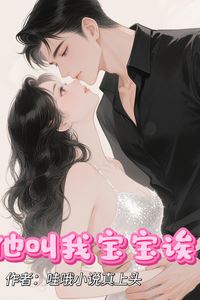
Gu Qingtong, a third-generation heiress and aspiring idol in the entertainment industry, is engaged in a business marriage with Yan Song, a marginalized half-brother of the powerful Yan family. The union is arranged to secure shares for the financially irresponsible Gu Qingtong, whose father has squandered the family legacy. However, after a car accident triggers a concussion, Gu Qingtong gains a fragmented awareness that she is a supporting villainess in a tragic romance novel. In the original storyline, Yan Song is a scheming man who marries her only to secretly favor the true heroine, eventually driving Gu Qingtong to bankruptcy and madness. Horrified by this fate, Gu Qingtong immediately severs the engagement, hiring a private detective to verify her suspicions about Yan Song's infidelity and hidden lover.

Her best friend, Yan Yijia, rushes to the hospital to confront the situation, unaware that Gu Qingtong is hiding the source of her revelation. Gu Qingtong attempts to navigate the fallout while managing her career, but Yan Song refuses to accept the breakup lightly. Desperate to salvage the alliance that would grant him entry into the Yan family business, Yan Song tracks Gu Qingtong to the hospital and attempts to forcibly restrain her. During the struggle, he assaults her, prompting Gu Qingtong to defend herself with a fruit knife, inflicting a wound on his hand before fleeing down the corridor.

In a pivotal turning point, Gu Qingtong collides with Yan Chi, the esteemed Grand Slam Best Actress and Yan Song's half-sister. Yan Chi, known for her aloof demeanor and reclusive nature, unexpectedly intervenes. She orders her butler to dislocate Yan Song's injured hand, effectively neutralizing the threat and establishing her dominance within the family hierarchy. Following this confrontation, Yan Chi privately proposes a new marriage alliance to Gu Qingtong, suggesting they replace the previous arrangement with a union between themselves.

Yan Chi claims she seeks the alliance solely to secure her inheritance rights within the Yan family, offering Gu Qingtong a secret marriage that will not interfere with her acting career. Despite Gu QingtongƆs initial hesitation due to her unrequited admiration for Yan Chi and her insecurity about her own status, she agrees to the proposal. The two families convene, where Yan Chi formally presents herself to Gu Qingtong's parents. Yan Song is publicly disgraced, stripped of his inheritance, and exiled from the Yan family, while the heads of both families accept the new union between Yan Chi and Gu Qingtong.

As the story progresses, Gu Qingtong navigates her new life as Yan ChiƆs fiancée while continuing to pursue her entertainment career. She encounters rivalry from peers and faces scrutiny regarding her professional competence. Meanwhile, Yan Chi maintains a careful distance, focusing on their political arrangement while gradually revealing deeper layers of her character. The narrative shifts from a straightforward escape from a toxic engagement to a complex exploration of power dynamics, family politics, and the evolving relationship between two women from vastly different social spheres.

Gu Qingtong uses her platform to improve her reputation, leveraging her connections to secure roles and challenge her rival, Yun Mingxuan. Yan Chi supports her from the shadows, utilizing her influence in the industry to protect their interests. The story highlights the contrast between Gu Qingtong's outwardly frivolous persona and her underlying resilience, alongside Yan Chi's cold exterior and strategic brilliance. As they prepare for their upcoming wedding, the boundaries between their contract arrangement and genuine affection begin to blur, setting the stage for future conflicts involving Yan Song's potential retaliation and the intricate power struggles within the Yan family lineage.

Latest Release
DateGroupRelease
2026-09-26knoxt c52
2026-09-26knoxt c51
2026-09-26knoxt c50
2026-09-26knoxt c49
2026-09-26knoxt c48
2026-09-26knoxt c47
2026-09-26knoxt c46
2026-09-26knoxt c45
2026-09-26knoxt c44
2026-09-26knoxt c43
2026-09-26knoxt c42
2026-09-26knoxt c41

Community Reviews

Rating(4 / 5.0, 329votes)
5 stars
110(33%)
4 stars
124(38%)
3 stars
95(29%)
2 stars
0(0%)
1 stars
0(0%)

Popular reviews

... Read More
Okay, so this whole scene is basically Gu Qingtong pulling a power move that completely flips the group dynamics, and I love it. She had this unused privilege sitting around—something she won from a live broadcast that lets her form or break up CP pairings—and everyone else had apparently forgotten about it. Even Bai Jin, who was practically gloating, had no idea what was coming. That moment when Gu Qingtong announces she wants to use it? Chef's kiss. The production crew was stunned, the other guests were stunned, and I was definitely stunned. What's clever is the setup. The entire previous round established this deduction logic where because Gu Qingtong left early due to fever but all three guys asked about her afterward, they automatically get grouped together. So you've got this triangle forming—Gu Qingtong, Yan Chi, and Chu Yu—and Bai Jin is slotted in as the toxic element. Bai Jin immediately starts going after Yan Chi's sore spot, saying things like "I thought you two were quite close" in that fake-cute way that makes my teeth ache. And Gu Qingtong's response? She doesn't just quietly sidestep it. She literally calls out to the director and uses her privilege to UNBIND herself from Bai Jin and kick her to another group. The reversal is beautiful because Bai Jin had been acting like she'd won, like this arrangement was perfect for her. One second she's smirking, the next she's been publicly humiliated on camera. And the way the narration frames it—"the slap in the face came too fast"—that's exactly how it felt reading it. Gu Qingtong also handles her explanation to the public really well, basically saying she's not trying to be mean but she finds Bai Jin's clinginess awkward and honestly, who can blame her? She's committed to the "iron straight girl" persona from day one, and this move reinforces that without her even having to try. But then the plot twist within the twist—that's the eye contact moment between Gu Qingtong and Yan Chi. Gu Qingtong does this selfless thing to comfort Yan Chi, expects some kind of grateful smile, and instead Yan Chi's gaze drifts to Chu Yu with that possessive tighten of the lips. The reader is left hanging on whether Yan Chi is actually jealous of Chu Yu or if this is just another layer of their complicated dynamic. And Gu Qingtong's internal monologue—"Don't look at me like that! My privileges are all used up!"—is both funny and a little heartbreaking. She gave everything she had in that moment and Yan Chi's reaction is... mixed?
... Read More
Okay so this chapter is honestly one of those moments that quietly restructures the entire story, you know? On the surface it's just a scene where Yan Chi sketches Gu Qingtong at a tourist spot. But if you look closer, three separate plot threads are converging here and it's almost invisible until you snap it all together. First thread: the portrait itself. Yan Chi draws Gu Qingtong crying, with tears on that teardrop-shaped beauty mark. She claims it's "creative liberty" but we already know from earlier chapters that Yan Chi's basement is literally filled with paintings of Gu Qingtong — crying, angry, pleading. So this public sketch isn't a sketch at all, it's a release valve. It's Yan Chi finally externalizing what she's been hoarding in private. The plot implication? She's coming undone, and the tension between keeping Gu Qingtong hidden and needing her visible is reaching a breaking point. Second thread: Gu Qingtong's side hustle. She borrows a camera, starts taking photos for Hanfu girls, and tries to earn money to feel equal to Yan Chi. This is a subtle but massive shift in the protagonist's arc. She used to be the passive one, the one being looked at. Now she's actively trying to stand on the same level. The line "The desire to stand on the same level as Yan Chi had never been so intense" isn't just a feeling — it's a plot catalyst. What happens when Gu Qingtong becomes financially independent? What happens when she stops being the dependent wife? And the third thread is the crowd. Yan Chi becomes invisible in the crowd while painting. Gu Qingtong can't even see her anymore. The physical separation mirrors the emotional gap between them, and the author is setting up a scene where they'll literally lose and find each other again. The crowd acts as both protection and barrier for Yan Chi — which means when that barrier falls, everything changes. I don't think the author is rushing anything here. Every detail serves dual purposes. That's craft.
... Read More
There are so many vivid sensory details in this passage that I want to sit with. The plain white pages held between Yan Chi's fingertips—that image haunts me. It's such an ordinary object but it carries the weight of someone's entire private emotional world. Gu Qingtong's fanfiction, printed on plain paper, becomes this physical artifact that Yan Chi examines with the same intensity she gives everything else. The visual of Yan Chi reading sentence by sentence, her expression unchanged except for her gaze drifting down the page—it's cinematic. You can practically see the red markings she's reading, the kiss descriptions standing out. And then she raises her eyes to look at Gu Qingtong's side profile, that “slightly chilly smile that didn't quite reach her eyes.” That description is perfect because it captures Yan Chi's entire personality—controlled, observant, calculating, but with something warmer lurking beneath the surface. The hot spring scene announcement adds this contrast too—leisure time promised but under the condition that they film their own footage, no restrictions on pranks. The production team has weaponized relaxation itself, turning every private moment into potential content. The environment shifts from outdoor task completion point to this intimate hot spring setting where cameras become the ultimate barrier and conduit between the characters.
... Read More
Let's talk about this setting because it's doing heavy lifting. A ski resort fitting room. Lockers, chairs, sponsored gear scattered around. Claustrophobic but anonymous—no cameras, no people. Perfect for intimate coercion. The author uses the space like a stage. First, the zipper sound. Then the jacket sliding off shoulders. The sweater that's too big but accidentally reveals everything. I'm obsessed with the visual of that white knitted sweater on Gu Qingtong's hips, the makeshift skirt situation, the safety shorts becoming visible. It's accidental nudity but charged with intention. Yan Chi could've just helped her change; instead she turns it into a slow reveal. And the boots! Tall ski boots that have to be unlaced, leaving calves exposed to the chill. The contrast between black socks and fair skin, the uneven lines accentuating her calves... this is fashion as foreplay. The chair in the middle becomes a throne, really. Gu Qingtong perched there, one foot dangling, Yan Chi looming. The physical proximity is suffocating in the best way—soft bodies touching, balance lost, leaning into each other. Even the socks matter. Yan Chi swaps Gu's socks for the program's spare pair, then makes her sit through the humiliation of having them put on while being admired. Every object in that room serves the tension. The lockers, the chair, the socks, the sweater. It's not just a backdrop; it's an active participant in the power exchange. And that final image—foot touching Yan Chi's knee, arch curved, skin pale-then-rosy—is so cinematic. I can see the lighting, the shadows, the quiet intimacy of a private moment that feels wildly public in its exposure.
... Read More
The external conflict here is straightforward—group assignments on a variety show, CP pairings, production rules—but the author keeps pulling the camera back to reveal that the real stakes are entirely internal and relational. Every move these characters make is layered with unspoken history, and that's what makes the tension so suffocating. Bai Jin's conflict with Gu Qingtong reaches its breaking point in this chapter, but it's not really about the show mechanics. It's about attention, about who gets chosen and who doesn't. When Bai Jin says "I thought you two were quite close" with that tilde at the end, she's not just being petty—she's genuinely confused and hurt that Gu Qingtong didn't come looking for her after the interview. Her entire arc on this show seems to be built around seeking validation from someone who sees right through her performance. Yan Chi's conflict is the most layered. She's possessive, proud, clearly hurt by something that happened previously ("we agreed to choose each other"—whose voice is this, Gu Qingtong's memory or Yan Chi's actual words?), and yet she can't bring herself to verbally express any of it. Her jealousy manifests as silent glares and tightened lips, directed not at Bai Jin but at Chu Yu, which adds another dimension to the conflict. Is she actually jealous of Chu Yu, or is Chu Yu just the safest target for emotions Yan Chi doesn't know how to direct elsewhere? Gu Qingtong stands to lose something too, though she'd never admit it publicly. By using her privilege to kick Bai Jin out, she's making a statement that could alienate producers, spark controversy, and complicate her relationships with other cast members. But she does it anyway, and the text makes it clear she doesn't care about the consequences. "She was not afraid of anyone or anything"—that line hit hard because it reframes everything. Her courage isn't absence of fear; it's indifference to the cost. The stakes escalate perfectly by the end when Yan Chi looks away from Gu Qingtong toward Chu Yu. After Gu Qingtong risked everything to protect Yan Chi's feelings, the person she protected responds with... what exactly? Possessiveness? Jealousy? Something else entirely? The uncertainty is what makes this chapter so gripping.
... Read More
There's a whole semiotics of hands running through this chapter that I can't unsee now. It starts with the most literal one: Yan Song's crippled hand, the one 'crippled because of' Gu Qingtong (or so Wu Suwei claims). The hand as instrument of harm, the hand as symbol of what was lost. But then Yan Chi is 'playfully scratching the warm and soft palm' of Gu Qingtong throughout the confrontation—a hand that's intact, connected, alive. Two hands, two different relationships to the same body part. Then there's the ring. Wu Suwei desperately trying to remove it as the truth comes out—the ring as a symbol of a false commitment, shed like a skins. It's almost ritualistic in how quickly she gets it off. But Yan Chi and Gu Qingtong aren't wearing anything visible. Their 'ring' is the hand-holding, the physical contact that says what words haven't officially said yet. The title 'Sister-in-law' itself is a linguistic trap. In the original Chinese context this was clearly designed to carry that double meaning—both a marital claim and a familial one. By having the crowd collectively understand the implication without anyone saying it outright, the author is exploring how language itself can be weaponized and deflected simultaneously. And then there's the billboard—falling from above, literally a sudden disaster—and Gu Qingtong pushing Yan Yijia out of the way. The same physics, inverted. What was meant to crush becomes the moment of connection. The childhood trauma that shaped their bond is recounted casually, almost carelessly, which feels like the author's way of saying: the things that change our lives often happen in seconds and are then folded into ordinary conversation. Yan Chi's 'melancholic emotion' at the end is the chapter's thematic climax. She's been present in Gu Qingtong's future but absent from her past, and the realization that she doesn't know the person she's fallen for entirely is both heartbreaking and honest.
See all reviews

Custom lists

See all custom Lists