I Am Not in Your Greenhouse
+Add to Custom List
Genres:
Novel Info
  • Author:
  • Status:Ongoing

Summary

... Read More

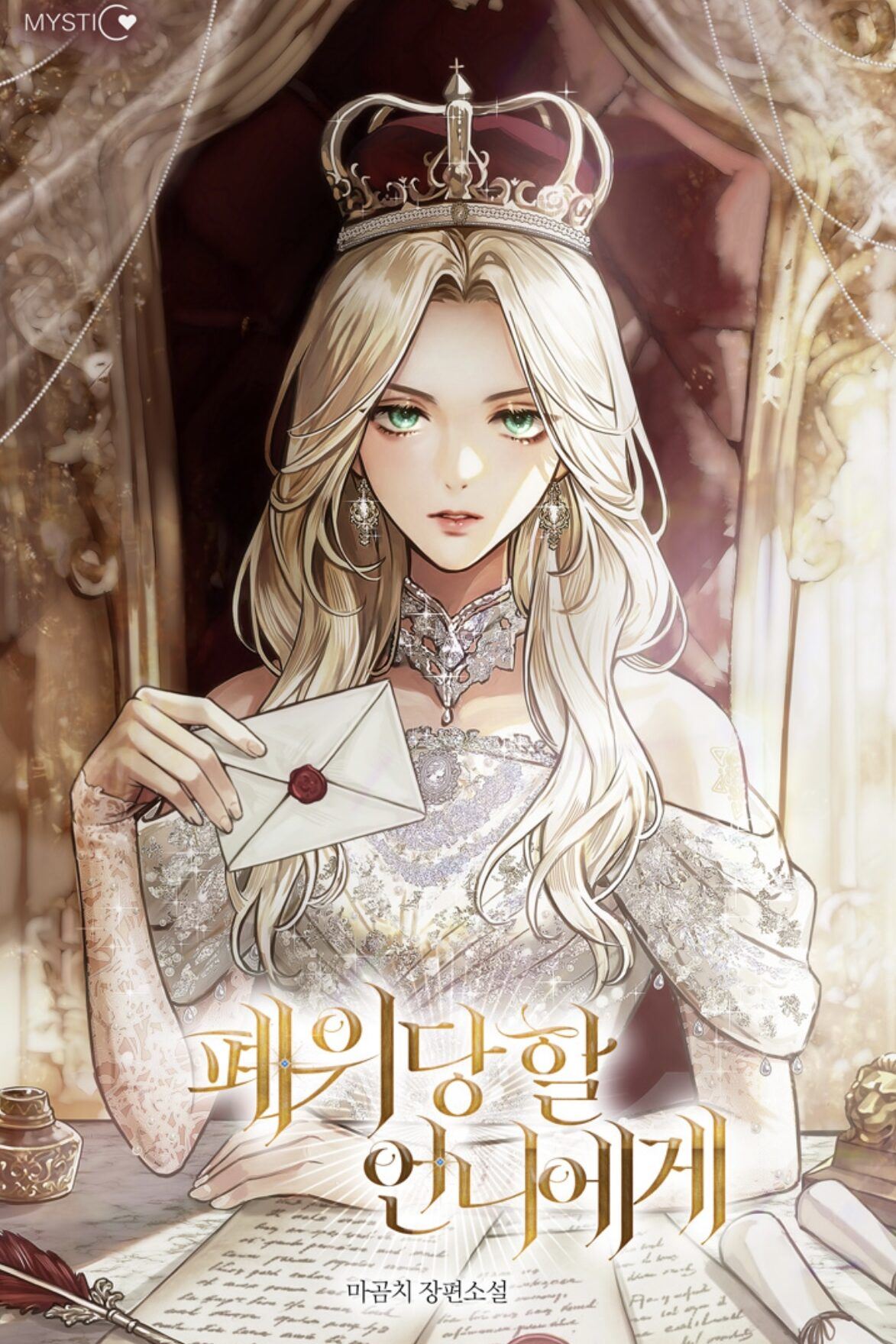
Radilt Brill is a twenty-one-year-old widow living in a dilapidated mansion in the capital. Her husband, Baron Lushen Sentangs, was murdered by a robber while buying her chocolate, leaving her with no children and minimal inheritance. The bulk of the title and property passed to his second brother, Fredo, who abandoned Radilt to care for their miserly mother-in-law, Merdea, and two younger siblings: the lazy brother Garden and the demanding sister-in-law Erite. Radilt survives on low-wage odd jobs as a flower sorter and perfume workshop clerk, enduring constant emotional abuse from her mother-in-law, who blames Radilt for Lushen’s death and treats her as worthless.

When Erite receives an invitation to the prestigious Garden, a social gathering for young adults, she demands money for a new dress. With no funds available, Merdea forces Radilt to attend the Plumen Party, a banquet for widows where she can receive sponsorship money. Radilt reluctantly goes, dressed in shabby clothes, intending to collect the funds for three months and then leave. At the party, she stands in solitude until Pendlore Duston, a wealthy and冷峻 nobleman known for his cynicism and refusal to marry, approaches her. Pendlore, pressured by his friend Cherse to find a companion who does not demand emotional responsibility, selects Radilt because she appears quiet, non-greedy, and free of romantic expectations.

Pendlore publicly declares his interest in Radilt, making a substantial donation to the party and escorting her to a high-end establishment. He offers her a contractual arrangement: she will act as his lover for three months in exchange for financial support and social shielding. Radilt, aware of her powerless position and desperate situation, accepts the proposal. Pendlore has her outfitted with expensive dresses and jewelry, transforming her appearance to match his standards. Their first dinner takes place at a luxurious restaurant featuring an elevator room, where Radilt nervously navigates high-society etiquette under Pendlore’s cold but observant gaze.

As the contract begins, Radilt returns to her oppressive home life, hiding the gifts from her critical family. Meanwhile, Pendlore finds himself unexpectedly intrigued by Radilt’s resilience and natural elegance beneath her plain exterior. His friends, including the angel-faced Judge Noia, tease him about his newfound interest, though Pendlore insists he seeks only a convenient, low-maintenance relationship. However, Radilt’s economic situation deteriorates rapidly when she is dismissed from both her jobs under suspicious circumstances, suggesting Pendlore’s influence extends beyond the party.

The story shifts focus to the growing tension between Radilt’s desire for independence and her dependence on Pendlore. While she initially views the arrangement as a mere means to survive and support her in-laws, Pendlore begins to question his own detached philosophy. He realizes that Radilt is not merely a tool for social convenience but a woman with depth and dignity. As they spend more time together, the contractual facade cracks, revealing underlying feelings neither is prepared to acknowledge. Radilt struggles with her self-worth, convinced she is only valued for her usefulness, while Pendlore confronts the loneliness he has long suppressed behind his cold exterior.

The narrative explores the power dynamics between the two protagonists. Radilt, accustomed to being treated as an object, finds herself navigating a relationship with a man who sees her as both a commodity and a curiosity. Pendlore, in turn, is forced to examine his prejudice against bloodlines and tradition, realizing that Radilt’s merit surpasses that of many high-born individuals he despises. The story builds toward a critical turning point where the boundaries between contract and genuine connection blur, challenging both characters to redefine their understandings of love, duty, and self-respect. Radilt’s journey from a submissive widow to a woman claiming agency forms the core emotional arc, as she must decide whether to remain in the safety of her arranged subservience or risk everything for a chance at true partnership.

Latest Release
DateGroupRelease
2026-10-03dusk blossoms c61
2026-10-03dusk blossoms c60
2026-10-03dusk blossoms c59
2026-10-03dusk blossoms c58
2026-10-03dusk blossoms c57
2026-10-03dusk blossoms c56
2026-10-03dusk blossoms c55
2026-10-03dusk blossoms c54
2026-10-03dusk blossoms c53
2026-10-03dusk blossoms c52
2026-10-03dusk blossoms c51
2026-10-03dusk blossoms c50

Community Reviews

Rating(0 / 5.0, 41votes)
5 stars
0(0%)
4 stars
0(0%)
3 stars
0(0%)
2 stars
0(0%)
1 stars
0(0%)

Popular reviews

... Read More
The imagery in this passage is just *chef's kiss*. Let me start with the cushion scene—Radilt clutching that goose down cushion beneath sunlight, only her green eyes blinking slowly, listening to the fabric whisper. It's such an intimate, domestic moment amidst all this high-stakes emotional turmoil. You can feel the warmth of that sunbathed down against her skin while her whole world is falling apart inside. Then the transition to the street—the moment the carriage drops her off and reality crashes back in. The narrator describes it perfectly: 'The neighbors' gazes stung.' She's wearing someone else's expensive dress, carrying roses from a man nobody in this neighborhood understands, stepping into a space where everyone already judges widows like her. And those red rose petals scattering on the worn, broken path? That visual of luxurious romance hitting the ground of her actual life? I physically felt that contrast. But the worst scene has to be the mother-in-law's entrance. 'A frosty voice pierced Radilt's back.' Merdea doesn't even let her speak properly—just drags her inside, slaps her across the face, calls her every name. The rose bouquet falls onto the broken stone floor. The juxtaposition of the beautiful roses and the broken stones mirrors Radilt's entire existence right there: grace landing in ugliness, again and again. And Radilt reaching reflexively toward those scattering petals—like even在被 abuse she can't help tending to beauty. That image is going to haunt me.
... Read More
Let me talk about symbolism for a sec because this text is RICH. The rose petal isn't just a romantic token—it's the ONLY thing in Radilt's world that was given to her without conditions, without expectation, without her having to earn it. Everything else in her life operates on transaction: she works, she gets criticized. She stays quiet, she gets slapped. She shows up, she's ignored. But that petal? It just... appeared. Fallen from somewhere, landing on dark wood, bright red like a spot of light. She doesn't even know if Duston meant for it to reach her. Maybe it was accidental. Maybe it was intentional. But it doesn't matter—because the ACT of receiving something beautiful without having to negotiate for it is revolutionary in her universe. And look at the other symbols: the four-horse carriage (status, power, everything she's excluded from), the tapestry metaphor (woman as decoration, useful only when hung properly), the white dove quote about love growing quietly like spring barley (hinting at something patient, hidden, inevitable). Even the wind—the spotted dog weathervane barking, the hat flying, the petals scattering. Wind is transformation. Wind is change. And at the end, when that carriage appears? The wind has finally pushed something toward her. The whole batch is about how objects and gestures carry meaning that words never do. Radilt collects these moments the way other people collect jewelry.
... Read More
I need to talk about the perfume workshop memory because WOW. Radilt is standing there in this glittering party, surrounded by women in bright dresses and all these fragrances — planana, rose, orange, pink merwool, Senia moss — and she starts IDENTIFYING them instinctively. Her body remembers what her mind has tried to bury. "A young man who came to her rural hometown in search of new fragrance materials. The feelings built up while they walked together along mountains, fields, and streams." And then immediately after: "But now, like a broken perfume bottle, only the fragrance remained, and even that was gradually fading and becoming blurred." I literally gasped. The metaphor is PERFECT — a broken perfume bottle. The moment is gone, the container is shattered, and all that's left is a ghost of scent that keeps dissipating. She built a life with Lushen, she cultivated something real, and now it's just... fading. She doesn't even remember what she looked like before. "The past and present, all dimly gray and dull." And THEN Pendlore appears and shatters whatever composure she had left. The emotional whiplash from tender memory to cold humiliation in literally two paragraphs. She goes from remembering a moment of genuine happiness to being grabbed by the wrist by a stranger who sees her as prey. I was so furious for her and so heartbroken at the same time. The worst part is Lady Rizan watching everything with this warm, knowing smile, treating Radilt's entrapment like it's some kind of romantic encounter. "Young men and women, they say a spark can ignite in an instant." SPARK MY ASHES. This woman has been running on fumes for years and someone just dumped her on the highway.
... Read More
Oh my god, Erite. First of all, let me just say: this woman is a NATIONAL TREASURE of awful human beings and I cannot stop quoting her. Her dialogue is SO distinct from everyone else. While Merdea speaks in sharp, judgmental cuts—"She's merely a temporary plaything"—Erite is ALL energy. ALL enthusiasm. She literally has "round cheeks flushed red with desire" while talking about her sister-in-law's possible arrangement. The line about Count Duston being "the husband every woman in the capital desires—why would such a man take in a poor widow?" delivered with that mocking laugh? I actually gasped. But what's fascinating is how the narration frames her words. Notice how often Radilt is described as "lifeless eyes" while Erite is "spirited," "bright," "passionate." The dialogue isn't just character voice—it's power dynamics. And then there's the butcher. Finally, SOMEONE who speaks plain. "You got really lucky, didn't you? Maybe you shouldn't come to our shop anymore." That's not cruelty, that's protection disguised as bluntness. And Radilt's response—"I have no intention of flailing about trying to grasp a passing breeze"—is one of the most elegant lines in the entire text. She's not naive. She's not desperate. She's清醒.清醒 and tired and still standing. The author gives every character a completely different mouth.
... Read More
I need to vent about Pendlore for a second because WOW. This man is terrifying and I hate that I can't look away. From the moment he appears — "Two blue-gray eyes that appeared commanding wherever they stood" — the power dynamic is established and it does NOT waver. He kisses her hand with a smile that doesn't reach his eyes. He comments on her expression when they're ALONE. He says "Yet here I am, looking only at you" like it's some sweet romantic line but it reads like surveillance. The stakes keep rising and Radilt keeps having less and less power. First it's the donation money hanging over her head — if she backs out, Lady Rizan will ban her and take back the prep money. Then it's the dinner itself, where she has to pretend to be happy while internally screaming. Then it's the reveal that he knows EVERYTHING about her family situation. EVERYTHING. She can't even have the dignity of privacy anymore. But what really gets me is the internal conflict. Radilt WANTS to resist. She thinks "There was never any choice from the beginning" — she's aware she's trapped. She tells him straight-up she has no desires and won't be greedy. She even looks him in the eye and says she won't change her life for a passing breeze. And yet — she still shows up. She still eats the crab. She still plays the part. The tragedy isn't that she doesn't want freedom. It's that she doesn't see a way to get it.
... Read More
There is SO MUCH going on symbolically in this passage and i am not okay. Let me unpack a few things because the author is clearly playing 4D chess with imagery here. First — the NET. "Like a fish tightly entangled in a net." Radilt describes her own situation in these terms. She's caught. Not by choice. And the sponsorship money that Lady Rizan gave her? Those aren't just funds — they're literally "heavy shackles being fastened to her ankles the moment the check changed hands." The charity is the cage. Every act of generosity in this world has a price tag attached to it, and Radilt is the one paying. Then there's the candle imagery — "She was trembling faintly like a precarious candle flame." A candle that could go out at any moment. That's Radilt in this society: a widow with no children, no real income, bound to in-laws who see her as a commodity. One strong wind and she's just... gone. Extinguished. And THE THREE STEPS. I keep coming back to this. Radilt steps back three steps (freedom, resistance, anger) and then walks back three steps (surrender, survival, choice within impossibility). Three steps is all the agency she has. Three steps is her entire universe of possibility. And she CHOOSES to walk back. That's not weakness — that's the most painful kind of strength there is. The perfume metaphor also works on a thematic level. A broken bottle — beauty destroyed but scent lingering. Radilt's life with Lushen is the broken bottle. The fragrance is what remains, but it's fading. And now this new, darker chapter is about to unfold in the carriage, in the darkness, with a man who sees her as both prey and puzzle.
See all reviews

Custom lists

See all custom Lists