Summary

... Read More

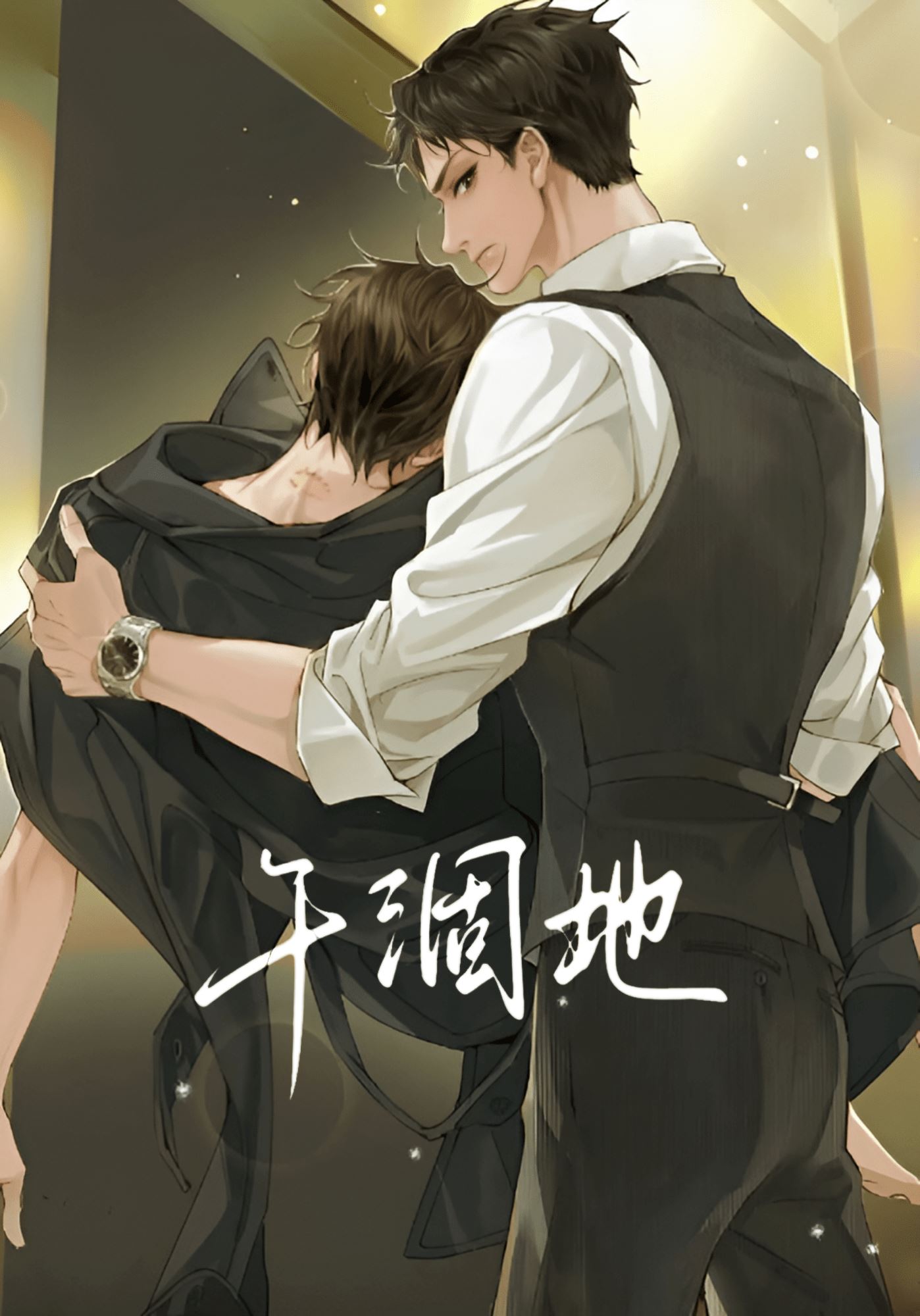
Li Shaochun, a decorated police officer who died in the line of duty, wakes up in a new body with a throbbing headache. He discovers he has transmigrated into the body of Cheng Ji, a nineteen-year-old college student working as a male escort at Moonlight Manor, a high-end establishment in Hong City. The original Cheng Ji is dressed in fishnet stockings and thigh-high shorts, selling his body to wealthy clients to pay for his mother’s critical medical bills. Li, maintaining his upright and honorable nature from his past life, is horrified by his new circumstances. He resolves to endure the situation only as long as necessary, determined not to compromise his integrity by serving male clients, despite the financial desperation of his new identity.

While in the staff restroom, Li hears a mechanical voice identifying itself as the Plot Administrator. The voice reveals that Li has entered a fictional world, specifically a low-quality BL romance novel titled "Cruel Passion: The Tyrant’s Jilted Concubine." Li is assigned the role of an insignificant extra with only five lines of dialogue. The Administrator explains that the plot is currently in motion: Shen Zimo, the secondary protagonist, is a bar server who has accidentally entered the private suite of Qi Beisong, the novel’s domineering male lead. According to the original storyline, Shen Zimo will offend Qi Beisong with a verbal misunderstanding, leading to his imprisonment, humiliation, and eventual development of Stockholm Syndrome. Li views this narrative as irrational and unjust, refusing to accept a plot built on forced love and psychological abuse.

When Manager Zhou attempts to keep Li confined to prevent him from interfering, Li escapes through a window and climbs the exterior of the building to reach the third floor. The Plot Administrator issues repeated warnings and eventually declares a plot collapse as Li breaches the suite. Inside, Qi Beisong is physically assaulting Shen Zimo. Li intervenes, striking Qi Beisong with a vase and subduing him using close-quarters combat techniques derived from his police training. He frees Shen Zimo, helping him escape through the bathroom window while fending off Qi Beisong, who recovers and attempts to fight back. Li defeats Qi Beisong again, securing his unconscious body and taking photos as leverage to ensure neither he nor Shen Zimo faces retaliation.

After escaping the manor, Li returns Shen Zimo’s coat and retrieves his own belongings, discarding his work phone to sever ties with his previous life. He visits his mother’s hospital room, observing her comatose state, and resolves to live a better life for both himself and the original Cheng Ji. Meanwhile, Qi Beisong recovers and discovers that Li evaded all surveillance cameras, indicating a high level of tactical expertise. Qi Beisong becomes obsessed with finding the man who defeated him, ordering his bodyguards to investigate Moonlight Manor’s staff records. The story shifts from a predetermined romantic tragedy to an open-ended mystery, with Li navigating his new reality while Qi Beisong hunts for the intruder who disrupted his fate.

Latest Release
DateGroupRelease
2026-08-11shanghai fantasy c23
2026-08-11shanghai fantasy c22
2026-08-11shanghai fantasy c21
2026-08-11shanghai fantasy c20
2026-08-11shanghai fantasy c19
2026-08-11shanghai fantasy c18
2026-08-11shanghai fantasy c17
2026-08-11shanghai fantasy c16
2026-08-11shanghai fantasy c15
2026-08-11shanghai fantasy c14
2026-08-11shanghai fantasy c13
2026-08-11shanghai fantasy c12

Community Reviews

Rating(4.1 / 5.0, 38votes)
5 stars
15(39%)
4 stars
13(34%)
3 stars
7(18%)
2 stars
3(8%)
1 stars
0(0%)

Popular reviews

... Read More
Let's talk about stakes, because this chapter raises them to ABSOLUTE MAXIMUM. On the surface, Cheng Ji is trying to save Shen Zimo from Qi Beisong. That's a clear, immediate threat — physical danger, time pressure, frozen fingers and all. But the author layers so much more on top. First layer: Cheng Ji vs. the Plot Administrator. This isn't just a voice in his head — it's a SYSTEM trying to enforce a narrative. And when Cheng Ji refuses to comply, the system collapses. But the cost? The administrator warns him: "You will face consequences." And then the author drops the bomb about the baby. The genius child that was supposed to be the heart of this story? Gone. Erased. And Cheng Ji is going to answer for it. Second layer: Cheng Ji vs. Qi Beisong. This isn't just a fight — it's a clash of worlds. Qi Beisong represents everything Cheng Ji is fighting against: the original plot, the forced romance, the power imbalance. When Cheng Ji knocks him out, he's not just saving Shen Zimo, he's breaking the story itself. Third layer: Shen Zimo vs. his own survival. He's terrified, disoriented, physically weak. Can he trust Cheng Ji? Can he climb down a building? Can he survive this night? The stakes are personal, narrative, and existential all at once. And the author makes sure we feel every single one of them.
... Read More
Okay so this whole sequence is basically Cheng Ji pulling off the most audacious thing I've seen in ages and I need to talk about it. He gets thrown into this body, barely has two hours of experience in it, and immediately decides to strip Qi Beisong naked, steal his clothes, and make off with a coat that—according to Le Le—was worth more than both of them combined. The irony of him thinking the coat was valuable while he'd just stolen hundreds of thousands is absolutely perfect. The author doesn't even need to spell it out; we just sit there laughing. But the real plot brilliance is in the escape. Cheng Ji returns the coat but makes the front desk wait thirty minutes—'they're busy inside'—which is such a casually brilliant lie. He buys himself time. He goes to the front desk, drops the coat, gives a fake storage number, and then vanishes. And get this: he specifically tells Le Le to say they're not close. He's already thinking three steps ahead, already severing ties before they even form. That's not panic. That's calculation. Then the taxi scene. He checks his phone, finds the hospital info, and then—this is the part that made me sit up—he smashes his own phone, removes the SIM, and tosses it. No trace. No way back. He's fully committed to this new life. 'Fourth People's Hospital,' he says, and the world shifts under him. The Lin Chong parallel is chef's kiss. The driver plays Peking opera about Lin Chong fleeing at night, and Cheng Ji literally mirrors it—betrayed, facing death, escaping into the cold. But then he turns it around: 'Do you know how I died?' and the driver is absolutely rattled. It's dark humor at its finest, and it also tells us everything about Cheng Ji's state of mind. He's not just running from Qi Beisong; he's running from his own past life, from the system, from the plot itself. And then Qi Beisong's side of the story kicks in, and we get this hilarious contrast—Cheng Ji is cold and exhausted on the mountain road while Qi Beisong is fuming in a bathrobe trying to figure out what the hell just happened. The plot is moving in two directions at once, and both are gripping. Who will find whom first?
... Read More
The dialogue in this section is so good I had to underline half of it. Let me start with the front desk attendant, who is genuinely the MVP of comedic relief here. She tells Cheng Ji: 'You gays shouldn't be wearing this kind of makeup. Don't say I taught you.' And then: 'Trust me, you look a hundred times better without it. You look like a flamingo.' This woman has no idea she's talking to the man who just robbed her employer's most dangerous guest, and she's just giving him fashion advice. The casualness of it is perfect. Then Cheng Ji's exchange with the taxi driver. The driver says something mocking—'How can someone like you appreciate traditional opera?'—and Cheng Ji fires back with this devastatingly poetic line about Lin Chong: 'A hero with an empty heart, unable to wield a sword to fight injustice, betrayed and facing life and death separations—that's hard to appreciate.' The driver is stunned into silence. Cheng Ji then drops the 'Do you know how I died?' line and the driver is absolutely terrified. This is dialogue doing three things at once: characterizing Cheng Ji as sharp and dangerous, advancing the Lin Chong parallel, and making the driver (and us) question whether this kid is insane or just very, very tired. Qi Beisong's dialogue is all short, sharp commands—'Shut the door,' 'Lock the door,' 'Forget it,' 'Shut up.' He's furious, humiliated, and he doesn't have the energy for anything else. It contrasts perfectly with Cheng Ji's more measured, almost philosophical speech. Two different voices, two different worlds, and they're about to collide. And Le Le's 'Are you Cheng Ji?'—so random, so honest, so human. She doesn't know what to say, so she says nothing at all. That's also great dialogue writing.
... Read More
"Why don't you think before you act? Who's even the target audience for this story, huh?" I am deceased. I have left the chat. Cheng Ji's fourth-wall-adjacent commentary is the best thing about this entire novel. But seriously — the dialogue here is so distinct for each character. Qi Beisong speaks in threats and commands. His lines are short, sharp, authoritative. "Next time, think before you speak." "Save it for later!" He doesn't negotiate, he doesn't explain — he just asserts. Shen Zimo? His dialogue is fragmented. Broken. "I—I've never tried it before." "Who are you?" He stammers, he trails off, he can barely form complete sentences. And that's not bad writing — that's EXACTLY what trauma sounds like. But Cheng Ji... Cheng Ji has VOICE. He's sarcastic, he's practical, he's occasionally sweet in the most accidental way. "If you ever encounter something like this again, learn to read the room." "You should head home early. Remember not to come to places like this again. There are no good people here." That last line — that's not just dialogue, that's CHARACTER. Cheng Ji has seen the world. He knows what these places are. He's trying to protect Shen Zimo not just from Qi Beisong, but from the whole culture that produced him. And the plot administrator's dialogue? Cold, mechanical, increasingly desperate. It contrasts perfectly with Cheng Ji's warmth and humanity. The AI vs. the human, and the human is winning.
... Read More
Let me just say — the pacing in this section is absolutely ruthless and I am obsessed. Chapter starts with Cheng Ji outside in the freezing cold, calculating his options. Thirty seconds to assess the building. Then the climb — and the author makes us FEEL every second of it. The numb fingers, the weak body, the plot administrator buzzing like a fly in his ear. We're sweating along with him. Then BOOM — he's inside, the administrator collapses, the world starts changing. Cut to the living room, Shen Zimo terrified, Qi Beisong about to lose his mind. The fight happens fast — vase to the head, sandal to the face, done. No drawn-out battle, just brutal efficiency. But here's where the pacing gets clever: after the rescue, when they're climbing down, the author SLOWS everything down. Shen Zimo's trembling hands, the sheet unraveling, Cheng Ji's warning about reading the room. We get breathing room. Then — punch to the back of Cheng Ji's head. Qi Beisong is awake. The tension snaps back to maximum. The final fight scene? It's over in a few paragraphs. Cheng Ji slips, falls, gets up, and the chapter ends mid-action. No resolution, no cleanup, just pure momentum. I had to immediately open the next chapter. This is how you write tension. The author knows exactly when to speed up and when to slow down, and the reader is never allowed to get comfortable.
... Read More
"Who are you? Why are you helping me?" I've read this scene five times now and it still wrecks me. Shen Zimo is dangling from a sheet three stories up, half-dead from fear, and his first question isn't about his own safety — it's about Cheng Ji. Who is this person? Why do they care? And Cheng Ji's answer? "I'm nobody important, no need to remember me." NO. No, that's not how this works. You just knocked out the most powerful man in the city to save a stranger. You climbed three floors in freezing temperatures with frostbite setting in. You are NOT nobody. But here's what makes this so emotionally devastating — Shen Zimo doesn't believe him. Look at his face. "Lips trembling slightly, but said nothing." He knows Cheng Ji is lying. He knows this person matters, even if Cheng Ji refuses to name himself. And the whole rescue sequence? It's not just physical danger — it's emotional intimacy forced by circumstances. Shen Zimo has to trust Cheng Ji completely. Cheng Ji has to trust Shen Zimo to follow instructions. They're tied together literally and figuratively. The sheet connecting them is the most romantic object in this entire novel and I will die on that hill. The author also doesn't shy away from the messiness. Shen Zimo is clumsy, scared, slow. Cheng Ji gets frustrated but keeps going. This isn't some polished fairy-tale rescue — it's two broken people trying to survive together, and that's so much more powerful.
See all reviews

Characters

See all characters

Custom lists

See all custom Lists