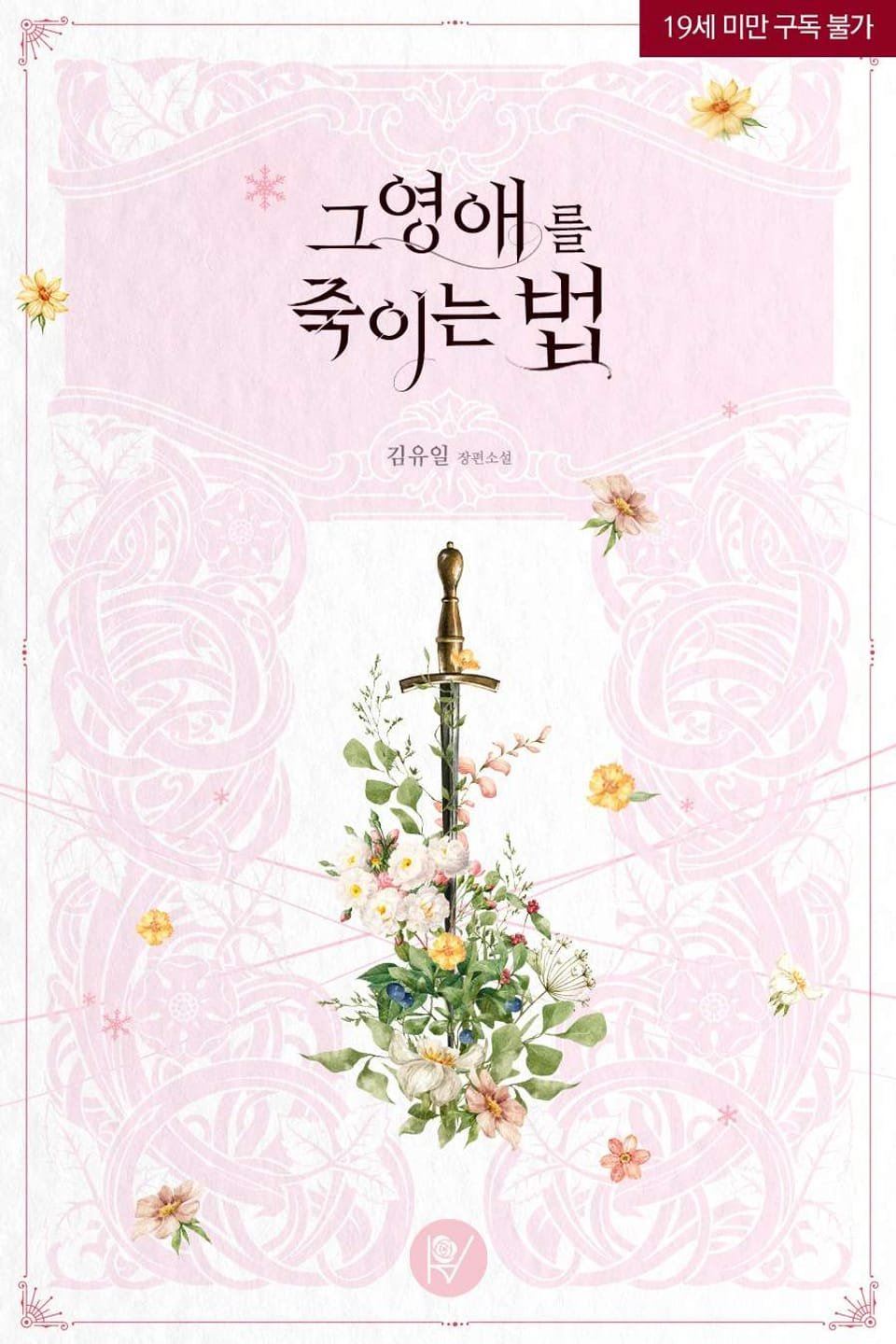
How to Kill That Young Lady
+Add to Custom List
Genres:
Novel Info
  • Author:
  • Status:Ongoing

Summary

... Read More
Riena, the daughter of the late Viscount of the Triad Household, is the victim of familial betrayal and systemic exploitation. Following her father's death, the family's wealth and status crumbled under the mismanagement of her half-brother, Joel. Desperate to recoup his gambling debts, Joel sold Riena to an aging Count, a transaction she endured with forced compliance while traveling in a carriage bound for her wedding. Her journey was violently interrupted by an ambush on a forest road, where armed men attacked the coach and killed her tutor. Riena was knocked unconscious and kidnapped rather than rescued.She awoke in a dilapidated mansion that served as a den for criminals and traffickers. Her captor was Kyle, a brutal and sadistic man who had purchased her from Joel. Kyle’s demeanor was cold and predatory; he viewed Riena not as a person but as an object of amusement and utility. Immediately upon her awakening, he subjected her to severe sexual violence, stripping her of her dignity and physically abusing her to break her spirit. Riena’s noble upbringing offered her no protection in this environment, leaving her trembling and terrified as Kyle asserted absolute dominance over her body and will.The power dynamic shifted when pimps from the local district arrived, demanding Riena be delivered as originally intended. Kyle refused to sell her, revealing that he had already taken her virginity and changed his intentions. Instead, he held an auction in his lobby, forcing the pimps to bid against one another. Despite their efforts, no bidder reached the price Kyle demanded, effectively cancelling the sale. This decision left Riena trapped in Kyle’s custody indefinitely, intensifying her isolation and hopelessness.A critical turning point occurred when Kyle brought Riena into the sparring ring where Joel was being held captive and tortured. Kyle handed Riena a dagger and ordered her to kill her brother. He promised that doing so would secure her freedom, framing it as a transaction: Joel’s death in exchange for Riena’s release. Joel, who had orchestrated her initial sale, struggled and screamed behind his gag, fully aware that his sister was being forced to execute him. Overwhelmed by conflicting emotions—resentment toward Joel for his cruelty and horror at the act of fratricide—Riena hesitated. In a moment of fractured resolve, she lunged forward, but her aim wavered. Instead of striking Joel, she slashed Kyle’s hand.Kyle reacted with manic laughter rather than anger, finding Riena’s resistance entertaining. He interpreted her attempt on his life not as a threat, but as a sign of character. Rather than executing her or selling her to a higher bidder, he decided to keep her as a personal captive, referring to her as a "puppy" he intended to train. He punished her by binding her wrists to the bedpost and subjecting her to psychological and physical torment, forcing her to beg for forgiveness and submit to further sexual abuse. The narrative concludes with Riena trapped in a cycle of violence and humiliation, while Kyle visits his father, the Duke, revealing his continued entanglement with high society despite his criminal activities.
Latest Release
DateGroupRelease
2026-10-03dusk blossoms c33
2026-10-03dusk blossoms c32
2026-10-03dusk blossoms c31
2026-10-03dusk blossoms c30
2026-10-03dusk blossoms c29
2026-10-03dusk blossoms c28
2026-10-03dusk blossoms c27
2026-10-03dusk blossoms c26
2026-10-03dusk blossoms c25
2026-10-03dusk blossoms c24
2026-10-03dusk blossoms c23
2026-10-03dusk blossoms c22

Community Reviews

Rating(0 / 5.0, 42votes)
5 stars
0(0%)
4 stars
0(0%)
3 stars
0(0%)
2 stars
0(0%)
1 stars
0(0%)

Popular reviews

... Read More
The stakes in this book are terrifying because they're so quietly escalating. Riena isn't fighting a dragon or a war — she's fighting to stay human in a place that profits from her destruction. And the real horror is how normal everything looks on the surface. Nice water. Good food. A kind maid. Meanwhile, beneath the mansion, men are beating each other to near-death for entertainment, and Kyle is watching from above, using Riena's body as a prop for his own amusement. What makes me genuinely anxious reading this isn't the violence — it's the bureaucracy of it all. There's a system here. Maids know their roles. The master comes and goes. There's a routine. Riena is trapped not just by walls but by normalcy. How do you escape a place that isn't overtly threatening in every moment? Where someone brings you soup and asks about your skincare routine? The internal conflict is where this book bleeds. Riena's body responds to Kyle even as her mind revolts. She wants to leave but knows she can't. She wants to hate him completely but finds moments — like the bath, like the meal with Isabel — where she feels something almost like peace. And that guilt, that split between body and will, is written with such honesty it hurts. Then there's the external threat we barely see but always feel. The underground fighting ring isn't just background texture — it's the philosophy of this mansion made visible. Power through pain. Entertainment through suffering. Kyle is the pinnacle of this system, and Riena is both its victim and its most precious possession. When he offers her a 'wish' in exchange for performing on his lap with the entire household watching, that's not just cruelty — it's a test. Can she commodify herself enough to survive? And her answer — 'I'll do it' — breaks me because she has nothing to lose. The closing line where Kyle cuts off Isabel mid-sentence? That's the stakes in miniature. One word, one gesture, and the fragile human moment is crushed. Every interaction in this book could be the last one before everything changes again.
... Read More
Okay so I need to talk about that scene where Riena finally snaps. You know the one—she's been reduced to this ghost of a person, being force-fed like an animal, treated as livestock by both Kyle and those eerily compliant maids. And then he brings out Joel. Her brother. The guy who SOLD her. And makes her choose: kill him or never leave. 'I want to leave. I don't want to live in this hell.' That line hit me like a truck. Because honestly? I understood her. Not that I approve of what she does—but the desperation was so real. Her fingers were trembling, she was staring at the knife, at Kyle, at Joel, and her whole world had shrunk to this one impossible choice. The fact that she almost did it—the almost is what killed me—showed how far she'd been pushed. But then she lunges at Kyle instead. And he just... laughs. Of course he laughs. He's delighted she tried to play along before pivoting. What wrecked me most was reading about her emotional state throughout. She doesn't scream or beg anymore. She just... hollows out. The maids wash her, dress her, feed her like she's furniture. And when she finally snaps and throws the food on the floor? They clean it up robotically and bring more. That's when she starts laughing—'a hollow laugh.' That word hollow isn't accidental. She's hollowed out. And the worst part? She's starting to wonder if this is her life forever. Or if he'll just kill her when he gets bored. There's this one moment I keep circling back to—when she's standing in front of the mirror after he's done with her. 'Is this really my face?' Her cheeks have sunken, her body is covered in bite marks, and she barely recognizes herself. That's not just trauma—that's identity erosion. The girl who used to exist is being systematically erased, and the emotional core of this entire arc is watching someone fight to stay human in a place designed to strip humanity away. And Joel. God, Joel. He's gagged and screaming and she's looking at him with this expression I can't even parse. Part of her wants him dead. Part of her still sees her brother. That duality tore through me. She loves him and hates him and that's what makes her collapse under the weight of it all. The relationship between Riena and Kyle is pure predator-prey, but what interests me is how she's starting to look back at him. Not with submission. With something sharp. After she stabs at his throat, 'Her gaze looking straight at him was as sharp as the knife she'd just gripped.' That shift—from victim to someone who fights back, even if it's futile—is where the emotional current gets most powerful. She hasn't found hope yet, but she's found fury. And fury might be the only thing keeping her alive.
... Read More
Okay I need to talk about Isabel because honestly she is the reason I didn't put this book down after the first chapter. This girl shows up, sees Riena absolutely destroyed, and instead of treating her like merchandise or a problem, she just... kneels down and asks if she's okay. In a place where everyone else treats Riena like an object, Isabel looks at her like she's a person. And the details! When Riena says 'eat with me,' and Isabel tries to refuse but her eyes literally track the food and she's starving — and then she says 'I ate earlier' but clearly hasn't — and then Riena insists. That moment where Isabel wipes her mouth with the back of her hand and looks like a actual child? I cried. Not dramatic tears but that weird quiet stuff where your throat closes up. The contrast with Kyle though — holy. He PLACES her beside Isabel intentionally because 'being with someone her age would be fastest' for attachment. That's not kindness. That's calculated. He observed that she laughed with Isabel, that she showed vulnerability, and he noted it. The narration says 'He felt irritated for no reason and threw off the blanket.' Irritated? Or threatened? Because for once Riena was having a moment that wasn't about him. I also noticed how Riena and Isabel's relationship shifts subtly. At first Riena is polite, distant, still wearing her noblewoman manners despite everything. By the meal scene, she's telling the girl to speak casually, to call herself by name. She's giving Isabel the dignity she herself was stripped of. That's growth, even if it's tiny. But here's what worries me — when Kyle appears at the doorway mid-conversation and calls Riena 'my puppy' in that voice, her body physically stiffens. That's not just fear. That's conditioned response. Two years with this man has rewired something in her nervous system. And Isabel? She freezes too. Both of them are trapped, just in different ways.
... Read More
The dialogue in this chapter is absolutely vicious and I mean that as the highest compliment. "You should be spreading your legs and acting cute—that wouldn't even be enough." Right at the beginning, Kyle drops this line and suddenly you know exactly who you're dealing with. No subtlety, no hedging. The author doesn't make him sound sophisticated or charming—he sounds like a man who has never once had to consider anyone else's humanity. But what's fascinating is how Riena's voice changes throughout. At first she's screaming, fighting, swearing: "You, sh*t!" "Let go of this!" By the end, after the assault, after the ankle break, after days of silence—her dialogue is reduced to single words. "Yes." "What should I say?" Even when she asks a question, it's not really a question. It's resignation dressed up as language. The author does something incredible here: Riena's shrinking dialogue mirrors her shrinking sense of self. Every time Kyle exerts more power, she has less to say. And yet—the moments she DOES speak hit harder because they're so rare. Isabel's voice is different entirely. Practical, flat, almost clinical: "I heard the wounds are severe." "The master said he didn't break your ankle. So rest assured." She speaks like someone who has made peace with impossibility. There's no dramatic tension in her lines because she's already mourned everything she needed to mourn. And Kyle's dialogue is where the author really flexes. His lines oscillate between tenderness and terror in the same breath: "Say it with your own mouth. That you won't run away again" vs. "Good. If you run away again, it won't end with your ankle. Next time it's here." The narrative voice itself is cold and unflinching. It doesn't moralize. It doesn't flinch from describing violence. It just... reports. Which makes it infinitely more horrifying because the reader is forced to sit with these moments without any emotional guidance from the narrator.
... Read More
Okay so can we just talk about how absolutely BRUTAL this tutor character is? Like. She's supposed to be teaching Riena how to be a Countess? But she literally SMACKS an old woman across the face for defending her. That slap echoed in my head for like ten minutes after I read it. Riena literally froze. I couldn't even breathe reading that part. And then the tutor just... CONTINUES like nothing happened. She doesn't even flinch. Just keeps lecturing about the Count's bedroom preferences while the nanny is probably dealing with a split lip. That's not discipline, that's sadism wrapped in a powdered wig. But the REAL relationship that got me is between Riena and her nanny. When the nanny shouts 'Our lady has not received such vulgar lessons!' - I literally gasped. This woman has spent her whole life caring for Riena, and the moment Riena is in danger, she throws away her own safety. And Riena's reaction? She shields the nanny. Even though SHE'S the one being sold off, SHE'S the one losing everything - she still puts herself between the nanny and that pointer. 'The unwavering smile calmed the nanny's heart a little, though it also made her worry even more.' - THIS LINE. Why does the author write things like this? It's that perfect description of how love works when you're powerless. You smile so the people you love don't worry, even when YOU'RE the one who should be terrified. And the tutor says 'From now on, Miss Riena is no longer the sister of the head of the Triad Household—she is the Countess.' What does that even mean? She's trying to erase Riena's identity. Strip away everything that makes her who she is. But then Riena breaks down and whispers 'I'm sorry. I wasn't thinking clearly.' - and the tutor just... uses it against her. Forces her to apologize so she can CONTINUE the lesson. That's manipulation at its worst. This isn't a story about women being educated. This is a story about women being broken and remade into something that serves other people's desires.
... Read More
There are so many layers beneath the surface of these chapters. The most immediate theme is dehumanization—but the author handles it through imagery rather than exposition, which is what makes it resonate. Let's start with the mirror. Early in the sequence, Riena stands before it and sees 'cheeks had sunken hollow' and asks 'Is this really my face?' The mirror is classic symbolism—self-recognition, identity, the moment when external reality finally forces internal acknowledgment. But here it's inverted. She's looking for herself and can't find her. The reflection shows what the abuse has done: not just physical marks, but the erasure of self. This isn't vanity; it's existential horror. The person she was supposed to be—the daughter, the sister, the free woman—has been replaced by something barely recognizable. The closed room is another loaded symbol. Riena is 'locked only in this room of this enormous mansion.' The paradox matters. The house is vast, full of spaces and people, but she occupies none of it. Her world has shrunk to four walls and a bed. The window 'wouldn't open.' This isn't just practical imprisonment; it's symbolic of her psychological state. She can't escape because escape has become unimaginable. Even the purple twilight outside is unreachable—a beautiful boundary she can observe but never cross. Food becomes a symbol of control and resistance. The maids force-feed her not just for health but for submission. 'That's how you'll survive, young lady.' Eating becomes an act of compliance. When she refuses and sweeps everything to the floor, she's asserting the only agency left: the ability to reject nourishment. The maids' response—cleaning up and bringing more—is chilling because it shows the system cannot tolerate refusal. Even starvation is managed. Then there's the knife. Oh, the knife. It's offered as a tool of choice, but it's really a test. Can she become what he needs her to become? A murderer? A survivor? Someone who will play by the rules of his world? When she grabs it and moves toward Joel, the knife represents the perversion of family bonds. She was supposed to kill her brother—the one person who should be protected. Instead she redirects it toward Kyle, the true monster. The blade becomes a symbol of redirected rage, of choosing the right enemy even when the choice is rigged. The sparring ring itself is rich with symbolism. Two brothers fighting each other for entertainment. Blood and sweat on display. Kyle watching with amusement while his own subordinate's brother competes. This mirrors Riena's situation perfectly: family turned against family, violence commodified, loyalty destroyed for profit. The ring is where the abstract theme of betrayal becomes physical spectacle. And that final image—Riena pressed to the floor, glaring up at Kyle with 'gaze as sharp as the knife'—feels like the birth of a new symbol. Not submission, not yet broken. Something hardened. The chapter ends not with despair but with transformation. The hollow girl in the mirror is gone. In her place is someone who will fight back, even if fighting means dying. The riverbank scene with Kyle's father adds another thematic layer: generational complicity. The father built his power through political murder; the son does it for profit. Same cruelty, different aesthetics. The author seems to be asking: can you escape systems of violence when they're woven into family, culture, and power itself? Riena's personal struggle mirrors this larger question on a microcosmic scale.

See all reviews

Custom lists

See all custom Lists