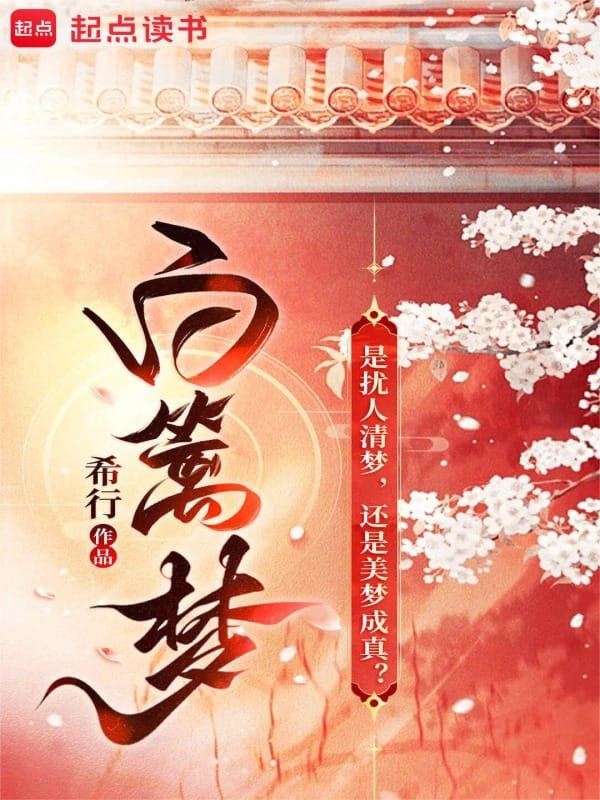
How To Kill Someone With A Tea Fork
+Add to Custom List
Genres:
Tags:
Novel Info
  • Author:
  • Status:Ongoing

Summary

... Read More

Irina Russ is a dedicated court physician serving at the royal palace, characterized by her quiet demeanor and frequent presence in the infirmary. Unlike her more social colleagues, she works excessive night shifts to save money for her own home, driven by a strained relationship with her family, particularly her younger brother Bill, who is a knight returning from war. The story begins during a celebratory banquet marking the king's military victories. Irina leaves the infirmary to treat a minor injury at the party, then takes a shortcut through a garden maze while carrying a slice of cake. There, she encounters Maverick Pride, the King's childhood friend and the Royal Guard Commander, known as the Strongest Knight. Maverick, who is hunting assassins targeting the royal court, mistakes the tea fork in her hand for a weapon and ambushes her.

Maverick grabs Irina by the collar, believing she intends to assassinate him. He questions her aggressively, threatening to sever her arm if she does not reveal who sent her. Irina, terrified and confused, is forced to defend herself when Maverick raises his sword. Seizing a momentary distraction caused by fireworks, she kicks him in the groin and strikes his head with her medical case before fleeing. Maverick is left incapacitated on the ground. When guards arrive, Irina accuses Maverick of being the murderer, pointing to the bodies of the assassins he had already killed. Maverick identifies her as the female assassin and orders a city-wide search for a blonde woman with a mole under her eye, mistakenly believing her hair appeared blonde under the moonlight.

Irina escapes the palace with the help of a guard who harbors secret affection for her. Upon returning home, she discovers that her brother Bill has been recognized by Maverick and is eager to join the Royal Guard. Bill describes Maverick as a cruel and relentless superior who vows to kill anyone who opposes him. Realizing she is hunted by the very man her family admires, Irina covers the distinguishing mole under her eye with makeup and continues her work, hoping to avoid detection. For a month, she lives in fear, changing her appearance to pass identity checks. Meanwhile, Maverick’s obsession with capturing the tea fork assassin intensifies, causing political tension as the King eventually orders him to stop the fruitless search.

The situation escalates when Irina is summoned to treat the Queen, who is accompanied by Maverick. Maverick recognizes Irina despite her disguise, having recalled the details of the encounter. He publicly accuses her of being the assassin, dragging her before the King. Irina pleads her innocence, explaining the misunderstanding, but Maverick remains unconvinced, interpreting her defense as deceit. The King declares Irina innocent due to lack of evidence but is intrigued by Maverick’s unusual fixation. Following the verdict, Maverick begins monitoring Irina personally, appearing in the infirmary daily to observe her. He justifies this behavior as surveillance, causing distress to Irina and resentment among her colleagues who blame her for inviting his wrath.

Irina attempts to reason with Maverick, asking him to stop his harassment. He initially agrees, but soon resumes his nightly visits, claiming it is the best time to detect suspicious behavior. Over weeks, a tense dynamic develops between them. One night, Maverick arrives intoxicated after a dinner with his subordinate Bill. During this encounter, Irina, exasperated by his persistent stalking, bluntly asks him if he likes her. Maverick finds the question hilarious and mocks her, placing a banana peel on her head as a final dismissal. He then stops visiting entirely, seemingly to avoid further embarrassment or misunderstanding.

Despite Maverick’s withdrawal, he experiences an inexplicable sense of loss and anxiety. He finds himself unconsciously heading toward the infirmary, realizing his routine has been disrupted. The narrative concludes with Maverick accepting various social invitations to fill his time, including one hosted by Bill, indicating that his life remains inextricably linked to the family he once sought to punish. The initial conflict of mistaken identity has shifted into a complex web of surveillance, psychological tension, and unresolved attraction, setting the stage for further developments in their relationship.

Latest Release
DateGroupRelease
2026-10-03dusk blossoms c1

Community Reviews

Rating(0 / 5.0, 45votes)
5 stars
0(0%)
4 stars
0(0%)
3 stars
0(0%)
2 stars
0(0%)
1 stars
0(0%)

Popular reviews

... Read More
I need to talk about the storage room scene because I am STILL not over it. So Irina has been playing hide-and-seek with him for days, right? She's literally dodging him every time he shows up with flowers. And then one night she hides in the storage room and thinks she's won again, opens the door, and HE'S THERE. The tension is INSANE. First he kisses her — not even gently, he just covers her mouth and pushes in — and then when they stumble into the storage room and she nearly falls, he catches her and somehow it looks like SHE pounced on HIM. And then he kisses her HAND. In the dark. With those sparkly eyes. And his first words are 'Are you hurt anywhere?' after literally trapping her. I'm screaming. Irina's face doing that thing where she wants to blame him but feels sorry for him at the same time — that contradiction is everything. And then he just sits up and says 'Let's kiss once more. Properly this time.' WITH NO SHAME. Absolute zero self-awareness and I am HERE for it.
... Read More
The centerpiece of this whole arc is Maverick's willingness to change his surname. Not just to win her over — that would be normal romance stuff. He's actually going to SEVER himself from the Pride family name, the name that has been 'a pillar supporting the Kingdom of Ashin for generations.' King Ashin literally calls it out: 'Why would you do something so wasteful?' And Maverick doesn't flinch. But here's the deeper thing — Maverick misread the entire rejection. Irina said becoming 'Irina Pride' would be burdensome, that the Duke wouldn't approve. She was using social hierarchy as an excuse to say no. But Maverick heard it as 'she wants me but the name is the problem, so I'll change the name.' Every step he takes to accommodate her is built on a fundamental misunderstanding. The name change represents both his devotion and his blindness. He's erasing his entire family's legacy for someone who literally just rejected him, because in his head, her polite 'thank you for understanding' proved she was grateful. The irony is almost painful — he's solving a problem that doesn't exist while ignoring the actual problem right in front of him. And then when everyone finally makes him hear the word 'rejection,' his world fractures so completely that he takes it out on everyone around him before doubling down and just... pursuing her harder. The theme here isn't really about love conquering all. It's about how love makes you stupid, and how stupid devotion can look like either the most romantic thing or the most concerning thing depending on which side of the story you're on.
... Read More
I need to process what just happened because my heart rate is not recovering. Let's trace the stakes here because the author absolutely weaponized escalation. At the start, Irina's problem is simple: she accidentally kicked a very powerful man in the groin and fled. The stakes are imprisonment or execution if she's caught. She develops a survival strategy—hide the mole, avoid Maverick, keep working. It's tense but manageable. Then the Royal Guard starts questioning people. Violetta gets dragged in. The palace is on lockdown. The stakes have multiplied—now there's public scrutiny, false accusations, and the danger spreads to people around her. She feels GUILTY that Violetta suffered because of her. That's a new emotional stake layered on top of the physical danger. Then a WHOLE MONTH passes and things seem to settle. The king tells Maverick to stop. She starts feeling safe. And THEN—the queen summons her. To the queen's private chambers. Where Maverick is ALREADY SITTING. The stakes just went from 'possible capture' to 'face to face with the man who wants to tear me apart' in a single sentence. And Maverick's threat—"Show me your face before I tear your throat out"—is delivered casually, almost conversationally, right after asking her name like he's just making small talk. The contrast between the domestic setting (the queen's bedroom, tea, casual conversation about marriage) and the lethal tension underneath is what makes this scene so suffocating. What I love most is that Irina is trapped not by walls or guards, but by social expectation. She CAN'T just run. She's a court physician attending the queen. She has to stay, to serve, to kneel. The very role that gives her purpose is also what pins her in place. And Maverick, the hunter, doesn't even know his prey is three feet away from him. The suspense here is excruciating in the best possible way.
... Read More
There's a symbol running through these chapters that I keep coming back to, and it's the handkerchief. On the surface it's just a romantic gesture—knights carrying tokens from their ladies. But strip away the medieval aesthetics and what are we really seeing? It's a physical object representing emotional vulnerability. Maverick can face down any opponent in the tournament but he can't ask a woman for a scrap of fabric without turning it into this monumental quest. The handkerchief becomes increasingly charged as the chapters progress. At first it's a joke—"I have a rabbit-like fiancée." Then it's a point of conflict—she refuses, he gets genuinely upset. Then it's recontextualized entirely when we learn his actual motivation: "The winner would receive a flower crown. Maverick wanted to give that crown to Irina in front of everyone." The handkerchief was never about the gesture. It was about LEGITIMACY. About claiming her publicly. About transforming an arranged engagement into something real. Then there's the body itself as symbol—I know this sounds extreme but hear me out. Irina has kept her body completely off-limits for six months as a form of control in a situation where she has very little. Her body is the one territory she governs. When Maverick says 'Keeping such a lewd body off-limits all this time,' he's unintentionally naming what this has always been about. It's not about repression—it's about autonomy. The line 'I swear on our future child, I won't put it in' is wildly problematic in one reading and deeply tender in another. Taken charitably, it's Maverick using the one thing that terrifies Irina (full consummation, loss of control) and swearing he won't take it—not because he doesn't want to, but because her willingness matters more than his desire. The child he mentions isn't a threat; it's a pledge. He's saying 'I want that future with you so badly that I won't ruin it.'
... Read More
I need to talk about this one dog because Riri is honestly the most important supporting character in this entire passage and I will die on that hill. First we get this whole origin story from Mrs. Russ—emaciated, limping, patchy fur, basically a living skeleton that everyone said should just be put down. Irina brought it home anyway, named it Riri, nursed it back to health over ten years, and it's now this healthy, energetic old dog that greets its owner like they've been apart for years instead of eight hours. The detail about Mrs. Russ putting Riri outside temporarily because they have a guest, and then pointing with her eyes toward the food bowl in the corner of the kitchen? That's such a specific, domestic visual. I could literally see this kitchen. And then the payoff—Maverick eats his roast beef slowly while listening to stories about this dog, clearly fixated on something he can't quite name yet. Then Irina comes home late, thinks everyone's asleep, takes her hair down, lets it flow to her waist, and immediately Riri launches itself at her. She falls, they roll around, she's whispering to the dog in this soft voice, and Maverick is standing right there in the shadows behind the reception room door. The composition of that scene is cinematic. Dark hallway, Irina on the floor with the dog, Maverick silhouetted in the doorway, and behind him you can see Mrs. Russ with her hand on her forehead and Bill looking like he wants to murder his own sister. Four characters, two rooms away from each other, all experiencing completely different emotions in the same spatial frame. I love this author's visual instincts.
... Read More
The pacing in these chapters is masterful and I want to talk about how the author builds tension not through action but through accumulation. It starts FAST — Maverick storms in, grabs Irina, accuses her, drags her away. This is kinetic, immediate, almost slapstick in its absurdity. The tea fork accusation alone is comedic gold. We're laughing. We're relieved because clearly this can't be serious — who gets accused of murder by a utensil? But then the King intervenes and the pace SLOWS down dramatically. The interrogation scene is long, measured, full of unanswered questions. Ashin speaks gently to Irina but his thoughts are sharp and suspicious. He's not just processing her story — he's analyzing it. And the reader is left wondering: does HE think she's guilty? Or does he think she's hiding something? Then comes the real horror: the daily surveillance. The author doesn't dramatize this. He just... states it. "After discovering that the tea fork assassin was Irina Russ, Maverick appeared before her eyes at least once every day." One sentence. That's it. No fanfare, no drama, just the slow suffocation of being watched. This structural choice is genius because it mirrors Irina's experience. The initial accusation was a spike of terror. The aftermath is a dull, constant pressure. You don't notice the water getting hotter until you're already burned. The chapter ends on a pivot — Irina asking to speak with Maverick privately. This is a classic midpoint structure: the victim stops running and decides to confront the hunter. But we don't get to see that conversation yet. We're left hanging, which means I absolutely need to read the next batch immediately. The pacing between comedy and genuine threat is also worth noting. The tea fork scenes are funny. The physicians blaming Irina is darkly comic. But underneath every joke is real danger. Maverick COULD have her executed. His threats are recorded: "the court physician should forfeit her life." The humor makes the menace more palatable but also more insidious — we laugh, then we remember she could actually die.
See all reviews

Custom lists

See all custom Lists