Summary

... Read More

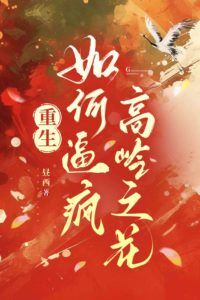
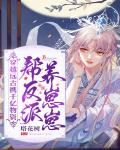
Yu Mingyao lived a life of quiet suffering in her first existence, married to Xie Zhuoguang, the cold and aloof sixth son of the Duke of Xie. Though they shared a mutual affection born from their youth at the Pei family academy, their marriage was poisoned by Xie Zhuoguang’s deep-seated jealousy and mistrust, particularly regarding her cousin Pei Shang. For seven years, Yu Mingyao endured emotional neglect and barrenness, believing her efforts to connect with him were futile. The tragedy culminated in the destruction of her family; her grandmother died of sorrow, and her twin brother, Yu Jinnian, perished in a scandal that ruined his reputation. In her final moments, Yu Mingyao realized the depth of her love for Xie Zhuoguang only after losing him, regretting that their misunderstanding had cost them everything.

Upon waking, Yu Mingyao found herself reborn fourteen years old, traveling to the capital with her grandmother, Shi Luo, and her brother, Yu Jinnian, before her fateful marriage. Determined to avoid the pain of her past life, she resolved to reject both Xie Zhuoguang and Pei Shang, seeking only a peaceful life in her hometown of Suzhou. She deliberately distanced herself from the Pei family, avoiding the pond incident that had previously sparked her infatuation with Pei Shang. Instead, she focused on maintaining a low profile, dressing modestly and refusing to engage in the social climbing that had defined her previous attempts to win approval.

However, her attempts to remain invisible failed to deter those around her. During a shopping trip to Yunlou, she encountered both Pei Shang and Xie Zhuoguang. Pei Shang, initially mocking her background, became increasingly captivated by her confident and playful demeanor, which contrasted sharply with the timid girl he remembered. Xie Zhuoguang, meanwhile, felt an inexplicable disturbance whenever he looked at her. Her lingering glances and the sorrow in her eyes haunted him, triggering a possessive jealousy he could not explain. He purchased an expensive golden hairpin for her, a gesture of affection he had never shown in his previous life, yet she politely declined it, deepening his confusion and frustration.

Yu Mingyao enrolled in the Pei family academy alongside her brother, seeking to prove herself academically rather than socially. When Pei Shang organized a betting pool on who would rank last in the upcoming exams, Yu Jinnian and Pei Biyu placed bets on Yu Mingyao to finish in the top three. Xie Zhuoguang, disguised by an anonymous note, placed a substantial bet on her success as well. During the exams, Yu Mingyao displayed remarkable competence, writing essays with clarity and skill that surprised her peers. Her performance shattered the assumptions of those who had underestimated her, including Pei Lianzhu, who had openly mocked her.

The turning point arrived during the archery examination. Yu Jinnian’s horse panicked, and he was thrown into a dangerous gallop toward a steep slope. Without hesitation, Yu Mingyao pursued him on horseback, risking her own safety to rescue him. She successfully pulled him from the beast just before a fall, sustaining injuries in the process. Xie Zhuoguang and Pei Shang arrived moments later to find her cradling her brother, her face scratched but her expression one of fierce devotion. Witnessing her courage and selflessness, Xie Zhuoguang’s perception of her shifted irrevocably. He saw not a scheming woman, but a brave and loyal sister, which intensified his desire to understand her. Pei Shang, too, was drawn to her spirit, his earlier mockery replaced by genuine admiration and protectiveness.

As the story progresses, the dynamics between the characters begin to unravel the knots of the past. Yu Mingyao remains guarded, determined not to repeat her mistakes, but finds herself increasingly entangled with both Xie Zhuoguang and Pei Shang. Xie Zhuoguang, driven by a need to atone for his past indifference and to understand the source of her sorrow, begins to pursue her with a persistence that contrasts with his usual coldness. Pei Shang, no longer the frivolous dandy, becomes a steadfast ally and confidant. The narrative sets the stage for Yu Mingyao to navigate a new path, one where she might reclaim her family’s honor, protect her brother, and potentially find a love that is built on mutual respect rather than misunderstanding.

Latest Release
DateGroupRelease
2026-08-11shanghai fantasy c28
2026-08-11shanghai fantasy c27
2026-08-11shanghai fantasy c26
2026-08-11shanghai fantasy c25
2026-08-11shanghai fantasy c24
2026-08-11shanghai fantasy c23
2026-08-11shanghai fantasy c22
2026-08-11shanghai fantasy c21
2026-08-11shanghai fantasy c20
2026-08-11shanghai fantasy c19
2026-08-11shanghai fantasy c18
2026-08-11shanghai fantasy c17

Community Reviews

Rating(4.3 / 5.0, 11votes)
5 stars
6(55%)
4 stars
2(18%)
3 stars
3(27%)
2 stars
0(0%)
1 stars
0(0%)

Popular reviews

... Read More
The stakes in this chapter are so layered and I love how the author escalates them. On the surface, it's about Yu Mingyao and Yu Jinnian getting in trouble for the horse incident at the academy. Madam Shi makes them kneel. Simple, right? But then you realize this isn't just about disobedience—it's about a grandmother who has lost her son and daughter-in-law and is terrified of losing the grandchildren too. Her voice is low, so low that Yu Mingyao can feel the pain beneath it. She says "Have you thought about me—a white-haired old woman—if I had to hear more bad news?" But the REAL stakes are internal, and they're crushing. Yu Mingyao has been reborn with the knowledge of her tragic past life. She knows that if she stays in the capital, she'll end up married to Xie Zhuoguang and die young, trapped in that snowstorm. Every day she stays is a day she's walking toward that fate. And yet—she can't just leave. She's bound by family duty, by her grandmother's love, by the fact that her brother is here and she needs to protect him. The riding competition itself is a microcosm of this struggle. She's injured, her arm is hurt, but she grits her teeth and competes anyway. She wins first place despite everything. And then the very next day, she's walking back to the academy pale and lifeless like a "withered daffodil" because her deepest wish—going home—is finally coming true, and it feels like a defeat instead of a victory. That's the kind of emotional complexity that keeps you up at night.
... Read More
I need to process what just happened in this chapter because the author dropped the most chilling reveal and I am still recovering. Yu Mingyao is helping Yu Jinnian up after the horse incident, and she looks up and sees a hand reaching toward her. A well-formed hand, pale as jade, with a small brown mole on the third knuckle of the index finger. And then the text says: "familiar, and unfamiliar." Her heart thumps violently. She follows the hand up and locks eyes with Xie Zhuoguang's deep black ones. And the narration just says: "A shiver ran through her. Cold. So cold..." This is the moment from her past life, isn't it? The rescue at Yunlou. The tiny notebook with feelings. She realizes that in this life, he has fallen for her even sooner and more deeply than before. But instead of warmth, she feels COLD. Because she knows where this path leads. She knows what happens. And the contrast between that memory and this moment—her previous life's tragic ending versus this present where she's trying so hard to walk away—it's rendered in just a few lines and it's devastating. The evening scene with Madam Shi is also beautifully atmospheric. The courtyard is deathly silent except for Yu Jinnian's cheerful voice, the bolt dropping as soon as they enter, the moonlight rising and then the fierce energy ebbing away into exhaustion. These sensory details make the world feel so lived-in.
... Read More
I have to talk about the dialogue in this chapter because it's incredibly efficient. Every line reveals character without a single wasted word. Let me start with Pei Shang because his voice is so distinct. He's the class clown, the loud one, the one who whistles and cheers and makes bets. But when he asks Yu Mingyao "You're really leaving?" those four words carry "endless emotion, spoken with layers of unspoken meaning." And then she just says "Mm. I'm going back" with a sweet smile, and his response is physical—his eyes droop, he slumps over his desk "like a defeated rooster." The boy who never takes anything seriously just got crushed in three sentences. Yu Jinnian's dialogue is equally revealing. He's supposed to be the goofy, forgetful younger brother, but when he talks to his grandmother, he's surprisingly articulate: "She said it so many times—she doesn't want to stay. We're the ones holding her here, claiming it's for her good." That line hits like a truck. He sees his sister clearer than anyone, even though he pretends not to notice. And Madam Shi's voice—her progression from fury to tears to remorse to resolve is all in her dialogue. She starts with "Kneel" and ends with "Alright. Help Mingyao up. Tell her—we'll pack up and go back to Suzhou!" The shift from authoritarian grandmother to vulnerable woman who realizes she's been wrong is rendered entirely through what she says and how she says it. No narration needed.
... Read More
I have to stop and appreciate the visual writing in these chapters because the author really knows how to paint a scene. The lake description alone is worth the price of admission: "A lake, clear as a mirror, shimmering in the sunset. Wildflowers filled the air with fragrance." That's it. Two sentences. But I was THERE. I could see the golden light on the water, smell the wildflowers, feel the grass beneath me. But what really elevates the worldbuilding isn't just the pretty descriptions—it's how the author uses sensory details to show emotional states. When Yu Mingyao lies down beside Pei Shang, the text says: "The air in her nostrils was crisp and fresh, with the scent of fragrant grass. It was completely different from the rich perfumes of sandalwood, flowers, and medicinal herbs she was used to." This is such a smart detail. She's been surrounded by expensive, heavy perfumes her whole life—in the Pei mansion, in the capital—and here, in this hidden place outside the city, the air smells like grass and freedom. The contrast between the two scents tells you everything about her emotional journey without a single word of exposition. And then there's the riding scene. The old horse that stops every ten steps, the tattered straw hat, Pei Shang galloping ahead on his fine steed turning back to laugh at her. It's comedic, yes, but it's also deeply atmospheric. You can see the quiet fields, the chickens clucking, the old farmers herding buffalo. The farther they go, the more remote it becomes, and Yu Mingyao starts feeling fear—not because anything bad is about to happen, but because this is the first time she's ever been somewhere so untouched by society's rules. When Pei Shang says "There's no one around. No one will gossip and say you lack proper decorum," that's not just dialogue, that's the author telling you what this place represents: freedom from the constraints that have governed her entire life. The final image of the chapter—Yu Mingyao staring at the carved ceiling of her wooden bed, the same bed she's slept in for three years up until her marriage—is haunting. Seven years have passed. The bed is a relic. And she's leaving it behind.
... Read More
Let me just say this: the author understands how to write unspoken tension like nobody's business. Xie Zhuoguang sits with his BACK to Yu Mingyao the entire time in that classroom scene. He doesn't turn around. But his ears? His ears are doing the talking. The narration says he grew "even more tense" and that his full attention focused on his ears and back, "as if he had been cast into darkness, and the person behind him was his only salvation." I AM NOT OKAY. And then Pei Shang asks if she's really leaving, and she smiles at him—soft, sweet, like water ready to spill—and his ears turn bright red. She tells him she's going back to Suzhou, and then casually drops that she won't be coming back either. Pei Shang's spirits plummet like a stone. But Xie Zhuoguang? He's sitting right there, hearing her voice, imagining her rosy lips moving, and he's drowning in this bitter iron-tinged jealousy. The text literally says "he could almost taste blood in his throat. So bitter. So iron-tinged." What I love is how Pei Shang and Xie Zhuoguang are both reacting to the same moment from completely different angles. Pei Shang went from resistance to admiration so fast he didn't even see it coming. And Xie Zhuoguang? He's the infamous Minister of Justice in the future—who could silence crying children with his name—and right now he's just a boy sitting with his back turned, unable to face the girl who's leaving him behind. The contrast is devastating.
... Read More
There's so much symbolism packed into this chapter and I need to unpack it. The recurring image of the moon is huge—it appears during the kneeling scene, during the grandmother's prayer, during the morning walk. Moonlight is this constant witness to Yu Mingyao's private suffering. It's cool, beautiful, detached. Just like her situation: outwardly composed, inwardly devastated. The withered daffodil metaphor for Yu Mingyao sitting in the classroom is chilling. She's still beautiful—"still beautiful, but lifeless." She's a flower that's been drained of color by something invisible. And then there's Pei Shang, who in her memories was the "infamous and blood-soaked Minister of Justice—whose mere name could silence crying children." The contrast between his current wild, arrogant youth and his future self is a running motif. He's already showing cracks—his family ruined, his home gone—and yet he's the one who tries to make her smile on cold nights. He's a symbol of resilience, of rising from devastation. But the deepest symbol is probably that hand with the mole. Xie Zhuoguang reaching out to her. In her past life, that hand pulled her into a tragedy. In this life, it's reaching for her again, and she has to decide whether to take it or pull away. The mole is "familiar, and unfamiliar"—the same hand, but a different context, a different choice. That tiny detail carries the weight of two lifetimes of fate.
See all reviews

Characters

See all characters

Custom lists

See all custom Lists