How to Avoid Debut - Reviews

How to Avoid Debut
+Add to Custom List
Sort
Add review
... Read More
I need to talk about the uncle because this man has given me some of the funniest dialogue in the entire series and I am not okay. "Anyone would think you're part of the editing team, uncle." — deadpan observation from the protagonist, perfectly setting up the absurdity to come. "That's what I'm saying. Plus, the chief editor only drinks Java Chip Frappuccino." — the uncle, treating corporate gossip like it's state secrets, and honestly? I respected him for it. Then the wallet shake. The man pulls out his wallet, shakes it a few times, and we KNOW there are only a few bills left. This is visual comedy at its finest, and the dialogue that follows—"I must be crazy to put you through all this trouble… I should have participated myself. Then at least the 33rd place would be confirmed!"—is peak self-deprecating humor that somehow makes you love him more. And the hot water dispenser threat turned into a bribe! "I can't buy the convenience store in front of your house, but I'll set up a mini convenience store inside your house. I'll even bring in a perfect hot water dispenser for ramen!" This man is negotiating with his own nephew using kitchen appliances as leverage and I am DEAD. Meanwhile, the Jun and Jigu scene: "You really have no fun, hyung." Short, sharp, perfectly captures the generational gap without any exposition. The dialogue does ALL the work. No narration needed. The author's voice is consistently wry and observant, never preachy, never over-explaining. Every character sounds like they have something to lose and something to hide, and that's what makes the conversations crackle.
... Read More
I need a minute. 'I really love your dance, senior.' Four sentences and my entire chest collapsed. What made this hit me so hard isn't even the words themselves — it's the fact that Jigu says this EVERY DAY and the protagonist has basically built a wall around themselves where Jigu's genuine admiration is the one thing that consistently gets through. And then in this moment, when they're at their most vulnerable, sick and crying from a fever, Jigu doesn't try to fix it or make it better. They just... see them. The line about 'just seeing you back on stage is already impressive' is quietly devastating because it implies they know about the practical exam disaster without anyone having to say it out loud. That's the kind of friendship that makes you want to scream at a page. And the protagonist's realization that their 'carefully concealed past feelings were abruptly exposed by a sudden bout of the cold' — literally the coldest metaphor ever and also the most accurate one I've ever read. Being sick and suddenly unable to maintain all those emotional defenses is something I have personally experienced and it is NOT fun.
... Read More
Okay, let me start with that opening line because I literally sat up and went—what? Reciprocity in human relationships was good? Since when is this a novel about transactional affection? But then reading further, it makes SO much sense. The protagonist is this quiet, careful person who measures every interaction like it's a math equation. Give and receive, same amount, same intensity. Don't pour affection into someone who can't interact back. That's not just a philosophy, that's a survival mechanism for someone who's been hurt or disappointed before. And then—BAM—he's at a fan sign, drowning in this wild, chaotic, unreciprocated love from thousands of fans screaming for his idols. He's standing there in his school uniform, mask pulled down, fully immersed, and for one glorious moment the reciprocity doesn't matter because the energy is just... so pure. The members remember him. Jay hyung remembers his name. Jeonghun hyung laughs at his pronunciation. It's everything his philosophy says shouldn't be possible, and he lets himself believe it. Then he falls out of bed. Not a gentle wake-up, not a dream sequence fade—physical, painful, awkward falling out of bed at his age. Embarrassing. The dream was so vivid, so real, that his body couldn't handle the transition. The fall is almost symbolic, isn't it? He's someone who lives between worlds—the disciplined dancer, the quiet high schooler, the secret fan who saves money for three hours to buy albums and write tickets. And now his uncle is calling to pull him into yet another world: the idol industry itself. What I find really interesting is the opening about wasting affection on someone who can't interact. The entire premise of the show his uncle is offering is exactly that—a program that turns ordinary people into idols. People who give affection to something they can't fully control or reciprocate. Is he about to learn that some things are worth pouring yourself into even when the returns aren't guaranteed? I don't know yet, but the symbolism is already hitting me.
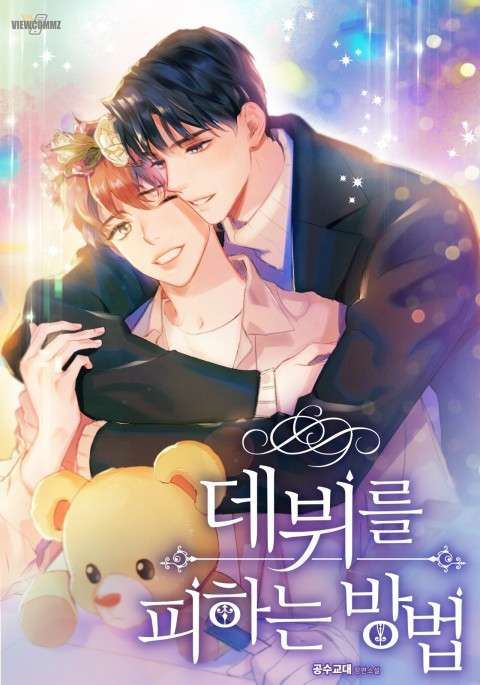
... Read More
'The world is ending, it's ending!'—and honestly? The drunk man wasn't wrong. This whole passage is about a world that has decided to destroy a kid for something he didn't do. The recurring image of the PHONE—Jigu fiddling with it, its dying battery, the malicious comments it carries—is such a pointed symbol. This device that connects us is also the weapon that's tearing him apart. And then there's the SCHOOL UNIFORM. He's still a high school student, formally dressed, but he can't even WALK THROUGH THE SCHOOL GATE. The institution meant to shelter him has become a place he cannot enter because of what the world has done to him there. The lemonade itself is interesting too—it's cheap, it's a deal, it's everything ordinary and normal—and yet it's the anchor that keeps this scene from floating away into pure melodrama. Reality keeps intruding. Also: 'We're each headed towards our own dreams, so there's no need to go around broadcasting that we're brothers.' That line about performance of identity versus actual relationship—it's the thesis of the whole book I think.
... Read More
I am not okay with how the author handles emotional beats here because they're so understated yet they wrecked me. Let me explain. Jigu hands Hahyun a water bottle. That's it. That's the entire gesture. But the narrator has us recall that earlier Hahyun told him not to cry because his face was swollen from eating ramen, and now she's sitting with that memory and feeling embarrassed. A WATER BOTTLE. How is a water bottle emotionally devastating? But it is. Because it means Jigu remembered she might be thirsty. It means he paid attention. And it means Hahyun is painfully aware that she hurt his feelings before and he's still being kind anyway, and she doesn't know how to process that kind of quiet generosity. Then there's the uncle. That thumbs up moment. Everyone else is celebrating—'Looks like we did okay!'—and Hahyun is standing there internally short-circuiting. She's surrounded by people who care about this outcome and she's the only one who doesn't quite share the feeling. The emotional isolation of being the person who doesn't want to be there while everyone else is giving everything—that's the real heartbreak here. Not romance. Not betrayal. Just the quiet ache of feeling fundamentally disconnected from people who are desperately trying to connect with you.
... Read More
There's this one concept that keeps echoing through the entire chapter and I can't shake it: SCREEN TIME. It's literally the currency of the survival show, the thing everyone is fighting over, but I think the author is using it as something much deeper. The anonymous forum poster claims Hahyun is the PD's pick — and the fans immediately reframe this absurdly, defining "PD's pick" as "someone with a very serious lack of screen time, or the screen time was stolen by a dog next door." They're so angry about the injustice that they've created an ironic reinterpretation of the term itself. But underneath the humor, there's something real here about visibility and worth. In a world where you're only as good as your footage, what does it mean to be erased? Then there's the fancam itself — Hahyun watching himself on screen, analyzing every movement, noting where his singing got lost in the mix. He's literally confronting his own mediated image, the version of himself that exists only through technology. And his uncle? His uncle is the FOOTAGE — the bouncing head, the striped shirt, the presence behind the lens that nobody notices but is somehow holding everything together. The final image of the chapter is Hahyun's phone lighting up with Jun's message, pulling him out of this spiral of self-scrutiny and back into the messy, unfiltered world of human connection. The theme isn't just about fame or success — it's about who gets to see you, who chooses to watch, and what it costs to perform for people who aren't actually looking.
... Read More
Okay so this chapter is basically one big setup sequence and honestly? It's intriguing how the narrator is participating in what feels like a manipulation tactic disguised as a birthday surprise. The writer handed over this script that supposedly has 'just enough' provocation for a hidden camera segment, but we all know what these shows really do—they escalate. And the narrator seems aware of it. 'I wondered if I was the only one taking it seriously.' That line hit different because it's not just about plot mechanics, it's about moral discomfort. The three hidden camera plans listed out—birthday surprise, quitting drama, ghost prank—show how formulaic and almost careless the whole operation is. But here's the thing: the narrator is buying a cake from a bakery NEAR THEIR HOUSE. Not just any cake. This isn't some producer-ordered prop. This is personal. And then the uncle's reaction—sighing at the cake box FIVE TIMES—almost made me laugh out loud. Meanwhile the narrator is quietly plotting to pull a surprise on Kim Seongwon with Hwiyoung's help, and I'm sitting here wondering who's actually manipulating whom. Because let's be real, Kim Seongwon isn't just some contestant. He's the hot topic. The one nobody can control. And the narrator? Well, they were 'considering quitting' a month ago. Now they have friends. Now they're in on something. What's really going on here?
... Read More
There are three symbols in this chapter that keep echoing in my head. First: the clothes torn off ‘as if they were shackles.' Not just dirty costumes or sweaty rehearsal gear—he's removing the physical embodiment of the day's performance. Every layer is a constraint. Second: the ‘chill' he tries to fend off under the covers. It's not just bodily cold; it's the emotional temperature drop after hours of scrolling through hatred, betrayal, and Performative outrage. Third: the silent phone. He turns it to silent mode, lowers the brightness, places it down. He's not ignoring the world; he's creating a boundary. The chapter is obsessed with thresholds—between public and private, between participation and withdrawal, between the noise of the internet and the ache of the body. Even the ‘unnecessary ache' is telling. It's unnecessary because there's no physical injury, yet it's there because emotional contagion doesn't require direct contact. You don't have to be Seongwon to feel the violence. You don't have to be a fan to feel the betrayal. The symbol that ties it all together is the gift card. A cake sent as thanks, but also as peace offering, as bribe, as silent communication when words would be too heavy. It's love language filtered through transaction. And the uncle's reply—‘Stop the terror'—is the closest thing to vulnerability in the entire chapter.
... Read More
There's this one detail that completely sold me on the atmosphere of this chapter — the narrator fell asleep on the floor because "the floor was warm enough." Can we talk about how specific and telling that is? It's not a grand description of a luxury apartment or a dramatic bedroom. It's a person who is too tired, too distracted, too emotionally wrecked to even bother moving to the bed. The floor is warm. That's the whole scene. Then you cut to the filming set — lights, cameras, the PD barking instructions, five alarms that all failed, the taxi driver reading their mind about the traffic. The sensory shift from the lonely apartment at midnight to the high-pressure, hyper-visible environment of the show is jarring in the best way. You can feel the brightness of the set lights, hear the rushed footsteps, see the survival stickers suddenly appearing on people's chests like badges of honor. The scene with Hwiyoung standing stiffly in front of the camera, pressing his eyelids to hold back tears while worrying about his makeup, is cinematic gold. Every detail serves the moment — the careful composure cracking under genuine emotion. This world feels so real because it's built from these tiny, precise observations rather than sweeping descriptions.
... Read More
I need to talk about THIS moment. The narrator is standing on stage after the second performance, exhausted, probably still catching their breath, and suddenly — "Hahyun! Debut! Please debut! I love you!" — this woman in the front row just absolutely loses it for them. And the narrator's reaction? They didn't do some idol thing. They just... remembered her. 'I etched her fervent voice into my memory.' That's it. That's the whole emotional peak of these chapters for me. Not some grand confession or dramatic confrontation, just a random fan's raw shout hitting the narrator right in the chest and landing somewhere deep. And then afterward, sitting in the waiting room dumbfounded, the narrator has this quiet realization: 'I realized why people want to become idols. This is what it feels like. The stage where you can only receive favor.' No fighting, no schemes, just pure unearned love from a stranger. That hit me harder than any romance scene ever has.
... Read More
So this batch does something really interesting structurally. It starts IN MEDIA RES with the producer seething, moves into the practice room chaos, lets us breathe through the dance and vocal part selection, and then — BAM — cuts to the taxi phone call with Uncle delivering basically the emotional climax of the entire arc. The transition from the bright energy of 'we nailed the choreography!' to 'we're going to fail and I might as well open a convenience store' is such a tonal whiplash and I love it. The author knows exactly when to accelerate and when to brake. During the practice scenes, sentences get shorter, more fragmented — 'One round with the guide recording, one round with the MR, and one round acapella. The singing continued without pause' — it mimics the relentless repetition of idol training. But then the Uncle scene slows right down, gives us that weary laugh, the bank account comment, the memory of stir-fried pork belly three months ago. It's a whole flashback embedded in a phone call. And ending on 'Do you not remember when I stopped eating and drinking for three days?' with the text cutting off mid-sentence? That's not just a chapter break, that's a gut punch. The pacing here is doing heavy emotional work.
... Read More
There are so many layers to unpack in this chapter alone, and the symbolism keeps revealing itself. The school uniform. Jun specifically dressed for it because "the writer told me to come in a school uniform." But everyone else has already moved past that - they're getting professional makeup done, transforming themselves into whatever the show needs them to be. Jun is the only one still playing dress-up while everyone else is preparing for war. It's almost cute how earnest he is, but it also highlights how different everyone's relationship to this show is. Then there's the mask. The student from the concert venue was wearing one before. Now it's off. His face is "soft-looking" without it. Masks in this story seem to represent anonymity - the ability to hide your true self from an industry that wants to package and sell you. Taking it off is an act of vulnerability, and our protagonist catches him doing exactly that at the worst possible moment. Makeup itself is a huge symbol. Thirty-three guys getting transformed, their natural faces covered in layers of foundation and glitter. The show demands they be polished products, not human beings. And the editing process is just another layer of makeup - it covers up who they actually are and replaces it with a curated version designed to please viewers. The elevator is interesting too. An enclosed space moving upward, packed with strangers who don't really want to be there. Seongwon won't stop talking. The protagonist just wants to get to the fifth floor and escape. It's a perfect metaphor for the show itself - trapped together, going somewhere none of them chose, hoping someone opens the door before it's too late. "Everyone is on this show because they want to debut, but they might not make it on screen." - this sentence from the narrator is devastating. Wanting something and having it taken away are two different things. The show sells hope but delivers erasure.

Leave a comment

You must be logged in to leave comments. or
