Summary

... Read More

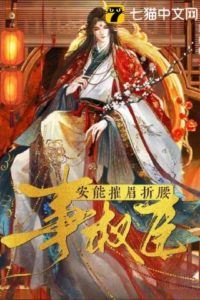
Xie Chengze, the Second Prince of the Jian'an Dynasty, transmigrates into the body of a vicious villain from the novel The Powerful Minister. In the original story, this prince is known for his cruelty, his illegitimate birth, and his eventual execution by the protagonist, Shen Yuan, who impales him with a sword on the Dragon Throne. Having read the novel, Xie Chengze is terrified of this fate and resolves to abandon all ambition for the throne. He decides to live as a lazy, indulgent slacker, enjoying his wealth and privileges without interfering in court politics or harming his siblings. His primary goal is simply to survive and avoid the murderous protagonist.

Upon waking in the palace, Xie Chengze immediately alters his behavior. During morning court, instead of aggressively competing with the Crown Prince, Xie Jinyu, for the Emperor's favor, he appears drowsy and uninterested. When the court debates flood relief for Yi Province, Xie Chengze unexpectedly yields the opportunity to propose solutions to Xie Jinyu, confusing his brother and the ministers. He then requests sick leave, feigning a serious illness to avoid future court duties. This sudden change in demeanor raises suspicions among the royal brothers. Xie Jinyu, who is calculating and suspicious, interprets Xie Chengze's actions as a new, cunning strategy, while the naive Fourth Prince, Xie Zimiao, worries that his brother is dying.

The core conflict intensifies with the arrival of Shen Yuan, the novel's protagonist and the grandson of the Grand Tutor. Shen Yuan has also been reborn; he remembers his previous life where he killed Xie Chengze to avenge loyal officials and the common people suffering under the prince's tyranny. Determined to prevent history from repeating itself, Shen Yuan seeks to eliminate Xie Chengze early. However, he is equally confused by the Second Prince's behavior. When Xie Chengze meets Shen Yuan, he does not react with the usual hatred and violence. Instead, he acts shy and even offers to share his collection of romance novels, specifically those about male-male relationships. This bizarre reaction unnerves Shen Yuan, who begins to suspect that Xie Chengze might also be reborn and is playing a deeper game to hide his intentions.

A key turning point occurs when Xie Chengze is tasked with overseeing the collection of donation silver from officials for the Yi Province relief fund. In the original story, Xie Chengze would have used this opportunity to harass honest officials and enrich himself. Instead, he identifies the lowest donor, Censor Chen, an upright official, and deliberately donates one copper coin less than Chen to take the penalty himself. This act of unexpected generosity confuses the officials and improves his reputation slightly, though it also draws more scrutiny from Xie Jinyu. Later, when Emperor Jian offers Xie Chengze the position of Spring Examination supervisor as a reward, Xie Chengze feigns illness and heart conditions to decline, further deepening the mystery surrounding his transformation.

The story direction shifts as Xie Chengze attempts to maintain his low profile while navigating the dangerous political landscape. He relies on his two personal guards, Wuhen and Wuji, who are fiercely loyal but accustomed to the original host's violent methods. Xie Chengze tries to redirect their skills toward menial tasks, such as peeling fruit, rather than assassination. Meanwhile, Shen Yuan continues to watch Xie Chengze closely, testing him and waiting for the old villain to resurface. The tension between the two men grows as they engage in a psychological battle, each trying to decipher the other's true nature. Xie Chengze's efforts to lie low are constantly challenged by the Emperor's expectations and the political machinations of the Crown Prince, forcing him to walk a delicate line between appearing harmless and avoiding the fatal attention of the reborn protagonist.

Novel Items

More
Clothing
Xie Chengze's court attire embroidered with extremely fine gold thread depicting Golden Koi and Begonia Flowers, making him appear unrestrained and arrogant.
Clothing
The Crown Prince Xie Jinyu's robe that makes his figure appear tall and outstanding with a noble and elegant bearing.
Furniture
The Emperor's throne in the court hall, large and wide, covered with a Golden Silk Cushion. Xie Chengze covetously eyed it as a comfortable place to nap.
Item
A cushion placed on the Dragon Throne, described as thoughtful and comfortable enough for someone to curl up on.
Item
A faint scent of incense that wafted from Xie Chengze's red-robed figure when he moved, affecting Xie Zimiao whose ears turned red upon smelling it.
Item
A gleaming bronze mirror that Leng Yaoda sat before after her afternoon nap, gazing at her unfamiliar yet stunningly beautiful transmigrated face.
Latest Release
DateGroupRelease
2026-08-11shanghai fantasy c32
2026-08-11shanghai fantasy c31
2026-08-11shanghai fantasy c30
2026-08-11shanghai fantasy c29
2026-08-11shanghai fantasy c28
2026-08-11shanghai fantasy c27
2026-08-11shanghai fantasy c26
2026-08-11shanghai fantasy c25
2026-08-11shanghai fantasy c24
2026-08-11shanghai fantasy c23
2026-08-11shanghai fantasy c22
2026-08-11shanghai fantasy c21

Community Reviews

Rating(3.9 / 5.0, 31votes)
5 stars
7(23%)
4 stars
15(48%)
3 stars
9(29%)
2 stars
0(0%)
1 stars
0(0%)

Popular reviews

... Read More
I'm still thinking about the moment between Xie Chengze and Xie Jinyu in Chapter 1. Let me just say this: the Crown Prince is one of the most complicated characters I've encountered in a while, and I haven't even finished the first two chapters. On the surface, he's the perfect heir—elegant, calculated, always smiling. But then there's this one detail that absolutely wrecked me. When Xie Chengze calls him "Crown Prince Younger Brother" again, the narrative says it's like floodgates opening. We get these flashbacks of a younger Xie Jinyu getting whipped by the Empress, and Xie Chengze—then just a beautiful, gentle second brother—caring for his wounds, crying harder than the injured party. Xie Jinyu once said he liked his Crown Prince Younger Brother the most. And then at some point, Xie Chengze stopped saying it. He started calling him "Third Brother" with extreme hypocrisy, as if to say: I am also of imperial blood, I do not recognize you as Crown Prince. But now he's saying it again, and Xie Jinyu can't figure out if this is a trap or something else entirely. The power dynamic between these two is so tense and layered. Xie Jinyu wiping that tear from Xie Chengze's eye with too much force, leaving a red mark—that's not just dominance, that's something messier. And Xie Chengze pulling the Fourth Prince into the middle as a shield? Genius. But also, I'm genuinely worried about what Xie Jinyu is going to do with this information.
... Read More
There's a symbol running through these chapters that I can't stop thinking about: the silver. Ten thousand taels that disappeared from the treasury, then reappeared, then got taken by Xie Chengze along with all of Magistrate Zhu's embezzled savings. Money as power. Money as leverage. Money as the thing that reveals everyone's true colors. Zhu Xiaobiao had been hoarding his father's stolen money - and when mortal danger arrived, he'd give it up without hesitation. Magistrate Zhu and his son would betray each other. The silver exposes the rot in their family, in their province, in the system itself. And Xie Chengze just takes it all and rides away like it's nothing. Then there's the imagery of cages and traps. Shen Yuan traps himself against the pillar. Xie Chengze traps him. Then Shen Yuan reverses it. The silver vault was a literal trap. The carriage becomes a moving prison that's also their only escape. Zhu Xiaobiao calls the situation a "pit of fire" - and Xie Chengze is leading them from one pit into another. The salted fish metaphor for Xie Chengze lying on the windowsill is doing heavy thematic work too. Salted fish is preserved, dead but not dead, useless yet surviving. That's basically Xie Chengze as a character - emotionally preserved in whatever state he was in, incapable of genuine warmth but remarkably good at staying alive. And yet Zhu Xiaobiao stays with him anyway. The tangerines - small, sweet, forgotten - represent everything that was lost. Innocence. Friendship. The possibility of different paths. Shen Yuan carries that memory like a weight, and it colors everything he sees. When he watches Jing Ze throw himself in front of a blade, he's not just seeing loyalty - he's seeing the ghost of what he lost, and the cruel irony that Xie Chengze still knows how to make people sacrifice themselves for him.
... Read More
I keep coming back to this one moment and I can't stop thinking about it. Shen Yuan watches Jing Ze throw himself in front of Xie Chengze's blade and something in him aches. Not sympathy for Jing Ze specifically - though that's there too - but for the ghost of someone else. A boy who shared sweet tangerines. Someone he carried with him when he left Jingcheng and couldn't forget, until reality caught up and the paths diverged and there was no going back. The text says: "By the time he came to his senses, the two had already embarked on completely different paths, with no possibility of reconciliation." That line destroyed me. It's so understated. So final. Shen Yuan is this powerful, calculating person who can outmaneuver the Second Prince in physical confrontations and political games, but he can't undo the fact that people change. That some connections just... end. And now he's watching this young man throw himself onto a blade for Zhu Xiaobiao, and he sees the ghost of someone he lost, and he feels disappointment at what Xie Chengze has become - or rather, what he never stopped being. And then there's Zhu Xiaobiao's scene with the concubines. He tries to send them away with money, genuinely believing he's doing them a favor. And they refuse. Not out of obligation - out of choice. "In life, we are the lord's people; in death, the lord's ghosts." One of them says she'll beg on the streets to make sure he eats. And Zhu Xiaobiao's response is just... "That really won't be necessary~" with this internal monologue that's equal parts touched and exasperated. The emotional complexity in this text is insane. Every relationship is layered with history, betrayal, genuine care, and self-preservation all at once.
... Read More
Let me just say: the pacing in these chapters is absolutely ruthless and I am here for it. We start with a quiet nighttime confrontation between Shen Yuan and Xie Chengze. Two guys, a pillar, some whispered threats about ten thousand taels. It's intimate, tense, almost claustrophobic. The prose slows down. You can feel every second stretching. And then - BAM - next morning, over a dozen yamen runners, wooden chests everywhere, Zhu Xiaobiao in golden robes shouting commands, and Xie Chengze suddenly kicking his subordinate across the courtyard like an action movie villain. The transition is jarring in the best way. One moment you're in a slow-burn psychological duel, the next you're watching a man in a theatrical rage swing a blade at someone while beautiful concubines throw themselves in the way. The scene escalates so fast that you barely have time to process before everyone's being loaded onto a carriage like luggage. But what I really appreciate is how the author uses the carriage ride as a pressure valve. After all that chaos, we cut to Zhu Xiaobiao untangling ropes and having a quiet(ish) conversation with Jing Ze. The tension doesn't disappear - it just changes frequency. From external violence to internal dread. Will they survive the journey? Is this really escape or just a different kind of trap? And then the chapter ends with Zhu Xiaobiao collapsing because his addiction is hitting him, and Xie Chengze casually promising to find a physician. The nonchalance is terrifying. After everything that just happened, he's lying on the windowsill like a salted fish. The pacing never lets you catch your breath, and that's exactly what keeps you turning pages.
... Read More
"Your Highness~ If the ice isn't curious, then I am!" — I literally screamed reading this. The author's dialogue writing is exceptional, but Wuji is on another level entirely. Let me just lay out the evidence. Wuji: "Your Highness is overthinking it. Even when you grow old, you will still be the most handsome old man in the world." This is delivered with such sincere warmth that it's impossible not to love him. Then moments later he's licking grape juice off his sword and offering Xie Chengze a plate of what looks like murder victims. The contrast between Wuhen and Wuji's voices is perfect. Wuhen speaks in flat, clipped sentences: "Your Highness may do as you wish." No emotion, no personality visible, just obedience so absolute it's almost terrifying. Wuji, meanwhile, uses tildes, asks questions, makes jokes, and refers to his grape art as if it's normal. "Did you notice?" "Lychees, all you think about are lychees!" These two have been together since the original host's darkest days and they're still somehow friends. That says something. And Xie Chengze's internal monologue—"No, I'm not badass. You're the one who's badass." This is the kind of dry, self-aware humor that makes reading this feel like chatting with a friend who just happened to transmigrate into a prince's body.
... Read More
Can we just take a moment to appreciate how funny this author's internal narration is? Because honestly, Xie Chengze's inner voice is carrying half the comedy of these chapters and I am here for it. The contrast between his outward performance and his actual thoughts is where the gold is. Outwardly he's the spoiled, arrogant second prince. Inwardly he's just a tired office worker who thinks the throne is basically a permanent 996 job. The scene where he's dozing at court and literally prays to the Emperor: "Old man Emperor, why aren't you here yet! If you don't come soon, I'm going to be stared into a hole!" — I literally laughed out loud. And then there's the dialogue between the ministers, which is surprisingly sharp. The Minister of Revenue and the Minister of Works going back and forth about whether to abandon Lin City or gather the wisdom of the common people — that's not just filler, that's worldbuilding through conflict. Every character has a distinct voice. Xie Jinyu's dialogue is always layered with double meanings, always polite on the surface but cutting underneath. Xie Chengze's shift from "Third Brother" to "Crown Prince Younger Brother" is one of the most loaded lines in the entire text, and the fact that it's delivered so casually by our protagonist makes it even more devastating. The author's narrative voice itself is witty and observant, never taking itself too seriously while still delivering genuine emotional beats.
See all reviews

Characters

See all characters

Custom lists

Oops…There is nothing here.