Honkai: Oh No, I’ve Become the Herrscher of Corruption?!
+Add to Custom List
Novel Info

Summary

... Read More
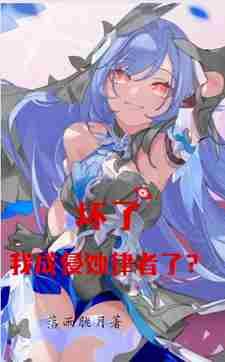
Wang Luowei, a university student with a high tolerance for emotional stories, becomes deeply invested in the game Honkai Impact 3rd after being recommended by friends. His emotional walls finally break during the Elysian Realm arc when witnessing the tragedy of the Flame-Chasers. While playing the Abyss ranking mode late at night, frustration over a single-point ranking deficit leads him to smash his phone, which then transports him to an alternate world.He awakens in a snowfield as the Herrscher of Corruption—the 12th Herrscher in Honkai lore, an ultimate virus capable of infecting both living organisms and electronic systems. Rather than panicking, Wang Luowei uses his knowledge of the game's mechanics to modify his own data signature, hiding his Herrscher-level energy from Schicksal sensors. He reshapes his appearance into a human form resembling Erosion Elysia—a beautiful girl with long blue hair and orange-red eyes—to avoid immediate detection. Taking the name Enoxia, he is rescued by Anti-Entropy Valkyrie Huo Bufan after feigning amnesia and being surrounded by Honkai beasts.Enochia infiltrates the Anti-Entropy Siberian Branch's computer network, discovering the timeline has shifted: it is January 31, 2000, five days before the Second Honkai Eruption. Through hacking Schicksal's sealed Babylon Labs records, she learns of the inhumane experiments conducted on children—including Sirin—to create Herrschers. Horrified by the suffering inflicted, she decides to alter the timeline to save those who died tragically in the original story: Sirin, Cecilia Schariac, Cheng Lixue, and Benares.She finds Sirin inside the Honkai Reactor at Babylon Labs and offers an alliance: Enoxia will help Sirin achieve her revenge against Schicksal, but in return, Sirin must allow Enoxia to guide her after their victory. When Theresa and Patricia Highsmith arrive to investigate the laboratory disappearances, Enoxia intervenes, using her corruption abilities to seize Patricia's motor functions and force her to commit suicide, then erases Patricia's memory before Sirin kills her. This accelerates Sirin's transformation into the Herrscher of the Void.While Sirin awakens her full powers, Enoxia infiltrates Schicksal Headquarters and steals the Gem of Thunder, delivering it to Sirin so she can absorb a second core without traveling to the moon. Simultaneously, Enoxia rewrites global Honkai detection systems to whitelist her and Sirin's signatures, allowing them to move undetected. The sudden appearance of five Herrschers in one week throws the Honkai War into chaos. Enoxia travels to London to confront the newly awakened Herrscher of Death, using a strategy of physical combat as a distraction while her corruption virus invades the enemy's core from within. She extracts the Death core and gives it to Sirin through a Void portal.In Siberia, the Glacier Herrscher—a dual-core entity far stronger than intended—threatens to destroy the Eurasian continent. Welt Yang, leader of Anti-Entropy, holds off the Glacier Herrscher alone using the Star of Eden's gravity manipulation while coordinating reinforcements. Enoxia brings Schicksal Valkyries, including Cecilia and Siegfried, to assist Welt. She commands Emperor-class Honkai beasts by corrupting their loyalty data, turning them into allies. During the battle, Cecilia defeats the Glacier Herrscher using the Black Abyss White Flower, ending the immediate threat of the Second Honkai War far earlier than in the original timeline. Enoxia continues to navigate this altered world, knowing that Otto Apocalypse remains the true architect of tragedy and that more Herrschers are yet to come.

Latest Release
DateGroupRelease
2026-10-01melreads c242
2026-10-01melreads c241
2026-10-01melreads c240
2026-10-01melreads c239
2026-10-01melreads c238
2026-10-01melreads c237
2026-10-01melreads c236
2026-10-01melreads c235
2026-10-01melreads c234
2026-10-01melreads c233
2026-10-01melreads c232
2026-10-01melreads c231

Community Reviews

Rating(3.9 / 5.0, 47votes)
5 stars
13(28%)
4 stars
15(32%)
3 stars
19(40%)
2 stars
0(0%)
1 stars
0(0%)

Popular reviews

... Read More
There's a recurring motif in these early chapters that I can't stop thinking about: eyes. Literal, figurative, mechanical — eyes everywhere. Our protagonist manifests as a single crimson eyeball before taking human form. The Herrscher of Corruption is described as something that watches, observes, perceives. And then he wears Elysia's face — Elysia, whose entire story revolvesizes around beauty, perception, and being seen as something perfect. There's a symbolic collision happening here that goes way deeper than cosmetic reshaping. The eye pendant hanging from Enoxia's chest is another layer — a constant reminder of what lies beneath the beautiful surface. It's almost like the story is asking: can redemption look like the thing you're most unworthy of wearing? Can the Herrscher of Corruption, the entity of erosion and decay, genuinely embody Elysia's ideals of beauty and compassion? Then there's the whole data/reality thing. Enoxia discovers she can edit herself, rewrite her Honkai signature, slip between physical and digital existence. In a story where fate feels predetermined — where we know how the Honkai narrative ends — the ability to literally edit reality becomes the central metaphor. She's not just changing events, she's editing the source code of the world itself. And that raises this uncomfortable question: if you rewrite someone's suffering away, do you still honor what they went through? The most powerful symbolic moment though is accessing those lab files. Cold numbers, clinical language, children's suffering reduced to data points. The story is making a statement about how institutions erase individual pain through bureaucracy — and Enoxia's response is to use those same tools of data manipulation to fight back. The weapon becomes the system itself.
... Read More
There's a thematic parallel running through this entire batch that I can't stop thinking about, and it's devastating in its simplicity. On one level, you have the artificial Stigmata—children's lives harvested to create power for Valkyries. Schicksal's original sin, the source of Sirin's hatred. Enoxia makes this explicit when she draws the line between artificial and natural Stigma-bearers, essentially saying: not all of them are guilty, don't hate the wrong people. But then the dream sequence layers on a second kind of artificiality. Siegfried and Cecilia aren't real. The family Sirin experiences isn't real. The breakfast, the shopping trip, the cat—all constructed by the Herrscher of Corruption to give Sirin what she wants most. And yet... does the artificiality invalidate the emotion? When Sirin cries eating that cake, are her tears less real because the person feeding them to her is a dream? The text seems to argue the opposite. The poem at the beginning frames this perfectly: "I am a Herrscher… but I also want to be human. Just like… Her." The Herrschers—beings of immense power shaped by suffering—are mirroring the artificial Stigma bearers. Both were made, not born. Both were weaponized. Both crave something they were never meant to have. Schicksal made children into Stigmata; the Honkai made girls into Herrschers. The parallel is structural, not accidental. And then Enoxia's final justification lands like a hammer: "Giving Sirin the love of a family… is the best atonement Schicksal could ever offer." Atonement through illusion. Can forgiveness exist if it's built on a fabrication? Or does the fact that Sirin needed this, truly needed it, make the dream itself a kind of truth? The orange cat as a symbol is also worth noting—something soft and harmless existing in a world of weapons and war, completely unfazed, just being. Maybe that's what Sirin was reaching for all along. Not revenge. Not power. Just something gentle to pet.
... Read More
Okay so I need to talk about Salome because this chapter absolutely wrecked me and I am NOT okay. The flashback scene with her and Shub-Niggurath was genuinely one of the most well-written team dynamics I have ever read. Think about it—HQ paired them together to test compatibility, which on paper sounds like bureaucratic nonsense, right? But that is exactly what made it hit so hard. Salome is all about planning, control, keeping everyone alive. Shub is pure instinct, charging headfirst into danger with zero hesitation. They are opposites in every way. And yet... they became THE sharpest fangs of Team Snowwolf. That line alone made my chest ache. What got me was how Salome misjudged Shub initially. She braced for defiance, expected friction, and instead got a logical rebuttal. 'No Emperor-class threats. Just a time-sensitive crisis. So why not blitz through?' Shub isn't reckless—she's efficient in her own chaotic way. And Salome? She shifted seamlessly from commander to support, eliminating targets outside Shub's sightlines without being asked. That moment of silent coordination where they just... understood each other? Chef's kiss. Then she dies. Alone in the snow. A hundred meters from where she landed. Her last words aren't even about the battle—they're about a parfait shop. '200 meters down the right turn past the Louvre's third alley. I wish we could have it again.' NOT about the mission. NOT about saving anyone. Just... I wish we could share another dessert. And Shub finding her body? The wind howling? Her molars grinding? This is the kind of character moment that lives in your head for weeks. The Comber is gone. And the person she fought alongside, the person she trusted enough to let her charge without covering her back, is dead because an A-rank Valkyrie simply cannot survive a Tetra-Core Herrscher's attack. Also can we talk about Theresa and Cecilia? Theresa charges into a barrier that strips everyone else of power because she KNOWS she's the only one who can make it work. And when she fails, Cecilia catches her anyway. 'Ah... Cecilia, you ended up saving me after all.' The guilt, the gratitude, the unspoken 'I'm sorry I couldn't do it'—this pair dynamic is everything. And Siegfried and Cecilia? 'Wherever you go, I follow.' 'But don't worry—we'll both come back. Promise.' Two people who have watched each other die and come back and died again and STILL choose to stand side by side. This is the kind of love story that doesn't need romance to be devastating. Enoxia's internal conflict about Bella too—help the weakened Valkyries and risk everyone dying, or let them kill Bella and destroy any chance of reconciliation with Schicksal? She's trapped between two terrible options and I could FEEL her desperation. That's excellent character writing, making the protagonist powerless in a meaningful way.
... Read More
So there's this scorpion Honkai beast, right? Like, three meters tall, fifteen long, with a tail that shoots freezing mist and a mouth that fires homing icicles. Cheng Lixue and her squad take it down—four A-ranks, coordinated, no scratches. Then Enoxia is watching from above, thinking about how her co-op teammates used to rage-quit while these girls are out here literally saving each other. Anyway, what struck me isn't the battle choreography, though that's fine. It's how the plot refuses to commit to a side. For half these chapters I'm convinced Enoxia is gonna stab Cecilia in the back because, you know, she's a Herrscher and that's what Herrschers do. But then she rewrites Schicksal's missile guidance systems so Otto's bombs don't hit her own Valkyries, and suddenly I'm second-guessing everything. The whole narrative arc hinges on this misdirection—we keep seeing her from the outside, as a threat, until Welt flies into view and we realize she's been herding everyone toward the same goal. Even the Glacier Herrscher's position shifting four kilometers outside the crater? That's not a plot hole, that's Enoxia clearing the path by force. The only loose thread I've got is whether the two new Emperor-class beasts get enough screen time, because honestly, they disappeared after the introduction and I want to know what their deal is. But the structure holds up—it's a puzzle where the pieces are moving while you're not looking.
... Read More
Sirin and Enoxia's dynamic is the emotional backbone of everything happening here and honestly it's beautifully subverted. Enoxia asks for Sirin's help but then literally tells her no if she refuses. Not a manipulation tactic, not a guilt trip—just "I won't force you." For a character who's been treated as a test subject since adoption, who's only ever known coercion from Schicksal, this indifference to her compliance is almost more shocking than any threat could be. She doesn't WANT obedience—she wants free participation. That distinction matters. Sirin's breakdown afterward is the most human moment she's had. She can't parse why someone would support her desires even when they're destructive. The text says it plainly: "It never crossed her mind that Enoxia's support stemmed largely from personal motives." She's so conditioned to being weaponized that genuine autonomy from another person registers as alien. And then Bella kneels and offers herself as a punching bag—"My Queen… you can vent your frustrations on me"—and Sirin does the opposite. She strokes her head. Gentle. Tender. Completely unexpected. That moment between Sirin and Bella is quietly revolutionary. Sirin imitates Enoxia's earlier touch, pressing close, running her hands over Bella's body—not cruelly but almost curiously, testing the texture, finding the cool smoothness soothing. And Bella? She carefully adjusts her posture to avoid poking Sirin with her horns. She's learning to accommodate someone who's still learning how to be soft. The mutual restraint between them is gorgeous. Enoxia and Cecilia's encounter is another highlight. One line—"White hair, blue eyes, and a figure that would make any model jealous—Kiana had clearly inherited her mother's genes. That radiant smile at close range short-circuited Enoxia's brain." She just freezes, stares, gets caught, bows awkwardly, and vanishes. This is a woman who just dismantled a Herrscher of Death and doesn't flinch at a scythe to the chest, reduced to a flustered mess by a maternal smile. It's funny, it's tender, and it shows a completely different facet of her personality that the rest of the text barely hints at.
... Read More
Okay so here's the thing about this story that absolutely got me — the setup is deceptively simple. Our protagonist is just some guy who plays Honkai, gets mad at a ranking score, touches his phone, and boom, transmigrated. Classic. But then it throws every expectation out the window. Instead of spawning as some OP hero or a cute Valkyrie, he wakes up as the Herrscher of Corruption — the villain everyone in-universe absolutely despises. And not just any version, but the Previous Era iteration that literally nobody roots for. Then comes the second twist, and this is where I sat up straight. He doesn't just take over the Herrscher body — he rewrites himself into Elysia's appearance. So you've got the most reviled entity in the entire Honkai mythos wearing the face of the most beloved Flame-Chaser. That's not just a plot device, that's a loaded narrative choice. Every interaction he has from here on is going to be filtered through that dissonance. And the timeline shift? Genius. Dropping him in January 2000 — right before the Second Eruption — means he knows exactly what's coming and has roughly a month to change everything. The plot doesn't waste time either. Within three chapters we go from confused transmigrator → discovering his powers → stumbling into a lab → reading about human experimentation → making a concrete rescue mission. That's rapid fire storytelling and I was here for it. The structure also plays with dramatic irony beautifully. We, the readers, know who Otto is, what he did, what happens to Sirin. Watching Enoxia discover these things for the first time while simultaneously realizing she has the power to alter them creates this delicious tension. The plot isn't just moving forward — it's stacking stakes on top of existing knowledge, and it works.
See all reviews

Custom lists

See all custom Lists