He’s Super Sticky - Reviews

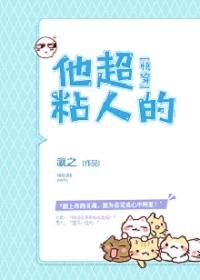
He’s Super Sticky
+Add to Custom List
Sort
Add review
... Read More
“Whether he is from the Lu family remains to be discussed.” Bai Chen says this line while casually wiping his hands with a wet towel. NOT dramatic music, NOT slamming a door. Just... dropping a nuclear bomb mid-snack and walking upstairs. The delivery is chef's kiss perfect. Because here's what makes this scene so tense: everyone in that room thinks they're playing a normal family drama. Zhao Jun thinks he's successfully orchestrated a takeover. Lu Qing thinks he's about to gain acceptance. Parents think they're handling things gracefully. And Bai Chen? He's been quietly gathering evidence the entire time. The stakes here are massive. If Lu Qing IS the biological son, Bai Chen loses everything—his family, his home, his identity. But Bai Chen clearly suspects something is wrong, and his refusal to just accept the narrative while maintaining outward composure? That's the kind of tension that keeps you up at 2 AM. What does he know? How did he know? Why is he so calm about potentially destroying someone's life? And then the Qi Xiao car scene—that's a whole different flavor of suspense. Someone ordered Zhao Jun's background checked with “check Zhao Jun thoroughly” said in such a dangerous voice that Ji Wenxuan himself starts trembling. The parallel storylines are building toward something explosive.
... Read More
The atmosphere in these chapters is everything. We start with this little yellow dog barking — "Woof woof" — and Bai Chen putting it down, and it just disappears into green bushes. It felt almost magical, like the universe was delivering something before the main event. A tiny moment of warmth before the real emotional hit. Then the car scene. Qi Xiao sitting there in a black suit, no tie, top button open revealing bronzed skin. The text says he carries "a scent of ruthlessness" but his eyes aren't angry. He's like the dark night itself — intimidating, powerful, but somehow safe for Bai Chen. The whole description of him is this perfect mix of danger and desire that made me physically hot. The mountain road setting adds so much to the mood. Night driving, surrounded by hills, isolated from the world. When they reach the villa at the top, Bai Chen has already fallen asleep in Qi Xiao's arms. The transition from that tense street encounter to this peaceful, almost sacred image of carrying someone who trusts you enough to sleep — it's cinematic. I could see this as a film. And the elite man peeking in the rearview mirror! The text says his "eyeballs wanted to peek" but he controlled himself. He tried to shield all the pictures and sounds like a professional. I laughed out loud. His presence actually enhances the scene because it reminds us this is a secret, intimate moment happening in a world with rules and consequences. The contrast between his internal panic and his frozen professionalism is comedy gold.
... Read More
'But I miss you very much.' Five words. That's all it takes. Five words spoken by someone who moments earlier was capable of throwing another human being through the air like ragdoll, and suddenly the entire emotional landscape of the scene shifts. Qi Xiao's reaction—eyes full of smiles, heart going soft—shows us that this line isn't just dialogue, it's the thesis statement of an entire romantic relationship. What strikes me most about this emotional thread is how carefully the author builds toward this moment of vulnerability. Bai Chen spends the entire chapter operating from a place of controlled indifference: dismissing Tang Qing's pleas, ignoring the butler's shock, watching his parents quietly abandon the pretense of family loyalty. He is armored in apathy, and yet when Qi Xiao appears—standing outside the car, warm sun on his face, black eyes full of love—armor cracks. The physical description here is almost painfully simple: Bai Chen's eyebrows curl, his footsteps accelerate involuntarily, and he rushes into Qi Xiao's arms. No grand declaration. No dramatic confession. Just a five-word admission that he missed someone. The intimacy that precedes this moment—Bai Chen's flushed cheeks, his shy confusion about his own feelings, the way he touches Qi Xiao's photo and frowns because 'there is no smell'—creates a private emotional world that exists entirely separate from the public battlefield of the Lu family drama. The system's presence (broadcasting Bai Chen's thoughts, murmuring to itself) adds a layer of tenderness that contrasts sharply with the violence Tang Qing experiences. One moment Bai Chen is a weapon; the next he's a boy pouting because he can't watch his lover through a distance-limited broadcast. And yet beneath the sweetness runs a current of genuine desperation. 'I want to hug and bite your mouth.' It sounds childish, almost comical, but read in context—after chapters of identity theft, paternity fraud, and family betrayal—it becomes something raw and real. This is not a romance existing in a vacuum. This love is forged in opposition to everything that wants to keep these two apart. The emotional high here isn't just the reunion; it's the knowledge that despite Tang Qing's tears, despite the Lu family's suspicion, despite the system's energy limitations and the butler's shock—none of it matters compared to the simplicity of 'I miss you very much.'
... Read More
There's a symbol hiding in plain sight in this chapter and I can't stop thinking about it. The twenty yuan. Two people. One day. That's the entire budget for surviving a treasure hunt in this show. On the surface it's just a game mechanic — a classic variety show constraint that forces creativity. But look at what it represents in the broader context. Zhao Xueqin spent all her energy constructing a false narrative, monetizing someone else's suffering, building a persona on lies. She had the attention economy on her side and she exploited it ruthlessly. And then — twenty yuan later, Jian Li and Bai Chen are forced to confront the same world with almost nothing, and they do it TOGETHER. No filters, no curated images, no manufactured sympathy. Just two people, a clue card with a classical poem, and twenty yuan to figure out how to survive. The poem itself — 'The waters of the Yellow River come from upon Heaven, surging into the ocean, never to return again' — is loaded with meaning about the irreversibility of time, the inevitability of change, the way some things can never be taken back. Fits the season's trajectory perfectly: what's done is done, the scandal has passed, and now they're moving forward with whatever they have. The live broadcast element is also deeply symbolic. In an age where celebrities are constantly performing for cameras, where every relationship is potentially content, Jian Li and Bai Chen use the live stream not to perform their love but to simply EXIST in it. The cameras capture what's real instead of manufacturing something fake. That reversal — using the tools of spectacle for genuine expression — feels like the author's quiet manifesto about authenticity in a manufactured world. I keep coming back to this. There's more happening here than meets the eye.
... Read More
Okay so this scene in the music studio is actually doing a LOT of heavy lifting for their relationship dynamics and I need to talk about it. Jian Li pressing Bai Chen against the bookshelf — it sounds aggressive on paper but the text makes it clear this is exactly what Bai Chen wants. When he says "ALi likes it, and I like it too" that is such a vulnerable, honest moment. He's not playing hard to get, he's not being coy, he just... admits it. And Jian Li's reaction? His breathing changes, his hand tightens on Bai Chen's waist, and then he kisses him like he's been holding back this entire time. The power dynamic here is fascinating because Bai Chen usually seems so cold and distant to everyone else, but with Jian Li he's soft, obedient even, burying his face in Jian Li's shoulder and whispering. Meanwhile Jian Li is the one who's visibly affected, who can barely control himself. It's a reversal of the typical tropes and I love it. The two employees watching from outside are basically the Greek chorus here — they see everything clearly while the main characters are lost in their own moment. "There's no doubt it was true love" — yeah, no kidding.
... Read More
Okay so this chapter had me completely undone by the little moments between Bai Chen and Qi Xiao. I know, I know, there is a whole corporate war happening off-screen, but can we talk about the grape scene for a second because it is everything. The way Bai Chen deliberately picks the roundest grape and offers it to Qi Xiao — that is not just feeding fruit, friends. That is him trying to express something he cannot quite name. The text says he nodded earnestly and explained that Xiao helped dad, so this is a reward. But really, isn t it something deeper? He is saying thank you without saying thank you. He is trying to reciprocate in the only language he has. And Qi Xiao s reaction — that sly smile when he says baby just robbed me of my grapes, why are you so good to me now — it is so tender. He could have just taken the grape. Instead he wipes Bai Chen s fingers with a wet tissue. Slowly. Carefully. Like those ten digits are something precious. What got me most was the line about Bai Chen s ears turning red but he stubbornly didn t take his fingers back. That tiny detail tells us everything about how he feels. He wants to pull away from affection but he also doesn t want to. The push and pull is real. Meanwhile Qi Xiao knows something is hidden. He touched Bai Chen s head and didn t ask how he knew about his involvement. He just accepts it. That silence between them speaks louder than any conversation could. There is trust there, deep trust, even if Bai Chen can t tell him about the system. I keep thinking about how Bai Chen would become a pendant hung on Qi Xiao s body if something happened to him. That line at the beginning is haunting. Wherever Qi Xiao goes, he also goes. It sounds romantic but it s actually terrifying when you think about what it means. Bai Chen s entire existence is tethered to this one person. The grape exchange at the end feels like a microcosm of their whole relationship. Qi Xiao teases, Bai Chen takes initiative, they end up sharing something sweet. It is simple domesticity after all that chaos. And honestly, that s what made my heart ache the most.
... Read More
This chapter is doing double duty and honestly it's handled well. The romantic payoff scene — the bookshelf kiss, the ear whispers, the shyblushing — satisfies whatever pent-up tension built up to this point. But the author doesn't stop there. Bai Chen's decision to pursue live streaming as a shortcut to fame is a major plot move. The system's analysis of why this is better than talent shows or trainee routes gives us worldbuilding and establishes the rules of this entertainment world. It tells us: no talent shows currently running, entertainment companies require trainee period, live streaming is fast and free. This isn't just character motivation, it's worldbuilding through character logic. Then there's the computer purchase scene which serves dual purpose — it advances the live streaming plot AND it creates the setting for the cliffhanger introduction. The girl recognizing Jian Li is clearly a setup for future conflict. And Jian Li's request for Bai Chen to play piano? That's another thread — we know Bai Chen can play but hasn't shown it yet. Expectation established. Multiple plot threads are being woven here without the chapter feeling cluttered.
... Read More
The opening line of this section hit me harder than I expected: "He has never changed, even if his appearance and identity change, he has never changed himself." This is the core thesis of the entire novel compressed into one sentence. Bai Chen has lived through multiple worlds, lost his memories, had his identity rewritten, shifted from one career path to another—and at the center of it all, what remains constant is his capacity to love Jian Li. The cooked dishes are still the same even after changing worlds. The food doesn't matter; the person cooking it and the person eating it together is what persists. There's also this recurring motif of visibility and concealment that runs through the chapter. Bai Chen hides his face under Jian Li's peaked cap at the studio. He's trying to be anonymous, protected, small. But Jian Li keeps his arm around his waist the entire time—never letting go, literally anchoring him. The hat covers Bai Chen's face but can't hide the fact that he's claimed, accompanied, held. And then the deeper layer: memory itself. Jian Li doesn't remember their past together in this world, or at least not clearly, yet he still loves. The system chose singing as Bai Chen's path partly because of temperament and practical considerations, but really it's because singing allows someone to express everything without needing to be visibly expressive—a perfect metaphor for Bai Chen's whole existence as someone who feels deeply but shows it only in private moments with Jian Li. The identity theme ties back to that opening thought: perhaps what makes someone truly themselves isn't their memories, their appearance, or even their career choices—it's who they choose to love and how they love them. And Bai Chen chose Jian Li across every world.
... Read More
I need everyone to understand what just happened. Bai Chen and Duan Qin survived an assassination attempt — multiple attempts, honestly — and after all that chaos, what does Bai Chen do? He looks at Duan Qin and says 'we haven't kissed yet.' That line hit me like a truck. Like, the entire venue could have been destroyed, people could have died, and his brain went straight to 'we need to fix this romantic deficit.' That is the most Bai Chen thing ever and I love it. And Duan Qin's response — just a gentle 'okay, baby' and pulling him in — is chef's kiss energy. The tenderness in that moment contrasted with the violence that literally just happened? Unreal. Later, the goodbye scene at the entrance is equally soft. Bai Chen grabbing Duan Qin's wrist, pouting, saying 'come early tomorrow, I want to see you soon' — this boy is ridiculously smitten and the text makes it feel genuine, not saccharine. Then Yan Lu's warning about the Duan family not accepting a male partner for Duan Qin... that undercurrent of threat hanging over their sweetness is going to hurt later. I can feel it.
... Read More
'Nothing has happened. That's why it can't be called a scar.' I know that line isn't in this exact batch, but it haunts everything here. Xie Zhengyi's missing eye and the injuries he suffered aren't just backstory; they're the central metaphor for this entire relationship. He spent years believing he was broken, that his damage made him unworthy of love, that the only version of himself Bai Chen could accept was a sanitized, 'proper' emperor. The entire arc from Chapters 310-326 was about unlearning that lie. This batch shows the aftermath: the acceptance, the physical proof of wholeness, the daily practice of choosing each other despite—or because of—the scars. The 'spring hunt' where the enemy spy will make contact isn't just a plot device; it's the return of the suppressed trauma. You can't hide from the past forever, no matter how sweet the present becomes. Even Bai Chen's reluctance to engage in imperial duties feels symbolic: he's rejecting the performative role of emperor to embrace the authentic role of partner. Which is more real? Which is more true? The text keeps asking this question through juxtaposition—intimacy versus duty, vulnerability versus power, private love versus public performance. And the most powerful symbol might be the simplest: Xie Zhengyi placing Bai Chen's hand on his heart. An organ. A pump. Something that beats whether you're wounded or whole. That's the thesis statement. Love isn't about fixing each other; it's about recognizing the rhythm beneath the damage and choosing to match your beat to it anyway.
... Read More
Xuanyuan Yan is one of those characters who makes you sympathize with him even as he becomes terrible. The text gives us his entire arc compressed into a few paragraphs: from transparent nobody to powerless puppet to paranoid tyrant to dead traitor. But what haunts me is the beginning—his deliberate invisibility. “The ninth prince Xuanyuan Yan, who has been weak and incompetent in the palace like a transparent person.” That line broke something in me. A child learning to survive by becoming nothing. Watching his brothers kill each other while he pretended not to exist. That kind of trauma doesn't just disappear when you're handed a crown. His relationship with the ministers is tragic. They raised him as their project, their “virtuous monarch” alternative to the bleeding empire. But instead of gratitude, he develops the exact paranoia of the man who slaughtered their colleagues. The text says he “realized the pleasure of being held up as the emperor”—and I think that's the turning point. Not ambition, but relief. For the first time, someone was listening to him. Someone needed him. That's how insecure people become dangerous: they confuse being wanted with being worthy. Then there's Xie Zhengyi. Oh, Xie Zhengyi. The text paints him as the ultimate courtier—calm, competent, quietly reshaping the empire while the emperor plays with beauty and power. But here's what the surface reading misses: Xie Zhengyi genuinely loved someone. The system information reveals that Xuanyuan Yan killed his lover. Bai Chen isn't just an observer—he's grieving. And yet, when he transmigrates into Xuanyuan Yan's body, he encounters Xie Zhengyi strangling him. The text says: “Bai Chen's anger from Xie Zhengyi strangling him and making him pass out dissipated a little, but he was still angry. Because Xie Zhengyi clearly recognized him subconsciously at the time, but still used a heavy hand on him.” That detail—“clearly recognized him subconsciously”—is devastating. Xie Zhengyi knew, even while choking him, and still couldn't stop himself. The physical violence wasn't about power; it was about something else entirely. Maybe grief. Maybe frustration. Maybe a love so complicated it expressed itself as harm. And Bai Chen's response? “If Xie Zhengyi comes to coax him, hug him, and kiss him tomorrow, then he will forgive him. Otherwise, he must ignore Xie Zhengyi.” This spoiled, hungry, politically powerless emperor—redacted by the most basic human needs: touch, attention, reconciliation. The system threatens soul destruction, but Bai Chen's real vulnerability is sitting on a bed, stomach growling, hoping someone will come comfort him. The relationship between these three—Xuanyuan Yan, Xie Zhengyi, and Bai Chen—forms a triangle of betrayal, love, and revenge that feels achingly real. None of them are purely evil. None are purely good. They're just people making terrible choices with incomplete information, hurt by people they trusted, hurting others in return.
... Read More
The pacing here is actually really smart and I want to talk about it because a lot of web novels get this wrong. The scene opens with immediate tension—Liang Yanghong is already standing on Bai Chen's furniture, already humiliating him. No warm-up, no 'so then what happened.' We drop right into the conflict and the reader has to keep up. Then the backstory about the Liang family and their status in City A comes in as exposition, but it's woven in naturally through the system's explanation, so it doesn't feel like a pause in the action. The fight itself is FAST. Two moves, two bone-breaking sounds, and it's over. No drawn-out brawl, no dramatic speech, just swift and brutal. That's good pacing—it respects the reader's attention. And then instead of resolving the scene, the author escalates: the teacher arrives, the counselor calls Mother Lu, Mother Lu arrives and makes everything more complicated, and THEN Liang Huihuang shows up. Each beat adds a new layer instead of repeating the old one. But the real pacing masterstroke is what happens at the end—the exposition dump about the car accident, the betrayal by Lu Qing and Zhao Jun, Liang Huihuang being squeezed by the Lu group and the Zhao group. In the middle of what seemed like a straightforward school bully scene, the author just opened up this entire conspiracy landscape. Suddenly Bai Chen isn't just dealing with a rich kid—he's in the middle of a generational war between families. The stakes went from 'don't get suspended' to 'your existence is part of someone else's revenge plot' in the span of a few paragraphs. That's how you keep someone up until 2 AM.

Leave a comment

You must be logged in to leave comments. or
