Her Sweet Seduction Overwhelms Him—The Restrained Prince Can't Hold Out Anymore
+Add to Custom List
Genres:
Novel Info

Summary

... Read More

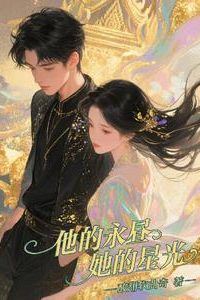
Xu Qingcheng, a noblewoman of the Great General’s Manor, dies in prison at Yuyang Pass after personally killing Xie Huaiyu, the man she believed was her savior but who turned out to be a treacherous fraud. In her final moments, she realizes the truth: Murong Jing, the Prince of Qin and her husband, was the masked rider who saved her from wolves three years prior, while Xie Huaiyu stole that credit to manipulate her affections. Burdened by regret and hatred, she dies alongside Xie Huaiyu in a mutual destruction. However, she does not remain dead. She awakens in her bridal chamber on the night of her marriage to Murong Jing two years earlier, retaining all memories of her tragic past life. Clutching a seven-colored gemstone dagger she had hidden for self-defense, she realizes she has been reborn to the very beginning of her marital life.

Initially believing she must avoid consummation to maintain her independence, Xu Qingcheng is shocked to discover that she and Murong Jing have already slept together. Confused by his denial of the event, she investigates with her maid Xueya and learns that a drugged tea intended for the Prince was mistakenly consumed by her, causing her to act erratically and leading to an unintended intimate encounter. Rather than being repulsed, Xu Qingcheng embraces this new reality. She resolves to abandon her past devotion to Xie Huaiyu and instead win the heart of Murong Jing, the man she now knows is her true protector and the one who secretly petitioned the Grand Empress Dowager for their marriage.

Her transformation is immediate and drastic. On the morning after the wedding, she abandons her previous aloofness and actively seeks to please Murong Jing. She rides to catch his carriage, insists on accompanying him to the palace, and charms the Grand Empress Dowager with her lively and affectionate demeanor. During these interactions, she learns that Murong Jing’s coldness is a facade; he is a disciplined man who values propriety but has secretly cared for her since the hunting incident. Despite her efforts, Murong Jing remains distant and skeptical, accusing her of fickleness due to her past association with Xie Huaiyu. He reveals that Xie Huaiyu requested the marriage as a favor, intending for Xu Qingcheng to remain a figurehead while she eventually eloped with him.

Undeterred, Xu Qingcheng decides to sever ties with Xie Huaiyu once and for all. She plans to confront him during her visit to her natal home, the Xu residence. She instructs her maid to send a message to Xie Huaiyu, inviting him to a private meeting under the pretense of reconciliation. Simultaneously, she coordinates with her father, General Xu Zheng, to expose Xie Huaiyu’s family, the Yao clan, for their past crimes. The confrontation is charged with tension as Xu Qingcheng publicly rejects Xie Huaiyu, declaring her love for her husband and exposing the impostor’s deceit. This bold move shifts the power dynamic within her family and marks the beginning of her campaign against the enemies who destroyed her in her previous life.

As the story progresses, political turmoil erupts. Murong Jing is placed under house arrest in the palace due to court intrigues orchestrated by the Yao clan. Xu Qingcheng is left to manage the Qin Prince’s Manor alone, facing harassment from her in-laws and rivals. Using her knowledge of future events and her father’s military influence, she outmaneuvers her opponents, humiliating Yao Shiwen and securing her position. Despite Murong Jing’s absence, she maintains hope, trusting in his plans. The narrative concludes with Xu Qingcheng returning to her duties, ready to face the coming storms alongside her husband once he is freed, determined to rewrite their fate and protect those she loves.

Latest Release
DateGroupRelease
2026-08-11shanghai fantasy c13
2026-08-11shanghai fantasy c12
2026-08-11shanghai fantasy c11
2026-08-11shanghai fantasy c10
2026-08-11shanghai fantasy c9
2026-08-11shanghai fantasy c8
2026-08-11shanghai fantasy c7
2026-08-11shanghai fantasy c6
2026-08-11shanghai fantasy c5
2026-08-11shanghai fantasy c4
2026-08-11shanghai fantasy c3
2026-08-11shanghai fantasy c2

Community Reviews

Rating(4.3 / 5.0, 6votes)
5 stars
4(67%)
4 stars
0(0%)
3 stars
2(33%)
2 stars
0(0%)
1 stars
0(0%)

Popular reviews

... Read More
Let me just say this: the stakes in these chapters are incredibly high and the author makes you feel every single one of them. On the surface, the conflict is simple: a newlywed wife wants her husband's attention and he's giving her the cold shoulder. But the deeper conflicts are what make this unbearable to read (in the best way). Xu Qingcheng's internal conflict is devastating. She just learned that the man she's married to requested this union—but not for her. For someone else. She's standing in her bridal chamber, arms around his back, and he just told her he won't touch her because she belongs to his friend. What does a woman do in that moment? The text says she clung even tighter when he gripped her wrist. That's not weakness—that's a woman who has survived a previous life and knows exactly what she stands to lose if she lets go. The external conflicts are equally tense. There's the palace politics with Empress Dowager Yao, who is actively hostile and watching for any misstep. There's the political dimension—Murong Jing is Commander of the Six Divisions of the Imperial Guards, he's involved with the young emperor, his marriage has political implications. And there's the mystery of Xie Huaiyu: who is he, what was the plan, why can't he marry her, and what does Murong Jing know that he's not telling her? The stakes are personal AND political. If Xu Qingcheng fails to win Murong Jing's affection, she's not just a neglected wife—she's a political liability. The Grand Empress Dowager has invested in this marriage. The Xu family has invested in it. A failed marriage could have real consequences for her family's standing. But the most intense conflict is the one between what Xu Qingcheng knows and what she doesn't. She has memories from a previous life, but these chapters reveal that she didn't know key facts—even about her own marriage. The Xie Huaiyu revelation is something she never knew in her previous life either. So what else doesn't she know? What other secrets are buried in the past that will change everything when she discovers them? The author maintains suspense by constantly raising the question: what is Murong Jing actually thinking? Every action he takes is ambiguous. Is he being cruel? Is he being protective? Is he punishing himself? We don't know, and neither does Xu Qingcheng, and that uncertainty is what keeps us turning pages.
... Read More
The pacing in these chapters is absolutely ruthless and I am here for it. Chapter 9 starts almost idyllic. Xu Qingcheng and Murong Jing arrive early at the Grand Empress Dowager's palace, she's charming everyone, she's winning favor, she's happy. The Grand Empress Dowager is warm, the atmosphere is pleasant. Then Empress Dowager Yao arrives and the tension shifts—but it's still manageable. Yao is being snippy, Xu Qingcheng is being unfazed. It's palace drama, sure, but it's light drama. We're still in rom-com territory. Chapter 10 maintains this upward trajectory. Xu Qingcheng is processing the marriage revelation, yes, but she's doing it with delight, not distress. She's planning dinner, she's coordinating with her maids, she's confident. The pacing here is almost buoyant—she's got a plan, she's executing it, everything is going smoothly. Even when Murong Jing says he's already eaten, she's not defeated. She has a backup plan involving Madam Gongsun and the gift list. The pacing never dips below confident. And then Chapter 11. The entire chapter is one long buildup to that single devastating line. She leads him to the bridal chamber. She's hopeful. She's touching his sleeve. She's hugging him from behind. The pacing slows down almost to a crawl in the most tension-filled way—every gesture, every word, every silence is stretched out. And then he drops the Xie Huaiyu bomb and the chapter ends mid-sentence. What's remarkable is how the author controls the reader's emotional experience through pacing. We go from happy to hopeful to heartbroken in the span of three chapters, and each transition feels earned because the author lets us live in each emotional state for a while before moving on. We're not rushed through the sweetness, so the bitterness hits harder. The chapter breaks are also doing important work. Ending Chapter 10 with "Tonight, I must make him stay" creates anticipation. We want to see what happens. And then Chapter 11 delivers exactly what we expected—a confrontation in the bridal chamber—but the emotional outcome is completely different from what we wanted. That's skilled pacing. The author knows exactly when to give us hope and when to take it away.
... Read More
There's this one moment at the very beginning that I keep coming back to. Xu Qingcheng is looking at Murong Jing and the text describes him: "Princes wore a color even deeper than dark purple, but on him, every movement radiated natural elegance and authority. Broad shoulders, narrow waist, long legs—just looking at him filled her heart with joy." I need to pause here because the visual writing in this passage is genuinely good. The color detail—deeper than dark purple—that's a specific rank indicator, right? Only a prince could wear that. And the author doesn't just say "he was handsome" but gives us the silhouette: broad shoulders, narrow waist, long legs. It's cinematic. I could see this as a drama scene. But what I really love about the scene work is how the author uses physical space to show emotional distance and closeness. Think about the carriage scene. Murong Jing catches up to them on horseback, rides alongside, but doesn't get in the carriage. Xu Qingcheng's smile freezes. She's disappointed. They pass through three palace gates before even a a prince can't proceed on horseback, and then they switch to walking—with her following closely behind him. To onlookers, they look like a deeply affectionate couple. But inside? She's disappointed he didn't get in the carriage with her. The contrast between public perception and private reality is a recurring visual theme. Later, at the Grand Empress Dowager's palace, the seating arrangement tells its own story. Murong Jing is seated at the lower left—respectful, subordinate position—while Xu Qingcheng is the one being praised and rewarded. The power dynamics are visible in who sits where. And then there's the bridal chamber scene. The bead curtain she lifts for him. The table of dishes. The gift list on the table. The two sets of bowls and chopsticks that he never uses. Every prop in that room is doing emotional work. The untouched dinner, the discarded gift list, the tea that goes un-drunk—all of these objects are saying what the characters won't say out loud. The Prince's Manor itself is described as "cold and lifeless" by the Grand Empress Dowager, and Xu Qingcheng wants to fill it with liveliness. There's something symbolic about a physical space representing the emotional state of a marriage. The manor needs warmth. The marriage needs life. And Xu Qingcheng is the one bringing it.
... Read More
I have SO many thoughts about Murong Jing after reading these chapters and I don't even know where to start. First of all, let's talk about Xu Qingcheng's perception of him versus the reality. She sees this man in black, collar buttoned to the top, waist sash perfect, radiating cold ascetic restraint. She thinks he's untouchable. And honestly? Part of her attraction to him comes from wanting to break through those defenses. There's something so relatable about that—wanting to be the one who makes the cold person warm. But then he says the thing about Xie Huaiyu and suddenly everything shifts. Is he actually cold because he doesn't care? Or is he cold because he's protecting something? The text says "We are friends. And he cannot marry you. Why, you know the reason." So there's history here. There's a reason Xie Huaiyu can't marry her that both parties understand. And Murong Jing is taking on this marriage as some kind of... what? A favor? A duty? A way to keep her safe? The physicality of their interactions is so telling. When she hugs him from behind, he grips her wrist hard. But she doesn't let go—she clings tighter. There's almost no space between them. This is a woman who has been reborn with knowledge of a previous life, and she's throwing herself at a man who just told her he won't touch her. That's either incredible courage or incredible desperation, and I love that the author doesn't make her look weak for it. And then there's the Grand Empress Dowager scene, which is its own masterpiece of character dynamics. She immediately picks up on Murong Jing's true nature—"Sometimes what he thinks and what he says are completely different." She's basically warning Xu Qingcheng that this man will not be straightforward. But Xu Qingcheng, bless her, just smiles and says she'll figure him out. She's not intimidated. She's actually excited. The relationship between Xu Qingcheng and the Empress Dowager Yao is also fascinating. Yao is vain, jealous, throwing barbed comments, and Xu Qingcheng just... absorbs them all and reflects them back with extra sweetness. "I'll be sure to come even earlier next time!" The fact that she doesn't even try to be humble is such a character moment. This is a woman who knows her worth and isn't playing the modest wife game. But the real relationship drama is between Murong Jing and Xie Huaiyu. Friends? Sure. But one can't marry the woman the other desires? What does that mean? What happened? The text says "You both know what you were planning for the future"—planning? As in, they had a plan together? And now that plan is shattered?
... Read More
Okay so I need to talk about Chapter 11 because my jaw was literally on the floor. Everything up to that point had been building this sweet romance vibe—Murong Jing requesting the marriage, Xu Qingcheng being all happy and confident, the whole "falling flower has intentions, flowing water returns the feeling" energy. And then BOOM. He drops the Xie Huaiyu reveal like it's nothing. Let me process this for a second. Xu Qingcheng's entire emotional arc in these chapters has been her discovering that this cold prince actually wanted her. She's glowing. She's hugging him from behind. She's talking about starting anew. And his response is basically: I asked for this marriage because my friend can't have you, so I'm doing him a favor. I'm not touching you. Be proper. The narrative structure here is brutal and brilliant. The author spent the entire previous chapters making us believe this was a genuine romantic interest, then yanks the rug out. It's not just a twist—it recontextualizes EVERYTHING. Every sweet moment, every glance, every time he was near her? Suddenly it all means something completely different. But here's what I love about how the plot is structured: the author didn't just drop this and move on. Look at how Xu Qingcheng reacts. She's not crying or screaming—she's confused, she's trying to process, she's asking questions. And the chapter ends on this devastating line: "In her previous life, Xu Qingcheng only knew that Xie Huaiyu and Murong Jing had studied under the same..." It cuts off right at the most crucial moment. The cliffhanger isn't just about what happens next—it's about what she's about to discover about her own past. The plot is playing with dramatic irony in the best way. We know this is a rebirth story, so we know Xu Qingcheng has memories from a previous life. But the author is carefully dishing out information so that both she and we are discovering things together. That Xie Huaiyu requested this marriage? In her previous life she didn't know. So now she's learning it for the first time, and so are we. This is how you write a plot twist that actually matters. It's not just shock value—it changes the entire emotional landscape of the story.
... Read More
I've been thinking a lot about what this story is actually about beneath all the palace intrigue and romantic tension, and I keep coming back to the theme of masks. Every character is performing some version of themselves. Xu Qingcheng pretends to discuss gift lists when she really wants to discuss their relationship. Murong Jing claims he requested the marriage for a noble reason (Xie Huaiyu) while hiding whatever his true feelings are. The Grand Empress Dowager plays the warm, wise matriarch while also being a shrewd political operator. Even Empress Dowager Yao's jealousy is a mask—she's vain and cruel, but the text tells us she was worse when she was Empress, suppressing beautiful concubines. Her current behavior is just a diminished version of past power. The marriage itself is the ultimate mask. Xu Qingcheng thinks it's genuine. The Grand Empress Dowager seems to think it's genuine. But Murong Jing calls it a "façade." He says "Our marriage is merely a façade. He is my friend. Since you are his beloved, I naturally will not touch you." But here's the thing—the text keeps undermining this idea that the marriage is fake. Murong Jing requested it. He rode alongside her carriage. He came back to the manor. He sat with her in the bridal chamber. He engaged with her at all. A façade doesn't require that level of participation. So what is it? Is he lying to her? Or is he lying to himself? The Prince's Manor is another powerful symbol. The Grand Empress Dowager says it's "cold and lifeless" and would "rust over time" without Xu Qingcheng. A manor that's cold and lifeless mirrors a marriage that's empty of genuine feeling—or at least, that's what Murong Jing wants us to believe. But Xu Qingcheng wants to fill it with liveliness. She wants to be the warmth that thaws him. The manor becomes a metaphor for their relationship: it can be either a cold, decaying structure or a vibrant home, depending on who's living in it. And then there's the gift list—the literal document that represents the merging of two families, two lineages, two lives. Murong Jing tosses it aside. But Xu Qingcheng used it as an excuse to be with him. The document doesn't matter; the opportunity does. The form is a mask, but the intention behind it is real. The recurring imagery of clothing is also significant. Murong Jing's black robes, buttoned to the top, sash perfect. It's armor. He dresses like someone who doesn't want to be approached, and yet Xu Qingcheng keeps reaching for him anyway. She tugs his sleeve. She hugs him from behind. She's trying to get past the costume to the person underneath.
See all reviews

Characters

See all characters

Custom lists

See all custom Lists