Help! I'm Trying to Be an Edgy Loner But Everyone Thinks I'm a Hero
+Add to Custom List
Novel Info

Summary

... Read More

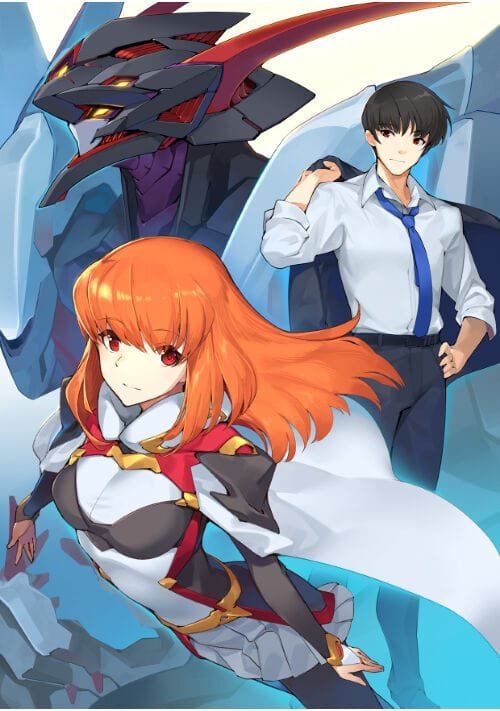
Ryuuji Sato, a high school student who has spent two years meticulously crafting a persona of an utterly forgettable loner, has engineered a specific destiny for himself. His plan, inspired by isekai tropes, involves being summoned to a fantasy world alongside his classmates, only to be betrayed and left for dead by his peers. This anticipated suffering would serve as the catalyst for his awakening to immense, chaotic power, allowing him to return as a vengeful anti-hero. However, the summoning that delivers him and his classmates—Kenji Tanaka, Reina Inoue, and Daisuke—into the realm of the goddess Amaterasu begins to diverge sharply from his script. Amaterasu, a deity who despises her bureaucratic celestial job and desperately seeks grounds for termination, summons Ryuuji specifically because she perceives his latent, world-destroying power hidden beneath his pathetic exterior. Her plan is to banish him in the most humiliating way possible, hoping his resulting rage will provide the cause for her dismissal.

The execution of this plan fails almost immediately when Kenji, the designated Hero, refuses to let Ryuuji be cast out. Instead of scorn, the group rallies around Ryuuji, revealing that they were all aware of his anonymous acts of kindness, such as fixing school servers and returning lost items. Rather than exploiting his perceived weakness, they reinterpret his desire for isolation as humble self-sacrifice. When Amaterasu insists on banishing the incompatible Ryuuji, Ryuuji improvises a frantic narrative, claiming the banishment was a divine test of character designed to filter for genuine heroism. The group accepts this fabrication with absolute reverence, bowing to Amaterasu’s profound wisdom and inadvertently saving her from having to commit an act of injustice that might trigger her firing protocol. Amaterasu, baffled by Ryuuji’s unintentional heroism and the group’s blinding sincerity, ultimately allows them to proceed to the world of Olvido, viewing Ryuuji as a frustratingly pure obstacle to her career-ending plans.

Upon arriving in the tutorial town of Olvido, Ryuuji attempts to steer the plot back toward betrayal by leaning into his role as the weak, trusting fool. He encourages his party to view Mayor Pedro, a visibly corrupt official, as a villain so that Pedro will eventually betray them, isolating Ryuuji as the sole survivor of their disillusionment. He even goes so far as to defend the mayor’s suspicious behavior to his friends, hoping to paint himself as a naive idiot whose judgment fails. However, the party’s loyalty and moral rigidity consistently thwart these efforts. When Ryuuji offers them a poisonous-looking fruit he found while ostensibly fleeing the battle, they interpret his absence as a brave, strategic maneuver to find healing supplies. The fruit turns out to be a miraculous restorative artifact, reinforcing their belief in his selflessness.

Further complicating Ryuuji’s revenge arc is the arrival of Siegfried, a rival hero who radiates genuine, polished charisma but is secretly a fraudulent con artist seeking a legendary artifact. Ryuuji immediately recognizes Siegfried’s toxic nature and, in a move to undermine the golden boy, publicly declares his trust in the corrupt Mayor Pedro over the heroic Siegfried. This act shocks both the local populace and Siegfried, who interprets Ryuuji’s behavior as the move of a terrifyingly perceptive saint. Ryuuji then gifts the priceless artifact to the mayor, hoping the mayor’s greed will expose him, but Pedro accepts it with unexpected, genuine reverence, further confusing Ryuuji’s understanding of human nature. Meanwhile, Amaterasu, watching from afar and eager to accelerate Ryuuji’s downfall, sends a system message warning that someone will betray him, planting seeds of paranoia in the mind of a protagonist who simply wants to be hated.

The narrative tension intensifies as Ryuuji’s friends begin to exhibit increasingly intense, almost obsessive protective behaviors toward him. Reina, the designated love interest, displays yandere-like tendencies, threatening to burn the town to ash if anyone harms Ryuuji and physically shielding him from perceived threats. This shifts the genre away from the dark revenge tragedy Ryuuji envisioned toward a protective comedy where his friends are desperate to keep him safe from a world they believe wants to hurt him. Ryuuji finds himself trapped in a loop where every attempt to be villainous or useless is reinterpreted as an act of supreme virtue or strategic genius. As he navigates this new reality, Ryuuji must contend with a goddess who wants him to fail, a rival hero who wants to exploit him, and a party that loves him with such intensity that it prevents the betrayal necessary for his growth.

The story direction moves toward an ironic deconstruction of the isekai genre. Ryuuji’s quest for revenge is stymied not by enemies, but by overwhelming, weaponized friendship. The core conflict is no longer about overcoming betrayal, but about Ryuuji’s struggle to maintain his identity as a future villain while his allies continuously sanctify his actions. As Siegfried plots to steal the artifact and the party faces external threats, Ryuuji’s hidden power remains dormant, suppressed by the very affection he sought to reject. The narrative sets the stage for a climax where Ryuuji may finally have to confront the fact that his revenge arc is impossible as long as his friends believe in his goodness unconditionally.

Latest Release
DateGroupRelease
2026-10-01jadescrolls c30
2026-10-01jadescrolls c29
2026-10-01jadescrolls c28
2026-10-01jadescrolls c27
2026-10-01jadescrolls c26
2026-10-01jadescrolls c25
2026-10-01jadescrolls c24
2026-10-01jadescrolls c23
2026-10-01jadescrolls c22
2026-10-01jadescrolls c21
2026-10-01jadescrolls c20
2026-10-01jadescrolls c19

Community Reviews

Rating(0 / 5.0, 29votes)
5 stars
0(0%)
4 stars
0(0%)
3 stars
0(0%)
2 stars
0(0%)
1 stars
0(0%)

Popular reviews

... Read More
Okay, I need to talk about this beautiful disaster of a protagonist-nemesis relationship because Ryuuji is absolutely THE WORST at manipulating people. The whole setup is so good on paper—Ryuuji intentionally freed Siegfried because he needs someone to betray him as part of his revenge arc. The meta-awareness is delicious. He's treating his own life like a story, trying to engineer his own downfall like some kind of deranged playwright. But then Siegfried shows up and completely refuses to read the script. Watched Ryuuji try like four different betrayal flags and every single one backfired in the funniest, most frustrating way possible. The stumble? Siegfried thinks it's a signal for an ambush. The weapon drop? Siegfried thinks it's a test. The dramatic scream behind the rock? Siegfried gets mauled saving him and then looks at Ryuuji like he's a cosmic horror entity. The wolf fight is the peak of this entire dynamic. Ryuuji is literally throwing rocks trying to 'accidentally' distract Siegfried, and the universe keeps conspiring against him. That moment when he throws the rock at the wolf instead—and then Siegfried's face goes from 'I'm protecting my friend' to 'this man is a monster'—absolute comedy gold. The man can't even fail at failing correctly. And Siegfried himself? God, he's such a paranoid wreck. The narration makes it clear he's operating on pure trauma and suspicion. When Ryuuji drags him into the teleportation rune, the look on his face—'He hadn't saved me from the trap. He had followed me right into it'—this guy is so broken that kindness looks like conspiracy to him. They're both so deeply messed up in completely different ways, and neither of them can land the plot they want. The tragedy is that they're literally designed for each other as protagonist and antagonist but can't seem to fulfill their narrative roles. Ryuuji wants a scumbag hero who will stab him in the back. Siegfried wants... honestly I have no idea what Siegfried wants, but it definitely doesn't involve trusting anyone. Maybe they're stuck in this loop forever.
... Read More
Okay, we need to talk about Reina because this girl is absolutely unhinged and the author is weaponizing it against our protagonist and honestly I'm here for it. On paper, Reina should be the generic tsundere heroine or the supportive friend who occasionally comments on how brave Ryuuji is. But every single time she speaks to him, there's this undercurrent of something deeply, profoundly wrong. Remember when he stubs his toe on a tree root and she whispers 'If anything in this world tried to harm you, Ryuuji, I would burn it to ash'? That's not support. That's a threat wrapped in a lollipop. She looks at him the way someone looks at a rare collectible they plan to lock in a display case and never let anyone else touch. And Ryuuji, bless his paranoid little heart, IS aware of it. He literally files it under 'Overzealous Heroine Trope' like a man trying to convince himself the sky isn't on fire. He notices the flag. He acknowledges it. And then he just... moves on because his own elaborate betrayal scheme is supposedly more important? Dude, your girlfriend-or-not is actively saying she'd murder people for you in the middle of a battlefield and you're worried about goblin fruit timing. Then there's the Mayor Pedro POV interlude, which is such a brilliant narrative choice because it completely reframes everything. We've been seeing Pedro through Ryuuji's cynical lens—this greedy schemer waiting to betray them—and then we get his actual perspective: he sees Ryuuji trembling, looking at the ground, and immediately reads him as a gentle soul who needs protection. The irony is so thick you could spread it on toast. Pedro is playing a completely different game than Ryuuji thinks he is, and they're both convinced they're the puppet master. Kenji, meanwhile, is the human equivalent of a golden retriever who's been given a holy sword and zero critical thinking skills. His absolute, unwavering faith in Ryuuji isn't naive—it's almost supernatural. The man genuinely cannot conceive that Ryuuji would do anything other than act selflessly. Which is, honestly, the most dangerous person in the party. A righteous hero with a black-and-white worldview who sees sacrifice and strategy and immediately interprets it as moral goodness? That's a recipe for some serious fallout when (not if) he discovers the truth. Daisuke barely speaks and I love him for it. He's the silent anchor, and his single 'grunt' when offered the poison fruit is the funniest beat in the whole chapter. The relationship dynamics here are a minefield. Ryuuji wants to be feared and resented. Everyone is trained by the narrative to adore him. The tragic comedy of this is going to be absolutely devastating when it finally snaps.
... Read More
This stretch of chapters is a masterclass in controlled pacing. You start with pure kinetic energy—the cart flying, the adrenaline, the absurdity of a vegetable chase. Then it drops into that quiet, sun-dappled clearing where everything slows down. The fight itself is swift, almost disappointingly one-sided, which is the point. The real tension isn't in the sword clashes; it's in the silence afterward, in Ryuuji's internal panic. The author lets the scene breathe after the battle, lingers on Reina's trembling arm, on Kenji's tears, on that awful, beautiful moment when Ryuuji's speech hangs in the air. And then—bam—you cut to the jailhouse, the mayor's breakdown, Siegfried's venomous confession. The rhythm moves from frantic → still → intimate → crushing. There's no filler, no dragging. Every beat serves the emotional arc. I found myself actually slowing down my reading during the confrontation, like I didn't want to miss a single reaction. And that ending? ‘Your stupid, smiling face. Your fake humility.' Chills. Absolute chills. It lands like a punch because everything before it was building to that release.
... Read More
Amaterasu. I need a minute. This character is doing the emotional equivalent of standing on a beach watching your dream vacation get cancelled because someone you didn't even know decided you looked important. She had it all planned out. The illegal summoning. The chaos catalyst. The property damage reports that should have definitely gotten her fired. She'd already packed her bags — oversized sunglasses, a bikini that 'shimmered with the light of a thousand dying suns,' a trashy romance novel. This was her retirement starter pack. Her escape from millennia of boring divine paperwork. And then Zeus looks at her little plan — the one designed to destroy civilizations — and says 'fascinating.' He doesn't fire her. He PROMOTES her. To a BIGGER office with a nicer view and a potted plant that sends congratulations. The tragedy isn't that she failed. The tragedy is that she SUCCEEDED too well. Her plan worked perfectly. Ryuuji is exactly as pure and perceptive and plan-wrecking as she could have hoped. And that's the problem, because now she's stuck. Now she has to watch from behind a wall-sized divine monitor as this impossibly good teenager sees through every trap, every disguise, every lie. I found myself genuinely sad for her. Not because her plan to cause chaos is good — obviously not — but because she wanted something as simple as a beach and a margarita, and the universe kept handing her responsibility instead. 'His saintliness was my curse. His heroic nature was my prison.' That's not a villain monologue. That's someone who's tired. But then she makes the choice. The moment where she decides to sabotage Ryuuji instead. Where she shifts from 'I want to leave' to 'I'm going to make him fail.' That's the emotional turning point, and it's terrifying because it's so understandable. When you've been wronged by success, when your dreams keep getting postponed by people who are just... good at being good... what do you do? You make them less good. The plant on her desk that radiates 'pure, unfiltered joy' and she wants to set on fire — that image stayed with me. It's the perfect symbol for everything wrong with her situation. The universe keeps giving her gifts that feel like insults.
... Read More
I keep coming back to Kenji. That kid is my emotional casualty of this arc and I am NOT okay with it. The way the author writes him — 'shining eyes,' 'hero-addled brain,' calling him a 'total idiot' with what reads as genuine affection — it's clear Ryuuji genuinely treasures him. Or at least, he treasures what Kenji represents: uncomplicated trust. In a world where everyone is performing, Kenji is the only one who isn't. And that makes him both the most valuable ally and the most vulnerable target. Reina is a different story. Her relationship with Ryuuji has this razor-thin edge running through it. She carries him through town like a princess — 'Her arms became steel bands around his torso. A low growl rumbled in her chest.' That's not romance, that's ownership. 'Reina's hand landed on my shoulder. Her grip was surprisingly tight, a silent warning aimed at the mayor. Her eyes were sweet, but the vibe she was sending his way was pure ice. She was staking her claim.' STAKING HER CLAIM. The possessiveness is palpable and it makes every interaction between them charged with something that isn't quite friendship and isn't quite love — it's something messier and more dangerous. And then there's Siegfried approaching Kenji alone in the alley. This is the moment that haunts me. Siegfried knows exactly who to target — the most trusting, the least suspicious, the one who would believe a fellow hero's concern about a stolen artifact. 'We are two of a kind, you and I.' That line is poison wrapped in compliments. He's not just trying to steal the fruit — he's trying to recruit Kenji's moral authority to legitimize his theft. Reiji's response — 'No. I trust my friend's judgment.' — is one of the purest moments in this entire text. But purity in this story doesn't protect you. It makes you predictable. Siegfried's reaction says it all: 'A noble sentiment. Foolish, but noble.' He doesn't respect the conviction — he pities it. And pity from a villain is worse than hatred. The party is already fracturing and nobody's even realized it yet. Kenji is being pulled toward Siegfried. Reina is guarding Ryuuji with increasing desperation. And Ryuuji himself is so busy playing long games that he might not notice his people slipping away. The tragedy isn't that they'll fight each other — it's that they'll destroy each other while believing they're doing the right thing.
... Read More
This narration is so good I need to talk about it. The first-person voice here has this incredible oscillation between dramatic self-importance and desperate崩溃. Ryuuji describes his own thoughts in these overwrought operatic phrases—'the Ballad of Saint Ryuuji,' 'my plan, my confession, my soul were all in ruins'—and then immediately undercuts it with this tiny whisper of 'Fine. Whatever.' The contrast between his internal grandiosity and his external surrender is hilarious. His friends' dialogue is the perfect foil. Kenji's 'We know the burden you carry is heavy' while patting his shoulder clumsily, Daisuke's choked grunt, Reina's breathy 'A root...' with that split-second flash of murder in her eyes—each character has a distinct vocal fingerprint. The best moment has to be when Ryuuji tries to sound thoughtful defending the mayor and produces: 'Maybe it's not greed. Maybe it's a medical condition. A rare facial paralysis that only affects the sincerity muscles.' That is such a weird, specific, unhinged thing to say out loud and it fits Ryuuji's voice perfectly. He's so desperate to sound charitable that he accidentally invents a medical diagnosis for the mayor's villainy.
See all reviews

Custom lists

See all custom Lists