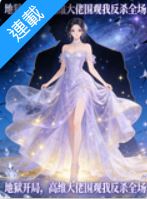
Hell-Mode Opening: Watched by High-Dimensional Titans as I Slaughter the Entire Board
+Add to Custom List
Genres:
Novel Info

Summary

... Read More

Jiang Mian, a criminal profiling specialist from the real world, awakens in the body of a fictional character with the same name. The original Jiang Mian was a vicious supporting character in a novel, adopted into the wealthy Gu family and obsessively in love with Gu Xingye. She was framed for a crime she did not commit and died in disgrace while Gu Xingye married her rival, Shen Yanxin. Now trapped in this hell-mode opening, Jiang Mian finds herself handcuffed in an interrogation room, accused of assaulting a man named Chen Ming. Despite the overwhelming evidence against her, she remains calm and analyzes the situation using her professional skills. She notices discrepancies in the photographic evidence, specifically the color of a tear mole, and uses biomechanical calculations to prove that her frail physique could not have inflicted the reported injuries. Her logical dismantling of the case confuses the interrogators and reveals a conspiracy orchestrated by Shen Yanxin.

Unbeknownst to Jiang Mian, her actions are being observed by a high-dimensional entity known as Pei Yuyan through a live stream interface. Viewers from another dimension watch her every move, placing bets on her fate. Pei Yuyan, intrigued by her anomalous behavior that deviates from the original plot, intervenes by granting her system points and a skill called Profiler’s Eye. This ability allows her to detect minute details in her environment, such as pixel inconsistencies in photos and subtle scent trails. Using these tools, Jiang Mian identifies an auxiliary police officer who planted evidence and exposes him during the interrogation. She is released but faces immediate danger from the Gu and Shen families, who plan to kill her at their upcoming engagement banquet.

Prepared for the banquet, Jiang Mian attends the event with the help of Fu Chenyi, a neutral ally connected to her late father. At the banquet, Shen Yanxin attempts to frame Jiang Mian again by faking a heart attack and accusing her of provocation. Jiang Mian counters by exposing Shen Yanxin’s smart bracelet as a fake medical device and revealing the staged nature of the incident. She then discovers the true assassination plot: a crystal chandelier rigged to fall on her. In the service corridor, she disables the mechanism and subdues the waiter sent to kill her. The old detective, who had been monitoring the case, arrives to arrest the saboteur. Jiang Mian survives the banquet unscathed, gaining a board seat in the Shen family’s art foundation as part of her victory.

Following the banquet, Jiang Mian receives crucial information about her father’s death. Her father, a scientist named Jiang Mingyuan, was killed fourteen years ago under suspicious circumstances involving a lab fire. The Shen family had repeatedly tried to acquire his research, which centered on a mysterious sample labeled Gamma-7. Jiang Mian discovers that her father left behind a silver key and a USB drive containing fragments of his research, including images of a preserved eyeball. She learns that the Shen family and a corporation called SkyEye Tech are involved in a cover-up. After receiving threats and being attacked at her apartment, she is rescued by Zhou Jian, a former associate of her father who provides her with a safe house and additional evidence linking the Shen family to her father’s murder.

As Jiang Mian delves deeper into the mystery, she continues to interact with the high-dimensional observers. Pei Yuyan remains her primary watcher, providing subtle assistance through system notifications and tips. He becomes increasingly invested in her survival, deviating from his protocol to protect her from immediate dangers. Jiang Mian realizes that she is not alone in this fight and that there are forces beyond her understanding watching over her. She resolves to uncover the truth behind her parents’ deaths and expose the conspiracy, even as the stakes rise and more enemies emerge. The story follows her journey from a desperate survivor to a determined investigator, navigating a web of lies, betrayal, and hidden agendas while maintaining her sanity and integrity in a world designed to break her.

Latest Release
DateGroupRelease
2026-08-11shanghai fantasy c22
2026-08-11shanghai fantasy c21
2026-08-11shanghai fantasy c20
2026-08-11shanghai fantasy c19
2026-08-11shanghai fantasy c18
2026-08-11shanghai fantasy c17
2026-08-11shanghai fantasy c16
2026-08-11shanghai fantasy c15
2026-08-11shanghai fantasy c14
2026-08-11shanghai fantasy c13
2026-08-11shanghai fantasy c12
2026-08-11shanghai fantasy c11

Community Reviews

Rating(3.9 / 5.0, 9votes)
5 stars
3(33%)
4 stars
2(22%)
3 stars
4(44%)
2 stars
0(0%)
1 stars
0(0%)

Popular reviews

... Read More
"If I hadn't believed her back then, hadn't treated you that way... would we have—" "No." Two words. That's it. Two syllables and the entire ten-plus-year relationship between these two people just got cut in half with a knife. I need to sit with this scene for a moment. Gu Xingye comes to Jiang Mian at night, under a streetlight, looking absolutely wrecked—bloodshot eyes, turmoil, the works. He brings her surveillance footage proving Shen Yanxin set her up. He tells her about Zhang Qiang's confession. He basically admits he was wrong about both of them. And his question—"Have I been wrong about you all along? And wrong about her, too?"—that is a man who has spent over a decade building his entire worldview on a lie, and he's finally seeing the cracks. But Jiang Mian's response? Cold. Calm. Frozen lake cold. "You don't need to apologize to me. What you need to think through is what you actually want." She doesn't yell. She doesn't cry. She doesn't even turn around when she walks away. She just... leaves him standing there in the dark. And I respect her so much for this. After everything—after being betrayed, after being made to look like the villain at her own tea party, after losing her parents and spending fourteen years without answers—she has reached a place where Gu Xingye's regret no longer moves her. That is not weakness. That is the most powerful character moment I've read in a long time. The elevator scene that follows is devastating in its simplicity. She leans against the wall, closes her eyes, and the narration says she was exhausted "the kind that seeps out from her bones." This isn't just physical tiredness. This is the exhaustion of a woman who has been fighting alone for over a decade and just realized the person she trusted most was never really on her side. And yet—she still goes back to her apartment. Still plugs in Zhou Jian's USB drive. Still stares at that photograph of her father's eyeball sample and keeps going. She doesn't collapse. She doesn't give up. She is broken, yes, but she is also unbreakable. The contrast between Gu Xingye and Fu Chenye is also worth noting. Gu Xingye shows up late with apologies and half-truths. Fu Chenye? He sends a message that says "Tomorrow afternoon, Yunding Teahouse" and the trailing tone sounds like an unspoken warning. He's been operating in silence, gathering information, protecting her from angles she can't even see. Zhou Jian calls him out directly: "He knows more than I do. But he won't tell you." Why? Because "some truths—the less you know, the longer you live." Is that protection? Or is it manipulation? I genuinely don't know which one frightens me more.
... Read More
I need to talk about Gu Xingye because THIS MAN is so complicated and I have opinions. Three days ago he had Jiang Mian in an interrogation room. He told her to "endure it" because "the Gu family's reputation matters." He was cold, calculating, willing to sacrifice her for his family's image. And now? Now he's standing at his own engagement banquet watching Shen Yanxin publicly frame Jiang Mian and his first instinct isn't to protect the woman he's supposedly marrying — it's to SHIELD her from the confrontation. "This is an engagement banquet, not an interrogation room. Yanxin needs rest. There's no need to argue about this." Translate: I don't want to deal with the truth. I want this to go away. But then Jiang Mian calls him out on it — reminds him of every time he told her to endure, every time he chose the Gu family over her — and something CRACKS. The text says his expression becomes "impossibly complex — disappointment, anger, humiliation at being played, and something deeper, like a crack forming in the foundation of his beliefs." What beliefs? That Shen Yanxin is innocent? That he's making the right choices? That the Gu family is worth protecting? And here's the thing that really gets me — when Shen Yanxin grabs his arm and says "Brother Xingye, believe me! I just... I loved you too much, I was afraid Jiang Mian would take you away..." she's admitting her motive out loud. To HIM. And Gu Xingye's reaction? He shakes her off. Not violently, but enough to make her sway. Fourteen years of Jiang Mian enduring for the Gu family. Fourteen years of being the good adopted daughter. And the moment she stops enduring and demands the truth, Gu Xingye is the one who looks most shaken. I'm not saying he's a good guy. I'm saying he's a guy who is starting to realize he's been on the wrong side of everything. And that realization is going to change how he sees Jiang Mian. Probably too late. But definitely not too late to be interesting.
... Read More
I have to talk about the iris key reveal because it completely flipped what I thought this story was about. Up until this point, I was reading it as some kind of revenge drama with corporate intrigue, right? The tea party setup, Shen Yanxin's manipulation, the board seat drama—it all felt like a familiar genre. But then Jiang Mian opens that USB folder and finds her father's lab journals with a photograph of a human eyeball suspended in liquid, and suddenly the whole thing transforms. The silver key Fu Chenye gave her? It's not THE key. It's just a container opener. The real key is a biological specimen—a living eyeball with golden markings around the pupil. That is such a bold, weird, unforgettable plot turn. And the note on the back: "Sample γ-7. Activity stable. Key carrier verification passed." What does that even mean? Is her father's research connected to SkyEye Tech? Is the eyeball still "active"? The plot just layered itself like an onion and I am not ready. What also stood out to me is how the Shen family's second branch made their move. They weren't just trying to embarrass Jiang Mian at a tea party—they were genuinely trying to eliminate her because her board seat hit tens of millions in their annual cash flow. The threat escalated from social sabotage to tactical team breach in one chapter. That's not subtle, and I mean that as a compliment. The plot doesn't waste time. When the three black SUVs appeared and those seven or eight people in tactical gear jumped out, I actually gasped. This story went from "drama about a woman fighting for justice" to "woman on the run from professional killers" in the span of a few paragraphs, and it worked because every earlier scene had been laying groundwork. The tea party wasn't just humiliation—it was a probe. A test of how far they could push her before she fought back. And when she did fight back by going to Fu Chenye, that's when the real danger woke up. Zhou Jian rescuing her was another twist I didn't see coming. Up until now, he's been this background figure—Jiang Mian's ally, Fu Chenye's colleague, someone who hands over USB drives and gives advice. But the way he rescued her? He was dressed in tactical gear, he had a car ready, he knew exactly how to extract her from that alley. And his explanation about SkyEye Tech's people—"specialized in handling technical disputes... they never leave survivors"—that line gave me actual chills. This man has been operating in a world far deeper than Jiang Mian realized, and he's been protecting her from the shadows. But here's the question that's been eating at me: why did he help? Is it loyalty to Fu Chenye? Is it something more personal? And what does he know about her father's research that he hasn't told her yet?
... Read More
I have to talk about the atmosphere in this chapter because the author knows HOW to build tension and I am here for it. Let me start with the banquet scene. The opening description is everything: "The champagne flute was cool in her hand, fine beads of condensation clinging to the glass, the chill seeping into her fingers." That cold glass. That's Jiang Mian's anchor. She's standing in a room full of people who want her dead, wearing a white evening gown, and the only thing keeping her grounded is the condensation on a champagne flute. The contrast between the opulence and her isolation is devastating. And the chandelier — oh god, the chandelier. The author describes it as "blindingly bright — thousands of crystals refracting harsh light that made her eyes ache." It's beautiful and threatening at the same time. A hundred kilograms of crystal hanging directly above her head, swaying "ever so slightly in the air-conditioning draft." Almost imperceptibly. But Jiang Mian sees it. The sensory details throughout this scene are incredible. The smell of "sweet tuberose mingled with cedarwood." The sound of "soft pop of champagne corks, the muted thud of high heels on carpet" blending into "a dull hum, as if heard through water." She's physically present but psychologically detached, like she's observing this from underwater. And then there's the contrast with her apartment scene earlier — the century egg and lean pork congee, the soup dumplings, the soy milk. Warm food. Real food. The author uses food as an anchor to reality throughout. When Jiang Mian eats that congee, it's not just a meal — it's "grounding her in the reality of being alive." The worldbuilding here isn't about fantasy elements or elaborate settings. It's about making a wealthy Chinese family's banquet hall feel like a battlefield. Every crystal, every perfume note, every whispered conversation is a weapon. And Jiang Mian is the only one who knows it.
... Read More
There's a whole ecosystem of symbols running through these chapters and I can't stop thinking about them. The eye is the big one, obviously. Her father's lab journal contains a photograph of a living eyeball—Sample γ-7—with golden markings around the pupil. The note says "Key carrier verification passed." And then there's the silver tail ring with an eye engraved on it. "The key is in the eye." But the eye isn't just a biological specimen—it's also a metaphor for observation, for being watched, for the act of seeing itself. Observer-01 watches Jiang Mian. Pei Yuyan watches Jiang Mian through screens in some high-dimensional space. And Jiang Mian herself becomes an observer when she starts studying her father's journals, piecing together the truth. The key is another powerful symbol. There's the silver key (which opens a container), the eyeball (which IS the key), and then there's the idea of keys as metaphors for truth, for access, for liberation. Jiang Mian has been locked out of the truth about her parents' deaths for fourteen years. Now she's holding the key in her hands, and she's terrified of what it will unlock. But the symbol that haunts me the most is the star. Pei Yuyan's final line—"Like a watcher of the long night, who, in endless darkness, for the first time stopped walking—for a star that refused to go out." This is such a beautiful, devastating image. Jiang Mian is the star. She's been burning through despair, through betrayal, through loss, and she hasn't gone out. And Pei Yuyan, this entity who exists outside of normal reality, who could force her back onto her "original track," chooses instead to watch her. To protect her light. The world stability metric dropping from 71.3% to 65.4% is the cost of her defiance, and Pei Yuyan is willing to pay it. The imagery of light and darkness runs throughout these chapters like a thread. Jiang Mian standing by the window with city lights like "a fallen river of stars." The dim lamplight in her apartment. The streetlight falling across Gu Xingye's face. The headlights of Zhou Jian's car in the dark alley. Every scene is lit deliberately, and the light always seems to represent hope, knowledge, or connection in a world full of shadows. And then there's the Pandora's box metaphor that Zhou Jian uses. Once you open it, you can't close it. The truth about her parents, about SkyEye Tech, about the eyeball, about Observer-01—it's all connected, and Jiang Mian has already turned the lid.
... Read More
The pacing in these chapters is absolutely ruthless and I love it. Let me walk you through the structure because the author does something really clever here. Chapter 27-34 spans from a tense nighttime confrontation between Jiang Mian and Gu Xingye, through a full-on tactical team raid on her apartment, a desperate escape down a fire escape, a rescue by Zhou Jian, three days at a safe house, and then a return home with a new threat looming. That is a LOT of story to cover, and the author handles it with this weird rhythm—fast, fast, slow, fast, fast, slow, fast—that keeps you locked in. The opening scene with Gu Xingye is deliberately slow. Long pauses. Unfinished sentences. The wind sweeping leaves. The elevator rising slowly. It's a breathing room moment, a quiet before the storm. And then—BAM. Her phone vibrates. Heavy breathing on the other end. Braking screech. Seven people in tactical gear. Three SUVs. The pace accelerates so sharply that I literally had to reread that paragraph twice to make sure I wasn't imagining it. What's brilliant is the jump cut to the alley rescue. One moment she's leaping from a second-floor fire escape onto a metal awning, shoulder exploding with pain, ankle twisting. The next moment Zhou Jian is there, grabbing her wrist, shoving her into a car, and they're gone. No dramatic speech. No long goodbyes. Just "Get in" and off they go. The author trusts the reader to fill in the gaps, and that trust makes the pacing feel efficient rather than rushed. Then comes the safe house sequence—three days compressed into a few paragraphs. This is where the pacing deliberately slows down, almost uncomfortably so. Jiang Mian organizing files, rereading messages, staring at the ceiling. It's quiet. It's meditative. It's the calm before the next storm. And then—her phone lights up. Observer-01 sends another message. The story picks up again. The chapter structure itself also deserves mention. Each chapter ends on a note that pulls you forward: a revelation (the eyeball), a rescue (Zhou Jian), a warning ("The night is deep. Remember to lock your door"), and then a cliffhanger that isn't really a cliffhanger but more of a slow-burn unease. The author isn't using cheap tricks here. The tension comes from the accumulation of details, not from sudden shocks. By chapter 34, I was so deeply invested in Jiang Mian's situation that the quiet ending—her standing in a dark living room, phone lighting up with another cryptic message—felt more threatening than any action scene could have.
See all reviews

Characters

See all characters

Custom lists

See all custom Lists