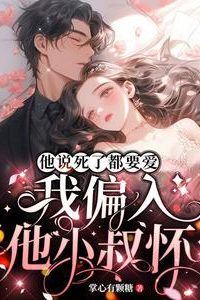
He swore love till death, but I chose his uncle’s arms
+Add to Custom List
Genres:
Novel Info

Summary

... Read More

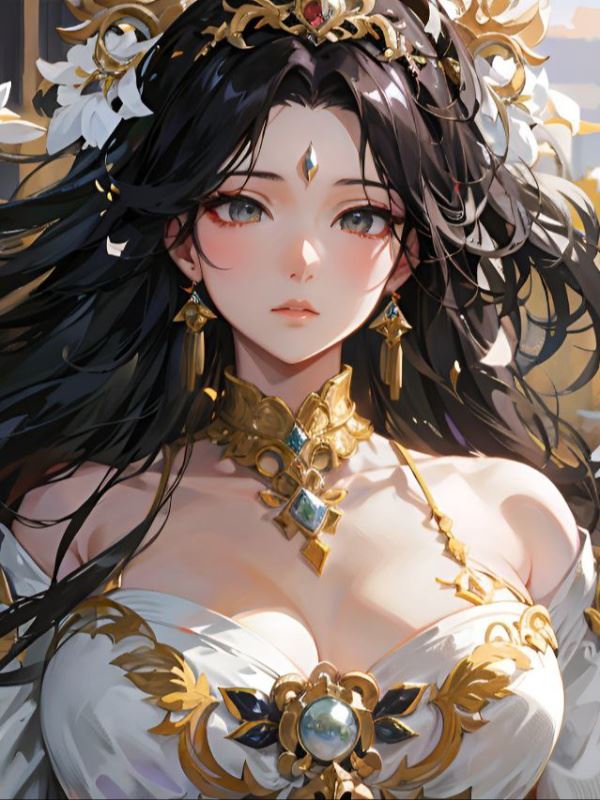
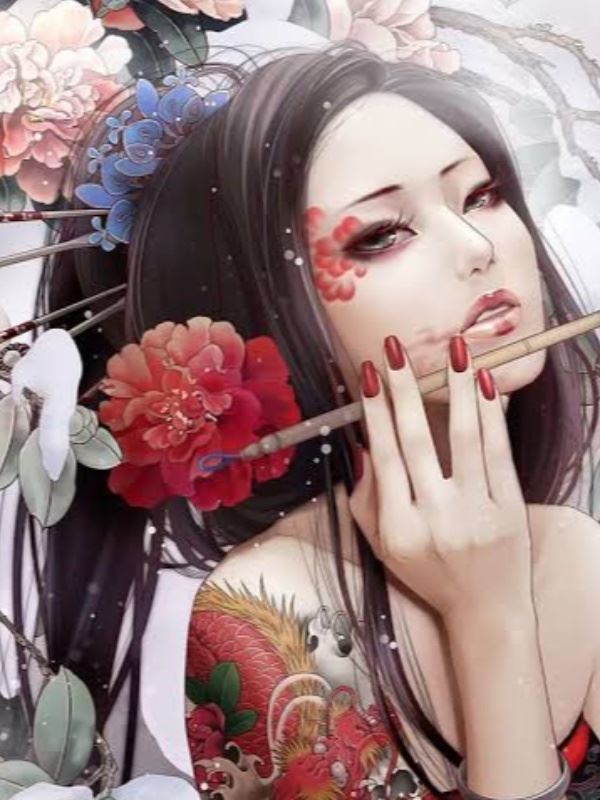
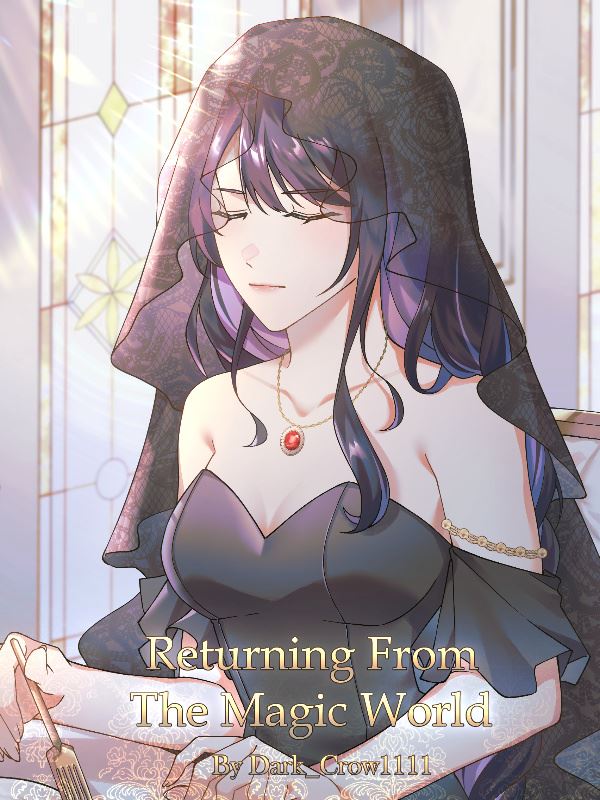
Wen Yue is an actress engaged to Gong Chen, the third young master of the powerful Gong family. Her life unravels when a video surfaces showing a woman being exploited at a club, leading the public to believe it is her. In reality, the woman is Wen Xi, Wen Yue's younger sister, who had recently been identified as the Wen family's biological daughter after being lost in childhood. Gong Chen and the Wen family pressure Wen Yue to take the blame to protect Wen Xi's reputation and future marriage prospects. Despite Wen Yue's protests that she did not commit the act, they insist she sacrifice her name for the family's benefit. Heartbroken and betrayed by her fiancé and family, Wen Yue cancels her wedding, drinks wine in her apartment, and dies by suicide. Before dying, she sends a cryptic message to Gong Hengye, Gong Chen's uncle, asking him to collect her body.

Gong Hengye, the cold and authoritative head of the Gong family, is abroad when he receives the message. Upon learning of Wen Yue's death and the circumstances surrounding it, he immediately returns home. He discovers Wen Yue's body in her apartment and arranges for it to be kept in a special hospital ward by Dr. Cheng Yong'an, rather than being handed over to the indifferent Wen family or cremated immediately. Unbeknownst to everyone, Wen Yue's soul remains attached to the living world. She appears before Gong Hengye in the hospital, revealing that she can see and touch him, though he is initially convinced he is hallucinating. Wen Yue explains that she has discovered she is a fictional character, a malicious female supporting role destined to die so that the true female lead, Wen Xi, can be with the male lead, Gong Hengye. Determined to ruin this plot, Wen Yue decides to cling to Gong Hengye and sabotage his relationship with Wen Xi.

Gong Chen, unaware of the supernatural events, believes his uncle has hidden Wen Yue away. He kneels in the rain outside the Gong family mansion, demanding to see his fiancée, but Gong Hengye cruelly tells him to die far away and not dirty the doorstep. Gong Chen accuses his uncle of pursuing Wen Yue, a claim Gong Hengye dismisses as foolishness. Meanwhile, Wen Yue follows Gong Hengye back to his residence in Haiting, where she realizes she cannot leave him due to a metaphysical barrier. Gong Hengye eventually pulls her through the barrier, accepting that she is stuck with him. He warns her not to act spoiled, mistaking her behavior for manipulative tactics used by Gong Chen, and remains indifferent to her plight.

As Wen Yue settles into her new existence as a ghost attached to Gong Hengye, she observes his interactions with others and reflects on the novel's plot. She learns that Gong Hengye is destined to fall in love with Wen Xi after Wen Yue's death, a scenario she finds absurd given his cold demeanor. Wen Yue resolves to use her knowledge of the story to prevent Gong Hengye from ever loving Wen Xi, aiming to change her fate as a villainess. The story establishes a dynamic where Wen Yue, now a ghost, must navigate her relationship with the aloof Gong Hengye while dealing with the consequences of her past life and the manipulative schemes of the Wen family and Gong Chen.

The narrative shifts focus to the supernatural bond between Wen Yue and Gong Hengye. Wen Yue discovers that she can only be touched by Gong Hengye and cannot interact with the physical world otherwise. This dependency forces her to stay close to him, leading to tense and awkward interactions. Gong Hengye, though initially dismissive, begins to notice Wen Yue's persistent presence and her unique ability to see and communicate with him. He starts to suspect that her death and subsequent appearance are not mere coincidences but part of a larger, inexplicable phenomenon. As Wen Yue continues to interfere with the original plot, she encounters resistance from the narrative's forces, which seem to push Gong Hengye and Wen Xi together despite her efforts. The story explores themes of fate, free will, and the complexity of human relationships, as Wen Yue struggles to redefine her identity beyond her role as a villainess.

Novel Items

More
Video
A video showing a balding middle-aged man holding a scantily clad young woman on his lap and forcing alcohol into her mouth. The video was originally about Wen Xi but trending topics falsely claimed it was Wen Yue. Hashtags included #WenXiWasOnceExploited# and #WenXiAttemptedSuicide#.
Drugs
Medication secretly administered by Ma Jianguo to Xie Zhengnian's medicine. Qin Nian spotted them and used spring water from her thermos to neutralize their effects. Ma Jianguo had doubled the dose for Qin Nian's tea.
Clothing
Held by Sister Zhang. Shen Qingci says it's for a special day - her battle attire for the grand opening of the stage play.
Beverage
A bottle of red wine from the wine cellar. It was stronger than expected and caused Qin Ya to get drunk after just one glass. During her drunken state, some of her memories began to return. Shi Jianchuan opened it with a corkscrew.
Object
The broken pieces of the wine goblet that Wen Yue used to cut her wrist in her suicide attempt. She picked up a piece and cut through a blood vessel, though she still called Gong Chen before hanging up.
Food
A soup that Wen Xi suddenly did not want to eat anymore, mentioned during her phone conversation with Gong Chen while Wen Yue was dying.
Latest Release
DateGroupRelease
2026-08-11shanghai fantasy c28
2026-08-11shanghai fantasy c27
2026-08-11shanghai fantasy c26
2026-08-11shanghai fantasy c25
2026-08-11shanghai fantasy c24
2026-08-11shanghai fantasy c23
2026-08-11shanghai fantasy c22
2026-08-11shanghai fantasy c21
2026-08-11shanghai fantasy c20
2026-08-11shanghai fantasy c19
2026-08-11shanghai fantasy c18
2026-08-11shanghai fantasy c17

Community Reviews

Rating(3.8 / 5.0, 25votes)
5 stars
6(24%)
4 stars
9(36%)
3 stars
10(40%)
2 stars
0(0%)
1 stars
0(0%)

Popular reviews

... Read More
"As the saying goes, belated affection only deserves to hug a dog. Accept your fate." I AM DEAD. Cheng Yong'an just dropped this line with a straight face while checking on a fainting man and I cannot recover. This man played the villain role flawlessly — delivered the urn, spun the whole "she wanted her ashes scattered at sea" narrative, and then capped it off with a proverb that absolutely destroyed Gong Chen's remaining sanity. And he did it all while smiling gently. The man is a menace. But what I love most about the dialogue in this section is how each character's voice is completely distinct. Gong Hengye's lines are short, clipped, icy — "Get out." "Scram." He doesn't waste words because he doesn't need to. Every sentence is a weapon. Meanwhile Wen Yue's internal monologue is chaotic and stream-of-consciousness, jumping from existential dread to complaints about being forced to watch Gong Hengye eat without being able to eat herself. The contrast is hilarious and heartbreaking at the same time. And Gong Chen's breakdown dialogue — "He... burned Yueyue?" "No, it can't be..." — it's fragmented, repetitive, desperate. You can literally hear his mind shattering in real time. The author doesn't over-explain his grief; they let the broken sentences do the work. The elevator scene where Wen Yue argues about being a ghost and whether ghosts can enter elevators? Pure comedy gold. "Besides, I'm a ghost, you know. Did you think I couldn't get in just because the elevator doors closed?" Gong Hengye's silence speaks volumes. He's one step away from confirming his mental illness diagnosis at this point.
... Read More
The pacing in these chapters is a masterclass in controlled escalation. Let me break it down because I can't unsee the architecture of this narrative. Chapter 2 starts relatively slow — we're in a high-rise, getting exposition about Gong Hengye's trip, his secretary's report, the time difference. It's almost mundane. And then BOOM: the message. "Uncle, could you please help me collect my body." The pivot from boring corporate travel to existential dread happens in a single sentence. That's not just good pacing, that's surgical. Then we cut to the film studio, to Wen Xi's feverish bed, to Gong Chen's internal conflict. The pacing slows again but now it's tense — like the eye of the storm. Wen Ze enters, the argument about Wen Yue, the subtle manipulation. Every exchange adds pressure without breaking the surface. Chapter 3 is where the pacing goes absolutely feral. Two in the morning. Storm. Car arrival. Bodyguards. Elevator ride. The apartment. The body. The chuckle. The walk out. The lightning. THE STRIKE. The transmigration vision. Waking up to a dead girl on top of him. All in what feels like ten minutes of reading time but delivers the emotional equivalent of a freight train. The chapter transitions are also brilliant. We go from Gong Chen's irritation to Gong Hengye's cold determination to the supernatural horror of transmigration without any jarring shifts. The storm acts as the connective tissue — it's present in both chapters, growing more violent as the plot accelerates. By the time Gong Hengye opens his eyes in the hospital, the reader is breathless. And then the author drops "Fuck" as the final line. Perfect comedic timing after maximum tension.
... Read More
I've been thinking about the symbolism in these chapters, and there's actually a lot going on beneath the surface that most readers might miss on a first read. The frog imagery is the most obvious one. Wen Yue literally looks like a frog as a ghost. Gong Hengye repeatedly points this out. But think about what a frog represents in literature—it's a creature that's supposed to be transformed, cursed, waiting for a kiss to become something else. Wen Yue is trapped in an unattractive form, and the only way out is through love. Not just any love, but genuine, chosen love from someone who sees past the exterior. Then there are the mirrors. Wen Yue can't see her reflection in the elevator doors, but Gong Hengye CAN. He sees the frog-ghost sticking her tongue out. This is such a loaded detail. He is the only person who can truly see her—both her appearance and her true self. And his reaction? He looks away quickly. Why? Because acknowledging what he sees would mean acknowledging what he's feeling. The rain is another symbol that keeps appearing. Gong Chen kneels in the rain. Thunderstorms are forecasted. Rain in Chinese literature often represents cleansing, but also emotional release that's been suppressed. Gong Chen is releasing his grief publicly in the rain, while Gong Hengye is suppressing everything internally, locked in his office on the top floor. And the idol drama they're watching—a story about betrayal and a woman watching her lover kiss someone else in the rain—mirrors Wen Yue's own situation in such a deliberate way that it can't be accidental. She's the woman in the distance, umbrella falling, watching the man she loved choose someone else. Except now she's the ghost watching from beyond. The author is weaving these symbols so carefully that every scene feels like it's operating on at least two levels.
... Read More
The atmosphere in these chapters is absolutely dripping — literally. From the very first scene with the overseas high-rise and floor-to-ceiling windows to the typhoon-battered Haiting Building, the weather is NEVER just weather. It's a character. Let me paint you the picture: Chapter 2 opens with Gong Hengye in a skyscraper, cigarette between slender fingers, scrolling through his phone while his secretary drones on about itineraries. The cold glass, the distance, the detachment — it perfectly mirrors his personality. He's above everything, literally and figuratively. Then Chapter 3: "At two in the morning, a sudden storm broke the calm night." The Bugatti pulling up, Feng Yang waiting with bodyguards in suits, the rain soaking Gong Hengye's shirt as he strides toward the elevator. The storm intensifies as he approaches the apartment — wind, rain, thunder, lightning raging. And inside? Silence. A dead girl in a wedding dress against a window while lightning flashes outside like nature itself is witnessing the crime scene. The hospital scene after the transmigration is equally vivid — the smell of disinfectant, the deafening thunderclap, the ghastly flash of lightning revealing Wen Yue's pale face hovering above him. The author uses sensory details masterfully: visual (white dress, crimson blood, stark black-and-white eyes), auditory (thunder, rain, the eerie silence of death), olfactory (disinfectant), and tactile (rain-soaked clothes, waterlogged ground). Every setting feels alive and purposeful. Nothing is accidental.
... Read More
I need to talk about Gong Chen because I am SO confused by him. On one hand, he genuinely loves Wen Yue — the text explicitly says his anticipation for their wedding was no less than hers. He's patient with her tantrums, he plans to go back and coax her, he sends multiple messages even when she ignores him. But on the other hand... he's also staying overnight at Wen Xi's bedside while his fiancée is potentially suicidal somewhere. And Wen Ze! Oh my god, Wen Ze is the only sane person in this entire family. His line about Wen Yue: "Ever since she pushed Xi Bao into the water, she no longer deserves that title." Chilling. And then he immediately softens for Wen Xi, creating opportunities for her and Gong Chen. Is he manipulating? Maybe. But he clearly sees the truth that everyone else is ignoring. The most interesting relationship dynamic though is between Gong Hengye and Wen Yue (before the transmigration). She called him "Uncle" and sent him that message. Why him? Why not anyone else? The fact that he immediately dropped everything — postponed his entire international trip, called for a helicopter, raced through a typhoon — suggests there's something deeper there that the author is carefully withholding. And Gong Chen's confidence that "my uncle isn't that unreasonable" while his uncle literally flies across oceans for a suicidal girl? The dramatic irony is painful.
... Read More
Let me just dump some of my favorite lines from these chapters because the author's dialogue writing is genuinely exceptional. First, Gong Hengye's masterpiece: "This kind of brain-dead show isn't suitable for you, but it's perfect for fools. The more they watch, the less likely they are to be fooled by love." What. A. Line. He's simultaneously mocking the TV show, mocking Wen Yue, and somehow also delivering actual relationship advice wrapped in pure sarcasm. This man cannot just say nice things. He has to armor-plate every emotion in layers of insult. And Wen Yue's response to the anti-Japanese drama question? "I meant it literally! Anti-Japanese dramas, anti-Japanese 'god' dramas! What are you thinking? Don't let your mind wander!" The fact that she's this flustered about her one acting credit is both hilarious and deeply human. Even as a ghost, she's worried about her reputation. That's character consistency right there. Then there's Cheng Yong'an on the phone: "Did you eat gunpowder or are you just sexually frustrated? But then again, you're already 27—practically ancient." This man is a gift. A absolute gift. The friendship dynamics in this novel are so well-written that every side character feels like they have their own life outside the page. The narrative voice itself is also doing a lot of heavy lifting. It switches between Wen Yue's internal panic ("Wuwuwu~") and Gong Hengye's cold exterior with seamless transitions. The author never lets us forget whose head we're in, and the contrast between their internal monologues is where the comedy lives. One thing I will say: the dialogue sometimes edges into meme territory. But honestly? That's not a criticism. This is clearly a novel that knows exactly what it is.
See all reviews

Characters

See all characters

Custom lists

Oops…There is nothing here.