Summary

... Read More

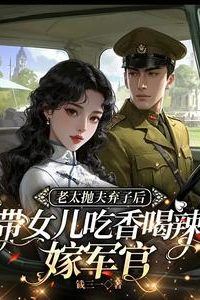
Ye Huan, a woman from the modern era, transmigrates into the body of an eighteen-year-old girl in 1970s China, arriving just as the government mandates that all unmarried, unemployed youth over sixteen must relocate to the countryside. Her mother, Li Xiufen, is desperate to prevent this fate and views marriage as the only viable escape. However, the family dynamic is fractured. Ye Huan’s father, Ye Yongguo, favors his children from his first marriage, Ye Qing and Ye Mingliang, while Li Xiufen dotes exclusively on her biological children, Ye Huan and the young Ye Mingqiang. This tension comes to a head when a suitable match, Chen Yongqing, a formal worker with a decent salary, becomes available. Li Xiufen intends for him to marry Ye Huan, but Ye Qing, aided by their father’s guilt over their deceased mother, secretly bribes the matchmaker and secures the engagement for herself. The wedding proceeds hastily, leaving Ye Huan with no husband and a looming deadline for rural assignment.

With marriage no longer an option, Li Xiufen leverages a favor from her husband’s former apprentice, Yang Shengbing, who now works in the city government. He secures Ye Huan a placement at Hongxing Farm in Jiangping City, specifically in the flower nursery, which is considered a privileged assignment compared to the backbreaking labor in poor villages. Before departing, Ye Huan outmaneuvers her step-sister and half-brother. When Ye Qing gives Ye Huan a portion of her husband’s wages as a parting gift, Ye Huan publicly announces the amount, forcing Ye Mingliang to match the sum to avoid appearing stingier than his sister. She also extracts a substantial contribution from her mother, who borrows money from neighbors to ensure her daughter is well-provisioned. The family sees her off at the train station, with her young brother Ye Mingqiang tearfully promising to take her place in two years when he comes of age.

During the two-day train journey, Ye Huan is accompanied by Li Mingjie, a young man who sees her as a strategic wife due to her apparent good family background and her connection to the desirable Hongxing Farm. Li Mingjie attempts to woo her by feigning a heart condition to secure priority disembarkation, a trick that backfires when Ye Huan exposes his deception to fellow passengers. She refuses to be indebted to him and carries her own heavy luggage, displaying a strength and independence that surprises him. Upon arrival in Jiangping, she encounters Gu Cheng, a tall, handsome military officer she had noticed days earlier. Gu Cheng, who is a battalion commander, assists her with her luggage and offers her a ride in his jeep. Li Mingjie, sensing Gu Cheng’s disapproval and Ye Huan’s clear preference for distance, loses interest in pursuing her and attempts to attach himself to Ye Huan’s new connection with the influential Xu family, believing Xu Guochao to be a farm director.

The journey continues with a mix of social maneuvering and harsh realities. Li Mingjie is forced to ride on an uncomfortable tractor while Ye Huan and another educated youth, Yao Yujuan, are offered a spot in the jeep. Yao Yujuan, a fervent idealist, refuses the comfort, claiming it contradicts revolutionary spirit, and insists on walking to the farm to demonstrate her dedication. Ye Huan observes these interactions with detachment, having already established that she must navigate this new world on her own terms. She arrives at Hongxing Farm, a place of relative prosperity with a renowned flower nursery, marking the beginning of her new life far from the political and familial intrigues of her previous home.

At the farm, Ye Huan settles into her role in the flower nursery, a position that aligns with her modern knowledge and appreciation for horticulture. The narrative establishes the stark contrast between her comfortable, albeit constrained, life in the city and the physical demands of rural labor. Her relationship with Gu Cheng remains undefined but charged with unspoken tension, as he represents a world of authority and stability she cannot yet access. Meanwhile, Li Mingjie’s attempts to climb the social ladder by ingratiating himself with the farm’s leadership are met with indifference. The story sets the stage for Ye Huan to build a new identity, leveraging her wits and skills to survive and potentially thrive in an era where personal ambition is often subordinated to collective duty.

Latest Release
DateGroupRelease
2026-08-11shanghai fantasy c27
2026-08-11shanghai fantasy c26
2026-08-11shanghai fantasy c25
2026-08-11shanghai fantasy c24
2026-08-11shanghai fantasy c23
2026-08-11shanghai fantasy c22
2026-08-11shanghai fantasy c21
2026-08-11shanghai fantasy c20
2026-08-11shanghai fantasy c19
2026-08-11shanghai fantasy c18
2026-08-11shanghai fantasy c17
2026-08-11shanghai fantasy c16

Community Reviews

Rating(4.2 / 5.0, 9votes)
5 stars
3(33%)
4 stars
5(56%)
3 stars
1(11%)
2 stars
0(0%)
1 stars
0(0%)

Popular reviews

... Read More
Let me be honest with you—the search for Yao Yajuan is genuinely tense. It's the end of March, the sun is going down, the temperature is dropping, and there are several forks in the road. A girl is out there alone, unfamiliar with the area, and the text makes you feel the urgency through the actions of the characters rather than any dramatic narration. Liu Quangui runs. Lian Yanmei organizes. Xu Guochao is pacing anxiously at the farm, worried about what he'd tell her parents. The stakes are real: frostbite, getting lost, running into unsavory characters. A girl all by herself. Then they find her. She's been walking the wrong direction the entire time, headstrong and confident, and when Liu Quangui yells at her, the text notes: "Though no one yelled at her, Liu Quangui couldn't hold back his anger." She doesn't fight back. She just quietly follows Lian Yanmei onto the tractor. She knows she's in the wrong. But here's where the author pivots and the real conflict begins—not between the educated youths and the farm, but within the group itself. Li Mingjie decides this isn't just a mistake, it's a threat to their collective future. If they let this slide, what's next? Everyone does whatever they want? The farm will lose respect for them? The counter-argument from Lian Yanmei is equally valid: if the farm gets involved, a disciplinary record could destroy someone's chance to return to the city. This isn't abstract philosophy—it's survival. Every person in that courtyard knows it. And that's why they all switch sides so quickly when Li Mingjie presses his advantage. They're not defending Yao Yajuan. They're defending themselves. The stakes escalate beautifully from physical danger to social danger to existential danger for people who have no control over their own futures.
... Read More
Okay, I need to talk about Li Mingjie because this guy is a masterpiece of self-serving performance art. Let me paint the picture for you: at the town office, when Yao Yajuan says she wants to walk instead of ride, Li Mingjie is out here PRAISING her. He calls her awareness high, says he feels ashamed in comparison, claims he wants to learn from her. And then, the very same day, when she gets lost and everyone has to go search for her in the dark, he's suddenly the guardian of discipline and organization. The man literally had to be dragged into a search party because she wouldn't get on the tractor, and now he's standing in front of the whole compound acting like a moral arbiter. What's fascinating is that Ye Huan sees right through it immediately. Her question to him is devastating in its simplicity: you praised her then, you criticize her now. Why the contradiction? She doesn't even need to be mean about it. She just states it like a factual observation and Li Mingjie is completely exposed. But here's what really gets me—Li Mingjie wasn't just being hypocritical, he was being strategic. The text makes it clear he saw Ye Huan as an ally because she'd also refused to walk with Yao Yajuan. The enemy of my enemy is my friend, right? He wasn't trying to lead the educated youth anymore; he just wanted someone to validate his position so he could step down gracefully. That's not principle. That's politics. And Lian Yanmei? She's trying to protect everyone by keeping things internal. She understands that a disciplinary record could ruin someone's chance to return to the city. It's not weakness—it's actually the more humane approach. The other educated youths switch sides too, not because they suddenly love Yao Yajuan, but because they're terrified that if the farm gets involved today, tomorrow it could be any of them. That's the real character study here: survival instinct masquerading as solidarity.
... Read More
I have to stop and appreciate how the author handles dialogue here because it's genuinely excellent. Let me give you the Ye Huan moment that made me actually sit up straight. Li Mingjie is goading her: "Comrade Ye, everyone has the right to speak their mind freely. Go ahead and speak boldly. Don't overthink it—just tell it like it is." And Ye Huan's response? "Then I'll go ahead. There's just something I don't quite understand, and I'd like to ask you about it." The author writes: "Li Mingjie immediately sensed danger in her tone—it didn't sound promising." That's it. That's the whole scene. Ye Huan doesn't raise her voice. She doesn't accuse anyone. She just asks a question in what the text describes as a "genuinely inquisitive" tone, and Li Mingjie is completely undone. The contrast between his aggressive posturing and her calm, almost naive delivery is hilarious and satisfying. Compare that to Liu Quangui's dialogue throughout. The man is all bluster and aggression: "She's nothing but trouble. These people didn't come here to work—they came to be waited on like ancestors." He's loud, he's physical (grabbing Xu Guochao's tea mug, throwing his arm around Zhao Sihai), and he's completely transparent about his prejudices. He likes Lian Yanmei because she's tough, he dislikes Ye Huan because she's pretty, and he thinks Bai Yin is lazy. Every opinion he has is surface-level and unexamined. The supporting dialogue from the other educated youths also feels very natural—people grumbling about being hungry, rolling their eyes, the casual complaints that feel like actual group dynamics. When Lian Yanmei tries to calm things and Li Mingjie immediately pivots to making it a formal report, the shift in tone is jarring in exactly the right way.
... Read More
I keep thinking about the imagery of roads in this passage. Yao Yajuan literally takes the wrong road—she heads northwest when the farm is southwest, and she keeps going, confident and determined, until she realizes she's walked even further from her destination. The text says she relied on her instincts after asking for directions once. She wasn't lost because she was weak; she was lost because she was stubborn. There's a parallel here with Li Mingjie, who is also on the wrong path but doesn't realize it. He thinks he's defending discipline and principle, but really he's just protecting his own position. He's walking northwest while convinced he's heading southwest. The irony is almost too neat, but it works. The dim yellow light bulb strung across the courtyard is another detail that stuck with me. It's low wattage, it's barely enough, but it's what they have. This is the reality of their situation—limited resources, makeshift solutions, doing the best they can with what's available. The educated youths are literally in a transitional space, not quite in the city and not quite settled in the countryside, and the lighting reflects that liminal quality. And then there's the question of who gets to define what counts as a problem. Yao Yajuan gets lost and causes a stir. Li Mingjie tries to make it a formal offense. But when Ye Huan points out his contradiction, the whole structure of his argument collapses. The real transgression isn't getting lost—it's using someone else's mistake as a weapon for your own ambition. The text never says this directly, but it's there, humming underneath every interaction.
... Read More
I need to talk about Li Xiufen because my heart actually aches for her. Like, genuinely. She's not a villain. She's not even a complicated anti-hero. She's just a woman trying to survive in a system that gives her no room to breathe, and she keeps getting crushed. The scene where she finds out about Ye Qing's marriage — she nearly flies into a rage, confronts Sister Zhang, has a fight with her husband, breaks down in tears. And then what? She accepts it. She has no choice. The wedding is already done. She swallows her bitterness and vows to find Ye Huan an even better match, both to avenge her daughter's humiliation and to restore her own pride. But then each introduction is worse than the last. Not even half as good as Chen Yongqing. And she's forced to smile obsequiously at Sister Zhang while handing over 20 yuan matchmaking fee, pretending she still has hope when she clearly doesn't. What destroys me most is the dinner scene. Li Xiufen bought meat — a rare treat — and when Ye Yongguo asks where Ye Mingliang's wife is, she replies flatly. She's seething but can't show it because Ye Mingliang is right there. She has to perform normalcy while her whole family is literally conspiring against her. And Ye Huan, sensing the tension, says something that must have cut like a knife: "Mom, it's okay if I have to go to the countryside. It'll be fine." She's offering herself up like a sacrifice. And Li Xiufen can't even protect her. I was sitting there like — no. No, this isn't fair. This woman gave everything and got nothing back.
... Read More
There's this one detail that I just can't get out of my head. When Ye Huan enters the room she now shares alone with Ye Qing, the text describes the tabletop: "The tabletop was divided like the 38th parallel, each sister claiming her half with clear boundaries." And the wardrobe too — "a cloth divider separating their halves." The 38th parallel. That's the line that divided North and South Korea. A border drawn through a country, creating two hostile halves that share the same land but can never truly coexist. That's what these two sisters are. Same roof, same family name, completely divided. And then there's the loudspeaker. It's mentioned multiple times — blaring from morning to night, that woman's high-pitched voice shouting slogans about going to the countryside. It's always there, in the background, like an invisible eye watching everything. The slogans themselves are almost comically passionate: "To the frontier! Take root in the vast world and make unshakable vows..." But underneath all that revolutionary rhetoric, what's really happening is people's lives being upended. Girls being rushed into marriages. Families torn apart. The loudspeaker represents this impersonal, crushing force of the state that no one can argue with. I'm also thinking about the apples. That military officer buying a whole bag of luxury apples while ordinary people can't even afford them — it's a tiny symbol of inequality that persists even in this supposedly egalitarian era. The world isn't as uniform as the slogans claim.
See all reviews

Characters

See all characters

Custom lists

See all custom Lists