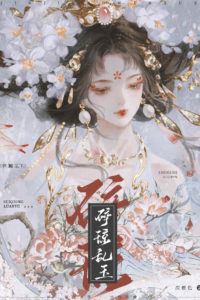
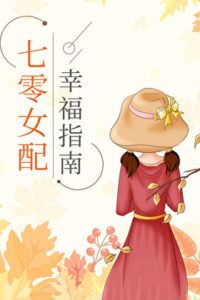
Guide to Happiness for a Supporting Female Character in the 1970s
Novel Info

Summary

... Read More

Tang Chu Xia is an eighteen-year-old educated youth sent to the Tanxi Production Brigade during the Cultural Revolution era. For most of her life, she has existed solely as a devoted background character to Han Ting, the man she has admired since childhood. Her identity is entirely defined by her service to him: she follows his every command, sacrifices her own needs for his comfort, and waits patiently for his affection, which he views only as sibling-like camaraderie. Her world is small, centered on cooking meals for him and ensuring his happiness, while she remains invisible and unremarkable to everyone around her. She possesses no distinct features, no strong personality, and no sense of self outside of her devotion to Han Ting.

The central conflict begins on the day of Jingzhe, when a series of violent thunderclaps triggers a sudden influx of foreign memories into Chu Xia’s mind. She realizes that her reality is a fictional novel, and she is merely a supporting character destined to suffer in silence while the male lead, Han Ting, lives a dramatic life of romance and success. The memories reveal her tragic future: she will sell her family’s assets to fund Han Ting’s career, raise his illegitimate child, and die alone while he remains emotionally attached to his true love, Su Yun. Confronted with this horrifying fate, Chu Xia experiences a profound awakening. The blind infatuation that once defined her is replaced by revulsion and a desperate desire for autonomy. She refuses to accept the role of a tool character and decides to sever her emotional dependence on Han Ting.

Her transformation is immediate and disruptive. When Han Ting returns home with a bowl of zhajiang noodles he expects her to serve him, she instead takes it to the riverbank and eats it herself, finding genuine joy in the simple pleasure of a full stomach. She returns to the dormitory and announces her decision to live independently, mirroring the actions of Lin Xiaohan, the cold and arrogant classmate who also refuses to join the communal group. This decision shocks her peers, who are accustomed to her obedience and silence. Han Ting is particularly disturbed, viewing her independence as a betrayal and attempting to guilt her into submission by reminding her of his promise to her father. However, Chu Xia stands firm, realizing that looking directly at Han Ting triggers a psychological compulsion that silences her. By focusing her attention elsewhere, she breaks the spell and asserts her will.

As Chu Xia establishes her separate life, she begins to navigate the harsh realities of rural existence with a new sense of purpose. She reclaim her personal belongings, such as a mirror she had neglected for years, and confronts her roommates with sharp wit rather than passive acceptance. Her independence does not go unnoticed by the village leadership. Team Leader Liang Youtian, frustrated by the laziness and irresponsibility of the other educated youths, identifies Chu Xia and Lin Xiaohan as the only diligent workers. He offers them both positions as teachers at the reopened brigade elementary school, a significant opportunity that provides stability and respect. In the original narrative, Han Ting would have manipulated Chu Xia into giving this opportunity to Su Yun, his romantic interest. However, with her awakened consciousness, Chu Xia accepts the position alongside Lin Xiaohan, rejecting the fate of self-sacrifice.

The story moves forward as Chu Xia balances her new responsibilities as a teacher with her efforts to build a life independent of Han Ting’s shadow. She observes the dynamics of the educated youth settlement with a detached, analytical perspective, recognizing the manipulative nature of Lin Xiaohan and the selfishness of Han Ting. While Han Ting continues to pursue Su Yun and rely on Chu Xia’s hidden labor, she deliberately distances herself, focusing on her work and her own well-being. The narrative explores her journey from an invisible prop to a self-aware individual, as she learns to value her own needs and desires. Her relationship with Lin Xiaohan evolves from mutual disdain to a grudging professional respect, as they work together to restore the school. The story sets the stage for Chu Xia to carve out her own destiny, challenging the predetermined plot of the novel and asserting her right to exist as a complete person rather than a supporting role in someone else’s story.

Latest Release
DateGroupRelease
2026-08-11shanghai fantasy c3
2026-08-11shanghai fantasy c2
2026-08-11shanghai fantasy c1

Community Reviews

Rating(4.3 / 5.0, 23votes)
5 stars
12(52%)
4 stars
5(22%)
3 stars
6(26%)
2 stars
0(0%)
1 stars
0(0%)

Popular reviews

... Read More
The dialogue between Chu Xia and Gu Yuzhu over the mirror is *chef's kiss*. Gu Yuzhu tries to play it cool: "Just don't leave it lying around after you're done. Put it back on the table—I'll need it tomorrow morning when I do my hair." Classic guilt-trip energy. And Chu Xia just says "Use your own." Two words. That's it. But it's the most powerful thing she's said in the entire chapter. Then Gu Yuzhu tries to backpedal with "What's even the point of looking in the mirror? Nobody would spare a second glance in a crowd. It's not like it's going to make you pretty." And Chu Xia's response: "Still better than you—more you look, the darker and uglier you get." I literally laughed out loud. This is the Chu Xia we've been waiting for. She's not the quiet, obedient girl anymore. She's sharp, she's direct, and she's done with everyone's nonsense. The other dialogue moments work too. Han Ting's "She's never been like this before" shows his genuine confusion — he's so used to her compliance that her independence reads as malfunction to him. And Guo Gai's breathless reporting about the grain situation gives us this almost documentary-style realism that grounds the whole story. Su Yun's line at the end — "What's wrong? Don't you recognize me?" — is deceptively simple. It's friendly on the surface but there's something underneath it. She knows Chu Xia is different now. She knows something has shifted. And that ambiguity in the dialogue makes me want to read the next chapter immediately.
... Read More
Can we just take a moment to appreciate how perfectly Lin Xiaohan speaks? This guy has such a distinct voice and I am obsessed. Let me just dump some of my favorite lines because they're too good not to share. "I'm not interested in being your friend, talking about feelings, or solving your problems. I just want to save time and get this done. And, for the record, I'd be more than happy to make Han Ting uncomfortable along the way." This is PERFECT. It's blunt, it's honest, it's transactional but also strangely warm underneath. He's not pretending to care about her feelings, but he's also not pretending he doesn't want to help. He's just being real about it. And then later: "Not at all. They trust my character." When Chu Xia threatens to report him for not wanting to go back to the fields. The absolute audacity. The casual arrogance. I laughed out loud. Chu Xia's dialogue is equally sharp. "My brain isn't all filled with romance and fluff anymore." She says this after giving a genuinely insightful analysis of why rural parents won't send their kids to school. The self-awareness, the slight bitterness, the pride—it's all in one line. The banter between them feels natural because neither one is performing. They're not trying to impress each other. They're two pragmatic people who've figured out that they work well together. The humor comes from their directness, not from witty one-liners. Even the narration has a great voice—dry, observant, occasionally sarcastic. The author knows exactly how to let the dialogue carry the scene without over-explaining.
... Read More
Okay so I have to talk about the mirror scene because it genuinely gave me chills. Chu Xia asks for her mirror back and the whole thing about looking at herself clearly — that's not just about vanity, that's about her entire existence in this story. She's been a background character, a tool, a placeholder wife for Han Ting, and now she's looking at her reflection and wondering if she can actually become someone real. The author drops this line: "As a background character, a tool for someone else's story, was she not even entitled to a face she could clearly see or others could remember?" And I just — I can't. That's the whole plot thesis right there. Then Su Yun shows up and Chu Xia gets this massive exposition dump about the original novel's plot. Tong Rui was the first love, the perfect goddess, but Han Ting let her go with surprising ease. Su Yun was the one who actually mattered, who shared his struggles, and then Su Yun dies and becomes this eternal memory. And Chu Xia? She was always the fallback. The girl waiting in the courtyard. The one who gave up her opportunity for Su Yun. The "unlucky fool." But here's the thing that made me sit up — the plot isn't just about Chu Xia getting a different man or becoming beautiful. It's about her fundamentally rejecting the role she was written for. She's not going to be the supportive girl who disappears so the real couple can shine. The grain distribution scene with Han Ting was basically his way of controlling her, and she refused. That's the inciting incident of her actual story.
... Read More
I need to talk about Han Ting because wow, the way he handles Chu Xia here is... not great. He literally says "she won't last long on her own, not without anyone to look after her" — like, bro, are you serious? He's treating her like a child who can't survive independently. And then he sends Su Yun to "help me ask her what's really going on" which is basically spy behavior disguised as concern. But Chu Xia? She just... doesn't care anymore. When she says "use your own" to Gu Yuzhu after getting her mirror back, that's not just about a mirror. That's her drawing a boundary. She's done being the girl who says yes to everything. The backstory about Tong Rui and Su Yun is fascinating from a character perspective. Tong Rui was the perfect first love — beautiful, good background, the fantasy. But Han Ting let her go easily. Su Yun was the one with the painful past, the difficult background, and somehow that's what created the real connection. They understood each other's pain. And Chu Xia? She was the one who enabled that relationship. Every opportunity Su Yun got, Chu Xia gave up. She was the silent infrastructure of their romance. Now she's waking up to the fact that she's been playing a supporting role in someone else's love story her entire life. And I think that's what makes her transformation so powerful. She's not just leaving Han Ting — she's leaving the entire narrative that defined her.
... Read More
I need to talk about Chu Xia's realization that Lin Xiaohan saw through her. "If you didn't like Han Ting, and you really spent over a decade following him around just because of childhood ties—then your head's even more messed up." That line. That absolutely devastating line. She kept this secret for ten years. Ten years of following him from school to the countryside, and this guy she barely talks to noticed immediately. Meanwhile Han Ting—the actual object of her affection—has no idea. The emotional architecture here is brutal. Chu Xia's internal monologue when she's trying to refuse: fingers white on chopsticks, sweat on her forehead, words stuck in her throat. You can feel the physical cost of narrative determinism. And then Lin Xiaohan walks in and suddenly she can breathe. The moment she screams "I won't be your scapegoat!"—that's not just plot resistance, that's ten years of suppressed emotion exploding. What breaks my heart is the riverbank scene with Su Yun. She follows Han Ting into the moonlight, watches him smoke, says nothing. The unspoken longing between them is so thick you could cut it. But Chu Xia's journey is the real emotional core. She's choosing between two forms of suffering: eternal submission to a story that erases her, or daily proximity to someone she finds insufferable. Her decision to call him "big brother" every day if it means freedom? That's love letter to agency. The dorm scene where everyone ignores her after her "out-of-character" behavior—she retreats to bed alone while they chat about fertilizing fields. The isolation is palpable. She's awakening, and awakening is lonely.
... Read More
Okay so let me just say—this opening hit me like a freight train. The way the plot unfolds in these first seven chapters is actually brilliant. We start with this incredibly mundane, cozy scene: Chu Xia cooking zhajiang noodles, two girls peeking in, the whole warm domestic vibe. And then—BOOM. Thunder. Not just any thunder, but Jingzhe spring thunder, the kind that awakens things. That's when everything shatters. The plot twist isn't some cheap shock value thing. It's layered. First, Chu Xia gets this flood of information—she's in a novel. Second, she realizes she's a side character, an emotional prop. Third, and this is the killer, she feels genuine disgust at her own past behavior. The author doesn't just tell us she's awakening; we feel it through her eating the noodles herself for the first time and being stunned by how good it is. That's plot through character experience, not exposition dumps. What I love is how the author sets up the central conflict almost immediately. Chu Xia decides she needs to distance herself from Han Ting, and we see the first crack in her old behavior when she flinches away from him taking the bowl. The narrative arc is set: a girl waking up from a life of self-erasure. But the author is smart about pacing—she doesn't rush into rebellion. She sits by the river, processes, eats her noodles, and lets the realization sink in. The tension builds quietly. And that ending with Han Ting helping Li Qiao with the laundry while Lin Xiaohan refuses? That's not just worldbuilding, that's plot positioning. The author is establishing the social dynamics that Chu Xia will now have to navigate with her new awareness. She's watching everything with "a god's-eye view" now. The stage is set for a story about someone breaking free from a predetermined role, and I am absolutely here for it.
See all reviews

Characters

See all characters

Custom lists

See all custom Lists