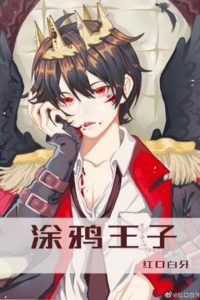
Graffiti Prince
+Add to Custom List
Novel Info

Summary

... Read More
Chen Feng is a manual laborer who works as a brick carrier, struggling to make ends meet while raising his young son, Chen Jiuxing. His life is further complicated by his wife, Zhao Linlin, who openly despises him, calling him inadequate and cheating on him with their neighbor, Wang Baqiang. Chen Feng recently suffered a head injury that caused amnesia, leaving him with only a month of memories, yet he retains a deep, instinctive bond with his son. The family lives in poverty, and Zhao Linlin eventually absconds with their remaining savings, leaving Chen Feng with a fabricated 100,000 yuan debt. When aggressive debt collectors threaten to harm his son, Chen Feng is forced to the rooftop of his thirty-third-floor apartment. In a moment of desperation, he attempts to jump to safety but falls, only to be caught mid-air by a mysterious figure with black wings. Upon waking, Chen Feng discovers his account balance has been inflated to one billion yuan by his father, Chen Zihua, a wealthy man who claims he hid Chen Feng’s true identity to toughen him up. However, the narrative reveals a darker reality: Chen Zihua is merely a toad-like demon servant reporting to a powerful, beautiful Prince who rules over the Lake Mist Realm. The Prince is tormenting Chen Feng, seeking to break his spirit through suffering, but Chen Feng remains unnervingly calm and indifferent to his misfortunes, including the revelation that his son is not biologically his. This emotional detachment frustrates the Prince, who decides to escalate his efforts by sending various demons to seduce or harass Chen Feng. The Prince himself disguises himself as a handsome spiritual master named Wang He and infiltrates Chen Feng’s life under the guise of a protector hired from a fraudulent spirit-dispelling agency. While living with Chen Feng, the Prince is exposed to human customs, such as drinking alcohol, which he finds both fascinating and confusing. Simultaneously, various monsters and demons, attracted by Chen Feng’s unique scent, begin to inhabit his home. These creatures, including a red-eyed suction cup monster and swarms of tiny black insects, clean and restore Chen Feng’s environment without his knowledge, creating a bizarre domestic harmony. The Prince, disguised as Wang He, is forced to contend with these creatures while maintaining his cover, occasionally using his powers to banish threats that might expose his true identity. As the story progresses, the Prince’s interactions with Chen Feng become increasingly complex. He attempts to manipulate Chen Feng into a life of luxury and emotional dependency, hoping to eventually crush him, but Chen Feng’s stoic and pragmatic nature thwarts these plans. The Prince’s disguise is nearly compromised when he transforms into his true form after drinking, but Chen Feng remains oblivious, attributing the events to dreams or confusion. Meanwhile, the Prince is drawn to Chen Feng’s scent, which has a calming and addictive effect on him, creating an internal conflict between his desire to torment Chen Feng and his growing, unwanted attraction to him. The narrative sets the stage for a continued struggle between the demonic Prince and the unyielding human, with the Prince’s schemes becoming more elaborate and personal as he seeks to understand and break the man who refuses to suffer.

Latest Release
DateGroupRelease
2026-08-11shanghai fantasy c55
2026-08-11shanghai fantasy c54
2026-08-11shanghai fantasy c53
2026-08-11shanghai fantasy c52
2026-08-11shanghai fantasy c51
2026-08-11shanghai fantasy c50
2026-08-11shanghai fantasy c49
2026-08-11shanghai fantasy c48
2026-08-11shanghai fantasy c47
2026-08-11shanghai fantasy c46
2026-08-11shanghai fantasy c45
2026-08-11shanghai fantasy c44

Community Reviews

Rating(4.3 / 5.0, 12votes)
5 stars
6(50%)
4 stars
3(25%)
3 stars
3(25%)
2 stars
0(0%)
1 stars
0(0%)

Popular reviews

... Read More
I need to just say it straight: Chen Feng is one of the most genuinely moving father figures I've encountered in any novel, and I've read a lot. The moment that got me was when the debt collectors are at the door with weapons, Jiuxing is crying, and Chen Feng's first thought isn't about the money or his own safety—it's that today was his only day off this month and he promised his son the amusement park. He doesn't skip it. He doesn't even consider it. That's not plot armor, that's character. The relationship between Chen Feng and Jiuxing is built on this quiet, almost wordless bond. Chen Feng had amnesia—he didn't even remember his own name a month ago—but his son is the one thing that feels familiar. Every time he runs his fingers through Jiuxing's hair, his heart settles. Blood ties, the narrator says, but it feels like something deeper, something almost supernatural in its own right. And then there's the dynamic with Zhao Linlin, which is honestly terrifying in its banality. She cheats, she mocks him, she calls him not a real man, she empties their savings and runs. And Chen Feng's reaction? He doesn't rage. He doesn't beg. He just... replaces the lightbulb. The scene where he comes home, she's in a strappy nightgown blowing smoke rings, the tension is thick enough to cut, and then he just climbs onto the bed with a screwdriver and fixes the light. The subversion is so sharp it almost hurts. Wang Baqiang is the perfect foil here—sweaty, scheming, hiding behind excuses about changing lightbulbs, while Chen Feng is the one who actually shows up for his family. The three moles on Wang Baqiang's face appearing on Jiuxing's face? That detail is doing so much work. It's either a darkly comic mirror or something far more sinister. I'm not sure which unsettles me more.
... Read More
Okay, I need to talk about this cliffhanger because my hands are literally shaking. Let me trace the plot arc because it's genuinely brilliant in how it's constructed. We start with this seemingly mundane slice-of-life setup—a poor dad at a kindergarten consultation, cheating wife, debt collectors—and by chapter 7, it has pivoted into something that is unmistakably supernatural horror. That tonal shift from domestic drama to cosmic horror is not jarring at all, which is the mark of a skilled writer. The author seeds the weirdness early. The black slimy creature on the ceiling dripping saliva? That's planted in Chapter 1 and it pays off in a way that recontextualizes everything that came before. The debt plotline is also doing heavy lifting here. Zhao Linlin didn't just run away—she mortgaged the house and left Chen Feng with 100,000 yuan in debt. That's not just a plot device for conflict, it's a character revelation about her. And Chen Feng's response—prioritizing the amusement park with his son over drinking himself into oblivion like a normal betrayed husband would—tells us everything about who he is. The rooftop chase sequence is where the plot truly snaps into gear. Chen Feng has acrophobia, lives on the 33rd floor, avoids windows, and he still jumps. He doesn't make it. But his son does. And that detail—that Jiuxing leaps like a monkey onto the AC unit—raises so many questions. Is his son actually mentally challenged, or is something else going on? The amnesia subplot adds another layer. Chen Feng doesn't remember his own life, but his bond with his son feels instinctive. The plot is weaving together at least four threads: the supernatural horror element, the debt/escape thriller, the father-son relationship, and the mystery of Chen Feng's amnesia. None of them feel disconnected. Every scene pulls double duty.
... Read More
Let me just start with the opening image: Chen Feng on a black leather sofa in a kindergarten waiting area, holding Hegel's Science of Logic like a prop. The absurdity of it is perfect. It immediately establishes the world—a place where appearances matter more than substance, where a man in a 50-yuan rented suit is pretending to be educated while his son drools through a kindergarten consultation. The worldbuilding here is all about economic realism. Chen Feng sneaks his son into an upscale residential playground because they can't afford an amusement park. The lightbulb hasn't been changed in three months. The room is dim because Wang Baqiang didn't actually fix it. These details are tiny but they accumulate into a world that feels suffocatingly real. And then the horror creeps in. The dripping faucet. The black slimy creature on the ceiling with tentacles and a blood-red tongue. The way the author describes it—"its dark, filthy, densely packed tentacles suctioned onto the wall like leeches"—is genuinely disturbing imagery. What's brilliant is how the horror is spatial. It's in the ceiling above the kitchen sink. It's in the same apartment where Chen Feng is trying to be a good father. The domestic space becomes the uncanny space. The rooftop scene is another masterclass in atmosphere. Thirty-three floors up, wind so strong it could blow you off, Chen Feng's acrophobia making his throat dry and his heart pound. The city below is just a void. The AC unit three meters away is the only thing that matters. And then there's the contrast between the gritty urban poverty and the almost fairy-tale quality of the father-son bond. Chen Feng buying his son joy on a playground that isn't even theirs. That juxtaposition—gritty realism meeting something almost mythic—is what gives this book its unique texture.
... Read More
Okay, can we just talk about how the Prince handles Chen Feng's broken hand? The man is literally called the God of Destruction, and his attempt at healing goes so catastrophically wrong that he has to shrink Chen Feng and put him in his pocket like a keychain. And then—this is the part that wrecked me—he presses his thumb against Chen Feng's feet and index finger against his head and gives him a little squeeze, like he's playing with a doll. Jingze is absolutely losing his mind, screaming internally that human bodies aren't elastic, and the Prince just looks at him like 'which of your eyes saw me playing?' Bruh. The man is in denial about his own behavior. But here's what gets me: the Prince is clearly trying. He's so awkward about it, so fundamentally incapable of understanding human fragility, yet he keeps coming back. He assigns himself as a spiritual master under a fake name, he buys alcohol to drink with Chen Feng (does he even know what alcohol is?!), he watches from the shadows as Chen Feng helps strangers at his door. There's this entire thread of the Prince wanting to be close to Chen Feng but having no idea how to do it without accidentally causing harm. And Chen Feng—he's been through so much. His wife cheated on him, he lost his memory, he's raising a child alone, and now this supernatural being is orbiting his life like a confused moon. The scene where Chen Feng gives the wet girl a plumber's number and tells her to change her clothes, then mutters 'a good deed a day' to himself while smoothing the magazine edge? That's the kind of mundane kindness that makes the Prince's obsession feel so earned. Chen Feng is just... good. Even when he's broken, even when he's been betrayed, he's helping people. And the Prince, who has spent eternity destroying things, is completely captivated by someone who only builds. That contrast is everything.
... Read More
I need to dedicate an entire review to the dialogue in this text because it is absolutely phenomenal. The Prince's voice is so distinct—it's this cold, imperious, utterly oblivious tone that somehow makes every line both terrifying and adorable. When he says 'Healing' to Jingze after accidentally breaking Chen Feng's hand, and Jingze just responds with '...Huh?'—that silence says everything. The Prince then explains with complete deadpan seriousness, 'I was just trying to straighten his hand,' as if applying enough force to shatter a human bone was a minor calibration error. The comedic timing is impeccable. And the chuunibyou exchange! Oh my god. 'Exposed, aren't you? Nothing escapes the Magic Eye of the Black Wing Clan...' vs. 'Black Wing Clan? No, you're not from our realm.' This is the single funniest moment in the entire passage. Two people claiming supernatural identities, neither one actually being what they claim, and the real supernatural being (the Prince) is just standing there watching them. The dialogue writes itself. But it's not just comedy—the emotional beats land just as hard. When Chen Feng says 'Although my wife left me, I completely understand her decision, so it wasn't a blow at all,' and Wang He just frowns and scribbles in his notebook? That understated devastation is so much more powerful than any melodrama could be. Chen Feng is lying through his teeth, and everyone in the scene knows it except him. The Prince, disguised as Wang He, is watching this lie unfold and I can only imagine what that does to him. The narrative voice itself is also worth praising—it's witty, observant, and has this dry humor that matches the Prince's own deadpan delivery. Lines like 'A big chuunibyou meeting a little chuunibyou?' and 'Why worry about His Highness? The Prince is the most powerful, perfect, and noble being in all of Lake Mist Realm—how could something as insignificant as alcohol possibly trouble him?!' show an author who understands exactly how to use narration to amplify the comedy.
... Read More
The worldbuilding in this passage is so delightfully weird, and I need to talk about how seamlessly it blends the mundane with the supernatural. We start in a hospital—a completely ordinary, fluorescent-lit, cast-encased human space—and the Prince is there in disguise as a spiritual master, trying to monitor Chen Feng without revealing himself. The comedy of him failing so spectacularly at human interaction (breaking Chen Feng's hand 'by accident,' then having to pretend to be a busy Grand Spiritual Master who 'has already left') is hilarious, but what really stands out is how the text treats these two worlds as existing simultaneously. The Lake Mist Realm has no liquor. This detail came out of nowhere and it hit me like a truck. It's such a small worldbuilding note, but it tells us everything about the Prince's cultural disconnect. He's an immortal being from a realm without alcohol, pretending to bond with a human over a drink he doesn't understand. The image of him transforming into Wang He's likeness, taking the Erguotou liquor, and heading toward Chen Feng's apartment while Wang He is reduced to a tiny glossy black cricket chirping in the grass? That is cinematic. That is pure visual storytelling. And then there's Chen Feng's apartment—the 32nd floor, the clothes-drying rack outside that somehow saved his life, the neighbor Wang Baqiang who taught Chen Jiuxing to call him 'Daddy Wang' (why does this keep happening?!), the two mysterious women showing up at his door at night. The text gives us these vivid, specific details—the damp nightgown, the red nail polish brushing the doorframe, the magazine with the torn-out plumber ad—that ground the supernatural elements in something tactile and real. The world feels lived-in, chaotic, and utterly unique.
See all reviews

Characters

See all characters

Custom lists

See all custom Lists