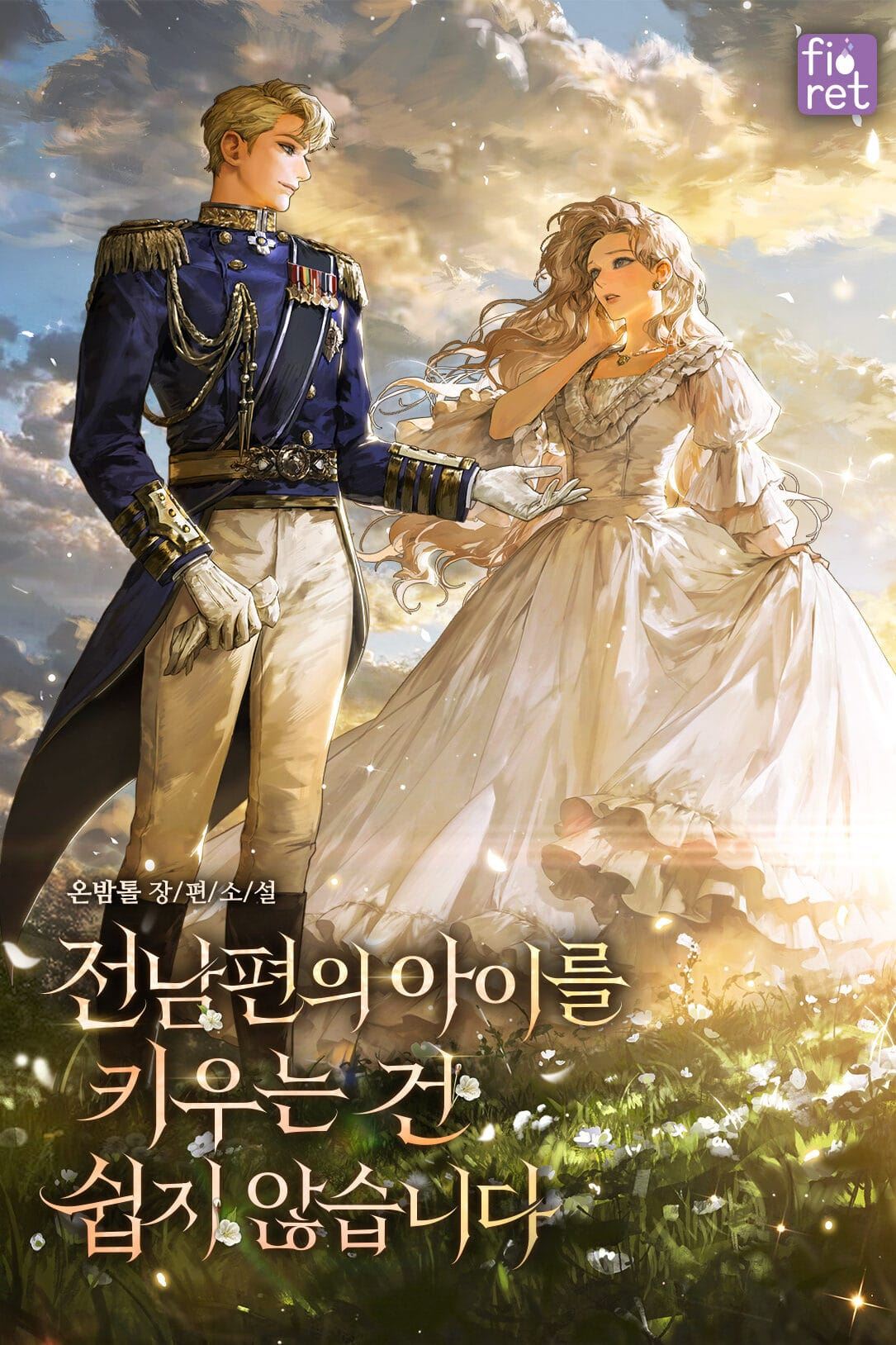
Goodbye, My Dear Husband
+Add to Custom List
Genres:
Novel Info
  • Author:
  • Status:Ongoing

Summary

... Read More

Ophelia Dauer spent her childhood in a loving household until a fire killed both her parents, leaving her orphaned and vulnerable. Hemian Roswell, a childhood friend and the heir to the Count of Roswell, rescued her and provided a home, eventually marrying her out of gratitude and affection. For years, Ophelia devoted herself entirely to the Roswell estate, enduring cold treatment from Hemian’s mother, Grand Duchess Eveline, and his sister, Camellia, who viewed Ophelia as an unwelcome burden. Despite their hostility, Ophelia found solace in Hemian’s initial warmth. However, their dynamic shifted drastically after their marriage when Hemian began a long-term affair with Laura Blanche, a woman from a prestigious noble family. The Roswells, already burdened by debt from Hemian’s late father, saw an opportunity to restore their fortune through a marriage between Hemian and Laura. They secretly manipulated Ophelia’s lifetime pension, originally granted by her father’s barony, redirecting the funds to themselves while allowing Ophelia to believe she was financially dependent on Hemian.

The breaking point arrived when Ophelia discovered Hemian embracing Laura in their marital bed. Realizing that her husband had not only betrayed her but also planned to abandon her for social advancement, Ophelia attempted suicide by walking into the sea. Hemian rescued her, but rather than showing remorse, he mocked her desperation and threw divorce papers at her, confident she would never leave him due to her lack of money and status. Believing that staying would only make her a pathetic figure who forgives endless cruelty, Ophelia made a decisive choice. She fled the estate, traveled to the capital, and legally finalized the divorce, relinquishing all claims to assets to sever ties completely. She left behind her wedding ring and the name Roswell, reclaiming her maiden name, Dauer.

Ophelia’s journey led her to Edent, a northern city under the jurisdiction of the Winches Duchy, the most powerful ducal house in the empire. There, she reunited with Mrs. Bovary, a former maid from her childhood who now ran a ghostwriting shop with her daughter, Clarice. Ophelia began working there under the pen name Summer, finding a fragile sense of independence. Her first day ended with a crisis when a servant named Esmond submitted a love letter she wrote to Ophelia’s former fiancé, Adre Winches. The letter sparked a scandal involving Adre’s engagement to Viscount Berkshire, forcing the Reclusive Duke, Cedric von Eschbart Winches, to investigate personally. Upon entering the shop, Cedric recognized Ophelia, revealing a shared childhood history where she had helped him overcome his mutism through written correspondence.

Cedric offered Ophelia a position as his personal secretary within the ducal estate, promising protection and anonymity in exchange for her discretion regarding the scandal. Ophelia accepted, moving into the grand Winches residence and leaving her past life behind. Meanwhile, Hemian’s attitude underwent a radical transformation upon learning that the divorce was irreversible. Initially viewing Ophelia’s departure as a tantrum, he descended into panic when he discovered she had taken nothing and left her wedding ring behind. His search for her led him to Edent, driven by a mix of regret and a desire to reclaim control. Unbeknownst to Hemian, his mother Eveline was actively manipulating Laura Blanche into pursuing Hemian during his absence, hoping to secure a beneficial marriage alliance to save the family from bankruptcy.

As Hemian arrives in Edent, unaware that Ophelia is now working under the protection of Duke Cedric, the narrative shifts toward a collision of past and present. Ophelia begins to rebuild her identity away from the Roswell shadow, supported by the Winches family’s resources and her own newfound professional life. The story sets the stage for a confrontation where Hemian must face the consequences of his actions, while Ophelia navigates her complex history with Cedric and her healing from Hemian’s betrayal.

Latest Release
DateGroupRelease
2026-10-03dusk blossoms c51
2026-10-03dusk blossoms c50
2026-10-03dusk blossoms c49
2026-10-03dusk blossoms c48
2026-10-03dusk blossoms c47
2026-10-03dusk blossoms c46
2026-10-03dusk blossoms c45
2026-10-03dusk blossoms c44
2026-10-03dusk blossoms c43
2026-10-03dusk blossoms c42
2026-10-03dusk blossoms c41
2026-10-03dusk blossoms c40

Community Reviews

Rating(0 / 5.0, 31votes)
5 stars
0(0%)
4 stars
0(0%)
3 stars
0(0%)
2 stars
0(0%)
1 stars
0(0%)

Popular reviews

... Read More
The tension in these chapters is absolutely suffocating and I am here for it. Three separate threads of conflict crashing into each other simultaneously: Hemian's internal war over Ophelia versus Laura, the external threat of the Winches scandal dragging Ophelia back into the spotlight, and Cedric standing right there ready to intercept if anything goes wrong. Let's talk about Hemian for a second because man. After sleeping with Laura, he doesn't feel guilty — he feels like he finally CLARIFIED something. 'Was it guilt? No. It felt closer to realization.' That line absolutely wrecked me. He realizes he loves Ophelia only AFTER he's betrayed her. Classic. Tragic. Painfully human. And then he sees her with another man — Cedric — and his jaw drops. The glass shattering isn't just dramatic flair, it's a physical manifestation of his entire world fracturing. Meanwhile Cedric is over there being the most composed man alive, draping his coat over Ophelia's shoulders and smoothly inventing an excuse to flee. 'I forgot I have an important engagement tonight.' The man is a tactical genius. But the real stakes? If Hemian discovers Ophelia is the ghostwriter, the Winches scandal blows wide open and her secret identity crumbles. Every time I read this scene, my heart pounds because there are literally no safe exits.
... Read More
Okay can we just talk about Hemian for a second because I need to vent. He remembers EVERYTHING about Ophelia from when they were kids. The cheese-colored cat. The white fur above its eyebrows. He gave her his scarf when she was cold. He stayed out in the freezing weather just to keep a promise to a little girl. And yet somehow his marriage fell apart and his first instinct is to rationalize everything instead of actually figuring out what went wrong? I read through that train scene twice. Twice. Every time I got more frustrated. He literally thinks: 'He did enough for her.' 'His mother pressured him... hadn't he stubbornly remained her support regardless?' NO HEMIAN. You emotionally checked out when she started struggling. That's not support—that's endurance, and there's a massive difference. But you can't see it. He's so convinced he's the good guy here that he can't even entertain the possibility that he failed her. Meanwhile, Cedric—oh man, Cedric. The man has been quietly keeping Ophelia alive in his heart for years and his response to finding her is not to demand anything, not to confess, not to manipulate. His internal thought is basically: 'From now on, all you need to do is accept what I choose to give you.' Which sounds sweet until you realize HOW controlling that is. He assigned her a room on the second floor 'for her privacy' but also admitted it's more convenient for him. He's building a golden cage with the best intentions and honestly that might be even more dangerous than Hemian's neglect because Ophelia won't even see the bars. Two men. One woman. Both convinced they have her best interests at heart. Neither fully sees HER.
... Read More
'As long as Hemian loved her, she believed she could endure anything.' This line came up in my head repeatedly while reading these chapters and it made me so sad I almost had to pause. Ophelia gave everything — her reputation, her family's precarious stability, her name — and in return, her husband let the world paint her as a gold-digger who seduced a noble man. He never corrected it. He never once said 'that's not true, I chose her.' And now here she is, signing a contract with another powerful man and immediately second-guessing whether she deserves the generosity she's receiving. The contrast between how she was treated as Countess Roswell versus how she's treated now is staggering. Mrs. Bovary and Clarice offered to take her in for free, and she refused because she didn't want to be a burden. Cedric offers her a luxurious life and she thinks it's suspicious. This woman has been conditioned to expect the worst from every kind gesture. But then there's this one quiet moment that absolutely destroyed me — Ophelia remembering her father's face that day, how he came home with the merchant contract and their struggles eased, and connecting it to the present where she's now standing in the Winches estate. 'If I think about it that way, I've received the duke's family's kindness twice now.' She doesn't know he has no idea about that. She's carrying gratitude for a person she's never met while standing in front of someone who might be the same person in a different context. I'm already emotionally invested and I barely know these characters.
... Read More
I need to talk about the structure of this chapter because the author did something really clever with the pacing and I'm still thinking about it. The chapter opens with Ophelia waking up at dawn—not because of some dramatic event, but just from pure nervousness. That's such a human, quiet detail. Instead of launching straight into action, we get this slow, almost meditative walk through the estate. The lake description is gorgeous: "the pink-tinted sky gradually brightened into shades of blue. The transparent lake perfectly reflected the vivid morning sky above it." For a moment I genuinely felt like I was standing there with her. This is the kind of passage that makes you want to slow down and breathe. And then—BAM—the Duke appears. Not in a dramatic entrance, just sitting on a bench, staring at the water, looking oddly lonely. The shift from this peaceful solitude to the charged conversation between them was so well-timed. The author lets the silence hang. Cedric doesn't fill the space with words. He just offers her the seat. And they sit together in quiet companionship for what feels like the first time either of them has experienced real peace. Then Ophelia's emotional spiral about her mother and the fire—it comes right after this serene moment and hits even harder because we've just had our guard down. The author knows exactly when to pull the rug out. But then the pacing SLASHES into comedy with the letter scene. One moment we're in literary fiction territory and the next we're laughing at a twenty-four-word apology. That tonal whiplash is intentional and it WORKS. It keeps you off balance in the best way.
... Read More
Okay so the dialogue in this section is genuinely remarkable and I need to talk about Elizabeth first because her voice is INCREDIBLE. "You're absolutely beautiful. What brings a secretary all the way to the Imperial Palace?" — sounds sweet, right? Wrong. She's immediately suspicious, testing Ophelia, sizing her up as a potential threat to her brother's peace. And then: "Elowyn likes pretty women. I think I understand now why Cedric brought you here." That line is A STAB. She's implying Ophelia was hired for her looks, not her skills. Elizabeth knows exactly what she's doing. But then look at how her voice shifts when she's alone with Ophelia on the bench. The sharpness melts away. She becomes tender, vulnerable, almost apologetic. "Cedric isn't very good with children. Honestly, he probably asked you to ghostwrite that letter because he was desperate enough to cling to anything." This is Elizabeth being honest — she's trusting Ophelia with information she'd never share casually. The tonal shift between her public persona and private self is masterful writing. Elowyn's dialogue is equally distinct — childish, haughty, then suddenly heartbreaking. "Uncle?" The pout, the terror at the idea of facing Cedric, then the raw honesty: "Actually... I was the one who was wrong." Kids say the most devastating things when they're being genuine. Hemian's voice, meanwhile, is pure hunger disguised as romance. "Shall we go upstairs first, Laura?" The physicality in every line. And Laura's performative guilt — "I feel guilty toward your wife" — is so obviously manipulative it should be study material for fiction writing courses. The author's narrative voice? It moves between intimate closeness (we're inside Cedric's head feeling his relief) and expansive cinematic descriptions (the terrace like a garden, the golden-haired Elizabeth like a goddess). This balance makes every scene feel both personal and enormous.
... Read More
The structural symmetry of this passage is genuinely impressive. We open with Ophelia and Cedric's gentle, almost innocent date — the anticipation, the clapping hands, Cedric's private smile. It's warm. Safe. And then we CUT to Laura and Hemian at the exact same restaurant, with Laura performing modesty while internally sneering at the 'shabby' establishment. This parallel editing creates enormous dramatic irony because we KNOW these two parties are heading toward collision. The pacing accelerates perfectly: Laura's gossip serves as the bridge, the 'ghostwriter' mention sharpens Hemian's interest, and suddenly we're at the moment of recognition — the shattered glass, the locked gaze, the flight. What I love most is how the author uses the meal itself as a narrative timer. Both parties arrive, sit, order, and then the world explodes. The return journey in the carriage acts as a natural denouement — the adrenaline drops, the silence swells, and we're left with Hemian's desperate questions and Cedric's controlled internal monologue. One chapter, three converging storylines, zero wasted beats. I stayed up way too late reading this and I regret nothing.
See all reviews

Custom lists

See all custom Lists