Summary

... Read More

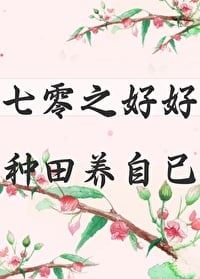
Ye Xin, a twenty-first-century corporate worker, transmigrates into the body of a sixteen-year-old educated youth in rural China, 1970. The original host, also named Ye Xin, had been sent to the Fengshui Brigade during the Down to the Countryside Movement. Upon waking in a dilapidated mud-brick house, Ye Xin discovers she is engaged to Shen Zhuo, a local farmer whose father recently died. The original host had moved into Shen Zhuo’s home under the guise of caring for his father, only to demand an annulment immediately after his death because the family was too poor. Now, Ye Xin must navigate a hostile social environment where she is despised by other educated youths for her previous laziness and vanity, while facing the immediate threat of starvation and social ostracization.

Ye Xin quickly realizes she possesses a mysterious spatial dimension with fertile land and a spring, which she identifies as her advantage for survival. However, her immediate priority is securing food and avoiding eviction from the Shen household. When Shen Zhuo confronts her about her strange behavior and demands she leave, Ye Xin pleads for mercy, citing her inability to cope with the other educated youths. Shen Zhuo, despite his cold demeanor and initial reluctance, agrees to let her stay, though he remains distant and suspicious of her sudden change in personality. Their dynamic shifts from antagonistic to a fragile coexistence as Ye Xin attempts to prove her diligence.

The narrative follows Ye Xin’s struggle to adapt to the grueling physical demands of agricultural labor. She participates in rice transplanting under the scorching June sun, earning only four work points, which is insufficient for adequate food rations. Despite her exhaustion and lack of farming experience, she persists, learning to plant rice alongside Shen Zhuo, who is a skilled and efficient farmer. Her efforts to integrate into village life are met with skepticism and mockery from peers, particularly Liu Hongxia, who openly ridicules Ye Xin’s past behavior and current appearance. Ye Xin endures these insults silently, focusing instead on her work and survival.

A pivotal moment occurs when Ye Xin receives a letter and a package from her family, including thirty yuan and food supplies. This financial injection allows her to plan a trip to the town market. She convinces Shen Zhuo to accompany her on his bicycle, a valuable asset in the village. During the trip, they interact more closely, with Ye Xin purchasing meat, seeds, and household necessities. The shared experience softens Shen Zhuo’s attitude slightly, though he remains guarded. Ye Xin uses the opportunity to send a letter to her sister, expressing gratitude and attempting to repair family ties, while also reflecting on the favoritism she received at home.

Back at the Shen household, Ye Xin begins to transform their living conditions. She cooks meals using the preserved meat sauce from home, improving their diet and fostering a sense of domestic normalcy. She also starts planting seeds in her spatial dimension, experimenting with agricultural techniques to potentially increase yields. The story highlights her determination to survive and improve her circumstances through hard work and strategic planning, rather than relying on the original host’s manipulative tactics. As she continues to work in the fields and manage her household duties, Ye Xin gradually earns a measure of respect from her peers, though the path ahead remains fraught with challenges related to poverty, social stigma, and the harsh realities of rural life in 1970s China.

Latest Release
DateGroupRelease
2026-08-11shanghai fantasy c92
2026-08-11shanghai fantasy c91
2026-08-11shanghai fantasy c90
2026-08-11shanghai fantasy c89
2026-08-11shanghai fantasy c88
2026-08-11shanghai fantasy c87
2026-08-11shanghai fantasy c86
2026-08-11shanghai fantasy c85
2026-08-11shanghai fantasy c84
2026-08-11shanghai fantasy c83
2026-08-11shanghai fantasy c82
2026-08-11shanghai fantasy c81

Community Reviews

Rating(3.6 / 5.0, 10votes)
5 stars
1(10%)
4 stars
4(40%)
3 stars
5(50%)
2 stars
0(0%)
1 stars
0(0%)

Popular reviews

... Read More
I am not okay with how cute this is. I repeat, I am NOT OKAY. "Instinctively, her hands wrapped around Shen Zhuo's waist, and when she realized it made things easier, she shifted closer, clasping her hands together in front of him for extra support." Shen Zhuo stiffened. Face flushed. Eyes straight ahead. PEDALING FASTER. Ye Xin is just... existing and causing him physical distress. She wraps her arms around his waist and his entire body goes rigid. He's trying so hard to act normal but he's literally sweating through his shirt and pedaling like his life depends on it. And Ye Xin? She's just worried the meat will spoil and that he's working too hard. She has no idea what she's doing to him. But here's what got me—the part where they're arguing about the cup. She bought him a new enamel mug, one with bamboo patterns, green and simple, because she specifically chose it for him. And he refuses it. He keeps saying give me back mine. And she says it feels awkward to switch after using his for so long. And he fires back: "If you don't mind, why should I?" They're both embarrassed. Both of them are just... trying to figure out this weird new dynamic where they're sharing everything but neither knows how to just accept kindness without feeling like they owe something. It's so painfully real. The fact that even something as tiny as a cup becomes this back-and-forth negotiation says everything about how careful they're being with each other.
... Read More
Let me just say this: the author is sneaky with their symbolism and I am here for it. First, the well. The meat gets lowered into the well on a basket, floating just above the water surface to stay cool. This is such a domestic, practical image—but it's also deeply symbolic. The well is their source of life, their sustenance, and they're using it to preserve something precious. That meat represents everything they've worked for in this chapter: Ye Xin's money, Shen Zhuo's labor, the herb gathering to come. It's fragile. It could spoil. It needs constant care. Just like their situation. Then there are the seeds. Ye Xin soaks them in well water and is already imagining the harvest. "She was already looking forward to improving her meals!" Seeds are the ultimate symbol of hope in a story about poverty—they represent faith in a future you can't yet see. She's planting something today that won't bear fruit for weeks or months. That's a mindset shift from surviving day to day to actually planning ahead. And the herbs themselves—Bai Qian for coughing, Bu Gu Zhi (whose name literally means "not abandoning" in Chinese, though I won't spoil that), Ding Gong Vine for rheumatism. These plants heal. They turn what grows wild and free into something that sustains life. Shen Zhuo knows them, his father taught him, and now he's passing that knowledge to Ye Xin. The cycle continues. The mountain gives if you know how to ask. The whole chapter is basically about taking what you have—however little—and making it last, making it grow, making it mean something.
... Read More
Okay so I have to talk about this market trip because it's honestly the first time the plot has felt like it's actually MOVING instead of just… existing in the same rural purgatory for thirty chapters. Before this, everything was just Ye Xin struggling to survive and Shen Zhuo being miserable. Now? They're riding a bike together, buying seeds, and she's writing letters to her sister. That's progression. That's a plot arc. The structure of this whole section is interesting too. It starts with the rice planting — which is basically the 'inciting incident' for why they need to go to town — then builds through the market scenes like a series of small beats: post office, butcher shop, supply store, agricultural market. Each stop reveals something new about Ye Xin. She's not just some girl trying not to die in the countryside anymore. She's planning. She's buying seeds for cabbage, eggplant, radishes, tomatoes, green beans. She's thinking ahead. That's a character who's stopped reacting and started acting. And then there's the little subplot thread with Li Guangrong and Li Jianbang that I didn't expect to care about but actually did. Li Jianbang defending Ye Xin — "You might've given her the wrong signals" — is such a small moment but it recontextualizes everything. This village isn't just hostile. There are people who actually see her as a person. That matters for the larger narrative. The only thing I'd question is whether the market scene drags a little. It's fun, don't get me wrong, but some of the shopping details felt like they could've been trimmed. Still, the ending — her buying him a meat bun — that's the kind of beat that makes you go "oh, the plot is doing something now" and I'm here for it.
... Read More
I need to talk about the stakes here because they are REAL and they never let you forget it. These two are broke. Like, genuinely, painfully broke. They spent 13 yuan and 48 cents in one trip and now have 28 yuan and 17 cents to their name. That's it. That's their entire financial world. And Ye Xin is already calculating: once they eat this meat, what's next? The production team won't let them starve, she says—but the fact that she has to say that out loud tells you how close to the edge they are. Shen Zhuo goes into the mountains to gather herbs because he's tired of feeling helpless. That's the internal conflict right there—he's not just poor, he's humiliated by his own inability to provide. And Ye Xin? Her conflict is different. She has some money, she has the modern knowledge of a reincarnated person, but she's still limited. She can buy things, but she can't grow them fast enough. She needs him, and she needs the mountain, and she needs this herb business to work. The tension in this chapter isn't about dramatic danger—it's about the slow, grinding pressure of poverty. Every decision is weighed: do we eat meat for lunch or save it? Do we use the precious rice or make porridge? Do we rest or keep walking because the meat might spoil? The author makes you feel every single one of these micro-stakes, and by the time Shen Zhuo finally agrees to make dry rice instead of porridge, you feel like you've won a small victory. "Once we eat, we'll figure it out." That line though. That's the whole story in one sentence. They're always figuring it out as they go.
... Read More
Let me just say — the dialogue in this section is quietly brilliant and I need to talk about how Shen Zhuo's voice works because it's doing so much with so little. He says things like "Let go." and "The brakes are broken. There's nothing I can do about it." and "I'll check after we eat." That's it. That's his entire personality in three sentences. He's terse, practical, not given to emotional expression. But the author doesn't make him a robot — there's this one moment where he thinks to himself that he doesn't see how he could benefit from being "taken advantage of" and suddenly you realize this kid has this weird, dry internal monologue that's almost comedic. He's not cold. He's just… understated. And that makes every small gesture — checking the bike tires, offering to carry the basket, silently following her through the market — feel earned. Ye Xin's voice is completely different. She's loud, scattered, impulsive. "Let's go to the market!" "Meat buns! Eat up!" "No need, I can manage." She talks to fill space, to convince herself, to keep going. And her dialogue reveals everything about her — she's performing competence even when she's terrified on that bike, she's making excuses for holding onto Shen Zhuo because vulnerability is scary, she's pushing through the market crowd even though she's small and exhausted. The side characters also have distinct voices. Sun Weiqiang is immediately recognizable — cynical, dismissive, the kind of guy who says "What's so great about him? He's a scrawny kid with no parents, dirt poor" and then gets shut down by literally everyone around him. Zheng Wenwen is sharper: "Poor or not, he's got a bicycle, and that makes getting to town way easier." She sees the practical value. Liu Hongxia is the harshest: "You know what she's like. Always trying to get something for nothing." These three represent the whole village's attitude in miniature. And Li Jianbang — the team leader — his dialogue is all authority and protectiveness wrapped in gruffness. "Watch your mouth!" "Shut up!" But then he says to Li Guangrong, "You might've given her the wrong signals. Otherwise, why would she bother with you?" and draws laughter from the group. That line does triple duty: it defends Ye Xin, it mocks Li Guangrong, and it shows Li Jianbang has a sense of humor. Three beats in one sentence. The narrative voice itself is interesting too — it's close third person, bouncing between Ye Xin and Shen Zhuo's perspectives, and it has this dry observational quality that never judges them. When Ye Xin is being dramatic internally, the narration doesn't mock her. When Shen Zhuo is being awkward, it doesn't make him a joke. It just lets them be people figuring things out.
... Read More
I need to talk about the bike scene because it's the perfect metaphor for everything happening in this story, and I'm not even being poetic about it. Shen Zhuo is riding a bike with broken brakes down a steep hill. Ye Xin is clinging to his waist for dear life. He keeps saying "The bike's fine, it's just the brakes. As long as you sit still, you'll be fine." But it's NOT fine. Neither of them is fine. They're hurtling toward the market at speed they can't fully control, and the only thing keeping them from crashing is that she's holding on and he's steering. That is literally the state of their relationship right now. And the stakes — what are they actually risking? On the surface, it's Ye Xin's reputation. She's already the girl with the rumors, the one Li Guangrong spread stories about, the one everyone thinks is trouble. Riding to town with her broken-fiancé on a bike? People are going to talk. Sun Weiqiang and the others are already watching, already judging. But Ye Xin's response is basically: what reputation do I have left to lose? And that's the thing — her stakes have shifted. She's past caring about gossip because she's fighting for something more basic: survival, dignity, a future. The external conflict is everywhere. The heat. The exhaustion. The fact that five centimeters of rice planting a day isn't enough to earn a full meal. The ration tickets. The money — 11 yuan and 65 cents, that's all she had before her sister sent 30 yuan. Every detail is a reminder that these characters are operating with almost nothing and every mistake costs them. But the internal conflict is what keeps me hooked. Ye Xin is trying to become someone who can survive here — not just physically but socially. She's learning to ask for things directly ("Captain, I need to go to town") instead of manipulating through others. She's learning that Shen Zhuo isn't the enemy. And Shen Zhuo is learning that maybe, just maybe, living with this girl who yells at him about bike maintenance and buys him meat buns isn't the worst fate he could imagine. The tension never drops. Even in the market — which should be a relief, a break from the fields — there's the constant pressure of time and heat and scarcity. Meat sells out fast. Eggs are in high demand. The supply store crowd is brutal. Every purchase is a small victory against a system designed to keep them wanting. And yet. And yet. They made it. They bought the meat. They got the seeds. They fixed the brakes. They came home with a basket full of possibilities. That's the real stakes here — not whether Ye Xin survives the day, but whether she can build a life worth surviving for.
See all reviews

Characters

See all characters

Custom lists

See all custom Lists