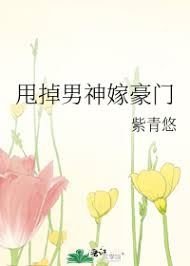
Get Rid Of The Male God And Marry The Rich
+Add to Custom List
Novel Info

Summary

... Read More

Meng Yu, a woman of striking beauty and multilingual talent, spent nearly a decade in a one-sided romantic relationship with Xiao Qi, a brilliant but emotionally distant AI executive in Shenzhen. Despite her deep affection and willingness to compromise, Xiao Qi maintained strict boundaries, refusing to marry her or engage in physical intimacy until his career stabilized. The relationship shifted dramatically when Ai Qing, Xiao Qi’s childhood neighbor and the girl from a photo he once kept in his wallet, arrived in the city with her young daughter, Huan Huan. Ai Qing claimed her family had helped Xiao Qi during his impoverished youth, and he responded by providing her with housing, employment, and financial support for her child. Meng Yu witnessed Xiao Qi displaying a warmth and tenderness toward Ai Qing and Huan Huan that he had never shown her, culminating in the child calling him "Daddy." The breaking point occurred at Xiao Qi’s workplace, where Huan Huan aggressively shoved a lollipop into Meng Yu’s throat, causing Meng Yu to push the child away in self-defense. Xiao Qi immediately rushed to care for Ai Qing and the injured girl, completely ignoring Meng Yu’s distress. Realizing she was merely an afterthought in his life, Meng Yu ended the relationship and left Shenzhen.

For over a year, Meng Yu traveled extensively to heal from her heartbreak, gradually rebuilding her sense of self. Her mother, Qi Mei, summoned her back to Yancheng to reveal a arranged marriage proposal with Chu Xiujin, the new chairman of Beiyue Automobile Group. Chu Xiujin was an illegitimate son of the powerful Xia family, rumored to be short, ugly, and ruthless. The original bride was Meng Yu’s step-sister, Wang Shuyuan, who had refused the match. Under pressure from her stepfather, Wang Weiguo, who relied on the Xia family for business success, Meng Yu agreed to take her sister’s place, viewing the marriage as a transactional duty rather than a romantic choice. She met Chu Xiujin at his headquarters and was surprised to find him tall, handsome, and polite, dispelling the vicious rumors surrounding him. Chu Xiujin revealed that the choice of bride was unimportant to him, treating the marriage as a mere formality, which relieved Meng Yu’s anxieties about their compatibility.

Meanwhile, Xiao Qi struggled with the reality of Meng Yu’s absence. Initially confident she would return, he experienced growing panic and insomnia as months passed without contact. He discovered she had blocked all his communication channels and moved to a new residence. His attempts to locate her led him to her new home, where he found her preparing for her upcoming wedding. Xiao Qi confessed his regret and begged her to cancel the marriage, promising to make amends for his past indifference. However, Meng Yu remained resolute, recognizing that his late-stage devotion was insufficient to repair the years of emotional neglect. She chose to proceed with her arrangement with Chu Xiujin, seeking a fresh start away from the pain of unrequited love.

The narrative explores the power dynamics between Meng Yu and the two men in her life. While Xiao Qi represents passionate but selfish obsession that only awakens upon loss, Chu Xiujin emerges as a composed and respectful partner who treats Meng Yu with dignity. As Meng Yu prepares to marry into the complex and patriarchal Xia family, she navigates the expectations of her stepfamily and the political intrigues of Beiyue Group. The story follows her journey from a submissive lover to an independent woman making her own choices, while Xiao Qi faces the consequences of his emotional unavailability and Chu Xiujin begins to show genuine interest in his new wife beyond the initial arrangement.

Latest Release
DateGroupRelease
2026-08-11shanghai fantasy c63
2026-08-11shanghai fantasy c62
2026-08-11shanghai fantasy c61
2026-08-11shanghai fantasy c60
2026-08-11shanghai fantasy c59
2026-08-11shanghai fantasy c58
2026-08-11shanghai fantasy c57
2026-08-11shanghai fantasy c56
2026-08-11shanghai fantasy c55
2026-08-11shanghai fantasy c54
2026-08-11shanghai fantasy c53
2026-08-11shanghai fantasy c52

Community Reviews

Rating(4 / 5.0, 6votes)
5 stars
1(17%)
4 stars
4(67%)
3 stars
1(17%)
2 stars
0(0%)
1 stars
0(0%)

Popular reviews

... Read More
Okay so I need to talk about this entire arc because honestly it's one of those plot moments that just hits different when you've been invested in the relationship for years. Meng Yu going to Shenzhen, thinking maybe she and Xiao Qi could just... reconnect? Like, come on. We all know how that ends. The author basically set her up with the most brutal possible confrontation—walking into Pangda Navigation and seeing Xiao Qi with Ai Qing and the kid, looking like a damn family. That scene is pure cruelty and I love it for storytelling purposes. The lollipop moment though—WHAT. The little girl literally shoving candy down Meng Yu's throat? That's not just a coincidence, that's the author making a point so loudly it echoes. Meng Yu pushes back instinctively, the kid falls, and Xiao Qi doesn't even look at her. He just walks away. And that's when she finally says it: "I'm hurting too." And he keeps walking. That's the plot turning point right there. Not the breakup conversation on the balcony—that was already decided. The real break happens in that office when he chooses the mother and child over his girlfriend of nine years and doesn't even glance back. The aftermath is what makes it land though. She moves, she quits, she changes her number, she travels to the Sahara and Mount Tai and Sweden. The plot doesn't just end the romance—it shows the actual process of unmaking a life built around someone. And then BAM, her mom calls her back with an arranged marriage. The author really said "you thought it was over? Nah." I'm already invested in what happens next.
... Read More
The pacing in these chapters is honestly masterful. Let me break it down because the author really knows how to control the reader's heartbeat. It starts with the confrontation at Pangda Navigation—high tension, immediate emotional stakes. The lollipop incident escalates it to physical danger, then Xiao Qi's abandonment of Meng Yu is the first punch. The breakup on the balcony is quieter, almost calm, which makes it hit harder. Then she confronts Ai Qing—explosive, cathartic, the release of years of suppressed anger. And then—silence. She leaves. No more drama. Just the aftermath. The travel montage is where the pacing shifts dramatically. The author could have rushed through this, but instead we get specific images: the Sahara, Mount Tai, diving into the ocean, sailing across lakes. It's a breathing room that lets the emotional weight settle. And then, just as she's starting to heal—"Only then did she start to truly enjoy her journey"—her mother calls. That transition is perfect. It's the narrative equivalent of a plot twist that feels inevitable in hindsight. The mother's voice on the phone, the serious tone, the arranged marriage reveal—it re-anchors the story back into domestic drama after we'd gotten a taste of freedom. The chapter ends with "I'll tell you once we get to where you're staying" and I am NOT ready for what's coming next. The structure here is basically: crisis → climax → catharsis → recovery → new crisis. Classic but effective, and executed with real skill.
... Read More
The scene where Meng Yu walks into Xiao Qi's apartment and sees Ai Qing with flour on her hands and an apron on, and Xiao Qi helping Huan Huan with her schoolbooks in the living room—this is one of those moments that's so visually specific it burns into your brain. The text says: "She had always thought his apartment felt too cold, too sterile. But now, it was filled with laughter and warmth. It felt like a home. And to Meng Yu, that felt like the cruelest irony." I keep coming back to this image. The succulents on the balcony—"still alive, still growing"—that's Meng Yu's touch, her presence in that space. But inside, Ai Qing has transformed it into something else entirely. The contrast between the cold sterile apartment Meng Yu knew and the warm home Ai Qing created is devastating because it shows us that Meng Yu was never really living there. She was visiting. Ai Qing was inhabiting. And the balcony scene where she breaks up with him—"The sun was setting, casting golden light across the sky"—there's something almost poetic about that. Golden hour for the death of a decade-long relationship. The fading light mirroring the fading hope. Then she looks at the succulents she planted and they're still alive. She's still alive. That's not nothing. The travel scenes later are also beautifully rendered—the Sahara, Mount Tai with clouds rolling beneath her, the colorful depths of the ocean. The author uses landscape as emotional landscape, which is a technique I deeply appreciate.
... Read More
"She had loved him so much. But strangely, it didn't feel as heavy as she had imagined. In fact, there was a flicker of something close to satisfaction. Look at me, Xiao Qi— I loved you so much, gave you all the power, let you decide everything… but in the end, I'm the one who walked away." This line absolutely wrecked me because it captures the entire power dynamic of their relationship in one sentence. Meng Yu had spent NINE YEARS making herself small, accommodating, endlessly forgiving—and the moment she stops, she feels... relief? Satisfaction? That's not weakness, that's liberation. But let's talk about Xiao Qi for a second, because he's complicated. He's not a cartoon villain. The text says he was silent for a long time when she broke up with him, and his first question was "Is this because of Sister Ai Qing?" He genuinely seems to think this is a temporary misunderstanding, not a fundamental failure on his part. And then his response—"No need. She'll come back when she's ready." The audacity. The absolute, unshakable certainty that she would return. That's not love, that's ownership. Ai Qing is also fascinating here. She's not the typical "evil home-wrecker." She makes dumplings, she cries when Meng Yu attacks her, she says "It's all my fault." But she also brings her kid to Xiao Qi's apartment while he's still dating someone else, and she's already wearing an apron like she owns the place. The text says Meng Yu thought Ai Qing already felt more like the woman of the house than she ever had. Oof. That's the real tragedy—not that someone stole Xiao Qi, but that Meng Yu was never really seen as his equal in the first place.
... Read More
Let me just say this: the dialogue in these chapters is SO sharp it could cut glass. Every exchange between Meng Yu and Xiao Qi, between Meng Yu and Ai Qing—it's layered with subtext and it's beautiful. The most devastating line in the entire passage is probably Xiao Qi's response to the breakup: "No need. She'll come back when she's ready." Not "I love you, please don't go." Not even "Why are you doing this?" Just... calm, confident acceptance. As if her departure is a temporary inconvenience, not a catastrophe. That's the kind of dialogue that reveals character more effectively than any narrator could explain it. And Meng Yu's confrontation with Ai Qing—"I haven't even broken up with Xiao Qi yet, and you're already bringing your kid over to cook and clean for him?" This is raw, unfiltered, and absolutely cathartic. The author lets her say everything she's been swallowing for nine years. It's not polished or graceful, and that's exactly why it works. Ai Qing's response is equally interesting: "I just wanted to repay him... Whatever problems you and he have—that's between the two of you. Why say such cruel things?" She plays the victim so naturally, so convincingly, that you almost believe it. Until you remember she brought her child to a man who has a girlfriend. The dialogue between Meng Yu and her mother at the end is colder, more clinical—"How much longer are you going to wander around?"—which perfectly contrasts with the emotional intensity of everything that came before. The author gives each character a distinct voice, and honestly, I'm here for it.
... Read More
There's so much symbolism packed into these chapters that I can't stop thinking about it. The lollipop is the most brutal symbol in the whole text. A child offering candy—a universal symbol of innocence, sweetness, childhood—weaponized against Meng Yu. The little girl says "Auntie, here—eat" and then shoves it down her throat. It's almost allegorical: the next generation, the new family, offering Meng Yu something that looks like kindness but is actually violence. And the fact that it's a CHILD doing it makes it even more horrifying, because there's no malice in it—just the casual cruelty of someone who's never been taught to consider her existence. Then there are the succulents on the balcony. "Still alive, still growing." Meng Yu planted them. They survived her absence. They don't need her to thrive—they just keep going. It's a quiet metaphor for her own resilience. And the travel itself—Sahara, Mount Tai, the ocean, Sweden—that's not just plot progression, it's symbolic rebirth. She's literally moving through the world, expanding herself beyond the small life she built around Xiao Qi. The vast landscapes contrast with the claustrophobic apartment where she was just a guest in someone else's home. But the deepest symbol might be the arranged marriage at the end. Her mother calling her back, the proposal waiting like a cage. After all that freedom, all that travel, all that self-discovery—she's being pulled back into the role of daughter, wife, obedient child. The story seems to be asking: can someone who's learned to walk away ever truly be made to stay?
See all reviews

Characters

See all characters

Custom lists

See all custom Lists