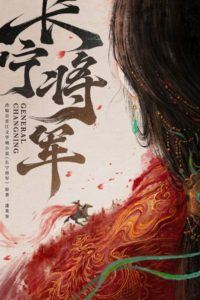
General Changning
Novel Info

Summary

... Read More

Jiang Hanyuan serves as the General Changning, commanding the elite Qingmu Battalion on the northern frontier of Great Wei. Raised in military camps by her father, Grand General Jiang Zuwang, she is renowned for her combat prowess and feared by enemies who nickname her the "She-Demon." During a routine journey to pay respects at her maternal family's tomb, she discovers a Northern Di raid on a border village. Despite having only twenty-four riders, she pursues the raiders and successfully rescues abducted women, demonstrating the aggressive tactics that contrast with her army's usual defensive posture. Her subordinate, Yang Hu, voices the frustration felt by many soldiers who are tired of merely defending walls while barbarians raid with impunity.

The political landscape of Great Wei is fragile. The young Emperor Shu Jian sits on the throne under the regency of his uncle, Prince Shu Shenhui. The late Emperor Shengwu had left behind unfulfilled ambitions to reclaim lost northern territories and drive out the barbarians. However, the court is divided. Prince Gao, the Grand Marshal and imperial uncle, commands significant military loyalty and has long resisted the Regent's efforts to centralize power. The Regent Prince seeks to consolidate authority and prepare for a decisive war against the Northern Di, a campaign that requires the allegiance of frontier commanders like Jiang Zuwang.

Prince Xian, the Regent's elder brother, travels north to propose marriage between Jiang Hanyuan and the Regent. This proposal is a calculated political move designed to bind the powerful Jiang family to the throne. When Jiang Zuwang learns of the proposal, he is torn between political necessity and his daughter's autonomy. Jiang Hanyuan initially reacts with fury, fleeing into the wilderness and leaping into a cliff pool to escape her fate. She leaves a note reading "Do not seek," indicating her desire for solitude and her refusal to be controlled.

Meanwhile, in the capital, tensions reach a breaking point during the Empress Dowager's birthday celebration at the Imperial Protecting Temple. Prince Gao, having discovered the Regent's marriage plot as a means to gain Jiang Zuwang's support, decides to strike first. He activates sleeper agents within the Imperial Guard to assassinate the Regent Prince. However, the Regent had anticipated this move. He lures Prince Gao into a trap within the temple grounds. Hidden assassins eliminate Prince Gao and his guards in a swift, brutal confrontation. The Grand Marshal is forced to commit suicide after failing to kill the Regent, marking the end of his faction's power.

Jiang Hanyuan has also traveled to the capital in disguise. She seeks out her father's old friend, General Liu Xiang, to gain entry to the temple. Unaware of the assassination plot, she intends only to catch a glimpse of her prospective husband. She witnesses the aftermath of the conflict but remains hidden. The Regent, aware of her presence, does not expose her. The successful elimination of Prince Gao secures the Regent's control over the capital, but it also signals to frontier generals that resistance will be met with lethal force.

Jiang Zuwang, initially intending to refuse the marriage to protect his daughter, receives news of Prince Gao's death. He realizes the political reality: the Regent holds the power, and refusing the alliance could be interpreted as dissent. Jiang Hanyuan returns to the camp and informs her father that she accepts the marriage. She understands that her union with the Regent is not merely a personal arrangement but a strategic necessity. It secures her father's position and ensures that the frontier army will support the Regent's upcoming northern campaign. She tells her father to prepare his troops, signaling her acceptance of her role in the larger conflict.

The story moves toward a convergence of military and political ambitions. The Regent has eliminated his internal rival, Prince Gao, and secured the loyalty of the Jiang family through marriage. Jiang Hanyuan, having surrendered her personal freedom for the sake of her father and her country, prepares to enter the capital as the Regent's consort. The narrative sets the stage for a major war against the Northern Di, with Jiang Hanyuan positioned at the center of both the political intrigue and the military strategy. Her transformation from a fierce battlefield commander to a political pawn marks a significant shift in her character arc, as she navigates the treacherous waters of court life while awaiting the day she can return to the front lines.

Latest Release
DateGroupRelease
2026-08-11shanghai fantasy c21
2026-08-11shanghai fantasy c20
2026-08-11shanghai fantasy c19
2026-08-11shanghai fantasy c18
2026-08-11shanghai fantasy c17
2026-08-11shanghai fantasy c16
2026-08-11shanghai fantasy c15
2026-08-11shanghai fantasy c14
2026-08-11shanghai fantasy c13
2026-08-11shanghai fantasy c12
2026-08-11shanghai fantasy c11
2026-08-11shanghai fantasy c10

Community Reviews

Rating(4.2 / 5.0, 6votes)
5 stars
2(33%)
4 stars
3(50%)
3 stars
1(17%)
2 stars
0(0%)
1 stars
0(0%)

Popular reviews

... Read More
Let's talk about stakes because they are NOT subtle here. Jiang Zuwang is a frontier general. His power exists because the empire needs him. The Regent needs him too. But the marriage proposal isn't a proposal—it's a leash. "The Regent's intent in marrying you is truly directed at me—more a gesture of favor and binding than affection." Jiang Zuwang knows this. His daughter knows this. Everyone in this story knows this. And yet. The stakes of refusal aren't just political death. They're personal. Jiang Zuwang thinks about his dead wife. "If he yielded again, bowing to fear of authority and betraying his own heart, without even attempting to fight for her, then even in death he would have no face to meet his departed wife." This man is fighting between two kinds of love: protecting his daughter from a bad marriage, and protecting her from a worse fate if he refuses the Regent. Then Jiang Hanyuan flips the entire board. She accepts. Not because she's weak. Not because she's been broken. But because she sees something her father doesn't yet see: that this marriage might be a weapon, not just a cage. "Only sharpen your blades and prepare your troops, and wait for that day to come." What day? She won't say. And that's the most terrifying part. She's playing a game her father can't see the full board of. The stakes just multiplied. Because now it's not just about survival—it's about strategy. And she's already three moves ahead.
... Read More
I need to talk about the spider. Just the spider. The opening image of this entire chapter sequence: a spider falling from its web, climbing back up, falling again, and then a hand—someone's hand—placing it back on the thread. It climbs, clings, and returns to its endless labor. That is Jiang Hanyuan. That is every person in this story who refuses to stop spinning. And the Moon Blade—the marriage gift—is such a loaded symbol. A sword. Curved like the moon. Forged in ancient style. Once the Emperor Shengwu's own weapon. Now offered as a token of affection. A blade is an instrument of death, and it's being offered as an instrument of union. The Regent isn't saying "I love you." He's saying "I will protect you with this, or I will use it on you." But here's what I think the author is doing: Jiang Hanyuan accepts the blade. She doesn't reject it. She takes the instrument of power and says, in effect, "I will wield this too." The recurring imagery of threads—broken threads, spinning threads, threads holding things together—connects to the theme of agency. Everyone in this story is trying to hold onto their thread. The spider holds on. Jiang Zuwang holds on. Jiang Hanyuan lets go of one thread and grabs another. The question isn't whether the thread will break. The question is who gets to choose when it does.
... Read More
"The marriage—yes." Three words. That's all it takes to change everything. I keep coming back to this moment because it's so devastatingly simple. Jiang Zuwang has spent the entire chapter preparing to refuse. He's rehearsed it. He's steeled himself. He's ready to stand between his daughter and the Regent's ambition like a wall. And then she appears—riderless, exhausted, frost on her face—and says three words that make all his preparation irrelevant. What happened to her? That's the emotional core of these chapters. Not the politics. Not the sword. The fact that some unknown experience transformed her from a girl who would fight this marriage into a woman who accepts it willingly. What did she see? What did she lose? What did she gain? And the father's guilt—oh god, the guilt. Every time he looks at her, he sees his own failure. He wanted to protect her. He couldn't. Not because he refused the Regent, but because she went somewhere he couldn't follow, and came back someone he doesn't recognize. "Zizi! What has happened to you?" he calls. And she just keeps walking. Not cruelly. Not coldly. Just... forward. She's made her peace. The tragedy isn't that she's being forced. The tragedy is that she's choosing this, and he can't stop her, and he can't understand her. That's the emotional knife twist. She's not a victim. She's a strategist. And he's still trying to be her father. Those two roles don't fit together anymore.
... Read More
Jiang Zuwang is one of those fathers who loves so hard it becomes almost painful to watch. The way he lies to Prince Xian about his daughter's whereabouts—"she went to pay respects at her maternal grandfather's anniversary"—this man is terrified. Not of the Regent. Not of politics. Of losing his daughter to something he can't control. And then she comes back. Travel-worn. Frost on her face. And she says three words: "The marriage—yes." His first reaction isn't relief. It's suspicion. He thinks she's forcing herself for HIS sake. He gives this whole speech about how the Regent is no worthy husband, how the capital is a cage, how he will refuse on her behalf. He's trying so desperately to be the protective father again, like he can just shield her from everything. But she doesn't argue. She just says: "Answer according to my will." That line hit me like a physical thing. She's not asking permission. She's telling him that the person he's been protecting no longer needs protecting the way he thought. She's gone somewhere. She's seen something. She's made her own calculus. And the most devastating moment? When she says: "Shu Shenhui needs a general like you. And you need a sovereign like Shu Shenhui." She's not accepting the marriage for love. She's accepting it because she's already thinking about the future of this empire. She's thinking like a general's daughter who understands duty. But also like someone who has made peace with sacrifice. The father-daughter relationship here is everything. It's love, yes. But it's also the moment a parent realizes their child has become someone they don't fully understand anymore. And that's both beautiful and heartbreaking.
... Read More
Let me just say—this opening spider scene is not just decorative. I knew right away the author was setting up something. A spider falling, trying again and again, refusing to give up, and then a hand gently placing it back on the thread. That hand? That's Jiang Hanyuan. She's the one who keeps climbing back. And the whole chapter is structured like that climb—fall, struggle, return, but changed. The plot moves in two directions simultaneously, and I love how they intersect. On one track: the political earthquake in the capital. Prince Gao dies. Reforms happen overnight because everyone's too scared to resist. The Regent consolidates power. This is background radiation, but it's what's pressing on Jiang Zuwang like atmospheric weight. On the other track: the marriage proposal, the Moon Blade, the father's internal war. These two tracks collide at dawn when Jiang Hanyuan rides back. The twist that got me wasn't the acceptance itself—it was the father's pivot. He goes from "I will refuse this marriage" to watching his daughter walk away into the sunrise, and he can't even stop her. The real plot twist is that she's no longer the girl he thought he knew. She's been somewhere. She's done something. And she's made a decision he didn't make for her. "Zizi! What has happened to you?" he calls after her. And the reader gets the same question. The chapter ends on that note of suspended mystery, and honestly? I need to know what she did in Yunluo. What broke in her? What rebuilt itself?
... Read More
The atmosphere in these chapters is so thick you could cut it with the Moon Blade. Let me just talk about the sensory details because they're doing so much work. The autumn wind sweeping through the southern window. The yellow leaf drifting down. The spider on the broken thread. This isn't just setting—it's the entire emotional temperature of the story. Everything is cold, everything is frayed, everything is holding on by a thread. Then Yanmen pass: "November winds swept over withered grass." The frontier is brutal. "The tents are drafty and cannot keep warm." Prince Xian's old body can barely make the journey. Jiang Hanyuan rides through the night and her face is "touched with frost." The cold is a character here. And the command tent at dawn—"The early winter sky was still dark. The horns that rouse the soldiers had not yet sounded." She appears out of that darkness like a ghost. Her figure fading into the pale light. This is cinematic. I swear I can see the frame: a lone rider against a white horizon, her father watching from the gate, the Moon Blade gleaming between them like a third presence. Then we cut to the palace at midnight. "The faint sound of the water clock drifted from the endless halls and towers." Wenlin Pavilion, brightly lit while the young emperor sleeps. The Regent still at his desk, absorbed in memorials. This contrast—the frontier's raw cold against the palace's manufactured power—is so deliberate. Two worlds. Two kinds of cold. And Jiang Hanyuan is moving between them now. The world feels alive because every detail has weight. The wind, the frost, the dark, the light, the sword on the table. Nothing is wasted.
See all reviews

Characters

See all characters

Custom lists

See all custom Lists