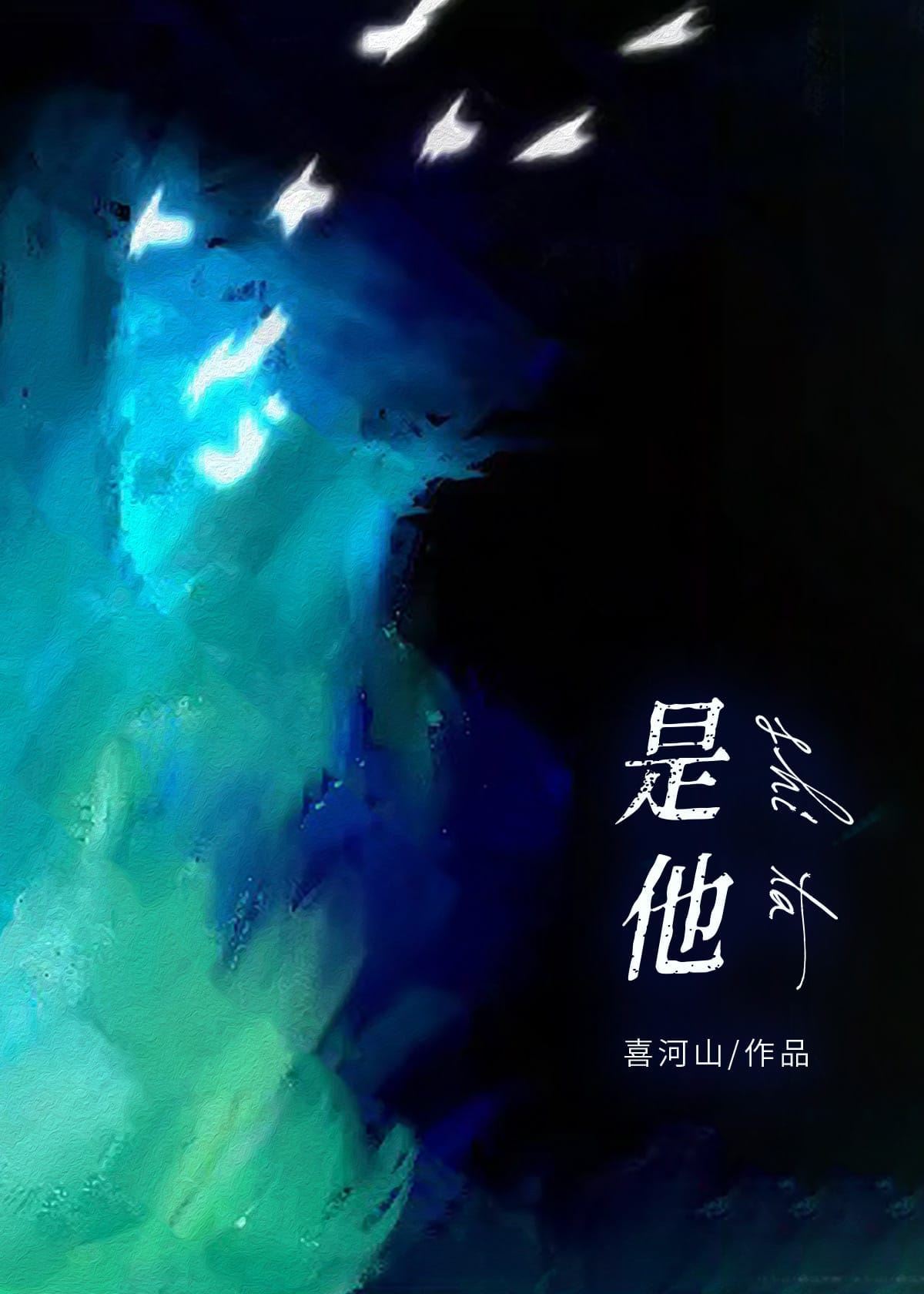
Gate of Stellar Scars
+Add to Custom List
Novel Info
  • Author:
  • Status:Ongoing

Summary

... Read More

Ren Ye is a former anti-fraud officer sentenced to six years and ten months in Qingfu Prison for shooting dead two suspects who had dismembered and killed a colleague. After three years, he is visited by Huang Wei, a member of a special government unit that deals with supernatural phenomena known as Star Gates. Huang Wei explains that spatial fragments exist across dimensions, containing ancient legacies, and that players who complete tasks within them gain godlike abilities. Four elite players recently entered a chain mission involving a Stellar Scar Gate, but all died, with one corpse returning three days later holding a mysterious ancient brush. The brush reacted to Ren Ye, summoning him by his birth date and time, marking him as the "Heavenly Pardoned One." Despite the lethal danger, Ren Ye accepts the offer, negotiating compensation and family care before entering the gate.

Ren Ye is transported into a First-Tier Star Gate set in the Great Qian Dynasty, where he inhabits the body of Zhu Zigui, the decadent and incompetent Prince Huai. Zhu Zigui is under house arrest by his suspicious uncle, the Emperor, and has been surrounded by ten covert agents posing as officials. Ren Ye inherits a useless legacy role, possessing only a dormant Imperial Brush and a disgraced Nation-Stabilizing Sword. His immediate objective is to survive for 72 hours while uncovering the identities of the agents and restoring the brush's power. He arrives in the Hall of Sincerity just as corrupt officials move to frame Wang Jingzhong, the prince's last loyal commander, for treason. Wang commits suicide in the hall to protect Ren Ye, leaving the prince isolated against a hostile court.

The situation shifts when the Princess Consort, Xu Qingzhao, intervenes. Despite maintaining a cold, detached persona, she reveals damning evidence of corruption and treason against the accusers. When the officials threaten Ren Ye to force his compliance, he draws a blade and brutally attacks Imperial Inspector Liu, severing fingers and inflicting deep wounds to assert dominance. Xu Qingzhao reinforces his authority with a veiled threat, warning the officials that removing the prince would destabilize their own positions. This alliance allows Ren Ye to survive the initial coup, though he remains acutely aware that everyone in the manor is either a player or an enemy.

Following the confrontation, Ren Ye learns that the princess consort has invited him to her chambers, signaling a shift in their dynamic. He also discovers that the Nation-Stabilizing Sword, once wielded by his predecessor, begins to respond to his presence. The narrative follows Ren Ye as he navigates the deadly political intrigue of the Great Qian Dynasty, balancing the need to maintain his cover as a foolish prince while exploiting the chaos to gather power. The story establishes a high-stakes environment where betrayal is constant, and survival depends on outmaneuvering both the imperial agents and the other players hidden within the royal residence.

Latest Release
DateGroupRelease
2026-10-01potato tales c124
2026-10-01potato tales c123
2026-10-01potato tales c122
2026-10-01potato tales c121
2026-10-01potato tales c120
2026-10-01potato tales c119
2026-10-01potato tales c118
2026-10-01potato tales c117
2026-10-01potato tales c116
2026-10-01potato tales c115
2026-10-01potato tales c114
2026-10-01potato tales c113

Community Reviews

Rating(3.9 / 5.0, 29votes)
5 stars
10(34%)
4 stars
7(24%)
3 stars
12(41%)
2 stars
0(0%)
1 stars
0(0%)

Popular reviews

... Read More
I need to talk about Second Fool because this character absolutely surprised me emotionally. On the surface, he's written as a brute — all 'Your Highness, who do we cut down?' energy. But the moment Wang Jingzhong dies, Ren Ye catches him sobbing uncontrollably, and suddenly this comedic relief character becomes someone with genuine depth. The exchange where Ren Ye says 'Besides the emotional aspect, he was also my right-hand man' and Second Fool wails 'Apart from the late Prince and Your Highness, only Uncle Wang treated me like his own' — that contrast between Ren Ye's cold calculation and Second Fool's raw honesty is devastating. It made me realize how lonely Ren Ye actually is. He's surrounded by people but can't trust any of them. Second Fool is loyal to a fault, Lian'er is… complicated, and Ren Ye is just playing a role while everyone else lives their truth. And then there's the Lian'er scene. Oh boy. Ren Ye asking her to turn around and pulling her hair? I know the text frames it almost as a joke — 'why use his own hair? probably because he was wearing a crown' — but underneath that humor, there's something deeply unsettling about a man who has to manipulate intimacy just to feel human connection. Even if it's calculated, even if it's for a trap, it tugs at something. The friendship between Zhu Zigui and Second Fool, glimpsed through Ren Ye's fragmented memories, is heartbreaking. 'The kind of loyal dog who could never betray him.' That's not a compliment in this world. Loyalty like that gets people killed. And yet Second Fool remains unguarded, vulnerable, crying over a man who actually cared for him. It makes you wonder — is Ren Ye preserving this relationship, or is he learning from Zhu Zigui's mistakes about who he can trust? Ren Ye telling Second Fool 'Today's shame will be repaid tomorrow; if not tomorrow, then in three years, five years' — that line stayed with me. It's the moment where grief transforms into purpose. That's the emotional core of this entire story.
... Read More
There's a scene in these chapters that I can't stop thinking about, and it's not the spirit absorption or the court intrigue. It's three strands of hair tied to a door seam. That's it. That's the detail. Three pieces of human hair, knotted around the edge of a palace doorway, and they save Ren Ye's life. It feels almost absurdly simple — like a folk magic trick or a paranoid grandmother's advice — except Ren Ye isn't practicing some mystical tradition. He developed this habit from working undercover on the borderlands. It's not magic. It's procedure. It's the accumulated muscle memory of a man who survived by noticing things other people ignore. I keep coming back to this because it connects to everything else in the story. The Heavenly Pardoned Qi — an invisible, almost meaningless title that everyone wants but nobody can explain. The flesh worm — a creature so small and unassuming it looks like nothing until it's burrowing into your skull. The amulet Xu Qingzhao gives him — translucent, delicate, essentially invisible unless you know what to look for. This story is obsessed with the invisible. Power you can't see. Threats you can't detect. Bonds formed without physical contact. And the thing that saves Ren Ye isn't a divine weapon or a secret technique — it's a knot of hair that any ordinary person would've swept aside without a second thought. The author keeps asking: what are you paying attention to? What invisible threads are holding your world together? And what happens when someone cuts them?
... Read More
I need to talk about Liu Ling'er because WOW. The scene where she kills that eunuch—just two slashes and the man's dead—was written with this clinical, almost bored precision that somehow made it hit harder than any dramatic murder scene ever could. And then immediately after, her face 'betrayed no remorse or pity, only an intense wariness as though facing an imminent threat.' That line. That IS her character in one sentence. This woman survived hell and decided mercy was a luxury she couldn't afford. The tragedy isn't that she's evil—it's that she had to become this to stay alive. And yet there's something painfully human underneath all that steel. When she looks toward the woods at the end, scanning for threats, I felt it: she's completely alone. No allies, no trust, just survival instinct wearing like armor. Meanwhile, Ren Ye and the Princess Consort have this ridiculous dynamic going on—he's sweating through his undergarments asking for elixirs to 'perform better,' she's rejecting him flat-out, and there's this weird undercurrent of actual partnership buried under the transactional stuff. When she says 'the Dao of Yin and Yang gives rise to all things' and offers him real advice about mutual benefit, it's the closest thing to genuine care she's shown anyone. She's not soft, but she's not heartless either. And Ren Ye internally grumbling 'Spare me the motivational speech' while still engaging with her? That's how these slow-burn, unequal relationships feel—annoying, pragmatic, and somehow the most honest connections either of them has. I'm weirdly invested in both of them not dying. Which is a problem because everyone around them keeps trying to kill each other.
... Read More
Let me just say — the pacing in these chapters is masterful. The author takes a seemingly simple search mission and stretches it out with enough procedural detail that when the sword activates, it feels genuinely earned rather than convenient. Here's how it works structurally: First, we get the emotional setup with Second Fool grieving. Then the quest begins — searching the desk, the bookshelves, the resting area. Nothing is found. Hours pass. Ren Ye is exhausted, slumped in the chair, questioning his own assumptions. This is the 'dark night of the soul' before the breakthrough, and the author doesn't rush it. He lets us feel the frustration alongside the protagonist. Then — boom. The Nation-Stabilizing Sword. The sensory details are incredible: 'Boom! Slash! Bang! Buzz!' Each onomatopoeia marks a different beat of the revelation. The sword cuts his palm, the blood reignites its brilliance, the hidden wall opens. It's choreographed like a fight scene, and that's intentional — Ren Ye is literally forging his bond with a divine weapon. After the peak, the pacing drops again. Second Fool goes into the tunnel first, Ren Ye sets up his hair-trap, descends the stairs, finds the archive room, discovers the iron door. Each beat adds a new question while answering the previous one. The sealed chamber hints at the ghost, the ghost delivers exposition about three eunuchs, the ghost reveals the seal can only be broken by the restored sword. The cliffhanger is impeccable. The torches go out, a face appears half a step away, and then the scream. End of chapter. No resolution, no breathing room. Just pure adrenaline. What's impressive is that the author never lets the tension drop below a simmer. Even the comedic moments (Second Fool's bargaining about horse-tending duty) exist within the pressure cooker of the overall quest. There's no filler — every scene advances plot, character, or atmosphere.
... Read More
Okay so let me just say this up front—the plot mechanics in this section are genuinely clever and I need to talk about them because the chain mission setup is the kind of thing that makes you sit up and pay attention. Four players went in. Three died inside the gate. One came back dead but holding a key. And now Ren Ye is being told to walk into the same door with a six-hour deadline. That is not a great odds situation, and the story knows it. What I find really interesting is how the narrative结构与the information drip-feed works here. Huang Wei doesn't just dump everything on Ren Ye at once—he tests him. 'Summarize what I've just explained in one sentence.' That's not exposition for the reader's benefit; that's a character moment that also happens to worldbuild simultaneously, which is honestly the mark of a writer who knows what they're doing. Ren Ye gets it right, and Huang Wei moves on. No padding. But here's what got me: the corpse that walked out three days after dying. That detail alone recontextualizes everything. This isn't just a dangerous game—it's a system where death doesn't work the way it should, where the rules are broken or rewritten inside the gates. If four people entered and only a dead body returned, what does that say about the survival rate? What does that say about whatever is waiting inside? And Ren Ye walking in anyway—not because he's brave, but because a voice from the gate literally called his birth data—that's the kind of forced destiny setup that could go either way. Either this becomes the most satisfying 'chosen one' arc ever, or it's a recipe for misery. I'm leaning toward hopeful but not confident.
... Read More
"My wife and I are both sentimental people. After ten years of marriage, we realized a horrifying truth: we found that after ten years, all that was left between us was…the act itself." I literally gasped out loud at this. Huang Wei, a hardened official, casually dropping the most devastating marriage confession mid-conversation like he's talking about the weather. This is peak dialogue writing right here — the contrast between the mundane setting (a dim guest room before a supernatural event) and the raw, uncomfortable honesty of two men who barely know how to say goodbye. The banter between Ren Ye and Huang Wei is what makes this chapter sing. They don't talk about the Star Gate once. Instead they discuss divorce, kids, whether marriage turns into kinship. It's so human. So normal. And that normalcy makes the impending supernatural departure infinitely more painful. Ren Ye's voice is sharp and cynical — the Wall Street wolf energy the narrator mentions. His line about the compensation being "over a hundred thousand yuan" but having to support four elderly people and a child in this society? That's not just character voice, that's social commentary delivered with devastating efficiency. And Huang Wei's final moment — tossing the letter back onto the mini-fridge and saying "The love you have for your dad—tell him in person" — that's the kind of dialogue that stays with you. No grand speech, no dramatic music. Just a man telling another man to stop preparing for death and start living. I'm a mess. This is what good writing does.
See all reviews

Custom lists

See all custom Lists