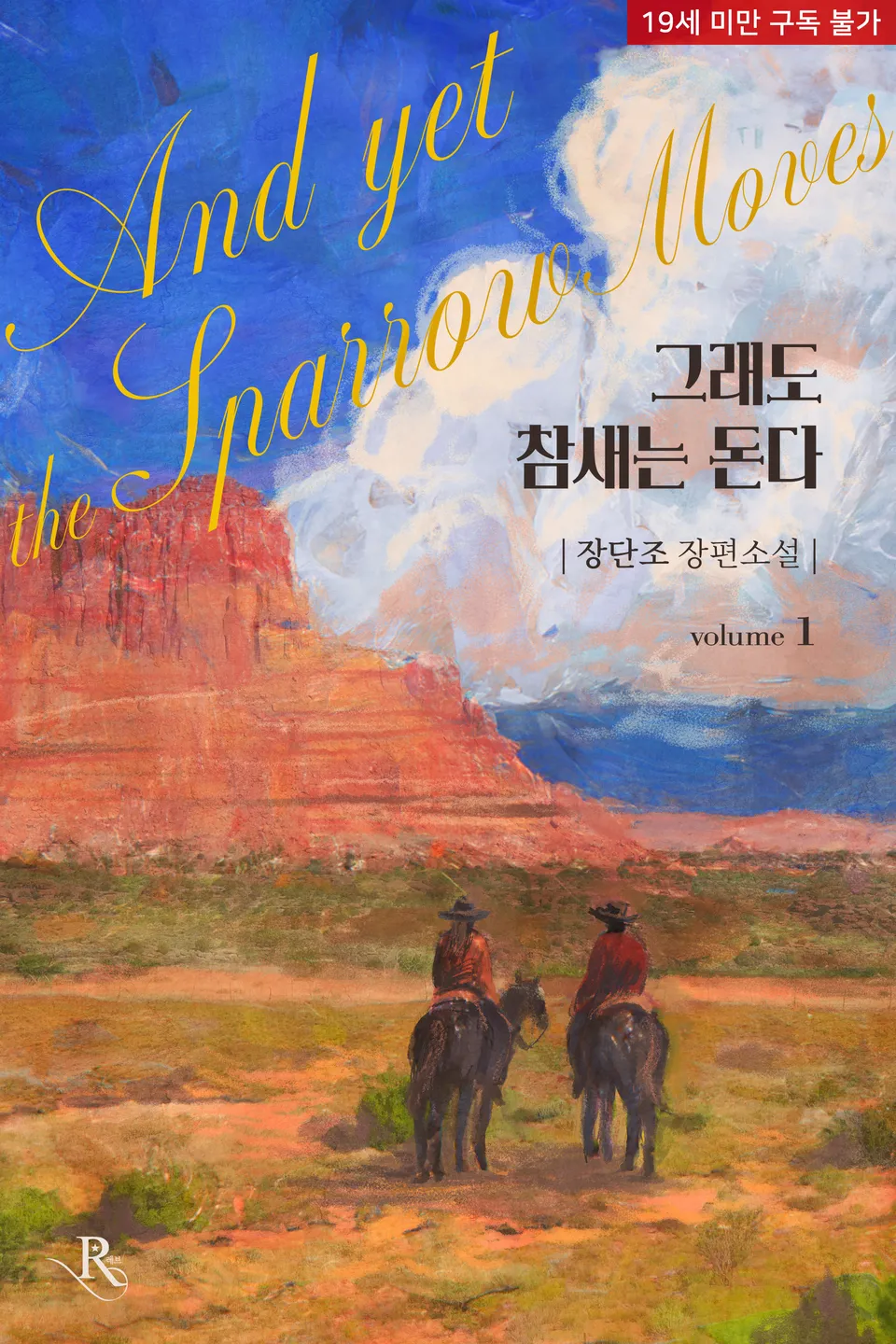
The Age of Discovery brought the continent's powerful empire into contact with a new eastern continent, whose porcelain, silk, rice, and tea generated extraordinary profits. The emperor, seeking greater wealth, chose conquest over trade, deploying mages as the decisive advantage since the East had no knowledge of magic. Imperial forces swept through the East with minimal resistance, capturing thousands of Easterners to serve as slaves in the southern colonies, where they produced goods for the lucrative triangle trade.Jang Min-hyuk, a Korean language lecturer living in the United States, was walking to work when his vision fractured like shattering glass and he lost consciousness. He awoke in the cramped, dark hold of a wooden slave ship surrounded by naked or ragged East Asian prisoners. Most remained silent, speaking a language he could not understand. When he climbed to the deck, he found himself on the open ocean under a violet night sky dominated by two moons, confirming he had been transported to another world rather than simply time-traveled.A watching sailor discovered him, knocked him unconscious, and confined him with the other captives. The ship's captain, Dallan, reported the incident to the vessel's mage, a sixteen-year-old apprentice named Del. Suspicious that Jang had not escaped from the hold, Dallan ordered him brought forward. Del examined his woolen clothes, cowhide shoes, clean hands, and literacy, concluding he was an Eastern noble from an unrecognized region. She offered to buy him for half her expedition share—fifty gold coins—before haggling him down to fifteen through intimidation.Del treated Jang with unusual courtesy, granting him a private cabin, meals equal to her own, and two months of intensive Imperial language instruction. She used drawings, gestures, and repeated drills until he achieved near-fluent conversation. In return for teaching him, she promised to reveal why she had rescued him once his language skills were sufficient. During lessons, Jang learned that mages held high status and that the Empire had only recently begun exploring the East.Del eventually showed Jang her collection of curiosities—taxidermied animals, plant specimens, minerals, and locked boxes of Eastern books. Among them, Jang recognized Chinese characters and discovered a localized edition of the Analects of Confucius. The presence of familiar East Asian texts confirmed that another transmigrator had preceded him, introducing continental writing and philosophy to this world. This realization shifted Jang's perspective: his knowledge of Chinese script and language made him uniquely valuable in a society where Eastern literacy was virtually unknown.Jang leveraged this advantage by requesting formal instruction in magic. Del initially refused, stating that Easterners were inherently incapable of wielding magic. Jang insisted he was not a mainstream Easterner and requested an aptitude test. Del agreed, questioning him about his past, lifestyle, and experiences with mystical phenomena. Jang fabricated a backstory about being a low-ranking noble interpreter from an isolated island, carefully avoiding any mention of his true origins while projecting qualities that might indicate magical potential.The narrative establishes a world where magic is the exclusive domain of continentals, Easterners are subjugated as labor, and knowledge of lost Earth civilizations constitutes a rare and powerful asset. Jang's survival depends on maintaining his disguise while acquiring magical ability, navigating the prejudices of mages, and uncovering the mysteries of a world shaped by both imperial conquest and the unseen influence of previous transmigrators.