Summary

... Read More

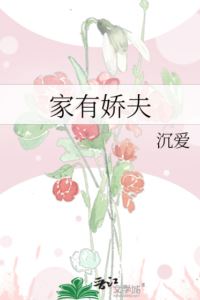
Pei Liang, a reincarnated culinary prodigy bound to a mysterious system requiring her to win over male leads across novel worlds, awakens in her body at the moment of greatest disgrace. She stands before three judges at a cooking competition against Wei Yingshu, whose father was a former disciple expelled by Pei Liang's grandfather decades ago. The contest was orchestrated by the gambling-addicted Pei Fugui, who wagered the family's Tianxiang Restaurant as collateral.

Despite having won the judges' votes through superior technique and flavor, Pei Liang voluntarily concedes defeat, acknowledging knife skill deficiencies in her stuffed bean sprouts. She delivers a devastating public reckoning by exposing the Wei family's history of corruption: bribery through ingredient substitution that led to a customer's death from poisonous mushrooms, followed by cover-up efforts and manipulation of witnesses. The truth unravels Wei Yingshu's narrative of victimhood, revealing her mother and uncle as the true architects of ruin.

Pei Liang hands over Tianxiang Restaurant to Wei Yingshu under strict conditions protecting staff livelihoods, then flees the capital with her parents to escape assassination threats from Li Shen, an underworld figure obsessed with Wei Yingshu. At the city gate, she intercepts General Shi Feiyu's troops heading to suppress bandits, warning of treason within the ranks. Her intelligence proves correct when poison is found on military cooks.

Shi Feiyu, impressed by her courage and acumen, allows her to travel with the army. Pei Liang demonstrates her value by preparing exceptional meals from meager rations, winning the respect of soldiers including Qiu Sanxiang and Ying Siji. Her culinary skills and sharp intellect begin earning genuine admiration beyond her previous life of wealth.

As the army marches toward Jiangnan, Pei Liang faces the challenge of navigating both martial dangers and the system's demands while building alliances with Shi Feiyu's faction. The story shifts from domestic culinary intrigue to broader political and military struggles as Pei Liang seeks to survive and potentially reclaim her fortune through strategic partnerships.

Latest Release
DateGroupRelease
2026-09-26akknovel c21
2026-09-26akknovel c20
2026-09-26akknovel c19
2026-09-26akknovel c18
2026-09-26akknovel c17
2026-09-26akknovel c16
2026-09-26akknovel c15
2026-09-26akknovel c14
2026-09-26akknovel c13
2026-09-26akknovel c12
2026-09-26akknovel c11
2026-09-26akknovel c10

Community Reviews

Rating(0 / 5.0, 46votes)
5 stars
0(0%)
4 stars
0(0%)
3 stars
0(0%)
2 stars
0(0%)
1 stars
0(0%)

Popular reviews

... Read More
I need to talk about the rock. The big slippery riverbank rock covered in moss. She just plops a handful of it into the pot. Nostoc commune. Ground ear. 'Sweet and crispy.' And I keep thinking about why the author chose that specific ingredient. Everything else in this scene is *preserved, dried, salted, smoked.* Cured meat. Dried fermented soybeans. Vinegar-soaked steamed cakes. Salt brine. The whole menu is preservation technology, food that will survive the march, food that has already been transformed from living thing to shelf-stable commodity. And then she walks to the river, touches a rock, plucks a living green moss, rinses it, drops it in. It's the only fresh, wet, *here-and-now* ingredient in the entire spread. It doesn't keep. It didn't travel with them. It exists only at this moment, at this specific riverside, and it's gone the second the pot cools. I think that's the whole theme of this arc compressed into one handful of algae. She's in a system—military, logistical, preservation-based—that's all about endurance and duration, and she keeps finding little pockets of the immediate, the perishable, the *alive* to smuggle in. Then there's the wok. 'The iron wok gleamed like a mirror, so slick that even cracking an egg onto it wouldn't cause it to stick.' I read that sentence three times. Not because it's impressive cooking technique—though it is—but because of what it symbolizes in context. This is a military march. The wok shouldn't be this clean. It shouldn't be mirror-smooth. It should be blackened, seasoned with weeks of use, functional. The fact that it's pristine is a clue that Pei Liang is carrying a piece of her old life with her. That kitchen she left behind, the one where she 'prepared ten elaborate dishes that the original owner had painstakingly crafted.' The wok is her last thread to that identity. She's here now in the wild, cooking shrimp-head pancake soup over a fire pit, but the tool in her hand remembers the restaurant. The discipline in her hands remembers the training. And I think that's why the soldiers 'slowed their movements as if their noses were tied by an invisible leash.' It's not just the smell. It's the *wrongness* of that level of cleanliness in this place. It's a civilian's precision dropped into a military's chaos and it doesn't belong and that makes everyone look. Oh and the rice flour pancake pressed on the edge of the pot, 'just above the water's surface,' crisping while the broth simmers underneath? That's her cooking *with* the environment instead of against it. Using the steam, the waste heat, the edge space. It's the whole chapter in miniature: taking the scraps and the constraints and making them do something unexpected. I'm not sure I can articulate why that specific detail made me put the phone down and stare at the ceiling for ten minutes. It just felt like the book was showing me a philosophy of survival that isn't about grit or willpower but about *attention.* Noticing the shrimp heads are still good. Noticing the moss is there. Noticing the pan is dry enough to fry the flour before the water boils. Everything in this scene is about paying attention to what's in front of you when every system is trying to make you move faster and stop looking. I think that's the quiet argument the whole novel is making and this chapter is where it stops hiding it.
... Read More
Can we just PAUSE and talk about the absolute nightmare that is Li Shen? This guy is introduced in maybe three paragraphs and already I'm sweating. A former beggar, now a ruthless underworld leader, obsessively devoted to Wei Yingshu to the point where anyone who "bumps into her disrespectfully" gets ambushed and beaten bloody. And the Pei Family did things to Wei Yingshu's reputation. Do the math. "Marked by such enemies, operating any business would be impossible." This isn't just dramatic flair — it's the reason Pei Liang's whole plan has to pivot. She could win every culinary duel in the world, but against someone like Li Shen? That's not a competition, that's a death sentence. The stakes just went from "lose a restaurant" to "lose your life" in one sentence. And the most terrifying part? Li Shen isn't even the main antagonist. He's someone ELSE'S potential weapon. Gu Xiu implies it — Wei Yingshu has powerful backers, and Li Shen is one of them. So the Pei Family didn't just anger a rival chef's admirer. They angered a man who has the power and the motive to make their lives hell. "How far can three spoiled fools run?" — Li Shen's line is basically the ticking clock for the rest of this arc. The tension here is MASTERFUL. Every chapter feels like the noose is tightening, and I can't look away.
... Read More
So here's the thing that keeps tripping me up with this stretch: the narration keeps cutting to the bystanders like they're a Greek chorus. One paragraph you're in Pei Liang's head, next one it's "the crowd found Pei Fugui despicable, but his explanation made some sense," next one diners are chiming in with specific memories of Chef Pei adjusting prices honestly. And it works. Like, structurally it works because this is a public scene and the crowd IS the stakes. They're not set dressing. Every time the narrator dips into collective opinion, it's resetting the emotional temperature of the room. Pei Fugui's spin lands, crowd tilts left, we feel the tension ratchet up because now the audience is against our protagonist. Then Pei Liang drops the integrity speech, crowd swings right, relief floods in. What I don't love is how fast the swing happens. It's almost mechanical. One good monologue from either side and the entire public reverses course. I get it thematically—it's meant to show how fickle public opinion is—but as pacing it makes the middle section feel a little... saw-tooth. Left, right, left, right. I kept waiting for the author to let one side's win sit for a paragraph, let us feel the sting before countering. Instead it's almost ping-pong. Also the transition into Pei Liang handing over the deed is SO abrupt. Like, one beat she's giving the integrity speech, next beat she's solemnly presenting the document to Wei Yingshu. There's no quiet moment where she actually looks at the restaurant. No "this place where I grew up behind the kitchen." Just... handover. And I know that's intentional, it's supposed to show her detachment, but I wanted one breath. One line of sensory detail. The smell of the kitchen through the doors, the sound of woks still going. Something to anchor the loss before it becomes transactional. The Gao Lezhang subplot also rushes. He's cornered, Gu Xiu smirks at him, his reputation crumbles, and then... he's just gone. Pei Liang moves on. I needed two more paragraphs of him seething. The contrast between Gu Xiu's amused power and Gao Lezhang's impotent rage is the best bit of secondary characterization here and it gets like four sentences. Feels like the author knew they needed to close the scene fast for the next chapter's setup.
... Read More
Okay, can we just talk about Pei Liang and Shi Feiyu for a second because the energy between them is absolutely electric and I am HERE for it. When she says "I have admired General Shi for a long time" — her voice steady, meeting his gaze dead-on — on the surface this reads as calculated flattery. Smart woman, using every tool in her arsenal to survive. But did you catch how Shi Feiyu reacts? The text literally says she was "well aware that despite her boldness and ambition, she was still a vulnerable woman." And yet he doesn't pity her. He sees through her game and STILL invites her along. That moment when she hands the couple twice their pay and tells them to destroy the clothes? That's not just cleverness — that's tenderness disguised as pragmatism. Those two people were trembling so hard they nearly fainted, and she still makes sure they walk away safe. She compartmentalizes so hard it's almost tragic. And here's what gets me: the narrative keeps circling back to how she used to be "once all-powerful wealthy lady persona." She's not just surviving; she's grieving a version of herself she's left behind. When she says "Now that I have nothing left, it gives me the freedom to act as I wish" — that line hit me like a truck. It's not just strategy talking. It's a woman who spent her whole life bound by family, convention, and duty finally exhaling. Shi Feiyu notices this too, though he'd never say it out loud. The text says he felt "as if he and she shared a hidden ambition that had never been revealed before." Think about that. Two people who've spent their lives performing roles for each other, each one recognizing the real person underneath. That's not romance yet — it's something deeper. It's the recognition of equals in a world that keeps trying to reduce them both. I'm already obsessed with where this goes.
... Read More
Let me just say this: the tension in this chapter is absolutely suffocating in the best possible way. Shi Feiyu draws his swords — no, his GUARDS draw their swords — and the couple collapses. Three people are seconds away from death and the reader is held in that suspension like a rubber band pulled to its breaking point. But here's the thing: Shi Feiyu himself isn't even sure if Pei Liang is a threat. He's genuinely weighing whether she's a spy sent by his mother or the Second Master, and the fact that he keeps them alive this long tells you everything about his nature. He's cautious to a fault. The stakes keep escalating with every paragraph. First, there's the question of whether Pei Liang's story is true. Then there's whether she's a trap. Then there's the bigger picture — the declining dynasty, the uprisings, the competition between Shi Feiyu and his stepmother and half-brother. Every conversation in this scene is happening on at least three levels simultaneously. What really got me was Pei Liang's counterplay. She doesn't beg. She doesn't cry. She literally starts analyzing Shi Feiyu's character for him — pointing out that a man who sends riders at full speed to protect civilians wouldn't kill innocent people on a whim. She turns his own values against his weapons. And it works. But the suspense doesn't disappear after she's accepted. Because we KNOW from the narrative that his mother and the Second Master are scheming, that the dynasty is crumbling, that Pei Liang is traveling south with a fortune and no protection. The immediate threat is defused, but the reader is left thinking: how long can this hold? How many conspiracies is she walking into? The author masters the art of satisfying resolution while simultaneously raising the stakes to an even higher level. I was gripping the phone like
... Read More
'I don't believe it! My mother was honest and principled her whole life—she'd never do what you're accusing her of—' I hit that line and just... stopped reading for like ten minutes. Because it's not the accusation that got me. It's the 'never.' A lifetime of being told 'my mom was wronged, the Pei family is evil, they broke us apart.' And now some guy in the restaurant says 'no, actually, your mom poisoned someone and made an old man kneel' and her entire identity - the story she's told herself since she was six - just evaporates. She doesn't get to process it. She's in front of a CROWD. Her composure cracks. She's shaking her mother's arm going 'Mother, say something! Tell them it's not true!' And her mother just... stands there. Mouth open, drowned out by the jeers. That's the most painful image in the whole scene. Not the crowd. Not Pei Liang. The mother who built an entire narrative of persecution, who probably told little Wei Yingshu 'Grandpa Pei is scheming to break our family apart,' and now has to sit in the wreckage of that lie while her daughter begs her to deny it. And she can't. Because the evidence is too solid. So she just. Stands. There. Gao Lezhang is the other half of this and it HURTS to watch him. He's literally shouting 'Where's the proof?' in a room where TWO WITNESSES ARE SITTING AND GU XIU JUST MENTIONED THE CASE FILES. He's not being irrational. He's being in love. He's so used to the version of Wei Yingshu that fighting for him that he can't compute the possibility that she's a fraud. 'Having the son of a high-ranking minister as her steadfast protector meant she wasn't entirely without hope.' That line made me wince because it's so cold. It's treating her protection as an asset, a bargaining chip. But Gao Lezhang probably just thinks he's being noble. And his dad in the carriage? 'If he wishes to see that female chef again, he won't be allowed to step outside.' He's not even angry at the Weis. He's angry his SON is being stupid. It's so... ministerial. So detached. He sees a political liability, not a heartbreak. The Weis' relationship dynamic is just... toxic in a way that's more sad than angry. The mother who weaponized guilt to keep her husband. The husband who took the beatings and never once spoke ill of his wife in front of his daughter. The daughter who grew up on a fairy tale and had to watch the witch reveal herself in a restaurant full of strangers. I think I would have fainted.
See all reviews

Custom lists

See all custom Lists