Free Love is Trending in the Capital
Novel Info
  • Author:
  • Status:Ongoing

Summary

... Read More

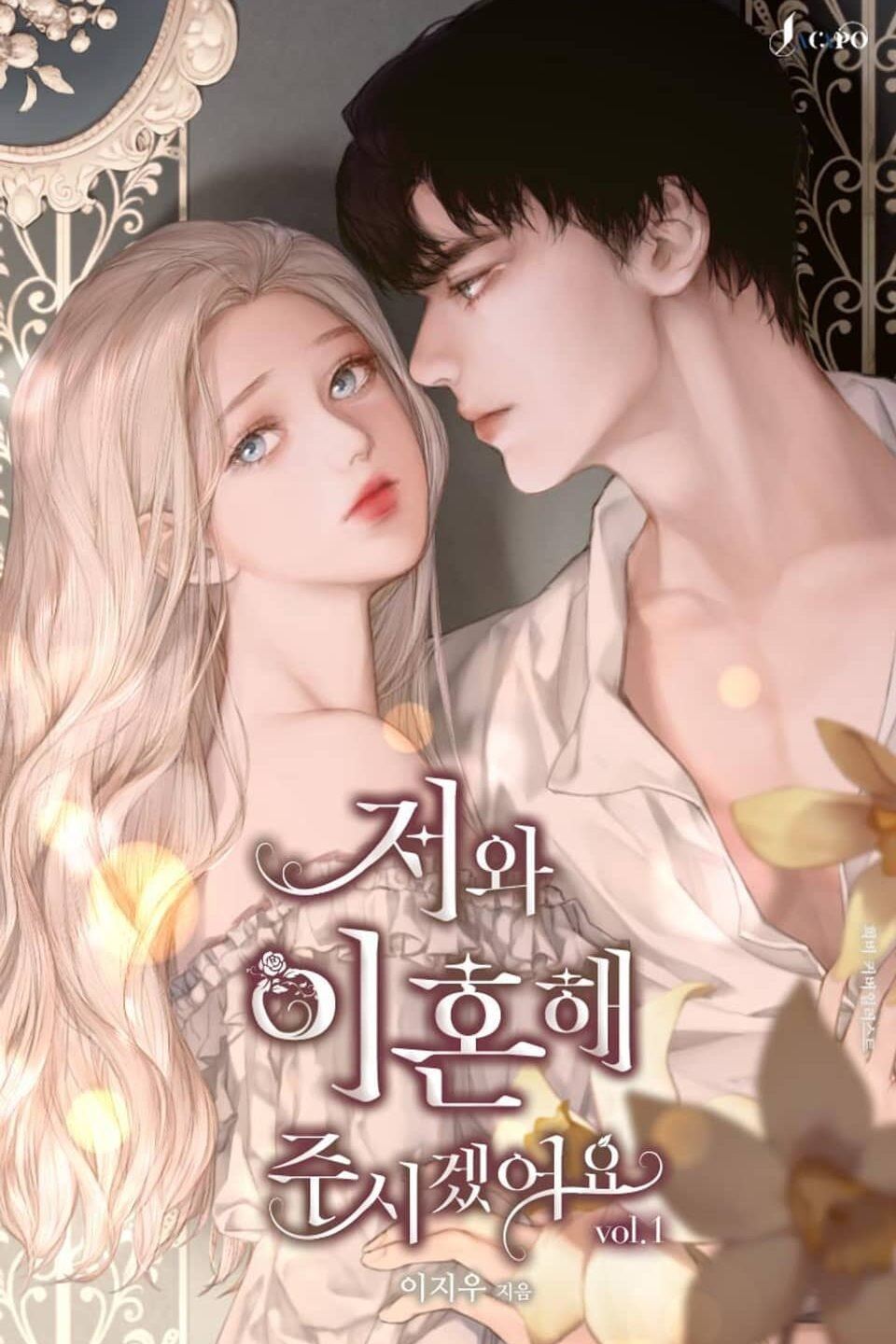
Lorraine Summers is the second daughter of a noble family in Mostar, perpetually overshadowed by her perfect elder sister, Agnes. While outwardly appearing as a modest and reserved young lady, Lorraine harbors a deep, unacknowledged curiosity about romance and physical intimacy, cultivated through forbidden books she read in secret during her childhood. Her standards for men are exceptionally high, demanding a specific type of beauty that she finds lacking in the suitors of her social circle. After a brief and unsatisfying relationship with Henry Boyle, which ends via a impersonal breakup letter, Lorraine realizes she has never experienced true physical passion. Driven by a desire to fulfill her curiosity without the complications of emotional attachment or the burden of knowing a partner's face, she decides to attend a masquerade ball at the Bedington residence. She dresses in a bold, revealing gown and dons a mask, seeking a anonymous encounter with a stranger who might meet her exacting aesthetic standards.

At the ball, Lorraine slips away to the garden, where she encounters Ian Lindsay, a Viscount from the capital known for his striking beauty and rumored promiscuity. Ian, too, had retreated to the garden to escape the noise of the party and the pressure from his friend, Earl Bedington, who had urged him to gain romantic experience. Tipsy and disarmed by Lorraine’s unexpected boldness, Ian engages in a dance with her that quickly escalates into a passionate sexual encounter. For Lorraine, this is her first sexual experience, and it exceeds her expectations, leaving her deeply satisfied. Afterward, Ian reveals his identity, and though Lorraine initially intended to remain anonymous, she discloses her first name, Lorraine. Ian, upon learning she is a Summers, becomes convinced that he must take responsibility for their union and decides to court her formally, unaware that Lorraine views their relationship purely as a casual arrangement.

The following day, Ian visits the Summers mansion and proposes a relationship based on mutual pleasure without emotional commitment, which Lorraine interprets as a "free love" arrangement. She accepts, believing this will allow her to continue exploring her desires with the man of her dreams without risking her heart. However, their subsequent dates reveal a growing disconnect in their expectations. Ian, who has never felt such a strong pull toward any woman before, finds himself genuinely falling in love with Lorraine. He begins to cherish their time together, buying her clothes, accompanying her to bookstores, and engaging in deep conversations that go beyond physical intimacy. He starts to study how to better satisfy her, driven by a desire to be worthy of her affection.

Lorraine, on the other hand, struggles with her own evolving feelings. While she appreciates the companionship and the sexual fulfillment, she becomes increasingly alarmed by the depth of her attachment to Ian. She recognizes that she is developing love for him, a feeling she had always dismissed as unnecessary. As their dates become more frequent and intimate, Lorraine finds herself unable to maintain the emotional distance she initially sought. The simplicity of her plan to have her cake and eat it too begins to crumble as both characters realize their motivations for the relationship are fundamentally different. Ian sees a future with her, while Lorraine fears the eventual pain of losing a man who may only be interested in her for her body or who might leave her when his curiosity is sated.

The central conflict emerges from this asymmetry of emotion. Ian’s family and social standing in the capital contrast with Lorraine’s provincial life in Mostar. The rumors surrounding Ian’s past relationships haunt Lorraine, creating insecurity despite his current devotion. Meanwhile, Ian’s determination to prove his sincerity and win her heart leads him to act with a sincerity that confuses Lorraine, who is unaccustomed to being treated with such care and respect. The story moves toward a crisis as Ian’s feelings deepen to the point where he cannot accept a mere casual arrangement, forcing Lorraine to confront the reality of her own heart and the potential consequences of her initial deception. Their journey challenges the societal norms of their time, as they navigate the fine line between physical desire and genuine emotional connection, with neither party fully understanding what the other truly needs from the relationship.

Latest Release
DateGroupRelease
2026-10-03dusk blossoms c32
2026-10-03dusk blossoms c31
2026-10-03dusk blossoms c30
2026-10-03dusk blossoms c29
2026-10-03dusk blossoms c28
2026-10-03dusk blossoms c27
2026-10-03dusk blossoms c26
2026-10-03dusk blossoms c25
2026-10-03dusk blossoms c24
2026-10-03dusk blossoms c23
2026-10-03dusk blossoms c22
2026-10-03dusk blossoms c21

Community Reviews

Rating(0 / 5.0, 41votes)
5 stars
0(0%)
4 stars
0(0%)
3 stars
0(0%)
2 stars
0(0%)
1 stars
0(0%)

Popular reviews

... Read More
"I see." That's it. That's the line. Two words. That's all it took to watch Ian Lindsay's entire worldview crack open in real time and I was sitting there absolutely breathless. Let me just say this: the scene where Ian processes Lorraine's rejection is one of the most devastating pieces of romantic writing I've read this year and I need everyone to understand WHY it works so well. He doesn't scream. He doesn't cry. He literally just freezes 'like a broken clock' and starts spiraling into this insane self-analysis where he's measuring his eye sockets against Henry Boyle's potato face. THE SELF-DOUBT IS SO SPECIFIC AND ABSURD AND HUMAN I COULDN'T STOP LAUGHING AND CRYING AT THE SAME TIME. And then you cut to them having tea together in the garden, both of them pretending everything is fine, both of them terrified of saying the thing that might end it, and the awkwardness between them is practically radiating off the page. 'Their feelings always stopped just short of colliding.' That sentence is a WORK of art. It describes literally every romantic relationship that's ever existed in compressed poetic form. They're both so desperately in love with each other and they're going to dance around this for so long and I am NOT okay with this.
... Read More
The opening scene in the garden at the edge of darkness is so well done. You can actually feel the cold night air, the warmth of Ian's body, the way everything else fades away. The author writes physical intimacy in a way that's hot but also serves the story—this isn't just smut, it's character development wrapped in sheets. What struck me was the sensory detail: the threads of saliva between them, the trembling, the rough breath against her ear, the way Ian's fingers trembled when he lifted her dress. Every detail made it feel real and intimate. And then contrasting that with the later carriage scene—sunlight, golden hair, the slow buildup of tension through touch rather than heat. The contrast between the dark passionate garden and the warm almost-confessional carriage ride is chef's kiss. 'Catherine has always circled Lorraine, coveting what was hers.' This little backstory about Catherine adds this whole layer of social worldbuilding—we get a sense of noble society dynamics, the rivalry, the unspoken rules, without it being an info dump. The image of Ian alone in his bedroom afterward, loosening his shirt, sitting in silence, replaying every moment in his head—that quiet domestic intimacy hit harder than any grand gesture. You could feel the weight of his loneliness in that empty room.
... Read More
Can we just talk about that library scene for a second because I am SOBSING Ian takes Lorraine to his childhood villa near Tuzla, close to Mostar—and suddenly we're not in the usual aristocratic drawing room anymore. We're somewhere smaller, warmer, less curated. The description hits you all at once: the mahogany bookshelves, the fire in the fireplace, the soft scent of wood. It's a space that feels genuinely lived-in, not staged for effect. And that's the point, isn't it? This is the ONE place Ian lets her see that isn't performing wealth or power—it's performing vulnerability. Then she finds the scribble. 'Ian Lindsay, 9 years old.' Carved into the bookshelf like a kid would do. Height marks climbing year by year—10, 11, 12, 13—and then stopping. The author doesn't need to spell out what happened after age thirteen. The silence after that last mark is louder than any exposition could be. "If I met you at nine, Viscount, I might have been taller than you." That line wrecked me. She's imagining him as a child, making him smaller, more human, and he's right there listening to her romanticize his eight-year-old self like it's the most natural thing in the world. The firelight, the dust on old spines, the boy who loved books more than hunting—this is the version of Ian nobody else gets to see. The contrast with the first scene is everything too. The bookstore was public, cramped, full of the threat of discovery. The villa library is private, safe, almost sacred. One space traps them together physically; the other opens them up emotionally. The author is mapping their relationship onto architecture and I'm not okay with how good it is. Also side note: the red wine under candlelight looking "strangely intense"? That's foreshadowing and I felt it in my bones.
... Read More
Okay, let's talk about structure because this section is genuinely excellent from a pacing perspective and I want to break it down. The author starts Chapter 40 with an immediate confrontation—no setup, no warm-up, just Henry walking in and dropping the word "friends" like a grenade. That's a bold opening choice. Most romance novels would ease you into the conflict, but this one slaps you in the face on page one. And it works because we already know Ian and Lorraine, so the implication hits harder. Then comes the Catherine interlude—a deliberate breathing room that actually builds tension rather than releasing it. Catherine is charming, flirty, perfectly put-together. She's everything Lorraine isn't in this scene (glamorous vs. reserved, golden vs. red-haired, outgoing vs. quiet). The author uses Catherine as a narrative mirror, reflecting back at us exactly what Ian is being offered and what Lorraine is supposedly missing out on. But Ian's Polite Dismissal of Catherine is the subtle signal that tells us everything we need to know about where his heart actually is. Chapter 45 shifts perspective to Lorraine, and this is where the pacing becomes really smart. We cut from Ian's internal turmoil directly to Lorraine arriving at the same banquet, and the parallel structure is devastating. She sees them together before she even knows why it hurts. The author doesn't need to explain—it's shown through her physical reactions: body stiffening, fingertips trembling, heart growing cold. The transition from the banquet hall to the garden corridor is where the chapter structure peaks. You go from a crowded public space full of gossip and表演 to an empty dark path where two people can finally speak. The physical movement mirrors the emotional movement—stepping away from society, from expectations, from Henry's manipulations, into a space where only truth can survive. The chapter ends on an incomplete moment—Ian pulling Lorraine into his arms, the sentence trailing off with "pressed against his"—which is a cliffhanger that's both romantic and agonizing. The author refuses to give us the full embrace, the full confession, the resolution. Instead, they leave us hanging on the threshold of something big. From a structural standpoint, this is tight. Every scene serves the central conflict. There's no filler, no unnecessary exposition. The author trusts the reader to connect the dots between Henry's manipulation and the couple's misunderstandings. The pacing never drags because the emotional stakes are continuously rising—each interaction raises the temperature a little more until that garden scene becomes almost unbearable. If this is any indicator of the novel's overall structure, I'm in for a very good ride.
... Read More
I need to talk about how the author uses physical spaces to mirror Lorraine's internal state, because it's genuinely impressive and I don't say that lightly. The very first scene — Lorraine buried in an old leather chair in the library, teacup beside her, fireplace crackling — this isn't just set dressing. The library represents everything she's been hoarding: old forbidden books, secret desires, isolation. She's the second daughter, the leaf, the one nobody notices, and she literally hides in the back of the library where the classics are untouched. Then compare that to Chapter 2 when she transforms. The same woman who was reading in quiet solitude now appears at a masquerade ball in a navy velvet dress with her back and neckline exposed. The contrast between those two scenes — dim library firelight vs. the glittering masked crowd — is basically the visual thesis of the entire story. She goes from hiding to being seen, but on her own terms, behind a mask. And the ball itself! The description of masked nobles, clinking glasses, the dreamlike atmosphere where identities are unknown — it's luxurious but also slightly suffocating. 'Under the dazzling chandelier, the laughing people looked like puppets in a play.' That line? Chilling. It tells you everything about how Lorraine sees this world. She's not part of it. She's watching. Which makes her decision to step INTO the chaos of the ball feel like a genuine act of rebellion.
... Read More
I have to address Ian's dialogue because the man is out here weaponizing romance and I am weak. 'Lady Lorraine. These days, when I see the sky at sunset, I think of you. The sky at dusk resembles your hair.' Okay but who actually says that?? Not in a bad way—in a way that made me short-circuit. He doesn't sound like a generic romance hero; he sounds like someone who's genuinely infatuated and trying to express it in his own way. The fact that it's slightly awkward and earnest makes it work better than if it were perfectly polished. And then: 'Is that so?' *leans in* 'Then, why won't you look at me like you used to?' The puppy eyes described in narration ('like a puppy scolded by its owner—downcast and forlorn') paired with that line is illegal. He's manipulating her with cuteness and she's falling for it and we all know it. Meanwhile Lorraine's responses are so dry and defensive—'You flatter me, Viscount. Thank you.' 'Viscount, I think we're almost there.' She's building walls and he's gently climbing over them one hand-hold at a time. Their dialogue contrast is everything. He's all soft confessions and lingering touches; she's all polite deflections and internal panic. The author's narrative voice throughout is also really good—Lorraine's sections feel restrained and observational (just like her personality), while Ian's inner monologue is more emotional and rambling. Each POV has a distinct texture.
See all reviews

Custom lists

See all custom Lists