Formless - Reviews

Formless
+Add to Custom List
Sort
Add review
... Read More
Honestly? This chapter does something really clever with pacing. You'd think after the operating room explosion, the story would ramp down — and it does, technically. But the car scene with Heewoon's breakdown is longer and more drawn out than the action sequence, and that's intentional. The author is saying: the real violence here isn't the broken leg, it's the three years of psychological damage unraveling all at once. The structure moves in waves: emergency room rescue → car breakdown → hospital diagnosis → Kangwoo's private observations → late-night awakening. Each section is shorter than the last, mirroring Heewoon's decreasing consciousness and increasing dependency on Kangwoo. By the time we reach the end where Heewoon wakes up and sees 'a lump of blankets' with his memory completely blacked out — that's the author winking at us. He doesn't even remember being rescued. Kangwoo is the entire bridge between trauma and safety, which means Kangwoo controls both. The cliffhanger ending with 'There was...' cutting off mid-sentence — I assume it continues in the next batch — is classic. And the transition from the hospital (where Kangwoo is in control, giving orders, acting as guardian) to the bedroom (where he's watching Heewoon sleep alone, lost in thought) shifts the power dynamic from public to private, from rescuer to something much darker. One tiny gripe: the three-week time jump to Heewoon's discharge felt slightly abrupt, but honestly the emotional beats are so strong I didn't mind.
... Read More
There's something really unsettling about how the author turns a normal home into a warzone. Let me paint it for you: Heehyun stumbles in, his mother frantically searching cupboards for medicine, bright light in the room making his injuries look even worse. It's supposed to be a safe space, right? Their home. But now it's where they're deciding whether to flee at dawn. The physical details are what sell it. The dust and dirt on his body. The faint footprints and shoe marks — implying he was dragged or trampled. The single slipper left at the door. These aren't decorations, they're evidence. The author treats the house almost like a crime scene investigator would, cataloging every detail of violence without ever showing the violence itself. "It was like watching a third-rate film" — Heewoon's own thought about their situation is honestly the most honest line in the chapter. Their life has become a bad melodrama. And the mother, "standing like a broken robot" — that image. She's performing all the right motions (searching for medicine, pulling out passports, packing bags) but inside she's completely shut down. The house used to mean safety. Now it's just the place where they're waiting to run again.
... Read More
This is the part where I admit I read the scene where Kangwoo pushes the tablet toward Heewoon and says "Did you want to see?" and then immediately after, "I missed you too" and my heart did a thing. Because it's not a straight confession. It's folded into work, into a gesture that could mean anything, and Heewoon is so flustered he waves his hands like he's shooing away a bee. The translator's note even acknowledges the double meaning — "Did you want to see?" / "Did you miss me?" — but the beauty is that even without the wordplay, the emotional beat lands. Kangwoo notices Heewoon looking at his screen, catches him, and instead of calling him out, offers it. That's the language they speak. And the physical intimacy — the ear nibbling, the hand on the nape of the neck, the way Kangwoo "lightly kissed only the lower lip as if to give him time to breathe" — this isn't just hot, it's attentive. Heewoon is the kind of person who forgets to eat (he devours a sandwich he can barely remember ordering), who scans parking lots for suspicious cars, who holds someone's pinky finger like it's a secret. Kangwoo meets him there. The family subplot adds this undercurrent of loneliness too. His mother's favoritism, the brother who's away — Heewoon comes to Kangwoo's place and says he's going to the library when really he's going to someone who actually sees him. That's not nothing.
... Read More
The pacing here is masterful in its deceptiveness. On the surface, nothing happens. Heewoon studies. He goes home. He makes soup. He meets Kangwoo. But the structural choices beneath that surface are doing serious work. Chapter 144 opens with the Kangwoo chin-lift scene—a moment of intimacy that immediately establishes the romantic tension. Then it pivots to Hyukjin's immigration rumors. This is deliberate: the author wants us to hold two timelines at once—the present romance and the unresolved past. The rumor thread acts as a narrative pendulum, swinging between warmth and unease. "Not long ago, through his group chat with his classmates, he heard that Hyukjin was going abroad with his family." This flashback insertion is smart. It doesn't interrupt the flow; it deepens it. We learn about Kangwoo's hidden identity through Heewoon's suspicion, not through exposition. Then the café scene. Three hours of studying. The text compresses time efficiently: "After about three hours of studying, he left the café." No wasted words. Just enough to establish Heewoon's solitude and his preoccupation with the cake. The mother scene is where pacing really shines. The conversation moves in fragments—cake, Christmas, father, tears, cough, milk. Each exchange is short, almost staccato. This mirrors real family dialogue: incomplete thoughts, sidestepping topics, the unsaid hanging in the air. "What's with the cake?" "It's Christmas." "It reminds me of the old times. Your father loved celebrating anniversaries." Three beats. Each one heavier than the last. The author doesn't need paragraphs of internal monologue because the dialogue carries the weight. The New Year transition is handled with a single paragraph: bell on TV, mother asleep, Heewoon turning twenty-seven, debt calculations. In four sentences, we leap forward in time and establish Heewoon's stakes. "Could he pay off his debt within ten years? Would they wait for him?" This is the structural pivot. The chapter moves from memory (Christmas) to future anxiety (debt, brother's return) to present action (Kangwoo's message). The past, present, and future all collide in Heewoon's mind. The final scene—car ride, hair drying, photo sharing—returns to the slow, intimate pace of the opening. But now the tempo has shifted. Heewoon is no longer the passive recipient of Kangwoo's attention; he's initiating sharing, offering vulnerability. The structure circles back but doesn't repeat. Heewoon has changed. The pacing reflects that.
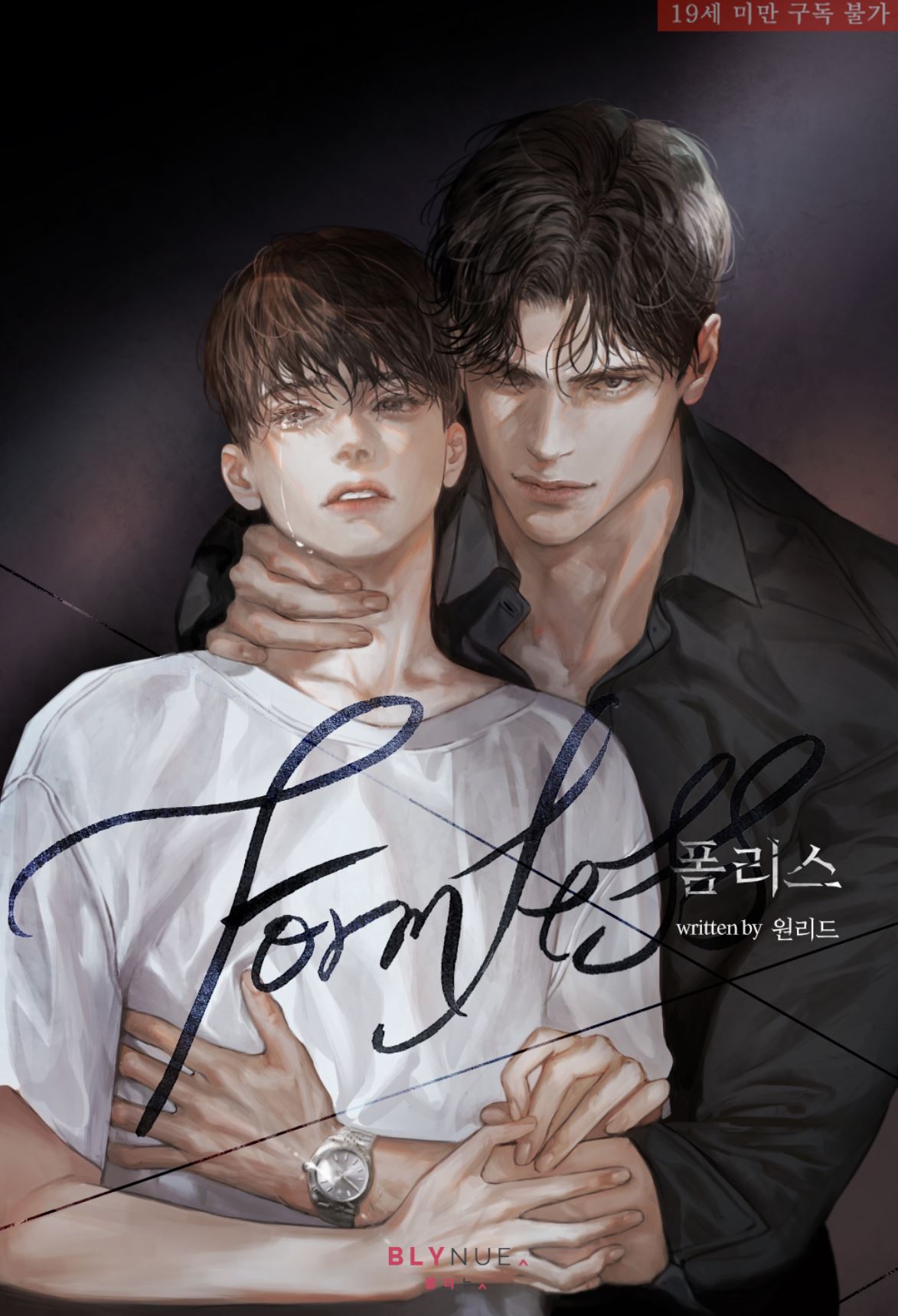
... Read More
Okay, I need to talk about Heewoon's relationship with Kangwoo because THIS chapter hit different. Like, on the surface it looks like some sugar daddy arrangement, right? Kangwoo gives him money, Heewoon lives in his house, everything seems fine. But look closer at the power dynamics—it's messed up and I can't stop thinking about it. The line that wrecked me was: 'Using Seo Kangwoo's money, following his words, seeking his permission for everything.' This isn't just independence being eroded, this is the COMPLETE dissolution of Heewoon's autonomy. He even catches himself doing it and feels like he's caught in a current. But here's the thing that makes it even more tragic—he's NOT fighting it. 'He was afraid that he would go with the flow, that he would let it comfortably carry him away.' Comfortable. That's the word that haunts me. And then Kangwoo pulls him onto his lap, massages his thigh, says 'spread your legs a little more' while his voice is 'affectionate, unlike his blatant and impolite hands.' Wait—IMPOLITE hands? So this isn't the first time? So there's physical history here that Heewoon has been processing? What's wild is Heewoon's actual admission: 'He had become accustomed to Seo Kangwoo.' ACCUMSTOMED. Not loved, not feared anymore, just... accustommed. That word choice is devastating. He's losing himself not through drama or crisis but through slow normalization. The shoe scene at the beginning is also SO telling—Heewoon buying sneakers (practical, affordable) and Kangwoo casually saying 'you can buy whatever you want.' Money as control, disguised as generosity.
... Read More
Let me just say this — the symbolism in these chapters is so layered I'm still processing it. The shoes. Heewoon picks up a pair 'similar to the ones he used to wear, bought with Kangwoo's card' and then CAREFULLY puts them on. But he also throws another pair on the floor. Shoes are about where you're going, right? And here he is literally balancing on a broken foot, trying on someone else's life. The cast on his leg is both a physical reality and a symbol of how this family has damaged him. He wants to walk normally again — 'The doctor had said that walking a little each day would speed up his recovery' — but every step requires him to lean on something. The mirror scene is crucial too. He fumbles toward it, almost falls, then stands straight and looks at himself. Who is he in this reflection? Is he Heewoon-who-lived-in-this-room-before or Heewoon-who-is-now-Kangwoo's-partner or is he just someone who's trying on identities like clothes? 'They seemed alright' — three words that carry so much weight about someone questioning whether they belong in their own life. And the money. 8 million won in a new account with a new passcode. It's not just generosity, it's Heewoon creating something that belongs to him and his mother alone, stripped of the brother's control. The act of giving becomes an act of resistance. Meanwhile his mom says she'll work, she'll find hobbies, she won't be a burden — and we know that's not really about money, it's about survival instinct so deeply encoded that she can't imagine existing without performing usefulness. 'I'm feeling great, getting a lot of positive energy from meeting people and going out.' The lie tastes like cake.
... Read More
What I love about this section is how the author builds tension not through action but through the slow accumulation of wrongness. First, the loan sharks are mentioned casually. Then Heehyun's return seems almost celebratory. The mother is happy, the food is delicious, everything looks normal. But Heewoon's internal narration is constantly undercutting the surface harmony — noting his brother looks scruffy despite supposedly having over a billion won, pointing out the suffocating tone, feeling the fragility of the moment. By the time Heehyun admits 'They've been surveilling us for a while now,' the reader isn't surprised. We've been sensing the ground cracking the whole time.
... Read More
There's a moment in Chapter 214 where Heewoon sees two cigarette butts under the flower bed, one still smoking, and he STOMPS on it. Not just puts it out — stomps. The violence of that gesture tells you everything about how he feels toward his brother's trail of destruction. Every discarded object associated with Heehyun becomes something Heewoon has to clean up, extinguish, manage. The padded jacket is another symbol that keeps coming back. Heewoon scowls because his brother wore HIS jacket out. Then he can't find a suitable coat himself and has to wear a worn-out one. There's something so telling about a younger brother literally dressing in the shadows of an older brother's discarded belongings — even the clothing. The whole family seems to exist in relation to whatever Heehyun left behind. But the symbol that hit me the hardest is temperature. So many coldness references: the food getting cold and needing to be reheated, the freezing morning air, the mother's hand being the same temperature as Heewoon's cheek so he can't feel it, the numb nose at the PC cafe. Coldness as emotional distance. Coldness as the absence of the brother who should be providing warmth. And then Kangwoo — who appears through phone calls, whose presence is mediated through technology, whose warmth is unpredictable and dangerous. The fruit scene is weirdly symbolic too. His mother bought fruit earlier. Heavy things. Heewoon says "you should have called me." She's carrying burdens alone that should be shared. The whole family dynamic is basically people carrying things for each other imperfectly. And Heewoon's white sneakers getting dirty — he thinks about buying different colored ones. A small desire to not track the same path, to not stay visually identical to his situation. But he doesn't. He keeps wearing them.
... Read More
The sensory details in this scene are doing SO much work. Let me list what hits me: The operating room is COLD. Heewoon specifically notices this — "Only now did he realize how cold he was." The chill of the room, the chill of his circumstances, contrasted with the warmth of Kangwoo's hand on his head, his cheekbones, his shoulder. The physical temperature mirrors the emotional temperature perfectly. Then the violence scene — the scissors cutting through tape, the bite mark on the man's hand ("vivid crimson"), the blood on the floor, Heewoon squeezing his eyes shut. Kangwoo's voice stays calm throughout: "Tell me, Sunbae. Did you fall?" said with a gentle and affectionate tone while examining bruises. That casual cruelty is so much more unsettling than yelling would be. And the ending image — Kangwoo bent over Heewoon's injuries, removing tape from his neck, still being intimate even as he orders violence seconds later. The world of this story feels real because every scene has this texture: clinical spaces, bodies in pain, blood on floors, but also soft hands and whispered questions and the smell of the person you love.
... Read More
Okay so I need to talk about this dynamic between Kangwoo and Heewoon because it is SO layered and I keep coming back to it. On the surface, Kangwoo is this dominant, controlling figure—"You should ask for permission first. That's not something for you to decide, Sunbae." Chilling. But then he follows up by calling Heewoon adorable when he's pouting, calling himself sweet for hugging him, ordering food Heewoon likes instead of his own taste... It's manipulative but also genuinely tender in its own messed-up way. And Heewoon! God, Heewoon is so interesting here. He knows he should hide things from Kangwoo. He vows internally to keep information about his coworkers secret. But then he still talks about work while eating fries together like nothing happened. He's trapped between fear and affection and habit, and the author never judges him for it. That's what makes this relationship feel real—it's not cartoonishly toxic, it's complicated. The line that got me was when Kangwoo says "I really like it when you cry, Sunbae." That's either threatening or endearing depending on how you read it, and honestly I think the genius is that it's both. Heewoon's reaction isn't pure terror—he's tense, yes, but he's also sitting on Kangwoo's lap, he's letting himself be held. The power imbalance is massive but there's genuine attachment underneath it all. I'm obsessed with how the author never resolves this tension. Every chapter just keeps circling it, pulling tighter, letting go, pulling tighter again.
... Read More
"When I'm scared and when I miss you?" — this line absolutely destroyed me. Kangwoo pushing for this kind of honesty, and Heewoon finally admitting it out loud, even if it was reluctant... it hit different. But then the whole family dinner scene, man, I was fuming the entire time. His mother making all those elaborate dishes, lighting up like she won the lottery because her irresponsible son came home, and Heewoon — who's been carrying the financial burden alone, paying loan sharks monthly, probably sleeping with one eye open — gets told to just be nice to the guy who ran away and took millions with him.
... Read More
'Even if his brother took the money and ran off overseas when loan sharks came demanding it, even if he secretly asked his mother for more money a few months later, he's still his brother. He's family.' This line hit me in the chest. That's the whole emotional core right there - the impossibility of truly resenting someone who's your blood, no matter what they've done. Heewoon literally catches himself thinking about whether the money will be okay instead of worrying about his brother's safety, and then his face turns 'a deep red' because he recognizes how selfish that is. The mother is this quiet anchor of emotional weight throughout these chapters. 'A few hairs falling down her cheek. Her exhausted face was filled with worry and anxiety.' She's never been overseas, the Philippines sounds intimidating to her, and her son is out there alone dealing with loan sharks and grudge-holding Filipinos. She says 'They say Heehyun is doing really well with his business' like she's trying to convince herself. And Heewoon watching her like that, feeling sorry for his brother for being alone while also resenting him for leaving... that contradiction is so human. 'It was much harder not to resent his brother than not to resent his mother.' Wait, what? How does that even work? But it does. You get mad at the person who's actually there because they absorb all the stress, and you protect the person who's gone because they can't hear your anger. The romance with Kangwoo operates on a completely different emotional frequency - it's intense, physical, suffocating, comforting all at once. When Kangwoo holds him 'so tightly around his waist that it was hard to breathe' and kisses his head repeatedly, Heewoon is simultaneously trapped and soothed. That's not healthy, but the author writes it honestly. You feel Heewoon's relief when Kangwoo says 'I'll embrace you' because he's so tired from carrying everything else. The moment with the phone vibrating in his pocket and seeing Kangwoo's name - 'he felt strangely relieved' - that's the kind of detail that makes emotional writing land. It's not dramatic, it's just... true.

Leave a comment

You must be logged in to leave comments. or
