Formless - Reviews

Formless
+Add to Custom List
Sort
Add review
... Read More
The relationship between Kangwoo and Heewoon is a study in control and surrender, played out through physical gestures. Kangwoo dominates the space—he initiates touch, decides when to stop, speaks in commands (“Clench your teeth,” “Get up”). But Heewoon isn't passive; his clenched fists and trembling acceptance show a quiet agency. When Kangwoo wipes tears with his lips, it's an intimate violation that also reveals care. This push-pull dynamic is built on history. We learn Kangwoo once saved Heewoon from loan sharks, yet he's also the source of his current fear. Their interactions are layered with unspoken debts: Heewoon owes Kangwoo financially and emotionally, but Kangwoo's jealousy over Heewoon's other relationships hints at something he won't name. A defining moment is Kangwoo's laugh when Heewoon fears another beating—it's not cruel; it's exasperated fondness. He knows Heewoon is stubborn, that he'll suffer in silence rather than ask for help. Meanwhile, Heewoon's relationship with his mother is heartbreaking in its normalcy. She lies about her appointments, hides her pain, and still tells him to “go to school.” It's a love expressed through avoidance. These relationships aren't healthy, but they're achingly real—two people who keep choosing each other despite the damage, because somewhere in the chaos, there's a thread of loyalty that neither will cut.
... Read More
okay I need to talk about this one scene because it genuinely wrecked me and I haven't stopped thinking about it. "Even if there are too many, tell me." That line right there. That is the entire relationship condensed into six words. Kangwoo has been this terrifying, intimidating figure throughout the whole story—controlling, sharp-tongued, the kind of person who throws people onto beds and threatens to get angry if they drink again. But then he says that. Like, genuinely soft. Like he's offering something real and Heewoon just… melts. What gets me is how HEEWON responds. He doesn't push back. He doesn't make a joke or deflect. He just whispers "…Yeah." and drifts off to sleep in Kangwoo's arms. There's this moment earlier where Heewoon insists "I'm not being clingy" and Kangwoo just smiles and strokes his hair like, of course you are, and I love that dynamic because it's so honest. Heewoon is clingy. He's been through stuff—debt collectors, loan sharks, people bothering him—and he's been carrying it alone. Kangwoo sees that. Kangwoo always seems to see that. But here's what makes me uncomfortable in the best way: Kangwoo telling him to delete all his contacts. On one hand, it's possessive and kind of red flag energy. On the other hand, Heewoon does it himself without being forced. He hesitates, then does it. And when Kangwoo laughs? It's not cruel. It's almost tender. Like he's impressed. The ending of this batch with Kangwoo watching him undress and then touching his bare skin—there's such raw intimacy there that isn't just physical. It's two people who have been circling each other for chapters finally just… letting go. I'm not okay.
... Read More
Okay so plot-wise this chapter does something really interesting with tension and payoff. We start with Heewoon's day — basically nothing happens. He walks the dog, talks to one random lady, comes home, showers, lies in bed waiting for Kangwoo. Five words spoken to actual humans all day. The narrator explicitly calls out: "While Kangwoo got him cooped up at home, Kangwoo seemed to wander around freely." That's the plot hook right there. Who is Kangwoo really? Why is he so busy? Why the secrecy? The chapter doesn't answer any of this — it just lets the question hang there while Heewoon lies in bed staring at the ceiling, waiting. Then Kangwoo comes home at 11:46 PM. The footsteps. The quiet entry. Heewoon pretends to sleep. Kangwoo stands over him, watches him, touches his hair — and THEN calls him out on it. "When you sleep, you aren't that quiet. The sound of your breathing is quite loud." This is brilliant misdirection. Heewoon thinks he's being sneaky, but Kangwoo knew the whole time. The power dynamic is constantly shifting between them, and this scene captures it perfectly. The chapter ends on this note of domestic normalcy — playing with the dog, sunlight, smiles — but underneath it all, the plot questions remain. Kangwoo is still absent most days. Still secretive. Still coming home at midnight. The warmth feels earned but fragile. And that's what keeps me turning pages.
... Read More
The structural move this chapter makes is BRUTAL and I have so much respect for it. You start with Heewoon calling his mother, and she's SOBING. 'It feels like I've just sold my son away.' This is heavy. This is family trauma. This is the kind of scene that should linger, that should give you space to breathe. And then—cut to Kangwoo at the door. Cut to the ear pull. Cut to 'when you're being pretty, please only be pretty.' Cut to the leg-breaking conversation that sounds like a customer service exchange. The tonal whiplash is intentional. The author is training us to feel unsettled, to never know which register a scene will land in. The rhythm follows this pattern throughout: devastating emotional beat → Kangwoo enters → tenderness → underlying threat → repeat. It's like a heartbeat monitor that keeps spiking and crashing. The phone call ends, Kangwoo kisses him, they discuss the leave of absence, Heewoon asks about anesthesia, Kangwoo mentions the two saves. Each moment flows into the next without pause, creating this breathless quality where you can't catch your breath because the next emotional hit is already coming. But the pacing also has its quiet moments. The sunset description. Heewoon's internal questioning about whether this is love. These are the pauses—the breaths between heartbeats. They make the violence hit harder because we've had a second to feel something beautiful, and then Kangwoo reminds us why we shouldn't.
... Read More
I need to talk about the sensory layering in this chapter because the author is doing something really specific with atmosphere. We're in this luxurious hotel room—you can tell from the cheesecake on a proper plate, the orange juice in a glass, the fact that ramyeon can be ordered with abalone and crab—but none of it feels glamorous. It feels like a cage with good furniture. And then there's Heewoon in his grey hoodie, the chest area damp where his tears fell and he tried to wash his face but somehow made it worse. That image is going to stay with me. The dark gray turning darker. A map of how much he's been holding in. The ramyeon scene specifically is genius worldbuilding. He asks for ramyeon because he wants something comfortingly ordinary, and what arrives is this absurdly extravagant version with shrimp and abalone and crab. It's Kangwoo's world invading Heewoon's simple craving. You can taste the disconnect. And Heewoon eats it anyway because he's starving and because refusing feels like making a scene he doesn't have energy for. The bottle of alcohol sitting between them like a third party in the conversation—that's such a quiet detail. It's there, it's almost empty, and it's the reason this whole emotional cascade is happening.
... Read More
The dialogue here is a language of avoidance and subtext. Characters rarely say what they mean. Kangwoo's lines are short, imperative: “Get up.” “Clench your teeth.” “Let's eat.” They sound harsh, but the tone shifts when he adds, “My heart keeps growing softer, this is a big problem.” That's almost playful—a rare crack in his armor that reveals he's aware of his own contradictions. Heewoon's speech is more fragmented, filled with ellipses and stammers (“I-I'm having hiccups… so it hurts…”), which perfectly captures his anxious, defensive posture. His mother's dialogue is equally telling: “I met some friends.” “They say I'm doing fine.” Euphemisms instead of truths. The author uses minimal exposition in conversation; most of what's revealed happens through what's left out. When Kangwoo asks about the phone, Heewoon's panic isn't voiced—it's in the narrative gap between the question and his internal spiral. The voice also differs by character: Kangwoo's speech is controlled, almost performative; Heewoon's is reactive, breathless. Even the mother's words carry the weight of someone hiding pain behind routine. One striking exchange is when Kangwoo says, “Now you don't have hiccups anymore, right?” The sweetness is undercut by the earlier threat of violence, making the line feel like both genuine concern and a reminder of power. The narrative voice itself is close third-person, staying firmly in Heewoon's head, which colors every interaction with his fear and exhaustion. Dialogue isn't used to advance plot so much as to expose the chasms between what characters feel and what they're willing to admit.
... Read More
There's a rhythm to these chapters that I can't quite put my finger on but it WORKS. The violence comes fast and brutal — no warning, just snap, crack, scream — and then it just… stops. Kangwoo says 'just be quiet' to a man who can no longer even scream and the reader is like wait, is that it? Is that really how this ends? And then the pacing does this incredible thing where it SLOWS DOWN. The man arrives, drags Hyukjin out, Kangwoo fixes his chair, wipes his hands on a napkin, asks Heewoon if he's scared. It's almost domestic. Almost calm. And that contrast — the brutal violence followed by mundane conversation — is what makes the tension so unbearable. You're never allowed to relax. Even when Kangwoo offers Heewoon macarons and tells him to go to his room, you're thinking 'what happens next?' The chapter structure itself mirrors Heewoon's psychological state: chaos, silence, false calm, then another hit of dread when Kangwoo asks about other bastards. The author understands that suspense isn't about constant action — it's about the pauses between the action where your imagination runs wild. And then ending with Heewoon walking home, saying 'I'm back' to his mother, completely unable to process what just happened. That final image — sliding the glass door, greeting his mom like nothing happened — that's the kind of ending that stays with you.
... Read More
Let's talk about dialogue because this author writes threats that sound like casual conversation and it is terrifying. "Sunbae, do you know what you put in your message?" - this line is delivered almost playfully, like Kangwoo is genuinely curious. But we KNOW he knows exactly. He's TOYING with Heewoon. And the worst part? "Don't bother those busy people. If you do it again..." Kangwoo isn't protecting Heewoon - he's eliminating any escape route while making it sound like advice. The voice distinction between characters is sharp. Heewoon's dialogue is fragmented, stammering, filled with ellipses and incomplete sentences - "I-I'm sorry," "N-no...," "I only want to do it with y-you..." His speech patterns show his terrified mental state perfectly. Kangwoo, on the other hand, speaks in complete sentences, often with pauses that feel predatory. "I told you to stay still." "Do you take my words as a joke?" Cool, controlled, deliberate. But then there's the line that broke my brain: "Sunbae, you must be cold." said while stroking Heewoon's neck, which the narrator explicitly notes "felt like he was trying to gauge the position to thrust a knife in." This is dialogue as weapon, as performance, as manipulation. Kangwoo speaks kindness and it means violence. He speaks concern and it means control. The author's voice throughout maintains this unbearable tension - the narration itself seems to understand what Heewoon understands intuitively: everything about this situation is wrong, but also complicated in ways that make simple judgment impossible.
... Read More
I need to sit with the Kangwoo-Heewoon dynamic for a moment because this is the most fascinating relationship I've read in a while and I keep finding new layers. On the surface, Kangwoo plays the devoted junior. He notices Heewoon's swollen face and touches it. He saves Heewoon's number as [Heewoonie] and teases him about it. He sits with him for lunch every day even when they don't have class together. He's the one who actually shows up. But the cracks appear immediately. When Kangwoo first touches Heewoon's face, the text says his eyes flashed "as if they were going to devour him" — that's not gentle concern, that's hunger. When Heewoon hesitates about grouping with Hyukjin, Kangwoo doesn't defend him. He just watches. And that final line — "Is your hole fully healed?" — delivered with a grin? That's not affection. That's ownership. That's someone who participated in something Heewoon may not have fully consented to and is now casually reminding him of it. Meanwhile Heewoon is doing what he always does: enduring. He accepted Kangwoo's number without really wanting it. He lets Hyukjin drag him into a group he doesn't want. He shows up to Kangwoo's house for dinner like this is normal. But notice how much anxiety lives under his calm exterior — the mental math about presenting schedules, the relief that tomorrow is Saturday so he won't have to see Kangwoo at lunch, the fear that Kangwoo will make him sick again. The power imbalance is staggering. Kangwoo holds all the cards — emotional, social, and apparently physical. Heewoon is trapped in a cycle of gratitude and dread, unable to tell where care ends and manipulation begins. And the worst part? Heewoon might not even want to figure it out.
... Read More
Okay so this whole section is wild because it starts with Heewoon literally falling apart in the car and ends with them cuddling instead of having sex. Like, what? The author just flips the script right when you expect the smut. Heewoon's crying because Kangwoo held his head too hard during their encounter. That's actually such a specific detail — it shows Heewoon is so emotionally raw that even physical pain becomes cathartic. And Kangwoo's reaction? He doesn't get defensive at all. He just... strokes his hair and tells him to sleep. Then the meal scene is where the plot really gets interesting. Kangwoo insists Heewoon eat the whole chicken. Heewoon is mentally preparing to vomit but eats it anyway. The power dynamic here is fascinating — Kangwoo controls everything (the food, the seating, the pace) but it's framed as care, not dominance for its own sake. And then the ending. Heewoon asks about sex. Kangwoo deflects. Heewoon grabs Kangwoo's arm like he's about to stand up, and the chapter cuts there. I need to know what happens next because the sexual tension has been building since chapter 44 and now Kangwoo is literally refusing it. Is this growth? Manipulation? Both? Also, the side characters who probably know about their arrangements keep bothering me. Heewoon wonders what they think of him. This domestic setting around Kangwoo's house makes everything feel more real and more vulnerable.
... Read More
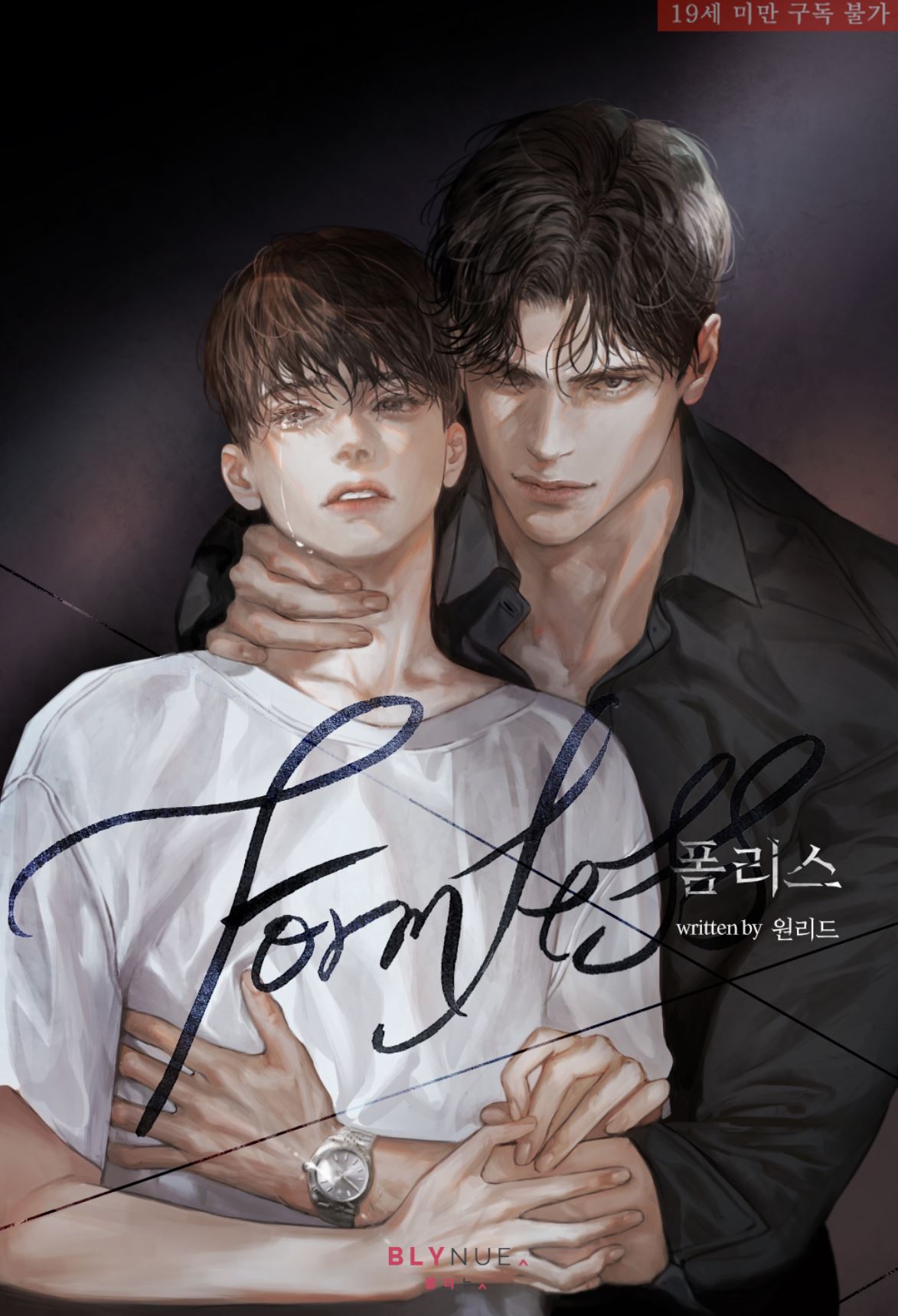
Okay, let me just... this entire chapter is basically a masterclass in how lies corrode relationships, and I am HERE for it. Heewoon lying to his mother about staying at a friend's house? Classic. But then he also lies to Kangwoo by omission, and that's the stuff that actually hurts, you know? Like, sure, he didn't drink in front of Kangwoo, but he's walking around with this guilt anyway, and Kangwoo's being all sweet and “would you like something warm to drink?” and Heewoon's just sitting there sweating because he knows exactly what time it is and he was up ALL NIGHT drinking with Jihwan and the group. And can we talk about Kangwoo though? The man shows up, hair damp from a shower, wearing a gown, and immediately hugs Heewoon and pecks his nose. Like, bro, you just got home from... I don't even know where, but you're being so affectionate and Heewoon's over here internally screaming because he feels guilty. The contrast is killing me. Kangwoo's not a mind reader, obviously, but the reader knows, and that dramatic irony is so delicious. Also, Jihwan posting that group photo on social media? That's a whole other level of chaos. Heewoon's checking his phone and seeing the photo with bottles of soju lined up behind the pork meat, and Kangwoo's looking over his shoulder like “did you see something dirty?” And then Heewoon has to show him the photo anyway. I was literally clutching my chest. The tension between these two characters—Kangwoo being sweet and suspicious at the same time, Heewoon being guilty and trying to play it cool—is everything I live for.
... Read More
This passage is a masterclass in controlled dread. The author doesn't rush. They let Heewoon stagger downstairs, let him feel his twinging buttocks, let him sit at that dining table and push food around his plate. Hours pass in-real-time while we watch him try to survive breakfast. The morning-after exhaustion, the hangover, the physical toll—all of it slows us down, forces us to sit in discomfort just like Heewoon sits at that table unable to eat. Then the car ride. The shift from interior domestic space to confined vehicle space changes the rhythm entirely. Heewoon leaning against the window, forehead pressed to glass, and Kangwoo's casual questions threading through silence. 'What are you doing today?' The pause before Heewoon corrects himself—'I'll stay home'—that momentary hesitation is where the pacing snaps tight. We feel the trap closing. But the real pacing genius is what happens AFTER Kangwoo leaves. The author could have resolved the tension immediately, but instead they let Heewoon lie there. Alone. With his thoughts. And that's when the phone buzzes. Jihwan's messages arrive one by one, and each notification pushes the chapter forward like a heartbeat monitor. 'The leader is hospitalized.' Car accident. A few days ago. You didn't know because you left the chat. The author uses time deliberately here—'A few days ago'—creating this gap where something terrible could have happened while Heewoon was isolated, cut off from information, from his study group. The phone messages accelerate the pace suddenly, pulling us from Heewoon's sluggish recovery into urgency, into paranoia. And then that closing memory: 'I want to kill all the guys who were with you. But I should just go easy on you?' The chapter ends on this threat masquerading as affection, and I'm left sitting there wondering what 'go easy' actually means in practice. The pacing doesn't just build tension—it traps us in Heewoon's escalating realization, mile by uncomfortable mile.

Leave a comment

You must be logged in to leave comments. or
