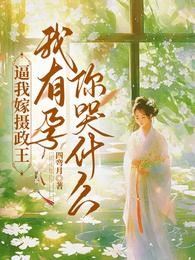
Forced to Marry the Regent King: I'm Pregnant So Why Are You Crying?
Novel Info

Summary

... Read More

Jiang Chuyue is the adopted second young lady of the General’s Manor, raised by Old Madam Xiao after her parents died in battle. For ten years, she has harbored a secret, unrequited love for her elder brother, Xiao Ji, the young and accomplished general who commands the Xuanwu troops. To him, she is merely a beloved sister, a role she accepts while watching him take concubine after concubine. Her devotion is absolute; she prays for his safety, molds her personality to match his preferences, and suppresses her own desires. The arrival of the Ninth Concubine, a skilled pipa player who captures Xiao Ji’s favor, deepens Jiang Chuyue’s isolation. She witnesses his intimacy with the new concubine and realizes that no matter how many women enter the manor, she will always remain an outsider, unable to claim his heart.

The narrative shifts when Jiang Chuyue is invited to a welcome banquet for Xie Linyuan, the Regent Prince, known in the capital as the "Ghost Yama" for his cruelty and immense power. During the event, Jiang Chuyue is abandoned by Xiao Ji, who rushes back to care for the Ninth Concubine after she feigns illness. Left waiting in a sudden rainstorm, Jiang Chuyue collapses and is rescued by Xie Linyuan’s men, spending the night in his lakeside villa. This encounter marks the beginning of Xie Linyuan’s interest in her. He observes her from afar, noting her fear and her hidden feelings for Xiao Ji. Meanwhile, Jiang Chuyue attempts to move on, considering the marriage portraits presented by her grandmother, but finds herself unable to feel anything for the eligible bachelors.

Conflict escalates when Madam Wang, a resentful relative, conspires with the Liu family to harm Jiang Chuyue. Liu Qingshu, the son of the Vice Minister of Revenue, drugs her and attempts to assault her in a carriage. Jiang Chuyue escapes and inadvertently seeks refuge in Xie Linyuan’s carriage, lying that she is the Regent’s concubine to deter her pursuers. Xie Linyuan, amused and intrigued, orders his shadow guards to throw the attackers into a moat and returns her safely to the Xiao residence. This incident reveals the extent of Xie Linyuan’s protection over her, though Jiang Chuyue remains terrified of him. Xiao Ji retaliates violently against the Liu family, breaking Liu Qingshu’s legs and ensuring the family’s downfall, further cementing his reputation as a ruthless protector of his own.

Despite Xiao Ji’s fierce defense, Jiang Chuyue’s emotional world continues to fracture. She witnesses Xiao Ji welcoming his Tenth Concubine, Jiang Caiyue, a young woman who resembles her in name and gratitude. Xiao Ji’s growing affection for Jiang Caiyue is evident, and he even drops a personal jade pendant while rushing to her side, an act that shatters Jiang Chuyue. She realizes that her brother’s heart belongs to others, and her own position in the manor is increasingly precarious. Xie Linyuan, meanwhile, continues to watch her, tearing up a portrait of her that was intended for the Emperor, thereby preventing her from being forced into the palace harem. His actions suggest a possessive interest that contrasts sharply with Xiao Ji’s oblivious affection.

The story moves toward a critical turning point as Jiang Chuyue faces the reality of her unrequited love. She decides to give up the pipa, the instrument she played for Xiao Ji, symbolizing her attempt to let go of her past hopes. However, her path is intersected by Xie Linyuan’s persistent presence. He saves her from bandits hired by the Liu family, searching for her through the night while Xiao Ji is delayed. When Jiang Chuyue is found, she cries in Xiao Ji’s arms, unaware that Xie Linyuan watched from a distance, his expression darkening at her reliance on another man. The narrative establishes a complex triangle where Jiang Chuyue is caught between the brother she loves and the regent who desires her, setting the stage for a struggle between duty, love, and power in the treacherous political landscape of the capital.

Latest Release
DateGroupRelease
2026-08-11shanghai fantasy c110
2026-08-11shanghai fantasy c109
2026-08-11shanghai fantasy c108
2026-08-11shanghai fantasy c107
2026-08-11shanghai fantasy c106
2026-08-11shanghai fantasy c105
2026-08-11shanghai fantasy c104
2026-08-11shanghai fantasy c103
2026-08-11shanghai fantasy c102
2026-08-11shanghai fantasy c101
2026-08-11shanghai fantasy c100
2026-08-11shanghai fantasy c99

Community Reviews

Rating(4.3 / 5.0, 6votes)
5 stars
3(50%)
4 stars
2(33%)
3 stars
1(17%)
2 stars
0(0%)
1 stars
0(0%)

Popular reviews

... Read More
Okay so the poisoning plotline is genuinely wild and I need to talk about how the author strings these things together. Let me start with the mung bean cakes — Jiang Chuyue is just sitting there fishing, living her peaceful life, and then Madam Jiang shows up with food. Sweet, right? Wrong. The Ninth Concubine poisoned them. And the whole sequence plays out like a masterclass in misdirection. Madam Jiang eats two pieces, Jiang Chuyue takes one bite, and suddenly everyone's scrambling. But here's what got me: the Ninth Concubine's motivation. She's been "living in an ice cellar" ever since Madam Jiang arrived, and her poisoning attempt is almost... understandable? Not excusable, but human. Then she kills herself clutching her pipa. That image haunts me. A woman who died holding onto the one thing she loved. And then the golden swiftlet's nest! The Prince Regent sends two boxes — worth more than two thousand taels — thinking it's for Jiang Chuyue. But Xiao Ji redirects it to Madam Jiang. The dramatic irony here is absolutely delicious. Jiang Chuyue never even gets the gift meant for her. She's the one who was poisoned, the one Xiao Ji rushed to check on first, but the luxury food ends up with the concubine who shares his bed. It's a plot twist that says everything about where Jiang Chuyue actually stands in this household — beloved as a sister, but never as a woman he would choose. The pacing is also worth noting. The poisoning happens, gets resolved quickly (culprit found within two days), and then we're immediately thrust into the swiftlet's nest subplot. The author doesn't let you breathe, but in a good way — each scene pivots into the next with this quiet momentum. And Jiang Chuyue attending the Marquis's banquet at the end? That's the hook. Something's coming. I can feel it.
... Read More
I need to talk about Madam Jiang because this character is SO much more interesting than she first appears. On the surface, she's the perfect rival — beautiful, gentle, accomplished, pregnant, devoted to Xiao Ji. Baozhu literally says she looks five or six parts like Jiang Chuyue, especially the eyes. And Jiang Chuyue's immediate dismissal of that comparison? That's not confidence, that's defensiveness. But here's what the text reveals that you have to read between the lines. Madam Jiang isn't some scheming villain. She's genuinely kind — she brings mung bean cakes, she handles Ninth Concubine's funeral with grace, she defends Jiang Chuyue to her own maid Dujuan. When Dujuan gossips about Jiang Chuyue being an "outsider with good fortune," Madam Jiang chides her. She means well. She's trying to survive in a household where she has almost no power, and her strategy is to be indispensable through kindness and competence. But her envy leaks out everywhere. She strokes her flat belly and prays for a son. She looks at Jiang Chuyue's luxurious boudoir with a trace of envy in her eyes. She watches Jiang Chuyue's carriage leave for the banquet and quietly resigns herself to her place. "Of course... I'm only a concubine now." That line broke me. She was a respected young lady in her hometown, and now she's nothing in the capital. Her entire arc is about a woman trying to find power in a system that gives her none. And Xiao Ji's relationship with both of them? He rushes to Jiang Chuyue when she's poisoned, but sends the most precious gift to Madam Jiang. He tells Madam Jiang not to enter his study. He treats Jiang Chuyue with genuine urgency and Madam Jiang with... politeness. Distance. The contrast is devastating.
... Read More
The sensory details in this section are absolutely exquisite. Let me start with the fishing scene — Jiang Chuyue reclining on her chaise, gazing at rippling water, thoughts wandering to Xiao Ji. It's so peaceful, so unhurried. And then Madam Jiang appears among the peach blossoms across the pond, "moving among the blossoms" like something out of a painting. The visual contrast between the two women — one by the water, one in the flowers — sets up their entire dynamic before they even speak. Then there's the boudoir scene where Madam Jiang visits and takes in Jiang Chuyue's surroundings: "A precious carved jade screen, top-grade scholar's tools on the desk, even the curtains were made of soft Yanluo silk worth hundreds of taels." The author doesn't just describe a room — she describes a world Madam Jiang has only read about. This is the luxury of the capital vs. the provincial life Madam Jiang left behind. The detail about the mung bean cakes being shaped into petals with green stamens? That's the kind of attention to craft that makes the world feel real. And the ending image — Jiang Chuyue in her lotus-pink silk gown with pearl earrings, standing at the gate before departing for the banquet, while Madam Jiang watches from the shadows. The crabapple trees blooming under moonlight in Jiang Chuyue's courtyard vs. Madam Jiang's "small and remote" quarters. These aren't just descriptions, they're class markers. The world of this novel has a very specific hierarchy encoded in its spaces, and the author makes you feel every inch of it.
... Read More
The stakes in this section keep escalating and I am HERE for it. Let's talk about what everyone is actually fighting for, because on the surface this is just a story about concubines and poisoned cakes, but underneath it's about survival. Ninth Concubine's poisoning attempt wasn't just about killing Madam Jiang — it was about self-preservation. When she says she's been living "in an ice cellar," she means she's been slowly dying from irrelevance. In a household where the General's attention is the only currency that matters, being forgotten is a death sentence. Her suicide — clutching her pipa, the one thing she loved — is the ultimate statement. If she can't have power, she won't have anything. Madam Jiang's conflict is quieter but no less desperate. She's not poisoning anyone. She's trying to be good enough, kind enough, useful enough to earn a place that will never truly be hers. Every gesture — the cakes, the funeral arrangements, the defense of Jiang Chuyue — is a bid for belonging in a system designed to keep her out. And the stakes? Her child. Without an heir, she's nothing. That's why the author keeps returning to her belly. It's not vanity, it's strategy. Jiang Chuyue's conflict is the most interesting because it's the one she doesn't fully see. She's the "master" of the household alongside Xiao Ji and the Old Madam, but she's also an outsider — her parents died, her sister is missing, she has no family of her own. The banquet at the Marquis's estate is supposed to be a triumph, a chance to shine in high society. But what if it's a trap? What if the real conflict is just beginning? The author leaves us hanging there, and I am not ready.
... Read More
The dialogue in this section is deceptively simple. Everyone is being polite, almost excessively so, and that's exactly what makes it so sharp. Take the first exchange between Jiang Chuyue and Madam Jiang: "The peach blossoms are so fine," Madam Jiang replied, "I thought to pick a few branches for my room. The General hasn't been sleeping well; peach wood's fragrance can soothe the nerves." On the surface: a lovely neighborly gesture. Subtext: I know you're watching me, I know why I'm here, and I'm going to be gracious about it. She's establishing her role — the caring wife, the one who tends to the General's wellbeing. And Jiang Chuyue's response — "How thoughtful of Tenth Madam" — is equally layered. Polite, distant, acknowledging the performance without calling it out. Then there's Dujuan, Madam Jiang's maid, who serves as the id to Madam Jiang's superego. Every time Madam Jiang tries to be noble, Dujuan says what everyone's thinking. "An outsider with such good fortune—it was enough to make people jealous." Dujuan's voice is raw, honest, unfiltered. She's the only character who speaks without performing. And Xiao Ji's dialogue is notably sparse but devastating. "Go back to your courtyard and rest. Madam Jiang has her maids to tend to her." He says this to Jiang Chuyue, the person he's clearly more attached to, while Madam Jiang lies poisoned on the bed. Three words to his concubine: "This is my study. In future, do not enter without reason." Cold. Final. The way the author uses silence and brevity in Xiao Ji's dialogue makes every word carry more weight.
... Read More
There are so many layers of symbolism packed into this section that I could write a whole essay. Let me just hit the ones that hit hardest. The carp. Jiang Chuyue paints a "Carp Leaping for the Lotus" — a golden carp breaking the water's surface, biting a pink lotus petal. And then she catches an actual crucian carp while fishing. The carp is a symbol of ambition, of rising above one's circumstances. But it's also a symbol of being caught — trapped between water and air, between desire and danger. Jiang Chuyue catches it, but she doesn't keep it. She lets it go back into the pond. Is that her way of saying she won't be trapped by this household the way Madam Jiang is? The golden swiftlet's nest is even more loaded. It's worth a thousand taels, it beautifies and purifies, it's meant to restore health. But it never reaches the person it was intended for. It goes to Madam Jiang, who is already pregnant — whose body is already doing the work the nest promises. Meanwhile Jiang Chuyue, the one who was actually poisoned, goes without. The nest becomes a symbol of misplaced care, of love that flows in the wrong direction. And Madam Jiang's flat belly. The author returns to this image three times. She strokes it, prays over it, worries about it. In a household where a woman's value is tied to her ability to produce an heir, her empty womb is her greatest vulnerability. It's the thing that makes her both powerful (she has the General's bed) and powerless (she has no children). The belly that should be her triumph is her ticking clock.
See all reviews

Characters

See all characters

Custom lists

See all custom Lists