Summary

... Read More

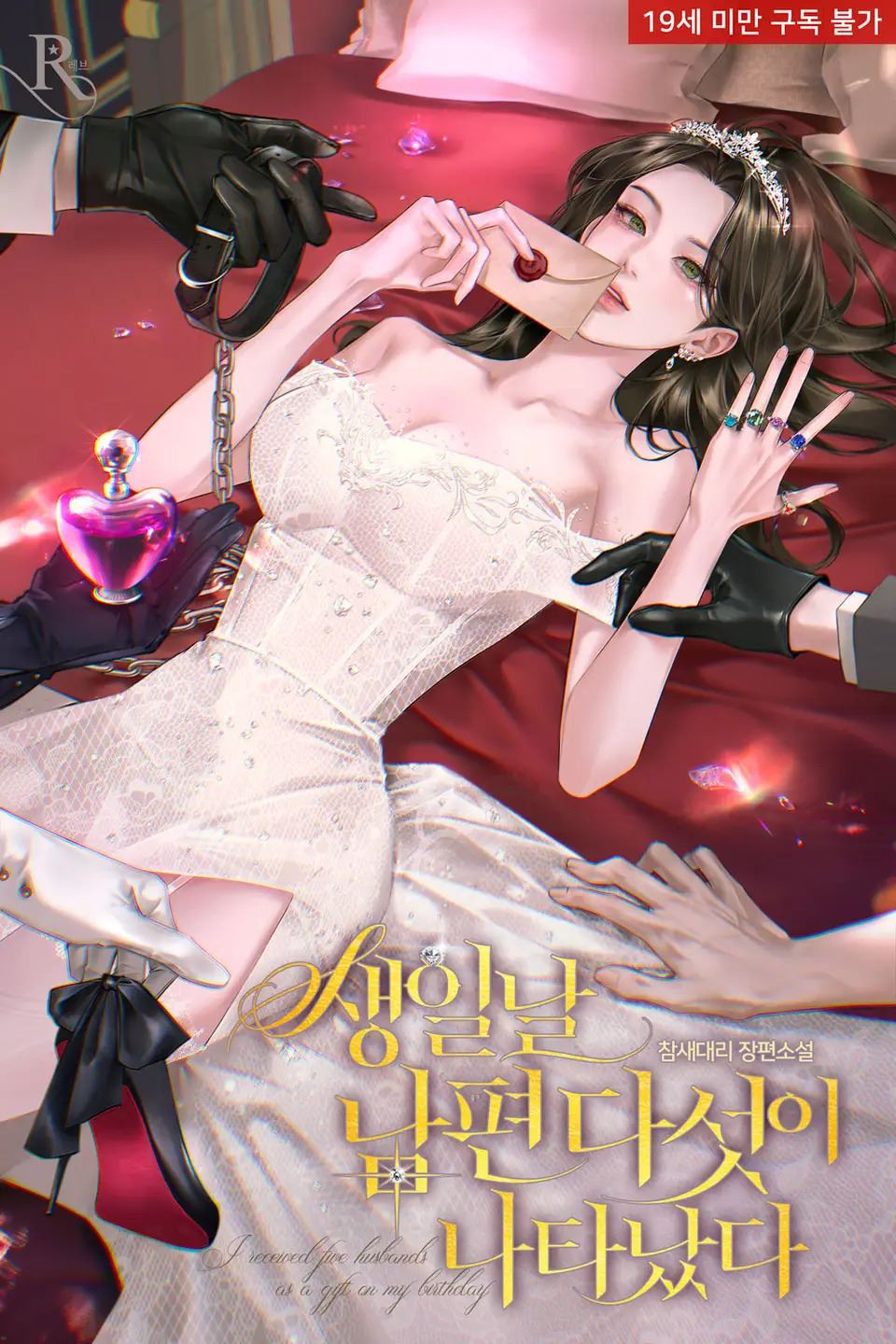
Eugenie Norton is a brilliant but emotionally detached graduate student in the Hermeland Empire, living a solitary life dedicated to her research after her mother’s death. Her father, Viscount Peregrin Norton, is a handsome man who neglects his late wife’s memory by quickly remarrying Agatha, a former lady-in-waiting to the powerful Empress Silvea. Agatha brings her own daughter, Apollin, into the household, and both stepmother and stepsister treat Eugenie with disdain, attempting to strip her of her inheritance and status. Eugenie’s only fiancé, Peter Lamburg, proves to be unfaithful, abandoning her at her father’s funeral to pursue Apollin. Devastated and facing legal dispossession due to imperial law that denies inheritance to unmarried women, Eugenie finds herself on the brink of ruin just before her twenty-fourth birthday.

On the eve of her birthday, Eugenie receives a visit from Carter Livingston, a childhood friend and temple priest who maintains a warm but distant relationship with her following a past incident. Simultaneously, four other prominent men arrive at her modest apartment: Alfred Wilberforce, a celebrated hero from the Southern Admiral family; Percival Troys, the formidable Duke of the North; Magnus Napier, her academic rival and an artistic patron; and Cassius Lysander, the enigmatic owner of a high-end boutique rumored to be involved in illicit trade. Each man reveals that they hold a secret contract with Eugenie’s deceased mother, Theodora Fay. The contracts stipulate that if Eugenie remains unmarried by the age of twenty-four, these men are bound to become her husbands to protect her rights and status.

Eugenie is initially shocked by the proposition of polygamy, but she quickly realizes the practical benefits. With the support of five powerful men, she can reclaim her inheritance, secure her social standing, and take revenge on those who wronged her. The men reveal that Theodora had saved each of them at critical points in their lives, and this marriage is their way of repaying her debt. Despite the unusual nature of the arrangement, Eugenie agrees to the terms. She learns from her mother’s final letter that there is a one-year trial period, during which they must fulfill their marital duties, including cohabitation and physical intimacy, to validate the contracts.

Determined to assert her dominance, Eugenie crashes Apollin and Peter’s wedding ceremony, which is attended by Empress Silvea. She strides down the aisle alongside her five new husbands, wearing the legendary Hero’s Million Diamond Dress. When Peter fails to appear, Eugenie proceeds with the marriage to the five men in the same venue, effectively stealing the spotlight and humiliating her step-family. The Emperor’s personal letter granting Duke Troys the right to make one wish is cited to legitimize the union, forcing the Empress to accept the situation despite her anger.

Following the wedding, Eugenie and her five husbands retreat to a lakeside villa for their honeymoon. The narrative shifts to explore the dynamics of this unconventional marriage. Eugenie, who has little experience with romance, navigates her first intimate encounter with Alfred. Through curiosity and gradual acceptance, she begins to understand the complexities of her relationships with each husband. The story establishes the premise of Eugenie living as a queen among five powerful men, fulfilling her mother’s wish for her to live safely and happily, while also uncovering the deeper secrets of her mother’s past and the true nature of the debts owed to her.

The initial conflict between Eugenie and her oppressive family is resolved through her strategic marriage, but new challenges emerge as she adapts to life with five distinct partners. The narrative sets the stage for a year-long exploration of these relationships, blending political intrigue, romantic development, and personal growth as Eugenie learns to balance her independence with the demands of her new marital bonds. The story concludes with Eugenie accepting her role, ready to face the future alongside the men her mother精心 chose for her.

Latest Release
DateGroupRelease
2026-09-27citrus aurora c51
2026-09-27citrus aurora c50
2026-09-27citrus aurora c49
2026-09-27citrus aurora c48
2026-09-27citrus aurora c47
2026-09-27citrus aurora c46
2026-09-27citrus aurora c45
2026-09-27citrus aurora c44
2026-09-27citrus aurora c43
2026-09-27citrus aurora c42
2026-09-27citrus aurora c41
2026-09-27citrus aurora c40

Community Reviews

Rating(4.1 / 5.0, 53votes)
5 stars
17(32%)
4 stars
22(42%)
3 stars
14(26%)
2 stars
0(0%)
1 stars
0(0%)

Popular reviews

... Read More
I'm not okay. I'M NOT OKAY. First Alfred and now Percival and I swear the author is playing 4D chess with my emotions and I have no defense. Let me just start by saying the Eugenie-mother dynamic in that dream sequence is the kind of wound that never really heals. She was fourteen. Fourteen years old and she was already carrying her mother's emotional baggage like it was her job. The guilt about telling her mother about the affair, the fear of being called "cold-hearted," the suspicion that her mother might blame HER for ruining the marriage—all of that stacks up and you can see it shadowing every relationship Eugenie enters now. She's married to FIVE men because her mother made a deal, and part of me wonders if Eugenie is subconsciously seeking the kind of devotion her mother never had from her father. Then Alfred comes in gentle and feeding her bread and she lets herself feel wanted and maybe that's why she gets so wet again so fast—not just physically but emotionally she's starved for this. And then Percival! This intimidating duke-type who can barely hold eye contact but calls her "Madam" with his whole face turning red and asks to be called by his first name like he's trying so damn hard to be close and it's the most endearing thing I've ever read. I'm already shipping them both and I haven't even gotten to husbands three through five yet help me.
... Read More
"The cost of magic is 'secrecy.'" This line, spoken almost casually by Mrs. Norton while discussing her daughter's marriage contract, contains the entire thematic thesis of this novel. Let me explain why this haunts me. The word "contract" appears repeatedly across these chapters — in the romantic sense (marriage contract), the magical sense (Mrs. Norton's deal with the Troys family), and the biological sense (the monster blood requiring human hosts to survive). Three different contracts, three different costs, all interconnected. What's fascinating is how the novel keeps asking: who really signed what? Eugenie thinks her mother made the deal. Percy thinks he's the one bearing the cost. But Eugenie's body is responding to things her mind hasn't agreed to. The contract is expanding beyond anyone's original terms. The beast/monster metaphor is doing heavy symbolic lifting here too. "Beast blood" represents everything the aristocratic world tries to repress — raw instinct, uncontrolled desire, physical vulnerability. Yet it's this very beastliness that seems to be unlocking something in Eugenie. Her mother's contract wasn't just protecting Percy — it was preparing Eugenie for something she didn't know she needed. And the library scene with Magnus is oddly symbolic too. She wants to research magic in a world where it's supposedly extinct. He bought her a house near the bookstore and the library. He claims it's consideration; she suspects surveillance. Either way, knowledge is the thing both of them are circling around, and neither will admit they need it. The repeated imagery of bodies — split headboards, torn sheets, sagging mattresses, wounded husbands secretly healed — all point to a world where intimacy isn't just emotional or romantic, it's almost geological in its force. Relationships here don't just change you. They remake your foundation.
... Read More
I need to talk about this moment. RIGHT HERE. Because honestly it completely shattered everything I thought I knew about their dynamic. We've been reading this arranged marriage setup and I was like, okay fine, it's duty-bound, they're going to work their way into it, whatever. But then during THE wedding night scene—yes, that one—Alfred suddenly whispers to her: "Listen to me, Eugenie. You might be right about many things, but this… this isn't your fault." And THEN the narrative drops us directly into a flashback. She's SEVEN. He's TEN. On the Wilberforce family's beach. She told her parents what her dad was doing and the whole trip fell apart. She's been carrying that guilt for NINETEEN YEARS. Nineteen years of believing she destroyed something beautiful because she spoke up. And Alfred has ALSO been carrying it. Because he's spent the entire scene holding her, reassuring her, saying it's not her fault over and over again like he needed her to hear it too. "That day, Alfred had hugged Eugenie with all his strength, refuting her over and over. The sun on the beach was hot, but she hadn't wanted to leave his embrace." This changes EVERYTHING about how I see their relationship now. It's not just political marriage or even attraction—it's two people who have been silently protecting each other since childhood, both convinced the other was carrying pain that wasn't theirs to carry. He thinks he comforted her. She thinks he couldn't save her from her own guilt. And during the most vulnerable moment of their married life, both truths collide at the same time. I'm not okay. I literally had to put the book down for a second. Also can we talk about how Alfred says "We're going to be seeing a lot of this from now on" while looking at her messy aftermath? That man is SO calm and it drove me wild.
... Read More
I need to talk about Alfred because WOW. This guy went from "slightly embarrassing backside walking away to get a towel" to genuinely tender in the same breath and it caught me off guard. The way he watches her sleep, strokes her forehead, brings her breakfast in bed—it's so domestic and soft that it completely disarms you after the previous scene. But here's what got me: when she notices his scar, he doesn't open up. He deflects with "training exercises that were as dangerous as real battles." Same pattern we saw with Eugenie and her dream—people don't share their pain easily. Then he feeds her bread with egg yolk and his fingers linger on her lips, and she LICKS THEM. That moment is SO intimate and unguarded. She's not performing anymore. And then—she's already getting turned on from the previous night, thighs still affected, and he notices, leans in, whispers "Is it alright for me to stay?" She says yes. That consent, that softness, that's not just physical—it's trust building. But then we CUT to Percival and the shift is brutal. From Alfred's warm sunlight and shared bread to Percival's cold marble statue energy, sipping tea like they're negotiating a treaty instead of starting a marriage. And yet—here's the thing that surprised me—Percival BLUSHES. His neck and earlobes turn red when he says "Madam" and asks her to call him by his first name. This guy who looks like a black panther is actually Nervous? The contrast between his imposing exterior and his flustered interior is Chef's kiss.
... Read More
"The sheets were completely torn, and the mattress seemed to have been damaged by rough thrusting, with one side sagging deeply." Also: "The headboard is split in half." That's it. That's the review. This author does not need fancy prose to convey intensity — a broken piece of furniture tells us everything we need to know. But what really struck me about the worldbuilding in this passage is how seamlessly the intimate and the political merge. The opening scene is raw, visceral, almost brutal in its physicality. Then we cut to seven years ago — a ballroom with crimson velvet curtains, a waltz in full swing, elegant conversations about contracts and magical costs. The contrast between those two worlds is staggering. One is about blood and instinct, the other about etiquette and calculation. And they're BOTH part of the same marriage. The capital library scene with Magnus is interesting too because it immediately establishes this world where books are luxury items worth tracking down. "The Wilson bookstore, where you always hang out when you return to the capital" — this detail alone paints a picture of a city with established intellectual commerce, rare book trade, limited editions. And the fact that Magnus could BUY a mansion in the most expensive area without consulting his new wife suggests a world where nobles move with financial independence that would shock anyone from a more egalitarian background. Also can we talk about the cane? "Since when did he start using a cane?" The fact that Eugenie notices this detail about her academic rival from TEN YEARS AGO tells us so much about how carefully she observes people she's in conflict with. And that he needed medical intervention severe enough that her mother had to cover it up? The world is clearly more dangerous than it appears on the surface.
... Read More
I have to talk about the setting in this chapter because the author really KNOWS how to paint a mood before everything gets weird and intimate. The opening image of Eugenie standing alone on the balcony, cool night breeze, the lake, starlight—it feels like a painting. There's something almost melancholic about her thinking those stars might be remnants of explosions from centuries ago. Like, even in a romance scene the author wants to remind us that time passes, things change, people grow apart and then back together. Then you've got the champagne glasses, Alfred's large hands making them look like toys, the white villa that Eugenie's own relative criticized as not being a proper resort. These little worldbuilding details—the Wilberforce family prestige in the South, the summer villa retreat, the other guests somewhere inside the house—just ground everything in a real, lived-in aristocratic world without feeling like an info dump. "On this breezy balcony with the cool night wind blowing in from the lake"—the sensory shift from that open, starry, slightly lonely balcony to the closed bedroom with clothes strewn everywhere is a whole atmosphere change. One moment it's romantic and dreamy, the next it's raw and charged. The author never forgets the physical world even during the intimate scenes, which I genuinely appreciate. You always know WHERE you are.
See all reviews

Custom lists

See all custom Lists