Summary

... Read More

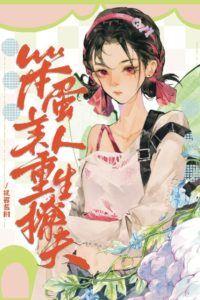
Xu Yinghuai, a prominent beauty influencer with millions of followers, dies in a severe car crash on her way to a fashion show abroad. Her consciousness transfers into the body of Chi Yi, a young woman who died from overwork while caring for her critically ill mother. Chi Yi’s soul lingers briefly, expressing gratitude before departing for reincarnation, leaving Xu Yinghuai to navigate her new life. The transition is jarring; Xu Yinghuai loses her glamorous appearance, her wealth, and her social status, inheriting instead a body plagued by acne, debt, and exhaustion. She finds herself in a cramped, dilapidated apartment with a stray dog named Xiao Bai, who was Chi Yi’s only companion.

Compounding her misfortune, Xu Yinghuai’s new identity requires her to interview for a position as a personal assistant to Zhou Zirong, a celebrated film actor and her childhood nemesis. Their history is defined by constant rivalry and sharp-tongued exchanges. Despite her reluctance and the humiliation of her current appearance, Xu Yinghuai attends the interview. In a moment of panic and stubborn pride, she answers a question about Zhou Zirong with the blunt statement that he is merely a person, offending his inner circle. However, Zhou Zirong, distracted by recent events, hires her anyway, unaware that she is the reincarnation of his old acquaintance.

As Xu Yinghuai begins her job, she discovers that Zhou Zirong is not the villain she remembered. He is a complex individual burdened by grief and professional pressures. The narrative reveals that Zhou Zirong believed Xu Yinghuai, the original influencer, died in the car crash. He is devastated by her loss and is preparing for her funeral. When the real Xu Yinghuai, now in Chi Yi’s body, attends the funeral incognito, Zhou Zirong is struck by a profound sense of familiarity. He senses that this assistant is connected to his deceased friend, though he cannot immediately place why.

The core conflict arises from this dual identity. Xu Yinghuai must hide her true self while working for the man who once despised her, all while dealing with the physical and financial hardships of Chi Yi’s life. Meanwhile, Zhou Zirong oscillates between treating her as a subordinate and seeking answers from her. A significant turning point occurs when Xu Yinghuai overhears her former best friend, Mu Xiao, expressing relief at Xu Yinghuai’s death, hinting that the car accident may not have been an accident. This revelation shifts Xu Yinghuai’s focus from mere survival to uncovering the truth behind her death.

Throughout the early chapters, the relationship between Xu Yinghuai and Zhou Zirong evolves from hostility to a tentative, confusing alliance. Zhou Zirong shows unexpected care, bringing her medicine and food, while Xu Yinghuai begins to see his vulnerabilities. She learns of his stomach issues and his deep loyalty to his late friend. The story explores themes of identity, grief, and the disparity between public perception and private reality. Xu Yinghuai struggles with the loss of her former life but finds a strange sense of purpose in her new role and her growing connection with Zhou Zirong.

As the story progresses, Xu Yinghuai must balance her duties as an assistant with her investigation into Mu Xiao’s potential involvement in her death. Zhou Zirong’s suspicion that Chi Yi is connected to Xu Yinghuai grows stronger, creating tension and dramatic irony. The narrative sets the stage for a mystery where Xu Yinghuai must prove her identity without driving Zhou Zirong away, while also clearing her name and exposing the truth about the fatal accident. The dynamic between the two leads is characterized by sharp dialogue, unspoken emotions, and a gradual dismantling of their past prejudices.

Latest Release
DateGroupRelease
2026-08-11shanghai fantasy c22
2026-08-11shanghai fantasy c21
2026-08-11shanghai fantasy c20
2026-08-11shanghai fantasy c19
2026-08-11shanghai fantasy c18
2026-08-11shanghai fantasy c17
2026-08-11shanghai fantasy c16
2026-08-11shanghai fantasy c15
2026-08-11shanghai fantasy c14
2026-08-11shanghai fantasy c13
2026-08-11shanghai fantasy c12
2026-08-11shanghai fantasy c11

Community Reviews

Rating(3.6 / 5.0, 26votes)
5 stars
6(23%)
4 stars
8(31%)
3 stars
7(27%)
2 stars
5(19%)
1 stars
0(0%)

Popular reviews

... Read More
The atmosphere in these chapters is SO specific. Let me paint you some pictures. First, the hot water room where Xu Yinghuai overhears the conversation—dimly lit, weak glow from the ceiling lamp, sitting cross-legged on the floor feeling a chill. The author really knows how to make you feel isolated. Then the KTV scene: flashing colored lights, loud music, Zhou Zirong storming in still in his school uniform, that moment where Xu Yinghuai's body nearly presses against his chest and she forgets how to breathe. The sensory details here are insane—the glass bottle shattering, blood trickling down the boy's forehead, the night wind chilling her to the bone on the taxi ride home. But my favorite scene has to be the bar at the end. 'Conan'—a bar named after a detective anime character, located on Mengpo Road (which literally translates to 'Forgetfulness Road' in Chinese, though I'm writing in English here), number 39, not even showing up on maps. Wooden sign covered in creeping vines, traditional Chinese decor inside, warm dim lighting. Xu Yinghuai circling the building looking for a window, spotting Mu Xiao in a corner with drinks, that warm smile that used to be familiar. The contrast between the cozy interior and the betrayal hanging in the air is chef's kiss. And the makeup room scene—sealed tight with the heater on, making her drowsy, the reflection in the mirror showing Zhou Zirong's intense gaze. Every setting in this book feels alive and purposeful. Nothing is accidental.
... Read More
There are two objects in this text that have been haunting me since I finished reading. The first is that crystal bracelet. Zhou Zirong sees it on a lifeless wrist in the accident footage—"even beneath the bloodstains, it still glimmered under the morning light." A crystal bracelet. Something precious, something that catches light even in the worst possible circumstances. It's the last thing that connects him to her, and the moment he sees it, every shred of hope shatters. The glimmer is almost cruel—the world still beautiful, still sparkling, while the person wearing it is gone. It's a symbol of how life continues to shine even when someone's world has ended. The second is the plain white bun. Chi Yi's entire existence, as revealed through Xu Yinghuai's investigation of her memories, comes down to this: a dented thermos and a plastic bag with a plain white bun for dinner. She gives the bun to Xiao Bai, the stray dog she couldn't even take home because of her landlord. She feeds her loyal protector pieces of her own meager food. What's striking is the parallel between these two objects. The crystal bracelet represents wealth, fame, beauty—the life Xu Yinghuai lost. The plain white bun represents poverty, sacrifice, love—the life Chi Yi lived and died in. And now Xu Yinghuai is inhabiting both. She carries the memory of the bracelet and the reality of the bun. She's living a life that is nothing like what she expected, in a body that is nothing like the one she knew. The recurring theme here seems to be about the fragility of identity. Who are you when your name changes, when your body changes, when the people who loved you think you're dead? The crystal bracelet glimmers. The bun is plain. But both are real. Both matter. And Xu Yinghuai has to figure out which one she gets to keep.
... Read More
Man, this section hits different. The whole narrative structure here is like a slow-burn trap. You start with what seems like a sweet friendship story—Xu Yinghuai protecting Mu Xiao, pulling her out of her shell, giving her confidence. Then BAM, the eavesdropping scene shatters everything. The author plays with timeline so cleverly too. We get flashbacks to the KTV incident where Zhou Zirong drags Xu Yinghuai away, then cuts back to the present where she's discovering the truth about Mu Xiao. The parallel between Mu Xiao's bullying behavior and her abusive home life is a nice touch—violence as a generational tumor, as the text puts it. But the real plot twist is the identity reveal. Zhou Zirong recognizing her, the stylist almost catching on, the name 'Xu Yinghuai' finally spoken aloud after all this time. And then Mu Xiao calling her to meet at a bar named 'Conan' on Mengpo Road—number 39. That's not random, is it? Something's brewing. The pacing here is masterful. It goes from quiet moments with Xiaobai the dog to explosive confrontations, then back to tension-filled silence. I love how the author withholds information. We know Mu Xiao is suspicious, we know Xu Yinghuai is hurt, but the full scope of what happened that night at the KTV is still being pieced together. And that ending—Mu Xiao inviting her to a bar that doesn't even show up on maps? Chilling.
... Read More
The dialogue in this section is sharp as a knife. Let me give you some highlights. Zhou Zirong's line 'You tell me, Xu Yinghuai. Are you out of your mind?'—that's not just anger, that's fear masked as rage. And later in the makeup room when he repeats 'Xiao Xu, are you Xiao Xu?' with emphasis, the subtext is screaming. He's not just asking for confirmation; he's saying 'I finally found you, thank God it's you.' The stylist being obliviously cheerful while tension crackles between them adds this layer of dramatic irony that makes every line hit harder. Xu Yinghuai's internal voice is equally compelling. When she says 'Scumbag. Just as she was thinking this, her phone vibrated'—that's such a natural, relatable thought pattern. And her confrontation with Mu Xiao: 'Wait. You didn't know I beat them up, so why did you come looking for me first thing in the morning?' That's the moment the friendship truly dies. The dialogue here does so much heavy lifting. Every conversation reveals character. Zhou Zirong's short, punchy lines show his intensity. Xu Yinghuai's questions expose her growing suspicion. Even Xiaobai's silent presence says more than words could. The author also uses silence effectively. That moment when Zhou Zirong says her full name 'Yinghuai' and the stylist comments on how nice it sounds—Xu Yinghuai's heart skips a beat. What isn't said matters as much as what is. The eavesdropped conversation we never hear, the restroom dialogue we only get fragments of, the bar meeting where Mu Xiao's warm smile doesn't reach her eyes. The dialogue here is layered, subtextual, and absolutely devastating.
... Read More
There's this one passage that I just cannot get out of my head. After Xu Yinghuai wakes up in Chi Yi's body and realizes her entire world has shifted, she looks out the window and the text describes the sunset like this: "shades of blue and purple spread across the sky, painting it in a dreamy gradient. The clouds, stubbornly holding onto their lighter hues, layered the sky like an artist's brushstrokes, creating an eerie, surreal beauty." Let me just sit with that for a second. An eerie, surreal beauty. That's the exact mood of this entire rebirth situation, isn't it? She's lying in a cramped, unventilated rental room that smells stale, with a rusty ceiling light and an exposed bulb, and yet the sky outside is doing this impossibly gorgeous thing. The contrast between her internal reality and the external world is almost violent in how sharply it's drawn. And then there's the scene where she walks to Chi Yi's apartment through those desolate outskirts streets—hardly any pedestrians, elderly folks sitting by water pipes squinting in the sun, this sense of bygone days hanging in the air. It feels like stepping into a film where the camera lingers a beat too long on empty spaces. The author doesn't just describe places; they make you feel the weight of loneliness in them. The convenience store scene earlier is also masterful in its mundanity. A clerk watching news, cheerful background music swelling, someone swiping to the next video like nothing happened while Zhou Zirong's world is ending. The ordinary world keeps turning while the characters are falling apart inside it. That's the kind of atmospheric writing that makes a book stick with you long after you've finished it.
... Read More
There are so many symbols working overtime in these chapters. Let's start with Xiaobai—the dog. Dogs represent unconditional love, loyalty, clarity. Xu Yinghuai literally says this: 'If only people could be like dogs. Love and hate would be so clear.' Xiaobai never pretends. Xiaobai never betrays. The dog becomes a mirror for what human relationships should be versus what they actually are. Mu Xiao wears a mask of friendship while plotting betrayal. Xu Yinghuai hides her true identity as 'Chi Yi' while Zhou Zirong slowly pieces together who she really is. Names are huge here. The entire arc builds toward Zhou Zirong finally saying 'Xu Yinghuai' out loud. For years she's been hiding, and his instinctive shout when he sees her with the dog—'Since when did you start getting along with a dog?!'—that's the moment the mask cracks. The stylist hearing the real name and saying 'That sounds familiar' adds another layer. Identity, recognition, being seen—these are the themes. The bar 'Conan' on 'Mengpo Road' (Forgetfulness Road) is loaded with meaning. A detective-themed bar where truth is hidden in plain sight. Number 39—specific, deliberate. And the recurring imagery of glass shattering, reflections in mirrors, windows you peer through—everything is about seeing and being seen, truth and distortion. Violence as a tumor passed through generations, Mu Xiao's abusive home life mirroring her bullying behavior. The story asks: can you escape the cycles you're born into? Xu Yinghuai tried to pull Mu Xiao out of her darkness, but some tumors run deep.
See all reviews

Characters

See all characters

Custom lists

See all custom Lists