Summary

... Read More
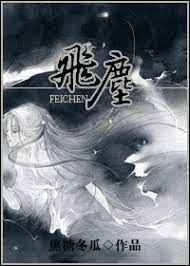
Mo Feichen, a modern college student obsessed with martial arts novels, is struck by a book and wakes up as a baby in ancient China. He is carried by his mother, Wu Qingyan, through a snowy landscape to Kun Yun Peak Manor. His father, Mo Chang, had abandoned them to join a heretical cult, and Wu Qingyan, shamed by her husband's betrayal, abandons the infant at the manor. Wen Qingyuan, the Lord of Kun Yun Peak, recognizes the child as the posthumous son of his junior brother and takes him in, naming him Mo Feichen. The name coincides with his original identity, but he accepts his new life in the martial world.Seven years pass, and Mo Feichen grows into a mischievous and lazy teenager who shows no interest in mastering martial arts. While his senior brother, Yu Jin, is ambitious and determined to become one of the top swordsmen in Jianghu, Mo Feichen is content with idling away his days. Yu Jin eventually leaves the mountain to explore the martial world, promising to return for a drink. Shortly after Yu Jin's departure, Mo Feichen falls from a cliff path while repairing it and lands in a hidden valley below.In the valley, Mo Feichen discovers a cave containing the ice coffin of He Yunfeng, the founder of Kun Yun Peak Manor and master of the World Detention Sword. Despite rumors of his death a century prior, He Yunfeng is preserved in a state of suspended animation. The cave walls are carved with martial arts manuals detailing sword techniques, internal energy cultivation, and Qinggong. Mo Feichen studies these arts, learning the "Ride the Wind" footwork and other techniques to survive. He secretly returns to the cave regularly, finding solace in the presence of the frozen founder.News arrives that Yu Jin has joined the Jing Shui Sect, a semi-righteous group, serving as a protector. This mirrors the path Mo Feichen's father took, causing tension within the manor. Meanwhile, Deng Ling and Li Bilian, a couple expelled from a rival sect, visit Kun Yun Peak under the guise of paying respects. Their true intention is to steal the manor's secret martial arts manuals during the annual memorial ritual. They collude with the Ling She Gang, a group known for using poisonous snakes, to attack the manor and distract the disciples.The assault forces the manor into chaos. As the disciples struggle against the snake-taming attackers, Mo Feichen finds himself in the midst of the conflict. His hidden knowledge of martial arts, acquired from the cave, becomes crucial for survival. The events set in motion by the invasion threaten to upend the peace of Kun Yun Peak, drawing Mo Feichen out of his indifference and into the turbulent world of Jianghu, where secrets of the past and dangers of the present converge.

Latest Release
DateGroupRelease
2026-09-26knoxt c66
2026-09-26knoxt c65
2026-09-26knoxt c64
2026-09-26knoxt c63
2026-09-26knoxt c62
2026-09-26knoxt c61
2026-09-26knoxt c60
2026-09-26knoxt c59
2026-09-26knoxt c58
2026-09-26knoxt c57
2026-09-26knoxt c56
2026-09-26knoxt c55

Community Reviews

Rating(4 / 5.0, 346votes)
5 stars
108(31%)
4 stars
121(35%)
3 stars
117(34%)
2 stars
0(0%)
1 stars
0(0%)

Popular reviews

... Read More
"What I have learnt in this life, as long as it's enough for me to be able to dig out birds' eggs and catch vole without starving myself to death, it's fine for me." I swear to god this character sounds like he's been married for twelve years and is on his third cup of tea at a weekend barbecue. He's a child. A literal child who fell out of a tree. And yet his dialogue radiates this deep, bone-level resignation that makes me wonder if the transmigrator consciousness is genuinely older or if the author just wrote a very specific flavor of exhausted millennial energy into this kid. The banter with the other disciples is also genuinely funny — not because it's punchy jokes but because it's painfully mundane. "That jujube is not ripe yet! It's bitter!" "You can't eat that pigeon! Those are for love letters!" This is a kids' squad being weirdly responsible about agricultural timing and romantic protocol. The humor lands because it's so specific and unhurried. And Yu Jin's voice is completely distinct — sharp, frustrated, but always with that undertone of someone who cares more than he wants to admit. "You little bastard!" delivered with a head slap is peak older sibling energy. I would read this book just for the dialogue alone tbh
... Read More
This chapter raises the stakes to another level, and it has everything to do with how trapped Mo Fei Chen becomes. The moment Leng Yufang deploys those blood cicada strings, my heart dropped. It is not just a weapon; it is a metaphor for the entire Jianghu world itself. Once you enter it, you are entangled. The description of the net as thin as air yet impossible to escape because it clings to sword Qi is brilliant. It means internal strength does not save you here; it might actually make things worse. That is such a sharp commentary on this world where power is both your shield and your snare. Mo Fei Chen thought he could fight his way out, but he could not. His opponent had already read the script. And Li Bilian, walking into that trap knowingly because she was poisoned and had no choice... she knew going in. That is the kind of desperation that makes you actually care about these characters. They are not just pawns in some grand scheme; they are people who made bad choices under impossible pressure. And then Leng Yufang speaking with that calm menace, threatening to disfigure his corpse so even He Yunfeng would not recognize him. That is personal. That is cruel in a way that feels real, not theatrical. And what did He Yunfeng do when he found out? He exploded. Threw the entire dinner table onto the floor. The man who never loses control cracked completely. That moment of raw fury tells us more than pages of internal monologue ever could. The stakes are no longer just about a sword seed or a tomb. They are about survival, betrayal, and whether anyone in this world can come out alive without losing themselves in the process. The question hanging over all of it is simple and terrifying: who is really pulling the strings, and when will they turn on each other?
... Read More
The sensory landscape of this passage is remarkably vivid. From the opening lines, the author establishes atmosphere through sound and temperature: the cold wind, the sound of breaking rocks, the whimpering quality of the valley breeze. The "inky fog" where Wen Qing Yuan fights is described with painterly precision—three figures coming and going above it, swords' Qi whistling like birds through mist. This visual layering is what distinguishes strong wuxia worldbuilding from generic action scenes. The cliff path of the mountain valley isn't just a location; it's a vertical geography that determines the plot's movement. Falling down it becomes a narrative device as much as a physical one. The cave interior is rendered with careful attention to light and shadow. Darkness protects them initially—"the only thing that could save them"—until Li Bilian's flame stick transforms the space from protective void to exposed arena. The flickering illumination reveals He Yunfeng's transparent ice coffin, creating a visual that is simultaneously serene and eerie. I particularly appreciated how the author uses the cave's architecture to create dramatic irony: Wen Qing Yuan fights above while Li Bilian discovers the coffin below, and Mo Fei Chen navigates the space between, unaware of both threats. The ice coffin itself is a worldbuilding masterpiece—a preservation chamber that speaks of ancient cultivation practices, inner strength protection, and a civilization that valued martial achievement enough to immortalize its greatest masters. The water surface outside, where sword Qi cuts through and rocks shatter, provides an auditory soundtrack to the tension below. Every element of this environment serves the story: the fog obscures, the cave shelters, the flame exposes, and the water connects. It feels like a real place with its own rules, weather, and moods—a world that exists independently of the characters who traverse it.
... Read More
"Don't be fooled by the fact that he liked to take the eggs out, but he also had a principle. If there were ten eggs in a nest, he would take out seven and leave three, otherwise if the mother abandoned the nest, next month he won't have any eggs to take." I need to talk about this. This single detail about Mo Fei Chen stealing eggs but leaving three behind — it tells you everything about the person he is. He's chaotic, selfish on the surface, a little shit who sleeps in trees and raids bird nests, but underneath there's this weird, soft-coded morality operating. He won't take more than he needs. He'll preserve what matters even when nobody's watching. And then the scene cuts to him hearing his peers talk about Yu Jin abandoning them, and his mouth curves into a smile with "some degree of helplessness." He pretends not to read the letter. He says it outright to Wen Qing Yuan — "I won't read it!" — and then he lies awake all night thinking about Yu Jin's face and Wu Qing Yan's back. The thing that gets me is how much he cares and how badly he hides it. The emotional architecture here is so specific — this is someone who can't express grief or loyalty except through evasion. He doesn't read the letter. He wanders around the manor like a ghost. And the text cuts off mid-sentence at the end, trailing off from "the look on people's faces" — it's like the narrative itself can't finish the thought because Mo Fei Chen isn't ready to finish it either. That sleepless night haunts me. What is he remembering? What is he afraid to acknowledge?
... Read More
Let's talk about what's actually happening beneath all the sword fighting, because this chapter is PACKED with symbolism about control and autonomy. Those Gu worms aren't just a cool power system — they're literally inside people's bodies, burrowing into their blood vessels, turning them into puppets. And Mo Fei Chen, the strongest swordsman apparently, can't even stop his own arm from striking his ally. The ultimate loss of self. Ye Su's silk threads connect everything — she controls the three puppets, she controls Mo Fei Chen, and her fingers dance like a conductor. The imagery is almost musical, which makes it creepier. She's playing a symphony of violence and everyone else is just the instrument. But here's where it gets interesting: the reversal. Lu Qingmo realizes he can't cut the threads, so he cuts the HAND that controls them. That's such a thematically rich move — instead of fighting the symptom (the worms/threads), he attacks the source (the controller). It's almost philosophical in a wuxia context. And then Ye Su's face — 'unable to find a target, tilting her head while blood kept dripping' — she's been reduced from puppet master to something lost and broken. The one who held all the strings is now tangled in her own helplessness. I keep thinking about that wheat pipe she pulls out at the very end. What's next? More worms? More chaos? The theme of control vs. freedom isn't resolved here at all — it's just changing shape. And honestly, that's what keeps me turning pages. Every time I think someone's safe, the worms remind me they're not.
... Read More
Gu worms. Severed hands. Incense smoke drawing poison out through the skin. This batch is drenched in bodily violation imagery and I keep coming back to what it might mean. The Gu worms aren't just plot devices—they're symbols of invisible corruption, of something living inside you that turns you against your own bonds. Ye Su didn't just poison Mo Fei Chen; she poisoned his relationship with Lu Qingmo. She put a parasite between them that made Lu Qingmo bleed. And yet the cure involves the same elements: fire, smoke, withdrawal. The Yu grass incense literally SUCS the worms OUT along the veins. There's something almost alchemical about it—transformation through combustion, purification through suffering. Then there's the hand. Ye Su's severed hand becomes a transactional object, a symbol of price and payment. Lu Qingmo treats it like any other commodity—'I snapped it in exchange for Ye Su's cut off hand.' The casual brutality of that line. But Mo Fei Chen's reaction is where the deeper theme lives. He steps on the worms himself, crushing them under his shoes. Where Lu Qingmo hesitated (compassion for Fei Chen's trauma), Fei Chen acts with pure disgust. His shoes become the instrument of justice. And the ending image—two men in a dim room, one recovering from invisible wounds, the other hovering at the threshold offering meaningless tasks like pouring water—this feels like it's building toward something about how trauma binds people together. Not through grand declarations but through small, desperate acts of proximity. The incense burns. The worms die. The hands heal. But something remains beneath the surface, crawling just under the skin.
See all reviews

Custom lists

See all custom Lists