Summary

... Read More

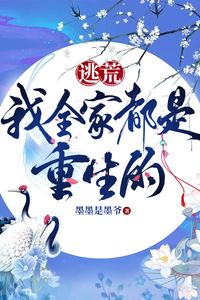
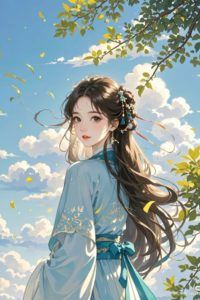
Su Yin, a woman who had lived and died tragically in a rural village during a refugee invasion, awakens in her sixteen-year-old body with her memories of a past life on a different planet fully restored. She realizes she has been reborn, along with her mother and sister, Su Baozhu, granting them a second chance to alter their fates. In their previous life, the village was overrun by starving refugees who slaughtered the inhabitants. Su Yin was stabbed to death, and her soul witnessed the brutal dismemberment and cannibalism that followed. Her family had abandoned her mother and sisters to their fate, sending them back to retrieve non-existent valuables so they could be captured. Now, with only two weeks before the disaster strikes, Su Yin resolves to survive and protect her biological mother, rejecting the patriarchal Su family that mistreated them.

Immediately after regaining consciousness, Su Yin conceals the truth of their rebirth from the rest of the village, knowing that revealing such knowledge would lead to accusations of possession and death. She tests her sister’s involvement by having her follow Su Yin to the county town, confirming that Su Baozhu also remembers the horrific future. The two allies begin procuring essential supplies, using hidden savings and a silver hairpin to purchase rice, flour, medicine, and weapons. During a trip to a haunted cave to store their goods, Su Yin discovers the skeleton of a wealthy woman hidden in a secret compartment, along with a jade bracelet and two hundred taels of silver ingots. This unexpected windfall provides the capital necessary for their escape preparations.

Su Yin transforms her appearance, buying new clothes to hide her peasant status and purchasing mules and a cart for transportation. She also acquires long knives and short blades for self-defense. Recognizing that she cannot survive alone, she seeks the help of her maternal uncles, who are kind and capable. She warns them of the impending refugee crisis based on information from a merchant, urging them to prepare for evacuation. Meanwhile, Li Rui, the second son of the Li family, returns to the village to warn the elders, but his warnings are dismissed. Su Yin’s uncle, Su Xiaoyong, a local scholar, counters Li Rui’s claims with rumors that the imperial court has sent a powerful marquis to restore order, causing the villagers to trust him over the outsiders.

Despite the village’s skepticism, Su Yin and her mother prepare to leave. Su Yin feigns a leg injury to gain permission to stay at her uncle’s house, allowing her to continue shopping and processing food supplies, such as rendering lard and making jerky, without suspicion from her domineering grandmother. The narrative highlights the stark contrast between the supportive maternal family and the abusive paternal family. As the deadline approaches, Su Yin accumulates more supplies, including meat and flatbreads, while maintaining a low profile. The story establishes a tense atmosphere of impending doom, with Su Yin and her allies racing against time to escape the village before the refugees arrive, while the majority of the villagers remain oblivious to the danger due to the influential uncle’s misleading information.

Latest Release
DateGroupRelease
2026-08-11shanghai fantasy c200
2026-08-11shanghai fantasy c199
2026-08-11shanghai fantasy c198
2026-08-11shanghai fantasy c197
2026-08-11shanghai fantasy c196
2026-08-11shanghai fantasy c195
2026-08-11shanghai fantasy c194
2026-08-11shanghai fantasy c193
2026-08-11shanghai fantasy c192
2026-08-11shanghai fantasy c191
2026-08-11shanghai fantasy c190
2026-08-11shanghai fantasy c189

Community Reviews

Rating(3.4 / 5.0, 29votes)
5 stars
7(24%)
4 stars
6(21%)
3 stars
9(31%)
2 stars
7(24%)
1 stars
0(0%)

Popular reviews

... Read More
I need to talk about Su's mother because honestly she had one of the most powerful moments in these chapters and I don't think people give her enough credit. Think about the position she's in. She's married into the Su family, which is clearly a patriarchal, extended-family setup where the eldest branch (Su Xiaoyong's line) holds all the power. Her husband is a pushover — literally says "I don't know" when asked to take a side. Her father-in-law and mother-in-law are hostile. The second and third concubines are actively hostile, adding fuel to every fire. And yet when Su Xiaoyong starts tearing down Su Yin's argument, who speaks up first? Su's mother. "I believe what Yinyin and Li Rui said." Not because she's brave — I think she speaks out of sheer desperation and fear. She's watching the people she loves walk toward a disaster and nobody else will stop them. And then Su Xiaoyong immediately turns on HER, calling her out for indulging an ignorant girl, questioning her motherhood. That's a mother being attacked for trying to protect her child, and it made my blood boil. The dynamic between Su Yin and her mother is also fascinating. When they're packing to leave and Old Mrs. Su tries to block them, Su Yin gives her mother a wink. They both know the three-day excuse is a lie — they're never coming back. That silent communication between them, that shared understanding, that's the kind of relationship that gets built through survival. They're allies in a house that wants them dead, slowly or quickly.
... Read More
"It's tedious to grill meat like this." "It may be tedious, but it's worth it for the delicious flavor." I literally laughed out loud at this exchange because the contrast between these two lines and everything that follows is absolutely brutal. One moment you're reading about Su Yin expertly handling meat skewers over a fire, sharing barbecue with the whole camp, kids with big wet eyes begging for tastes, everyone feeling that warm sense of camaraderie under the stars... and then BOOM. Horse hooves. Carriages flying past. A civil uprising. The city gates slamming shut. All that warmth and comfort just evaporates in one chapter transition. The way the author structures this is masterful. The barbecue scene isn't just filler — it's deliberately making you feel safe, making you settle into this cozy survival-story rhythm. Su Yin using star anise and cinnamon as both medicine AND seasoning, her secret spice blend, the way little Yanggui tries to steal a taste with those big puppy-dog eyes... all of it builds a world where these people are actually enjoying something. And then the Yuzhou Civil Uprising hits like a freight train. What I love is how Su Yin's prophetic dream ability quietly threads through all of this. She's certain the dream was precognitive, she's waiting for it to come again, and when the uprising happens, she's completely calm about her own family's safety because "they were fine in the last life, and they will definitely be fine in this life." That single line carries so much weight — she's carrying knowledge we don't fully understand yet, and it makes every tense moment around her feel like she's playing a different game entirely. The pacing from the slow mountain descent to the frantic rush toward Fushun County is perfectly calibrated. Half a day lost to a mountain tiger, then hours of desperate travel. The author doesn't rush the transition — we feel every mile. And that ending, with everyone forced to decide what to throw away and what to keep, is the kind of moment that makes you immediately need the next chapter. How much do you sacrifice when survival is on the line? I need to know what they leave behind.
... Read More
Let me be blunt: the refugee invasion is a ticking bomb, but the real conflict in this story is sitting at the dinner table. Old Mrs. Su. That woman is more dangerous than any marauder because she holds all the power and she doesn't even need to raise her voice to destroy people. The stakes are layered in a way that keeps me on edge. On the surface, it's survival — can Su Yin, her mother, and her sister escape a village invasion? But beneath that, the stakes are about information control. If they tell anyone about the rebirth, they'll be burned as possessed. If they don't tell anyone, they'll be forced to work until they collapse and have no resources to prepare. Every choice is a trap. What makes the conflict so tense is that Su Yin knows exactly what's coming but can't prove it. She can't say "I saw us die" without risking death herself. She has to manipulate events from the shadows — sending her mother to test Baozhu, going to town secretly, pretending to be sick. The suspense comes from watching her navigate a minefield where one wrong word could get her killed by her own family. The refugee horror is described in such visceral detail that the external threat feels immediate and real. But the internal threat is worse because it's personal. The uncle who sent Su Yin's mother and Baozhu back to the house to die. The grandmother who would rather see her grandchildren starve than spend money on medicine. The family that abandoned them in the previous life and will do it again unless Su Yin changes the equation. I'm also fascinated by the moral stakes. Su Yin is clearly planning to save herself and her immediate family, but what about the rest of the village? Li Rui's family left and survived. What about the people who stayed? The story hasn't addressed this yet, but it's going to — and I have a feeling Su Yin's choice here will define who she becomes. The tension is maintained brilliantly because every scene raises the question: how much time do they really have? Two weeks feels like a lot, but in a world where every hour is spent managing the family's hostility and hiding their knowledge, those two weeks are going to feel like an eternity. I need to know what happens next.
... Read More
Okay, let me just say it: the opening hit me like a truck. A girl gets stabbed to death by refugees, watches her body get devoured, and then wakes up in her own bed with all her memories intact? That's not just a rebirth trope — that's a full-body shock to the system. And the author doesn't waste a single page. Chapter 1 establishes the horror, the rebirth, and the central question in one brutal sitting. But what I found genuinely interesting is how the plot layers the mystery. Su Yin isn't the only one who was reborn — her mother confesses to having the same nightmare, and Su Yin deliberately tests her sister Su Baozhu by sending her to town while secretly watching for her to follow. When Baozhu does follow, the whole dynamic shifts. This isn't a lone protagonist with foreknowledge; it's a fractured family where trust is the real question. The subplot with Old Mrs. Su is already painting the real villain. The grandmother who yells about money, who would call them possessed if they spoke the truth, who clearly favored the second son's family over her own grandchildren — she's the domestic antagonist, and she's far more terrifying than any refugee horde. The author is smart about this: the external threat (refugees) and the internal threat (family) are running on parallel tracks. I'm also intrigued by the Li Rui thread. In the previous life, Li Rui warned everyone and most people called him a coward. He left with his family and survived. Su Yin's plan to use his return as proof of the nightmare being real is a clever narrative device — it gives the story a built-in verification mechanism that also sets up future conflict when the villagers inevitably refuse to believe them again. The plot structure so far is tight. No filler, no unnecessary exposition. Every scene advances either the survival plan or the family conflict. And that ending with Su Baozhu saying "I want to live" — that's the story's thesis statement right there.
... Read More
The dialogue in these chapters is genuinely sharp and I want to highlight a few exchanges that really showcase how each character uses words differently. Su Yin's confrontation with her uncle is my favorite piece of dialogue here. When Su Xiaoyong tries to shut her down with family hierarchy — "Does she still think of me as an elder in her eyes?" — Su Yin fires back with: "Uncle, we are talking about something that concerns the fate of everyone. As a member of the village, Uncle Zheng asked me to say it. I just asked, uncle, why are you so angry? Made it up? Why are you so angry if you let me expose it? Just tell people slowly, why did you use a big hat to block my mouth?" This is amazing. She doesn't get angry. She doesn't match his aggression. She just asks calm, logical questions that expose his real motivation: he's not protecting the village, he's protecting his own credibility. If she's right, he's wrong. And he knows it. The way she dismantles him without raising her voice — that's a character who understands power dynamics at a deep level. Then contrast that with Su Xiaoyong's speech to the villagers. He's performative. He enjoys the attention. "He coughed lightly and said..." The author gives us that physical detail and it tells us everything about the man. He's not concerned about the village — he's concerned about being seen as the one who knows best. And Li Rui's final line to the elders: "I just hope that what I said is false." That's not defeat. That's genuine, human concern. He's not angry that they didn't believe him. He's sad that they might not survive because of it. The simplicity of that line carries so much weight.
... Read More
I need to talk about the sheer panic in these chapters because holy crap the stakes escalate so fast and I was gripped the entire time. It starts with a simple question — "What's going on with these people?" — and within pages we're dealing with a full-blown civil uprising where mobs are "massacring many counties and villages." The leading guard's casual delivery of this information is what makes it so chilling. He doesn't drama it up. He just says "Victims from Yunzhou, Ganzhou and other places have a civil uprising in Yuzhou, and the mob is heading towards Meizhou" and rides off. That nonchalance is terrifying because it means this is NORMAL for this world. People are dying by the thousands and the messenger doesn't even break stride. Then Fushun County closes its gates. The image of officials shouting "Close the city gate, close the city gate" while refugees scramble to get through before it's too late — I could literally hear the chaos. The old man begging to get in to find a doctor for his grandson and getting pushed away with "Even if you go in, you can't get out even if you call the doctor" is one of those lines that just sits with you. The authorities aren't protecting people — they're containing them, and the refugees are caught between two disasters. But the real stakes moment comes when Su Yin points out the mathematical impossibility of their situation: the rich escape fast in carriages, the ordinary people are dragging carts full of belongings on foot, and the mob will catch up. Every minute of delay is an added danger. This is where the conflict shifts from external threat to internal crisis — not just running FROM something, but having to make impossible choices about what to leave behind. Yang Li's speech to the group is perfect because it doesn't sugarcoat anything. He lays out the brutal arithmetic: slow people die. Those who hold onto their belongings too tightly won't survive. The silence that follows before someone asks "do you want us to throw away all our belongings?" is the sound of an entire community confronting its own mortality. Dazhuang's refusal to let go — "These things are all important things" — is so human. Those belongings represent years of labor, security, identity. Asking people to abandon them isn't just practical advice, it's asking them to mourn before they even know if they'll survive. The tension here is absolutely razor-thin.
See all reviews

Characters

See all characters

Custom lists

See all custom Lists