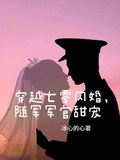
Flash Marriage in the 1970s: Pampered by the Military Officer
+Add to Custom List
Genres:
Novel Info

Summary

... Read More

Yang Qingyan, a survivor of a devastating apocalypse, transmigrates into the body of a woman who suffered to death a year prior due to severe neglect and abuse by her in-laws. Her new husband, Mu Nanhe, is a dedicated battalion commander who had been away on continuous missions for the past year. Although he had arranged for financial support to be sent home, his family withheld the money, leading to the original host's starvation. When Yang Qingyan arrives at the military compound to find him, she is emaciated and weak, carrying deep resentment toward the man who failed to protect her. Mu Nanhe is shocked and guilt-ridden upon discovering her condition, realizing his family betrayed his trust. He moves her into the family quarters, the former residence of a retired commander, and vows to fulfill his duties as a husband.

The couple’s relationship begins with significant emotional distance. Yang Qingyan remains cold and guarded, while Mu Nanhe struggles to bridge the gap caused by his year-long absence. Their dynamic shifts when Yang Qingyan demonstrates her exceptional medical skills, which she honed during the apocalypse. She successfully treats a critically ill child in the compound using acupuncture and herbal medicine, earning the respect of her neighbors. This act of kindness begins to soften the community’s perception of her, though it also attracts the jealousy of Wei Lan, a young woman from a military performance troupe who harbors romantic feelings for Mu Nanhe. Wei Lan’s hostility creates early tension, but Mu Nanhe firmly rejects her advances, prioritizing his wife.

As Mu Nanhe moves back into the family quarters to live with Yang Qingyan, he attempts to rebuild their connection through daily acts of care, such as cooking meals and managing household chores. Yang Qingyan, meanwhile, uses her unique wood-element ability to slowly heal her damaged body and absorb natural energy from the mountains. A pivotal moment occurs when Mu Nanhe injures his back protecting Yang Qingyan from a falling child. His selflessness deepens her respect for him, and she tends to his wounds with genuine concern. This incident marks a turning point in their relationship, as the ice between them begins to melt.

Conflict escalates when Wei Lan falsely accuses Yang Qingyan of pushing a child into a river, leading to a public confrontation. Despite the accusations and the initial disbelief of the child’s mother, Yang Qingyan saves the drowning boy using CPR and her abilities. Mu Nanhe trusts her completely and supports her during the crisis. The truth eventually emerges, clearing Yang Qingyan’s name and exposing Wei Lan’s malice. Following this, Yang Qingyan experiences physical changes, including severe menstrual pain, which Mu Nanhe tenderly alleviates. During this vulnerable moment, she dreams of the original host, who gives her blessing to live her life fully. The story concludes with Yang Qingyan accepting her new identity and future, as she and Mu Nanhe begin to build a genuine partnership based on mutual care and respect in the peaceful 1970s setting.

Latest Release
DateGroupRelease
2026-08-11shanghai fantasy c75
2026-08-11shanghai fantasy c74
2026-08-11shanghai fantasy c73
2026-08-11shanghai fantasy c72
2026-08-11shanghai fantasy c71
2026-08-11shanghai fantasy c70
2026-08-11shanghai fantasy c69
2026-08-11shanghai fantasy c68
2026-08-11shanghai fantasy c67
2026-08-11shanghai fantasy c66
2026-08-11shanghai fantasy c65
2026-08-11shanghai fantasy c64

Community Reviews

Rating(3.8 / 5.0, 44votes)
5 stars
12(27%)
4 stars
16(36%)
3 stars
10(23%)
2 stars
6(14%)
1 stars
0(0%)

Popular reviews

... Read More
Okay, can we just talk about how Mu Nanhe and Yang Qingyan are basically the same person trauma-wise? I need a minute. Both of them grew up in families where they were completely undervalued, overworked, and treated like disposable labor. And the way the author mirrors their backstories is just... devastating in the best way. Mu Nanhe talking about going hungry while his brother got all the food, developing calluses on his hands at a young age, falling into a hunter's trap and no one coming to save him — he literally crawled out of that forest alone, just like Yang Qingyan crawled out of her life alone. But here's what got me: the moment she says 'From now on, you have me.' That's not just a sweet line. That's two people who have never had anyone in their corner suddenly becoming each other's person. And Mu Nanhe's response — just holding her hand, applying slight pressure — says everything he can't put into words. He's never been held before. He's never been protected. And then the kiss scene? The fact that he asks permission? 'Wife... can I kiss you?' He's so gentle, so careful, like he's afraid she'll break or he'll do it wrong. And she nods because she can't bear to see him look so hurt and lonely. That's the whole relationship in one moment — she responds to softness, he gives her everything but never demands anything.
... Read More
This batch is a masterclass in pacing variety. It opens with this slow, almost meditative sequence—dinner in silence, the bankbook exchange, Mu Nanhe lying awake thinking about her scent. The author lets you breathe. You're settling in, getting comfortable with this new domestic rhythm. And then BOOM, a kid comes charging around a corner and everything changes. The transition from the morning run (which itself goes from peaceful to exhausting when Yang Qingyan can't keep up) to the accident is so sudden it mirrors real life. One moment they're walking together, the next they're on the ground bleeding. The author doesn't slow down to warn you. It just happens, and that's what makes it work. Then the pacing shifts again into the confrontation with Battalion Leader Wang's wife. This is where the story picks up speed—dialogue-heavy, tense, with neighbors gathering and voices raising. It's a completely different energy from the quiet clinic scene that follows. Yang Qingyan doing acupuncture for Little Hu is almost meditative again, a return to calm after the storm. But that ending! 'Do you know anywhere n...' CUT TO BLACK. The author leaves her sentence unfinished and I am SCREAMING. This is exactly the kind of pacing that makes you immediately open the next chapter. Every section has a different rhythm—quiet, action, conflict, tenderness, cliffhanger—and none of them feel rushed or dragged out. The author trusts the reader to handle tonal shifts without hand-holding.
... Read More
I have to talk about how good the dialogue is here, especially the quiet moments. Most romance novels go for big declarations, but this author understands that the most powerful lines are the ones left unsaid. Take Mu Nanhe's request: 'Wife... can I kiss you?' That's it. That's the entire line. He's a trained soldier, a battalion commander, someone who faces danger without flinching — and he's asking permission like it's the most terrifying thing in the world. The vulnerability in that question is devastating. And her nod? No words needed. Then there's the playful banter later: 'Wife... can you call me Nanhe? Or husband? Or Brother He?' And she immediately replies 'I'll call you Uncle Mu' and runs away. This is the kind of dialogue that makes you smile out loud. It feels real — like a couple that's comfortable enough to tease each other. The shift from 'Battalion Commander' to 'Wife' to playful nicknames tells you everything about how their relationship has evolved. And Yang Qingyan's line to her parents — 'From the moment you sold me to the Mu family, you lost the right to be my parents.' Short. Final. No room for argument. Her voice has changed throughout the story and you can hear it in every word she speaks now.
... Read More
I keep coming back to the imagery in this passage and I think the author is doing something really clever with symbols without being heavy-handed about it. Let's talk about the chicken soup. They go to a neighbor's village to BUY a chicken. Not fancy ingredients. Not imported ginseng from some mystical mountain. A regular chicken from a regular villager who "quickly herded out all the chickens he raised and let them choose." Yang Qingyan picks a healthy hen with glossy feathers. She cleans it, slices the ginseng, puts it in a clay pot. And the result is this golden broth that makes Mu Nanhe feel, for the first time, what having a home means. The clay pot is interesting — it's traditional, slow, requires patience. You can't rush it. And the ginseng — that's her special ability subtly woven into the domestic. She's nourishing him without him knowing. Then there's the bullet scar. A wound that should be ugly becomes a map of survival. And the river — she jumps into freezing water, the same water that could kill her, to save a child who belongs to someone else. Water as both danger and salvation. And the period scene — her body rejecting the cold, vomiting, pain — but then she uses her ability to heal herself while Mu Nanhe makes brown sugar water and massages her stomach. The body as a battlefield and a sanctuary at the same time. The original host's dream departure is the biggest symbol though. She appears thin and haggard, says she doesn't resent him, and disappears. The body is now fully Yang Qingyan's. No more ghost of the previous owner. Just her, and Mu Nanhe, and the clay pot of soup waiting on the stove.
... Read More
The confrontation scene with Li Zhaodi is where this batch earns its tension. On the surface it's about a kid who hurt someone, but the stakes are so much bigger. Yang Qingyan isn't just seeking an apology—she's establishing boundaries in a community where power dynamics matter. Battalion Leader Wang's wife knows this, which is why she immediately tries to shame Yang Qingyan for 'making a fuss.' The neighbors gathering, the raised voices, the threat of shutting the door in her face—it's all escalating in real time. What makes this scene work is that Yang Qingyan doesn't back down, but she also doesn't lose control. She presses her hand against the closing door and delivers this line: 'If someone makes a mistake, they should take responsibility. I can't let Mu Nanhe be injured for nothing.' That's not just about the apology. That's her drawing a line in the sand. She's saying: my husband's safety matters, and I will fight for it. The stakes are personal but also communal. If Yang Qingyan lets this go, what does that say about her? About Mu Nanhe's status? About whether anyone in this compound will stand up to Li Zhaodi's bullying? The child's apology is small—'S-sorry...' barely audible—but it's the victory. Not because it's satisfying (it's kind of underwhelming honestly), but because it proves that accountability is possible even against someone as unreasonable as Li Zhaodi. And then there's the physical stakes from the fall itself. Mu Nanhe's back is scraped open, bleeding, and Yang Qingyan has to be the one to get him to the clinic. The vulnerability of that moment—him unable to protect himself, her having to take charge—raises the emotional stakes dramatically. They're no longer just two people sharing a house; they're people who've now seen each other at our most fragile.
... Read More
The entire cooperative trip is basically a masterclass in efficient storytelling. In one location, the author manages to: 1. Establish Yang Qingyan's practicality (calculating fabric measurements, choosing bedsheets and curtains) 2. Introduce the rival (Wei Lan) 3. Create public confrontation 4. Show Mu Nanhe's growing protectiveness 5. Reveal Yang Qingyan's hidden skills through neighbor gossip 6. End with domestic imagery that hints at future development That's six plot functions in one scene and it doesn't feel rushed at all. The author moves through it like a camera panning—starting with fabric, drifting to clothing, catching Wei Lan in the periphery, then zooming in on the confrontation, then pulling back to the neighbors gossiping, then ending on the quiet domestic moment. The plot twist I didn't see coming was how the neighbors' gossip works. While Yang Qingyan and Mu Nanhe are carrying bags inside, completely unaware, the neighbors are already turning her into local legend. "She saved Little Hu with acupuncture!" This is how reputation builds in a closed community like a family compound—it spreads through women's networks faster than anything else. Also, the 47 yuan detail. In an era where that's a significant amount, Mu Nanhe pays without hesitation. This isn't just plot convenience—it's character revelation. He has means, he's willing to spend them on her, and she notices. Small details like this accumulate into something that feels like the beginning of trust.
See all reviews

Characters

See all characters

Custom lists

See all custom Lists