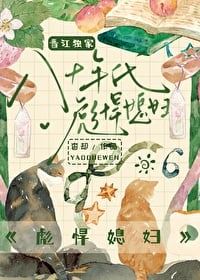
Fierce Wife of the 1980s
+Add to Custom List
Genres:
Novel Info

Summary

... Read More
Xu Xiangjuan wakes up in 1985 after a bus accident that killed her in her previous life. She finds herself in the body of a new mother with a two-month-old son, Niuniu, and a three-year-old daughter, Guagua. Her husband, Zhou Chengning, is a Tsinghua University graduate working as a middle school teacher. In her past life, Zhou Chengning died young from illness, leaving Xu Xiangjuan to raise the children alone while facing financial ruin and family estrangement. Determined to change their fate, she resolves to improve their quality of life and ensure her husband survives. The story begins with Xu Xiangjuan taking charge of household management. She kills a chicken for the first time, a significant event in their frugal life, and cooks it with dried mushrooms. Her daughter Guagua is delighted, having only eaten chicken once before at her grandmother's house. Xu Xiangjuan sends portions to her parents, despite her mother Wu Caifeng's constant criticism of Zhou Chengning as a poor match. Wu Caifeng prefers a wealthier local man, Wang Qiang, but Xu Xiangjuan insisted on marrying Zhou Chengning for his education and character. Xu Xiangjuan's priorities shift from mere survival to strategic planning. She decides to buy a bicycle for Zhou Chengning to reduce his exhausting daily walks to work. She also plans to have a custom bed made for Niuniu to prevent accidental suffocation during sleep. Her husband is initially confused by her sudden kindness, fearing she might be leaving him, but she reassures him that she is investing in their future together. She gives him a small monthly allowance, a gesture that surprises him but also strengthens their bond. The narrative explores the family dynamics with Zhou Chengning's bloodsucking parents, who demanded financial support despite his estrangement from them. Xu Xiangjuan firmly rejects their demands, protecting her husband's interests. She also manages her own natal family, guarding gifts sent by her siblings from being taken by her aunt's family. Her sharp tongue and decisive actions earn her the reputation of a shrew, but she uses it to secure her family's well-being. As autumn approaches, Xu Xiangjuan focuses on preparing for winter. She knits clothes for her children and preserves vegetables. She takes Guagua and Niuniu to visit Zhou Chengning's grandfather, a kind elderly man who lives in poverty compared to his other children. This visit highlights Zhou Chengning's deep affection for his grandfather and his resentment toward his neglectful parents. Xu Xiangjuan supports this decision, recognizing the importance of family loyalty beyond the toxic elements. The story direction moves toward economic improvement and health preservation. Xu Xiangjuan writes to her brother for a bicycle ticket, aiming to secure the purchase before prices rise. She continues to cook nutritious meals, balancing meat and vegetables, and ensures Zhou Chengning eats well. Her colleagues at school notice the change in his diet and demeanor, expressing surprise at his wife's apparent transformation. Zhou Chengning defends her, attributing the change to her desire for a better future. Key turning points include the decision to buy the bicycle, the construction of Niuniu's bed, and the visit to the grandfather. These actions signify Xu Xiangjuan's active role in reshaping their destiny. She addresses the root causes of their past suffering: poverty, poor health management, and family exploitation. By taking control of finances and household decisions, she creates a stable environment for her family. The narrative maintains an objective tone, focusing on daily life details and interpersonal relationships. Xu Xiangjuan's past life memories serve as a guide for her present actions, but she does not rely on supernatural elements. Instead, she uses her knowledge of future events to make practical decisions. The story emphasizes the importance of communication, mutual respect, and proactive planning in building a successful family life. Through her efforts, Xu Xiangjuan aims to break the cycle of hardship that defined her previous existence, ensuring a healthier and more prosperous future for herself, her husband, and her children.

Latest Release
DateGroupRelease
2026-08-11shanghai fantasy c2
2026-08-11shanghai fantasy c1

Community Reviews

Rating(3.4 / 5.0, 24votes)
5 stars
5(21%)
4 stars
5(21%)
3 stars
8(33%)
2 stars
6(25%)
1 stars
0(0%)

Popular reviews

... Read More
Okay so I need to talk about this rebirth setup because WOW. The way the author reveals Xu Xiangjuan's past life isn't some big dramatic exposition dump — it's woven into these quiet domestic moments and it works so well. She's just having this family meal, stewed chicken, and suddenly we get this entire alternate timeline where her husband dies when Niuniu is 13, the family goes broke, and her daughter Guagua basically tells her to her face that nobody listens to her anymore. The line that destroyed me: "Except for when her husband passed away, Xu Xiangjuan had cried for a few days, but after that, she raised the two children alone as a widow and didn't cry again. But after this argument with her daughter... she couldn't help but cry." That's not plot mechanics, that's just human truth. The author lets us piece together the past life through Xu Xiangjuan's memories and reactions rather than telling us outright. She remembers her husband's salary down to the yuan, she remembers the bus schedule, she remembers the exact sequence of his illness — all of this builds this incredible sense that she really did live this other life. And now she's back, and the stakes are suddenly so much higher because we know what's coming. The plot isn't just "woman reforms her life" — it's "woman with foreknowledge tries to prevent a tragedy while navigating present-day family dynamics." The chicken-killing scene with her mother is a perfect microcosm too. Her mother scolds her for wasting chickens, and Xu Xiangjuan just... doesn't care anymore. She's already lived through poverty and loss. This small act of defiance — cooking four chickens without apologizing — is the plot telling us everything about her transformation.
... Read More
The atmosphere in these chapters is insane. I can literally smell the stewed chicken and the kerosene lamp smoke. The author doesn't over-describe — they just drop these specific, grounded details and the whole world snaps into focus. Let me paint you a picture: Zhou Chengning, a Tsinghua graduate turned middle school teacher, sleeping in a bed that's somehow both cramped and warm, four people under one blanket, with the baby between the parents like a little human sandwich. "Her husband, being tall with long legs, was better off sleeping under one blanket by himself." I'm not okay. And then the detail about the bus — one round trip a day, leaves at 8 AM for the county, returns at 4 PM, doesn't stop in between. "The bus was almost as if it didn't exist." His wife realizes he walks over half an hour each way, every day, and thinks: "No wonder her husband was thin — it was from all that walking." That's it. That's all the worldbuilding you need. The 1985 setting isn't just backdrop — it's alive. Grain tickets, oil tickets, a bicycle costing over a hundred yuan being a massive deal, the sister's dowry of "three turns and one bell with 32 legs" (which I'm guessing is furniture). The courtyard with the vegetable garden, the maternal grandmother's house where they have chickens roaming around, the carpenter Chen in the village. Every object has weight and history. The kerosene lamp burning in the bedroom at night, the egg drop soup that's basically flavorless water compared to the chicken, the pickled dried radish that Xu Xiangjuan made herself. This isn't a generic historical setting — it's a specific time, a specific place, and the author makes you feel like you could reach out and touch it.
... Read More
The kitchen scene in chapter 2 is genuinely one of the most vivid sensory passages I've read in a while. Let me just... sit with it for a second. The lard hitting the hot iron pan — sizzling and crackling. The ginger, chili, and garlic being sautéed until fragrant. The rice pot making that faint sizzling sound that tells you it's almost done. The smoke filling the kitchen. I could literally smell this. It's not just description for description's sake; every detail grounds you in this specific time and place. And the house itself — wooden beams on the ceiling, a double room divided into inner sleeping quarters and an outer guest room, a small storage room for dried goods and pickles, the clock on the kitchen wall instead of a watch, the string of dried chilies hanging by the door. These aren't random details. They build a world that feels lived-in and real. What I love most is how the author uses food as a lens for the era. The fact that this chicken is such a big deal — that they only had four egg-laying hens and normally you'd trade a chicken, not eat one — tells you everything about the economic reality of 1985 rural China without any exposition dumps. The dried mushrooms, the pickled radish, the fact that rice is "the most filling" part of the meal. This is a family that knows scarcity. The scene where Guagua stands on a stool trying to reach the chicken on the table — that's such a specific, cinematic image. Her dad has to lift her up and secretly give her two pieces because "if Mom sees, she'll scold you." This little act of rebellion from the father is adorable and heartbreaking at the same time. I also appreciate how the author handles the layout — the kitchen, the outer room, the inner room. You always know where everyone is and what they're doing. It's like a stage play. Very efficient storytelling.
... Read More
That chicken. Let me just say that word again. The chicken. Because this chicken is literally the symbol of everything this story is about. In the original timeline, that chicken went to the mother-in-law's house. It was traded, not consumed. It was currency, not food. And Xu Xiangjuan — her former self — would've thought the same way. Being full was already a luxury, who dares dream of eating meat? But now, reborn with a different mindset, she's like: we're eating this chicken. Both my daughters are going to enjoy it. And this tiny decision — to cook the chicken instead of trading it — is actually massive. It represents her entire transformation from scarcity-minded to abundance-minded. From surviving to living. The non-laying hen is another layer. In the original timeline, it stopped laying eggs and was sent away. This time, she decides to just eat it. Why waste something that still has value? This is such a practical, almost philosophical shift. Her former self would've been too proud or too constrained by tradition to do this. And then there's the garlic and ginger. Guagua being tasked with peeling garlic and cleaning ginger — these are small, domestic details that somehow carry so much weight. This is a mother teaching her daughter to participate, to contribute, to be part of the family economy. It's not just about feeding them; it's about building a different kind of household than the one she grew up in. The egg drop soup she makes only for herself is another interesting detail. She's been so focused on the family that she forgot about herself. But this time, she's claiming something for herself too. Small acts of self-care as rebellion. I'm already thinking about what other symbols are going to show up. The tour bus accident that brought her here — is that just a plot device or does it mean something deeper about the randomness of second chances?
... Read More
The stakes in this book are deceptively simple and that's what makes them so devastating. On the surface, Xu Xiangjuan's conflicts are everyday stuff: her mother-in-law disapproves of her husband, her mother scolds her for cooking too many chickens, her daughter has a stubborn attitude, money is tight. But underneath all of that is this massive, looming conflict — she knows her husband will die young in the original timeline, and she's fighting against that fate with everything she has. The bicycle scene is where this becomes crystal clear. She's not just being sweet — she's making a calculated decision because she knows his walking will contribute to his weakened health. "Her husband had started getting sick two years later, and now she had to take precautions." Two years. She has two years to change everything. And the internal conflict is just as intense. She's a woman who spent her first life controlling everything because she had no one else, and now she's learning to let go. Guagua's accusation cuts deep: "The dad who listens to you is no longer here. Who are you going to vent your temper on?" That's not just a child's anger — that's the truth of a woman who used her grief as a weapon and didn't even realize it. The external conflict with her mother is also layered perfectly. Wu Caifeng's constant criticism — "What are you here for again? Did you owe us something in your last life?" — isn't just mean parenting, it's the voice of a woman who never approved of her daughter's choices, including marrying a "door-in son-in-law." But Xu Xiangjuan has changed. She brings the chicken anyway. She doesn't argue. She just... leaves. The stakes keep rising too. We're not just watching a woman improve her family's material conditions — we're watching her fight against the erosion of her marriage, against her daughter's resentment, against poverty, against a fate she's seen play out before. Every small decision — buying the bicycle, planning the baby's bed, saving the wage slips — is a battle against the future she's trying to rewrite.
... Read More
Okay so I need to talk about this husband-wife dynamic because it's actually really interesting and I didn't expect it. Xu Xiangjuan wakes up and her very first instinct isn't to panic or cry or anything — it's to immediately start barking orders about the baby and then ask her husband to kill a chicken. And this is the moment where everything shifts, right? Because in the original timeline, she would've just sent that chicken to her mom's house. But this time she's like, no, we're eating it. What's wild is that Zhou Chengning is just... going along with it. He's stunned but doesn't argue. The text says he "never disagreed." That's such a loaded detail. Is he submissive? Is he genuinely a good guy who's just accommodating? Or is there something else going on? And then there's this whole backstory about her matchmaking requirements — high school education, knows how to kill chickens, she manages all the money, he lives in her village. She basically designed this husband like a product. And the matchmaker actually delivered. But does he love her? Does she love him? The text doesn't say explicitly but there's this undercurrent of care — he's gentle with the kids, he offers to help in the kitchen, he brings Guagua along despite his mother-in-law's obvious dislike of him. The mother-in-law thing is fascinating too. Her mom wanted her to marry Wang Qiang — rich family, but also smelly, uneducated, boastful. Xu Xiangjuan rejected him for being physically repulsive (body odor!). But now her own mom resents Zhou Chengning for some reason. What's the actual conflict there? The text hints at it but doesn't fully explain. I'm already curious. Also the way Guagua has learned to navigate her mom's strictness — she doesn't dare ask anymore, she tries to solve problems on her own. That's such a sad detail about a THREE-YEAR-OLD. This mom is strict to the point where her own daughter is walking on eggshells. No wonder Xu Xiangjuan is determined to be different this time around.
See all reviews

Characters

See all characters

Custom lists

See all custom Lists