Summary

... Read More

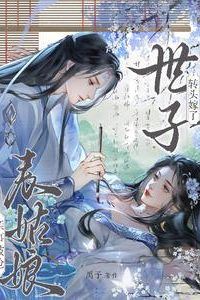
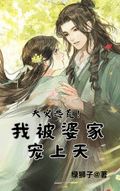
Shi Jianli, an orphan who lost both parents at a young age, came to live with her aunt, Qiao Ruoying, at the prestigious Anguo Gong Manor five years ago. Her aunt arranged a marriage for her with Qiao Jingchuan, a Juren degree holder from her maternal clan. However, just before the wedding, Qiao Jingchuan publicly declared his love for Ming Yueshu, the illegitimate daughter of the Second Master, and attempted to force Shi Jianli to relinquish her place in the betrothal. Ming Yueshu and Qiao Jingchuan pleaded passionately before the family matriarch, the Old Madam, claiming their love was genuine and unavoidable. The Old Madam, initially furious, ultimately punished Ming Yueshu by sending her to work at the family farmstead for a month and confined her mother, Su Yiniang, to their quarters. Shi Jianli calmly agreed to break off the engagement, viewing the incident as a fortunate test of her fiancé's character rather than a tragedy.

Following the broken engagement, Shi Jianli maintained a composed and detached demeanor, focusing on her studies and managing the family's commercial interests, which included profitable shops like the Hua Si Meng clothing house. She shared a close bond with her cousin, Ming Zhouhe, who fiercely protected her reputation and later ambushed and beat Qiao Jingchuan to ensure the former fiancé would not speak ill of her. Shi Jianli also maintained a respectful distance from Ming Zhaohuan, the heir to the Anguo Gong title and a renowned military general known as the Jade-Faced General. Their interactions were formal, governed by strict social hierarchies, though Ming Zhaohuan showed subtle interest in her competence and grace.

The narrative introduces Ji Rangzhou, the Civil Star and Chief Minister of the Court of Judicial Review, who is betrothed to Shi Jianli’s close friend, Ming Yuelin. Ji Rangzhou and Ming Zhaohuan are considered the twin stars of the dynasty, balancing civil and military power. During a chance encounter at a teahouse, Shi Jianli observed both men, noting the contrast between Ming Zhaohuan’s gentle scholarly appearance and Ji Rangzhou’s dignified composure. The social circle of the Anguo Gong Manor revolves around these prominent figures, with family dynamics complicated by the ongoing illness of Ming Zhaohuan’s betrothed, the eldest daughter of the Hongnong Yang Clan, who is gravely ill and unlikely to survive.

Shi Jianli’s aunt, Qiao Ruoying, begins to consider new marriage prospects for her niece, impressed by Shi Jianli’s managerial skills and the financial independence she has achieved through her businesses. The Old Madam and the Duchess Yuan Yuhe, Ming Zhaohuan’s mother, are concerned about the heir’s marital status due to the potential collapse of his engagement with the Yang family. Meanwhile, Ming Yuelin expresses frustration with her own arranged marriage to the stern Ji Rangzhou, contrasting his rigid personality with the warmth of her brother Ming Zhaohuan. The story establishes a complex web of familial obligations, social expectations, and unspoken tensions within the noble household.

As the engagement with Qiao Jingchuan is formally dissolved, Shi Jianli’s future remains open, with her aunt promising to find a more suitable match. The narrative highlights the stark contrast between Shi Jianli’s pragmatic acceptance of her situation and the emotional turmoil experienced by those around her, particularly Ming Yueshu, who struggles with her punishment and lost romantic ideal. The household continues to navigate the delicate politics of noble marriages, with the health of the Yang heiress casting a shadow over Ming Zhaohuan’s future and the potential for new alliances. Shi Jianli remains a central figure of stability and competence, her quiet strength drawing the attention of those around her while she carefully maintains her position within the manor.

Latest Release
DateGroupRelease
2026-08-11shanghai fantasy c194
2026-08-11shanghai fantasy c193
2026-08-11shanghai fantasy c192
2026-08-11shanghai fantasy c191
2026-08-11shanghai fantasy c190
2026-08-11shanghai fantasy c189
2026-08-11shanghai fantasy c188
2026-08-11shanghai fantasy c187
2026-08-11shanghai fantasy c186
2026-08-11shanghai fantasy c185
2026-08-11shanghai fantasy c184
2026-08-11shanghai fantasy c183

Community Reviews

Rating(4.1 / 5.0, 12votes)
5 stars
4(33%)
4 stars
5(42%)
3 stars
3(25%)
2 stars
0(0%)
1 stars
0(0%)

Popular reviews

... Read More
The pacing in these chapters is absolutely masterful and I need to unpack why. Chapter 10 starts with a family dinner—light, warm, almost domestic. Brothers bickering, tea being poured, someone sketching a dress design. It feels like a breath of fresh air. And then—without any warning—the scene cuts to 'In a distant alley, Qiao Jingchuan was walking when suddenly his vision went dark.' The transition is so abrupt it's almost jarring, and that's exactly what makes it work. The author doesn't give us a chapter break or a scene marker. We're just... there. Kicked in the rear, face-first on the ground. This is the kind of pacing choice that separates good writing from great writing. The author trusts the reader to follow along without hand-holding. One moment you're reading about spring pastries, the next you're reading about a sack being pulled over someone's head. The tonal whiplash is intentional and it's brilliant. Then Chapter 11 immediately undercuts that violence with something even more mundane—account books. 'Resigned, she began checking the accounts for her aunt.' After a beating, we go to BOOKKEEPING. And somehow, it works. Because that's how life actually goes. You don't get to sit with trauma. You just... move on to the next task. The pacing mirrors the characters' emotional reality. The structure also plays with scale beautifully. We have enormous plot movements—betrothals being discussed, a girl potentially dying, a war ending thirty years of border instability—all happening alongside the incredibly small moments: a girl enjoying sweet tea, being delighted over pastries, sketching a dress. The author keeps toggling between the epic and the intimate, and neither ever overwhelms the other. My only complaint? I wanted more of the Qiao Jingchuan aftermath. Like, what did he actually do to deserve this? The text tells us he 'only kicked Qiao Jingchuan once' but we don't know what for. I'm dying to know. Does the author have more planned, or is this deliberate ambiguity?
... Read More
Ming Zhouhe is genuinely one of my favorite characters in this whole mess. Let me tell you - this kid walked up to Shi Jianli after class, looked at her like he was actually trying to read her face, and went straight for the jugular: "Checking if you're heartbroken." No beating around the bush. And then the offer! "If you were heartbroken, I might as well marry you myself." Now, I know he was technically joking, but the fact that it came out so naturally tells me everything I need to know about where his heart is. He's not some polished nobleman playing games - he's an eighteen-year-old boy who genuinely cannot imagine a world where his cousin is sad and he's not the one fixing it. And the mint cakes detail! He remembered she liked those specific cakes from that specific shop and had someone buy them. That's not casual cousin behavior, that's someone who pays attention. The way he deflected with "I'll go beat up that Qiao Jingchuan to vent your frustration" and then actually taking her seriously when she said "That could work" - he didn't push back, he didn't say she was overreacting. He just agreed because her feelings mattered to him. What's interesting is the contrast with how he's treated in the family. He's described as "used to being overlooked when these two conversed" - his own aunt and cousin talk about Shi Jianli's engagement like he's furniture. But the moment they're alone, he's the one pouring tea, the one checking in, the one who actually sees her. It makes me wonder what his life is like in that household. Does he feel invisible a lot? And if so, why does he still show up with mint cakes and protective instincts?
... Read More
The pacing in these chapters is fascinating because it moves in two completely different directions. The first half is pure fire - Chuntao's testimony, Ming Weishen's rage, Su Yiniang's pleading, Ming Yueshu's defiance, the mother and daughter being dragged away. It's fast, it's loud, it's chaotic. The author doesn't slow down for breath. You read it and your heart is pounding because everything is happening at once. Then, almost immediately, the story goes still. Shi Jianli returns to her courtyard, removes her jade ring and pendant, watches magnolia petals fall outside the window, and has a quiet conversation with her maid. The tempo shifts from allegro to adagio so suddenly that I actually had to reread the transition to make sure I hadn't missed something. This contrast is deliberate, and it's brilliant. The family drama is over for Shi Jianli - it was never really hers to begin with. While everyone else is performing emotions, she's already moved on to something else entirely. The pacing mirrors her emotional state: the world can burn, but she has tea to drink and pastry to eat. The classroom scene that follows serves as another pacing pivot. Ming Yuelin's casual whispering, the arrival of other students, the two-hour class - it's all mundane, almost boring. But that's the point. Life goes on. The scandal that has everyone in an uproar is just Tuesday for Shi Jianli. The author uses this ordinary school day to show that the real story isn't the engagement drama - it's what happens next, in the quiet moments between the explosions. Then, at the very end of the excerpt, we get Ming Zhaohuan. The pacing slows again, almost to a standstill. He's described in detail - the Jilan robe, the Black Jade Hairpin, the Chaotic Cloud Pattern belt. Every word is deliberate, every image carefully placed. It's as if the author is saying: pay attention. This one matters. The shift from the chaotic family drama to this single, still figure creates a sense of anticipation that's almost palpable.
... Read More
The dialogue in this text is genuinely one of its strongest features, and I want to highlight why. First, let's talk about how differently each character speaks. Ming Zhouqing is the teaser—his lines are light, playful, always pushing buttons. 'Ah, before Pear Cousin arrived, third brother would talk daily about what games to play. After Pear Cousin came, third brother's daily topic became what cousin likes.' That's not just dialogue, that's narrative compression. He's telling us three chapters of character development in one sentence. Ming Zhouhe, on the other hand, speaks in short, clipped phrases. 'Cousin likes it.' 'Mm.' 'Does your cousin praise you as the best brother in world too?' His dialogue is sparse but loaded with meaning. Every word is chosen carefully, and that's exactly how someone who's been trained to be measured would speak. Shi Jianli's voice is perhaps the most interesting. She's reserved—'It's safer to be cautious' when asked why she calls the Heir 'the Heir' instead of a familial term—but she has moments of sharp wit. 'Next time I'm quietly enjoying something, don't point it out.' That's not just dialogue, that's a personality. She's a woman who values her peace and isn't afraid to defend it with a smile. The narrator's voice is also worth discussing. It's close third person, dipping into characters' thoughts without ever feeling intrusive. When it describes Ming Zhaohuan's eyelashes lowering 'with their usual gentle warmth reserved for family and friends,' that's the narrator giving us access to emotional truth that the characters themselves might not articulate. And the humor! 'Qingqing would praise me as the best brother too.' 'I wouldn't praise you! If I said you were the best, what would we do if big brother got jealous?' This is sibling dialogue at its finest—competitive, affectionate, and utterly natural. I could read pages of just these brothers bickering.
... Read More
Okay, can we talk about how smoothly this entire engagement dissolution went? I know that sounds like a weird thing to praise, but hear me out. In most novels, this scenario would be drawn out for at least twenty chapters of misunderstanding, false accusations, and dramatic confrontations. Here? It happens in one scene and it's over. Ming Weishen finds out, loses it, punishes his daughter, and Shi Jianli's aunt calls off the engagement within days. No drawn-out drama, no one pretending they're still in love, no fake apologies. The structure here is almost surgical. Chuntao delivers the testimony methodically - flowers, gifts, the secret meeting, the spring outing plan, the compensation promise. It's presented like a legal case, and that's exactly what it is. Then Ming Weishen's explosion feels almost cathartic because the reader has been waiting for someone to lose their mind about this. The punishment is swift: Farmstead for Ming Yueshu, confinement for Su Yiniang. The engagement is broken. Everyone moves on. But the real plot twist isn't the breakup itself - it's Shi Jianli's reaction. Or rather, the lack of one. She's not devastated. She's not even particularly angry. She's calculating, observant, and already three steps ahead. When the Old Madam asks for her thoughts, she gives the perfect answer: break it off, she doesn't want a fickle man. She plays the role of the wronged but gracious party so well that even I almost felt sorry for her - until I remembered she was probably feeling absolutely nothing. The subplot of Qiao Jingchuan's entanglement with Ming Yueshu also raises an interesting question about the family dynamics. He's the clan nephew of both her aunt and her deceased mother. That means this isn't just a romantic scandal - it's a bloodline complication that could have ripple effects. The fact that the Old Madam handled it so reasonably suggests she already suspected something was off about the match, which makes her earlier objection to the marriage even more significant.
... Read More
There's a recurring image in these chapters that I can't shake: white magnolia petals falling outside the low window. Shi Jianli watches them spin as she removes her engagement jewelry - the White Magnolia Jade Ring and the Jade Bell Pendant Fob. The symbolism is almost too on the nose, but that's what makes it work. She's shedding not just an engagement, but an identity. The magnolia is white - pure, untainted, uncommitted. It falls freely, unattached to the branch, just as she's freeing herself from a man who never deserved her. The jade itself is significant. In Chinese literature, jade represents virtue, refinement, and cold beauty. Shi Jianli's eyes are described as "crystalline as ice striking jade" - she is the jade, and she is cold because cold things don't break. The magnolia petals and the jade ring are bookends to the same idea: beauty that doesn't need warmth to exist. Then there's the Farmstead. Ming Yueshu is sent there as punishment, to "experience hardship and learn what true suffering means." But the Farmstead also represents something else - a return to roots, to the earth, to honesty. It's where Ming Zhouhe's family connection comes from (the Zhao Aniu family). The place of punishment is also the place of authenticity. Ming Yueshu, who performed so much emotion in that courtyard scene, will now have no audience. She'll have to be real, whether she wants to or not. The most powerful symbol, though, is the Betrothal Agreement itself. It hasn't even been presented yet - the betrothal gifts were never exchanged. This means the engagement existed only on paper, in promises and intentions. When Shi Jianli calls it off, she's not destroying something real - she's canceling a draft. The paper agreement is fragile, but her freedom is not. That's the theme running through all of this: what's real versus what's performed, what's written versus what's felt.
See all reviews

Characters

See all characters

Custom lists

See all custom Lists