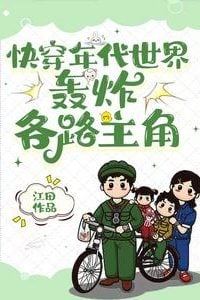
Fast-Travel Era Worlds: Bombarding Every Protagonist
+Add to Custom List
Genres:
Novel Info
  • Author:
  • 江田
  • Status:Ongoing

Summary

... Read More

Lin Ning is a professional fixer for the Quick Transmigration Bureau, tasked with entering the bodies of cannon fodder characters from novels to avenge their injustices and secure fulfilling lives. Her first assignment takes her to 1982 in Dong’an County, Hunan Province, into the body of a twenty-year-old woman named Lin Ning. The original owner was sold into marriage with Feng Tianqi, a thirty-two-year-old widower with three children, solely to generate a six-hundred-yuan bride price for her brother’s house. Upon waking with a head wound inflicted by her brother, Lin Ning immediately rejects her fate. She violently defends herself against her abusive family, smashing her brother’s head with a teapot and punching out his teeth when he attempts to force her compliance. Realizing she cannot stay, she steals five yuan and flees, leaving her family in chaos.

With no household registration to stay in guesthouses, Lin Ning finds refuge at a public bathhouse. She saves a coworker from fainting by offering candy and subsequently applies for the vacant position of bath attendant. Her physical strength and meticulous scrubbing skills impress the manager, Sister Hong, and she is hired with room and board. During her work, Lin Ning detects a suspicious lump on a customer, Li Huan, and insists she seek medical attention. Li Huan undergoes surgery for early-stage breast cancer and survives, later gifting Lin Ning a substantial cash reward and a silk banner. This act of kindness attracts a journalist from the Women’s Gazette, whose article makes Lin Ning locally famous. The Lin family and the Feng family exploit this publicity, attempting to force the marriage again. The Feng matriarch, Ge Jinhua, publicly claims Lin Ning as her daughter-in-law to damage her reputation, but Lin Ning retaliates by dunking Ge Jinhua’s head in the bathwater. When Lin’s father attempts to drug her with an alcohol-soaked towel, she kicks him in the groin and alerts the police, who warn both families against forced marriage.

The conflict escalates with the return of Chen Caohua, Feng Tianqi’s first wife who had abandoned him in the original timeline. Chen Caohua is also reborn and seeks to reclaim her husband and status. She confronts Lin Ning at the bathhouse, accusing her of stealing Feng Tianqi, but Lin Ning exposes Chen Caohua’s past elopement and financial exploitation in front of the patrons. Humiliated, Chen Caohua returns to the Feng household, where she manipulates public opinion by playing the victim against Ge Jinhua’s abuse. Meanwhile, Lin Ning discovers a mystical dimension called the Ruyi Space within a cinnabar bracelet she purchased. The space contains fertile land and spiritual water, offering her a secret advantage. She uses this space to secure her future while continuing to outmaneuver her enemies.

Lin Ning’s most significant strategic move involves her brother, Lin Yong. After stealing two thousand yuan intended for his house from her parents’ home and hiding it in the Ruyi Space, she orchestrates a plan to make Lin Yong a live-in son-in-law to Fan Xiao’e. This decision ruins the Lin family’s financial stability and leaves her parents elderly and alone. With her family distracted by internal strife, Lin Ning pivots to entrepreneurship. She identifies the lack of scrubbing mitts in the 1982 market and develops a prototype using twisted nylon fabric treated with hot water. She partners with the local textile and garment factories, securing a two percent commission on all sales. The product becomes an immediate sensation, selling twenty thousand units in two days and generating substantial wealth for Lin Ning. She establishes a distribution network through bathhouses across the county, achieving financial independence. The story follows her rise from a exploited cannon fodder to a successful businesswoman, as she systematically dismantles the families that sought to destroy her while building a new life on her own terms.

Latest Release
DateGroupRelease
2026-08-11shanghai fantasy c63
2026-08-11shanghai fantasy c62
2026-08-11shanghai fantasy c61
2026-08-11shanghai fantasy c60
2026-08-11shanghai fantasy c59
2026-08-11shanghai fantasy c58
2026-08-11shanghai fantasy c57
2026-08-11shanghai fantasy c56
2026-08-11shanghai fantasy c55
2026-08-11shanghai fantasy c54
2026-08-11shanghai fantasy c53
2026-08-11shanghai fantasy c52

Community Reviews

Rating(3.6 / 5.0, 40votes)
5 stars
13(33%)
4 stars
8(20%)
3 stars
10(25%)
2 stars
9(23%)
1 stars
0(0%)

Popular reviews

... Read More
"Oh, you're a god? Well, I'm the heavens!" I am DEAD. This line alone is worth the price of admission. Lin Ning's dialogue has this perfect mix of dry sarcasm and outright aggression that makes every confrontation feel electric. And the way the author handles different character voices is genuinely good. Chen Caohua's shift from domineering to performative victim is clear just through her dialogue—"Lin Ning, please don't take my husband. I have three children—they can't live without their father..." versus her earlier self who would've been screaming and throwing things. Ge Jinhua's dialogue is consistently shrill and entitled: "You wretched woman! If you hadn't run off, our family wouldn't have lost that 200 yuan! It's all your fault—you're not even worth 200 yuan if we sold you!" You can literally HEAR her voice. And Lin Ning's responses are always short, sharp, and devastating. "A man in his thirties, dragging around three sons—no one would want him if he were dumped on the street. And you think I'd steal him? Steal your mother!" The narrative voice itself has this great casual energy too—nearly conversational, never pretentious. It just flows.
... Read More
Okay so the Ruyi Space thing is actually such a cool mechanic. Lin Ning stumbles into this personal dimension through the bracelet and it turns out it's basically a cheat code—three harvests a year, spiritual water that preserves youth. That's literally how Jiang Chacha built her cosmetics empire in the previous life. I love that Lin Ning immediately connects the dots but also immediately thinks ahead: even if the original host found this, her spineless nature would've let the Lin family steal it. "True security didn't come from treasures but from self-reliance." That's the thesis statement of the whole rebirth arc right there. She's not just getting revenge—she's building real power. Then the Chen Caohua confrontation at the bathhouse is pure chaos and I lived for it. The way Chen Caohua tries the victim card, crying about stealing a husband, and Lin Ning just... doesn't fall for it. She physically attacks Chen Caohua with a wet towel. Then a basin to Ge Jinhua's head. The escalation is perfect. And that reveal that Chen Caohua is ALSO reborn—"Several of the terms Chen Caohua used weren't common for this era; they were from a decade or two in the future"—that's a genuinely surprising twist. Two reborn people going at it? That changes everything. The plot just got way more interesting.
... Read More
I need to talk about Ge Jinhua for a second because this woman is absolutely vile and watching her get taken down is the most satisfying thing ever. She extorts 200 yuan from the Feng family, blames Chen Caohua for everything, beats her daughter-in-law, and then when Chen Caohua plays the victim and creates scenes in public—Ge Jinhua can't do anything because of the neighborhood committee and public opinion. The woman who was always in control suddenly has ZERO power. And her own husband calls her out: "Well, you were a bit too stingy before." She SLAPS him for it. Classic. But what's really interesting is Chen Caohua's evolution. In her past life she was the type who yelled and fought and ended up dead and abandoned. This time she's learned: "Playing the victim was so effective—it worked much better than yelling and fighting." She's becoming strategically cruel instead of just chaotically desperate. And Lin Ning? The original host would've crumbled under this pressure. This Lin Ning? She's cold, calculated, and physically violent when needed. The dynamic between these three women is chef's kiss.
... Read More
I need to talk about Lin Father and Lin Mother. Specifically, that line: "the Lin parents, who had gambled everything on their son—only to lose it all." That sentence hit me like a physical blow. Because it's not just about money. It's about a family system where the mother's entire identity was invested in her son's success, and when that investment failed, she had nothing left. Let me go back to the beginning of this chapter. The opening image: "washing clothes in the basin had turned sour, and the floor was littered with trash. Without Lin Ning to manage the house, it had fallen into complete disarray." This is symbolic on so many levels. Lin Ning was the emotional and practical center of this household—the person who held everything together—and the moment she's gone, the whole thing collapses. The sour laundry, the trash on the floor, the missing money. It's a house in freefall. And Lin Mother's reaction to the missing 2000 yuan? She doesn't mourn the loss of the money first—she mourns the betrayal. The family turns on each other, accusations flying, Lin Qiao threatening to block Lin Yong's hospital access, Lin Yong shattering a teapot at his sister's feet. This is a family that has never had to cooperate because Lin Ning was always there to absorb the conflict. What breaks my heart is Lin Qiao. She's caught in the middle—resentful that her brother gets everything while she gets nothing, but also terrified of her father's violence. When she swears "whoever took the money will get hit by a car," she means it. She's so exhausted by this family that she'd rather curse her own brother than keep pretending everything is fine. And the parents? They reluctantly agree to let Lin Yong move in with the Fans because they've already calculated that resisting is pointless. "If you don't want me to move into their house, then buy me my own place!" Lin Yong's ultimatum is essentially emotional blackmail, and the parents fold because they've invested so much in him that they can't afford to lose him completely. The tragedy isn't that Lin Yong becomes a live-in son-in-law. The tragedy is that his parents enabled it because they never had an alternative strategy. They gambled everything on one son, and when he took everything and left, they were truly alone. I keep thinking about who will take care of them now that Lin Ning has escaped. The author hasn't answered that yet, and honestly, I'm not sure I want to know.
... Read More
This batch of chapters is a masterclass in pacing. The author spends a huge amount of time on the domestic squabbles between Lin Yong and the Fan family—meal fees, coal briquettes, early wake-up calls. It's deliberately tedious, almost suffocating, which makes you feel exactly what Lin Yong is experiencing. Every scene is a small battle, and the Fan family keeps losing ground even though they think they're winning. The author could have rushed through this, but instead they lean into the discomfort. You want Lin Yong to just leave, but he can't because he's too cheap and too proud. Then—bam!—the pacing shifts dramatically. Lin Yong snaps and attacks Lin Ning. The violence happens fast, almost casually, and then the aftermath unfolds with its own rhythm. The hospital scenes, Fan Xiaoe stealing the passbook, the Fan parents scheming—it all moves quicker than the domestic disputes. But here's what I love: the author doesn't let either pace run too long. The coal briquette scene is short and brutal. The market house-hunting sequence is brief but efficient. And that ending with Fan's father pulling out the passbook? Perfect timing. The author knows exactly when to slow down and when to accelerate. There's no filler, no dragging. Even the exposition about Lin Ning's bath scrub business success is woven into character moments rather than info-dumped. The structure feels organic, like real life—some days are slow negotiations, other days everything changes in a single swing of an iron rod.
... Read More
Let me just say—this author knows how to raise the stakes. We start with Lin Ning discovering her Ruyi Space (internal conflict: what to do with this power), then immediately pivot to Jiang Chacha trying to frame her for theft (external conflict: survival and reputation), then Chen Caohua shows up with a whole vendetta (external conflict: two reborn enemies), and somehow it keeps getting MORE intense. The bathhouse scene is a masterclass in tension. Chen Caohua tries to use social pressure—crying in front of customers, playing the victim. Lin Ning counters with raw physical dominance. But then the real stakes hit: Lin Ning knows she'll lose her job. She tells Sister Hong herself: "Even if it meant losing my job, she was going to teach these two a lesson." She's willing to sacrifice her income for justice. That's huge. And the aftermath? Chen Caohua adapts. She learns that playing the victim works better than fighting, starts creating public scenes, and Ge Jinhua—who was always the bully—suddenly has no power because the neighbors and committee turn against her. The power dynamic completely flips. Meanwhile Feng Tianqi stops sending money because of Ge Jinhua's telegram. Everyone's losing something. The suspense is relentless and I absolutely cannot stop reading.
See all reviews

Characters

See all characters

Custom lists

See all custom Lists