Farming Through Natural Disasters in the Beast World
+Add to Custom List
Novel Info

Summary

... Read More
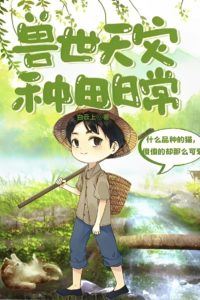
Qin Ziheng, known in his childhood as Bao Wa'er, is the illegitimate son of Qin Ming, a man who abandoned him after discovering his wife's infidelity. Raised by his impoverished grandfather in Wande Village, Qin Ziheng endured a lonely and difficult childhood, relying on his own determination to excel academically. He skipped grades, topped provincial exams, and eventually built a lucrative career in Beijing, becoming a wealthy executive. Despite his success, he maintains a strict emotional distance from his biological parents, who only reappear when they seek financial gain. His only genuine familial bond is with his uncle Qin Liang and cousin Qin Ziwen, to whom he provides significant financial support, including funding a new house and helping resolve a workplace injury lawsuit for his uncle. The narrative begins on Qingming Festival, with villagers gathering to witness Qin Ziheng's return from Beijing. He arrives in an expensive luxury car, dressed in a tailored suit, contrasting sharply with the rural setting. He greets his uncle and cousin warmly but ignores his father Qin Ming and stepmother Lu Meiyan, who attempt to ingratiate themselves with him. Qin Ziheng's primary motivation for returning is to sweep his grandfather's grave, a ritual he has performed every year since the old man's death. The story reveals that his grandfather died under tragic circumstances, wandering into the mountains during a rainstorm while suffering from dementia, having forgotten everything except his duty to provide for his grandson's education. Qin Ziheng's visit is marked by acts of gratitude and remembrance. He helps clean an elderly neighbor, Grandma Liang, who is incontinent, showing no disgust despite her condition. He also gives his cousin Qin Ziwen a new smartphone and advises him on university majors. However, the underlying tension of his fractured family is evident. His father and stepmother's resentment and greed are palpable, particularly regarding the money Qin Ziheng sent to his uncle instead of them. Qin Ziheng harbors deep resentment toward his stepmother for forcing his grandfather to sell the ox he had raised for years to pay for Qin Ziheng's tuition, a act of cruelty that left his grandfather in tears. The story takes a dramatic turn when Qin Ziheng is driving back from the grave site. While answering a phone call from an old friend, a figure suddenly darts out onto the road, causing him to swerve violently. The car rolls down a slope and crashes. As he lies injured, Qin Ziheng experiences a hallucination or vision of his grandfather carrying him on his back along their old dirt road, a poignant memory of their close bond. The narrative then abruptly shifts to a completely different setting and protagonist, introducing Mao Xiaoshu, a young man in a primitive tribe. Mao Xiaoshu is hungry and struggling to survive, highlighting his弱势 status within the tribe after coming of age. This sudden transition suggests a parallel narrative or a shift in perspective, contrasting the modern, wealthy, yet emotionally isolated Qin Ziheng with the primal, survival-driven existence of Mao Xiaoshu. The text ends with Mao Xiaoshu observing others sharing food, emphasizing his isolation and hunger.

Novel Items

More
Event
During his master's program, Qin Ziheng teamed up with an upperclassman to develop a game, earning over two million yuan before even graduating.
Event
Qin Zili lost 80,000 yuan gambling. Qin Ming, living with them in Guangdong, had no money to pay it back and subsequently went to Beijing to extort money from Qin Ziheng.
Event
Qin Ming traveled all the way to Beijing to find Qin Ziheng and demand money to cover the gambling debt. Qin Ziheng refused to give him a single cent and threatened legal action, causing Qin Ming to cave.
Event
Six years ago, Qin Liang fell while plastering a wall at a construction site, breaking his leg and needing head surgery. The labor contractor fled and the boss refused liability, offering only 8,000 yuan. Qin Ziheng resolved the case, and the boss came begging to settle.
Item
Qin Ziheng sent 400,000 yuan to Qin Liang to build a new three-story house, repaying the two years of schooling costs Qin Liang had covered during Qin Ziheng's high school years.
Item
The Liang family borrowed 100,000 yuan when Liang Jinlan's mother fell ill, after which there was nothing left from the compensation money.
Latest Release
DateGroupRelease
2026-08-11shanghai fantasy c26
2026-08-11shanghai fantasy c25
2026-08-11shanghai fantasy c24
2026-08-11shanghai fantasy c23
2026-08-11shanghai fantasy c22
2026-08-11shanghai fantasy c21
2026-08-11shanghai fantasy c20
2026-08-11shanghai fantasy c19
2026-08-11shanghai fantasy c18
2026-08-11shanghai fantasy c17
2026-08-11shanghai fantasy c16
2026-08-11shanghai fantasy c15

Community Reviews

Rating(3.9 / 5.0, 32votes)
5 stars
11(34%)
4 stars
7(22%)
3 stars
14(44%)
2 stars
0(0%)
1 stars
0(0%)

Popular reviews

... Read More
Okay so I need to talk about this plot twist because HOLY. The chapter starts with this deeply emotional grave visit, right? Qin Ziheng is pouring his heart out to his dead grandfather, talking about how he never wanted to be a burden, how he worked so hard to make him proud. And then—BAM—he's driving home in the rain, phone rings, he glances at it, and some guy sprints out with arms wide to stop the car. Car goes off the road, rolls down a slope, and then... we get this surreal vision of Grandpa Qin carrying young Bao Wa on his back, walking into the mist. And then Qin Ziheng just... closes his eyes. I'm not even sure if he survived that crash. The text ends on this ambiguous note where he's seeing his grandfather like a near-death vision, and then it CUTS to an entirely different story about some tribal guy named Mao Xiaoshu eating sour fruit. Like, what? One second we're in modern China with a car accident, the next we're in some prehistoric tribe? Is this a time travel thing? A reincarnation? I literally dropped my phone. The narrative just pivots so hard I had to re-read it three times to make sure I wasn't hallucinating.
... Read More
Okay so let me just say—this opening sequence is absolutely terrifying and I love it. Qin Ziheng stumbling through the woods, finding those claw marks on the tree, and the author doesn't even need to show us the beast. Just the scratches, five or six centimeters wide, fresh sap still wet. My skin was literally crawling. And then the circular patch of flattened grass? That's a lair. The author is playing with us, dropping clues like breadcrumbs and we're running alongside Qin Ziheng not knowing what's coming. But then—BAM. The rabbit. A twenty-six-inch SUITCASE-sized rabbit. I actually laughed out loud because my brain went from pure terror to absolute confusion in one second. And then the wild boar scare where he almost bops Mao Xiaoshu on the head with a stick? I was screaming internally. The tension goes from survival horror to comedic misunderstanding so fast I couldn't keep up, and that's what makes this chapter work so well. The plot here is doing double duty: it's establishing the danger of this world while simultaneously setting up the meet-cute between Qin Ziheng and Mao Xiaoshu. Every scary moment pivots into something softer. The beast in the grass turns out to be a crying boy. The fever that's killing him is treated by a rabbit healer. This world is chaotic and unpredictable, and the plot mirrors that perfectly.
... Read More
I need to talk about Grandpa Qin because honestly he is the emotional anchor of everything that's happened so far and I am already obsessed with him. When the shopkeeper's wife tells us about Grandpa Qin finding Qin Ziheng after his parents abandoned him, and saying 'If no one loves him, then I'll love him. This is my Bao Wa'er' — I literally got chills. This man dug through his own outhouse latrine pit looking for a child who wasn't even his grandson by blood. That is the kind of love that doesn't come up often in fiction. It's quiet and desperate and real. And then the detail about him teaching the boy to read because Qin Ziheng was staring at the debt numbers on the wooden door — that scene broke me. This is a child who had never been spoken to with kindness, who had been called a bastard behind his back, and he was just... watching. Learning. Wanting something better. Grandpa Qin saw that hunger in him and fed it. The father-son relationship is this wound that hasn't healed. Qin Ming went to work in the city for three years and came back to find his new wife was pregnant with another child. He never really claimed Qin Ziheng. The boy was always 'the one left behind,' the living evidence of his humiliation. And yet — and this is what kills me — Qin Ming still took him everywhere like 'a little tadpole searching for his father.' That metaphor. The author chose it deliberately. A tadpole searching for its father. Not its mother. The father who rejected him. I'm already dreading what happens next with this family dynamic. The grandfather is the only one who ever truly saw Qin Ziheng as a person instead of a problem.
... Read More
The snow season scene. Let me just say the snow season scene. Mao Xiaoshu tries to explain how cold it gets and can't find words, so he just... transforms. One second he's a person, the next he's a big orange cat. And he takes the hide garment in his mouth, jumps onto the stone bed, and curls up wrapped in it, tail around his head, SHIVERING. No words. Just performance. The text says "His performance was very apt." And honestly? It's one of the most vivid worldbuilding moments I've read because it does three things at once: it shows us that beastmen can transform, it establishes the brutal cold of the coming season, and it gives us Mao Xiaoshu's personality — he communicates through action, not explanation. The cave itself is barely a home. Stone bed, a firewood stove that barely works, pucker-fruit for food. Qin Ziheng arrives in a three-piece suit with a long overcoat — Qingming season back home, still cold — and here it's hot. The contrast between his civilized world and this primitive existence is constant. But what strikes me most is how the cave becomes a SHARED space. It starts as Mao Xiaoshu's lonely refuge and gradually fills with Qin Ziheng's presence — his clothes, his warmth, his voice. The setting mirrors the relationship: sparse, basic, but becoming something through companionship.
... Read More
There's this one detail that keeps haunting me. Mao Xiaoshu follows the sweet scent through the woods thinking it's wild fruit, and it turns out to be Qin Ziheng. 'This beast really smelled sweet!' The scent becomes this bridge between them—Mao Xiaoshu's instinct leading him not to food but to a person, to connection. In a world where beasts hunt for survival, he's drawn by something softer. And then the empty cave. Mao Xiaoshu has nothing—no stone bowl, no furniture, just a pile of fruit in the corner. The Tiger and Leopard clans took everything. But he still offers to carry a stranger home, still tries to pay Grandpa Rabbit with nothing he has, still coaxes medicine down someone's throat with promises of fruit he can't even give. His emptiness makes his generosity infinitely more powerful. The fever itself is symbolic too. Qin Ziheng arrives stripped of everything—his glasses, his direction, his strength, his certainty. He's reduced to pure vulnerability, and it's in that state that he meets someone who sees him not as a threat or a beast from another tribe but as someone who needs help. The hot-hot sickness strips him down to human, and Mao Xiaoshu responds to that humanity. I keep thinking about Grandpa Rabbit's line: 'Whether he wakes up depends on his fortune.' But I don't think it's about fortune anymore. I think it's about choice. Mao Xiaoshu chose to carry him. That's not luck. That's who he is.
... Read More
I have to stop and appreciate the description of the old elementary school because it is genuinely one of the most vivid settings I've encountered in recent reading. Let me just quote this: 'The wooden boards on the basketball hoops on both sides of the playground had long since rotted beyond recognition. The doors and windows of the three classrooms were crooked and uneven. Inside, the desks were either broken or damaged, and many of the wooden tabletops had split open.' This isn't just description for description's sake. This school is Qin Ziheng's entire world before he wanders off into it. The decay mirrors his own life — neglected, falling apart, but still standing. And then the author drops this line right after: 'The only thing that stood out was the bright red national flag fluttering in the wind in front of the classrooms. It was the only new item in the old elementary school.' I've been thinking about that flag for hours. It's the only new thing in a place built on old brokenness. It's hopeful in a way that feels almost painful. And then Qin Ziheng — this quiet, fair-skinned, beautiful boy who doesn't fit in anywhere — presses himself against that schoolhouse window to listen to lessons he has no right to attend. The image of him standing on tiptoe, watching through a dirty window at a world he's not part of but desperately wants to be part of — that is cinema-level writing. The rural village setting is equally textured. The basketball court where elderly women gather. The convenience store. The paddy fields. The biogas tanks some families built while others still used pit latrines. Every detail grounds us in a specific time and place — rural China in the late 1990s and early 2000s — and makes it feel lived-in rather than researched.
See all reviews

Characters

See all characters

Custom lists

Oops…There is nothing here.