Summary

... Read More

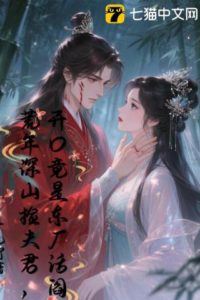
Cui Xiaoqi is a sixteen-year-old hunter in Qingshui Village during the Great Yu Dynasty, a woman who has transmigrated from the modern world and survived two years in a harsh, impoverished reality. The imperial court has imposed draconian marriage and childbearing taxes to boost the population after a devastating war; unmarried women over sixteen face an Unmarried Tax of eight taels of silver, with escalating penalties for childlessness. When tax collector Wu Dafu arrives at her door demanding payment, Cui Xiaoqi has no silver. The village chief, Wang Shougen, attempts to force her into a marriage with his lazy, gluttonous son, Wen Wazi, but she threatens him with an arrow, exposing his past corruption regarding a saved enemy spy. With only three days before the Official Matchmaker will forcibly assign her to an elderly widower, she devises a desperate plan: she claims to have already found a husband.

Cui Xiaoqi rescues a blood-soaked, unconscious man she finds in the wilderness, dragging him to her home to serve as her fake spouse. She burns his suspicious Feiyu robe and cleans the evidence while hiding him from the prying eyes of the village. The man, Pei Ji, awakens with amnesia and a lethal demeanor, holding a hairpin to her throat. He is secretly the Dongchang Supervisor, a feared intelligence agent, though he does not reveal his true identity. Cui Xiaoqi manipulates the situation by claiming she saved him from wolves and used her body heat to warm him, implying intimacy to bind him to her. She proposes a contract marriage: he provides his household registration to satisfy the tax authorities, and once the crisis passes, they will divorce. Pei Ji, suspicious of her motives but intrigued by her audacity, agrees to the arrangement.

The conflict intensifies when Wang Wenhan, the village chief’s son, discovers Cui Xiaoqi’s secret. He confronts her in the mountains, revealing he stole her bow and arrows and intentionally startled a wild boar to endanger her. A violent struggle ensues where Cui Xiaoqi outsmarts the brute, using the enraged boar to incapacitate him. She leaves him injured in the snow, forcing him to crawl back to the village, while she secures the boar to sell for much-needed funds. Meanwhile, Pei Ji recovers in her home, displaying supernatural agility and combat skills that hint at his true nature. He follows Cui Xiaoqi to the capital to retrieve his household registration, revealing he is not a commoner but a man of significant power and danger.

In the capital, Cui Xiaoqi sells the wild boar to a restaurant owner, Uncle Tong, earning three taels of silver. However, she is ambushed by three thugs who intend to rob and assault her. Just as she is overpowered, Pei Ji appears, silently killing one attacker and dispatching the others with lethal efficiency. He reveals his subordinates, Qiufeng and Luoye, who handle the cleanup. Cui Xiaoqi is terrified yet grateful, realizing she has married a man far more dangerous than she imagined. She demands the return of her father’s clothes, which Pei Ji had carelessly discarded, showing her deep attachment to her family’s memory. After securing the necessary documents, they return to the village, only to find Wang Shougen and Wu Dafu waiting at her courtyard, setting the stage for the final confrontation over her marital status and survival.

Novel Items

More
Tax Policy
A tax of eight taels of silver imposed on women who reach sixteen without being married, introduced by the imperial court to increase the population after a devastating war.
Tax Policy
A tax of twenty taels of silver imposed on women who reach seventeen without having children, part of the harsh marriage and childbearing policies.
Document
A legal agreement arranged by Qin Zelin's grandfather and Old Master Cen. It stipulates a nominal marriage for one year with financial compensation upon divorce. Cen Miao does not need to fulfill marital duties and can adjust the compensation amount if unsatisfied.
Weapons
Used by Jiang Tian to hunt a pheasant and a rabbit on the mountain.
Clothing
A blood-stained silk garment worn by the injured man, resembling the type of robe worn by male leads in historical dramas. Cui Xiaoqi burned it in the brazier to destroy evidence.
Event
Su Zhan invited an official matchmaker to the residence to arrange his marriage. The birthdates of Su Zhan and Princess Xiuning had been matched.
Latest Release
DateGroupRelease
2026-08-11shanghai fantasy c10
2026-08-11shanghai fantasy c9
2026-08-11shanghai fantasy c8
2026-08-11shanghai fantasy c7
2026-08-11shanghai fantasy c6
2026-08-11shanghai fantasy c5
2026-08-11shanghai fantasy c4
2026-08-11shanghai fantasy c3
2026-08-11shanghai fantasy c2
2026-08-11shanghai fantasy c1

Community Reviews

Rating(3.9 / 5.0, 15votes)
5 stars
3(20%)
4 stars
8(53%)
3 stars
4(27%)
2 stars
0(0%)
1 stars
0(0%)

Popular reviews

... Read More
I need to talk about THIS moment. You know the one. She's on the ground, terrified, just survived three thugs, and when she looks up and sees Pei Ji—she just blurts out 'Husband.' Not 'sir,' not 'thank you,' just... husband. And he just... stands there. Letting her cry into his chest like it's the most natural thing in the world. "You—you said you'd wait for me at Drunken Immortal Pavilion, I—" and then she just breaks. Two years of transmigration loneliness and this is the moment it all comes out. I literally had to pause the book. The way the author writes this—Pei Ji remaining motionless while she sobs, the snowflakes melting in his palm, the warmth of his hand enveloping hers—it's so understated but SO powerful. And earlier, when she pulled half the quilt over herself and he didn't let go of her wrist? I felt that. The tension between them is this weird mix of practical necessity and something neither of them wants to name. She's calling him brother-in-law to Xiao Ba but husband to herself, and Pei Ji is playing along with every single one of these roles like he's memorizing a script. But that moment at the city gate when he just... appeared? That's not acting. That's something else. The CP chemistry is simmering, not boiling, and I am OBSESSED with the slow burn.
... Read More
Can we talk about how DIFFERENT these characters sound when they speak? Because the dialogue here is genuinely excellent and I want to highlight a few things. Xiao Ba's internal monologue when Cui Xiaoqi calls Pei Ji 'brother-in-law' is one of the funniest moments in the entire text. "Calling Pei Ji—the ruthless and sinister 'Living King of Hell,' the Dongchang supervisor—'brother-in-law' made her deeply uncomfortable." I literally laughed out loud. The contrast between what she's thinking and what she's saying (or not saying) is comedy gold. And Pei Ji's dialogue! The man speaks in MINIMUM WORDS. "Not going?" "I'll go into the city myself. Meet at Drunken Immortal Pavilion." That's it. That's the whole personality. Cold, efficient, zero wasted breath. But then there's this one moment where he says nothing at all and just... watches her pull the quilt. His silence speaks louder than any monologue could. Cui Xiaoqi's voice is wonderfully distinct too—she switches between tough hunter mode ("My knife has no eyes—it loves to pierce necks") and desperate bluffing ("My husband is the Dongchang Supervisor. Do you want to be skinned and have your tendons ripped out?") with complete conviction. Even when she's terrified, she's performing. That's a character who has learned to survive by being sharp-tongued and quick-witted. The dialogue never feels like everyone's just explaining plot points to each other. Each person sounds like their own person.
... Read More
The atmosphere in this book is SO thick you could cut it with a knife. From the very first paragraph, the cold is a character. 'The snowflakes outside the window, which were falling heavier and heavier.' The villagers retreating early 'to save lamp oil.' The thatched roofs buried under thick snow. Every scene is wrapped in this biting winter chill that makes every warm moment — the rabbit stew, the charcoal brazier, the shared body heat — feel earned and precious. There's one image that won't leave me: Cui Xiaoqi walking to the locust tree outside the courtyard, pulling an arrow from its trunk, and placing it in her quiver. Just a simple, quiet moment. But it tells you everything about who she is — she's a hunter, she's prepared, she lives in a world where you need arrows and fences and firewood just to survive another day. The kitchen scenes are particularly vivid. The rabbit stew 'so tender it melted in the mouth,' the rice jar 'nearly empty — even mice wouldn't bother squeezing inside,' the stir-fried cabbage 'without a hint of oil.' These details paint a picture of poverty that's almost tactile. You can taste the thin porridge, feel the cold seeping through the walls when the brazier dies, smell the blood when Pei Ji's wound splits open. And the contrast between the domestic warmth inside and the lethal danger outside — that's the world this story lives in. The snow that brings food (the burlap sack with rice) also brings death (the freezing man on their doorstep). The courtyard they're repairing is both a home and a fortress. Every scene feels like it could tip from warmth to violence in a single heartbeat, and that's what makes reading it so gripping.
... Read More
Let me just say this: the author knows EXACTLY when to speed up and when to slow down, and it's masterful. The chapter starts almost domestic—bathing, combing hair, warming by the brazier. Very cozy, very slow. Then suddenly Xiao Jiu is screaming about the bloody pig at the village entrance and the pace JUMPS. By the time Cui Xiaoqi is driving the ox cart through the snow, we're already in full motion. The transition from the quiet village to the dark city streets is handled so well. The ox cart journey feels like a breath held between two explosions. And then—THUGS. Just out of nowhere. Three scrawny men materialize from the wall base and suddenly we're in a life-or-death scene. The author doesn't waste a single word on setup; they just drop you into the danger and let you drown. What I appreciated most was the pacing of Pei Ji's rescue. He doesn't just appear and solve everything instantly. There's this beat where Cui Xiaoqi is already cornered, the knife is knocked away, and she's literally bargaining with her life. THEN the skinny guy gets impaled. The timing is perfect—it gives her a moment of genuine peril before the deus ex machina arrives, which makes the rescue feel earned rather than cheap. The chapter ends on this quiet, almost tender note after all that chaos, and it works because the reader needs to exhale. Brilliant structure.
... Read More
I need to talk about Pei Ji because THIS MAN is absolutely unhinged and I am HERE for it. Let's start with the hairpin scene. He wakes up, has no memory, and his FIRST instinct is to press a hairpin to Cui Xiaoqi's throat. Not a gentle 'who are you?' — straight to lethal force. And yet, the text says something so telling: his Adam's apple rolls when he looks down at her. He's affected by her, and it TERRIFIES him because of that Gu insect inside him. A eunuch who can't feel desire but suddenly feels desire — of course he suspects poison, of course he suspects conspiracy. But then the hammer scene. He dislocates his own leg, takes a hammer to it, and doesn't even flinch. Not a sound. Just cold, white sweat on his forehead. And when Cui Xiaoqi starts scolding him for ripping the gauze off his wound — 'Madman! Are you a masochist?' — he just sits there and takes it. This is a man who has been abandoned, betrayed, used, and he has no one to trust except the woman who literally tricked him into marriage. And the domestic moments? When Xiao Jiu calls him 'brother-in-law' and he freezes? That's the moment that got me. He's spent years as an abandoned child with no family, and suddenly someone is calling him that. Husband. Brother-in-law. These words that were never meant for him are now being placed on his head like a crown he didn't ask for. The dynamic between him and Cui Xiaoqi is so electric because neither of them fully trusts the other, and yet they're stuck together. She's playing a game, he's playing a deeper game, and the reader is just sitting there watching them both try to outmaneuver each other while somehow also caring for each other.
... Read More
There's so much going on beneath the surface of this text that I think deserves attention. The snow is everywhere—covering bloodstains, illuminating the dark night, melting in Pei Ji's palm. It's this beautiful metaphor for how everything in this story is about concealment and revelation. The snow hides the blood but also reveals everything else. Cui Xiaoqi is hiding her transmigration, Pei Ji is hiding his true identity and abilities, Xiao Ba is hiding her fear. Everyone is covered in layers. The wild boar itself is symbolic in a way I can't quite shake. It's bloody, massive, terrifying to the villagers who find it at the entrance—but it's also what feeds her family, what earns her silver, what brings her into the city where the plot actually happens. It's death that becomes survival. That's basically the theme of the whole story, isn't it? And the quilt! Think about it. She drapes it over Pei Ji to keep him warm, then pulls half of it toward herself. It's this tiny domestic object that becomes a boundary and a bridge simultaneously. He could push it away. He doesn't. The warmth of that quilt carries his body heat, and she sniffs it and notices there's no blood smell—only an indescribable fragrance. This man who is covered in other people's blood smells like... nothing? Everything? The fragrance is a mystery that mirrors who he actually is beneath the reputation. The travel permit is another symbol I can't ignore. It's the difference between freedom and being trapped, between moving forward and being stuck in the village. Pei Ji doesn't have one, which is why he has to go alone—and why the whole plan falls apart and then gets saved in the most dramatic way possible.
See all reviews

Characters

See all characters

Custom lists

Oops…There is nothing here.