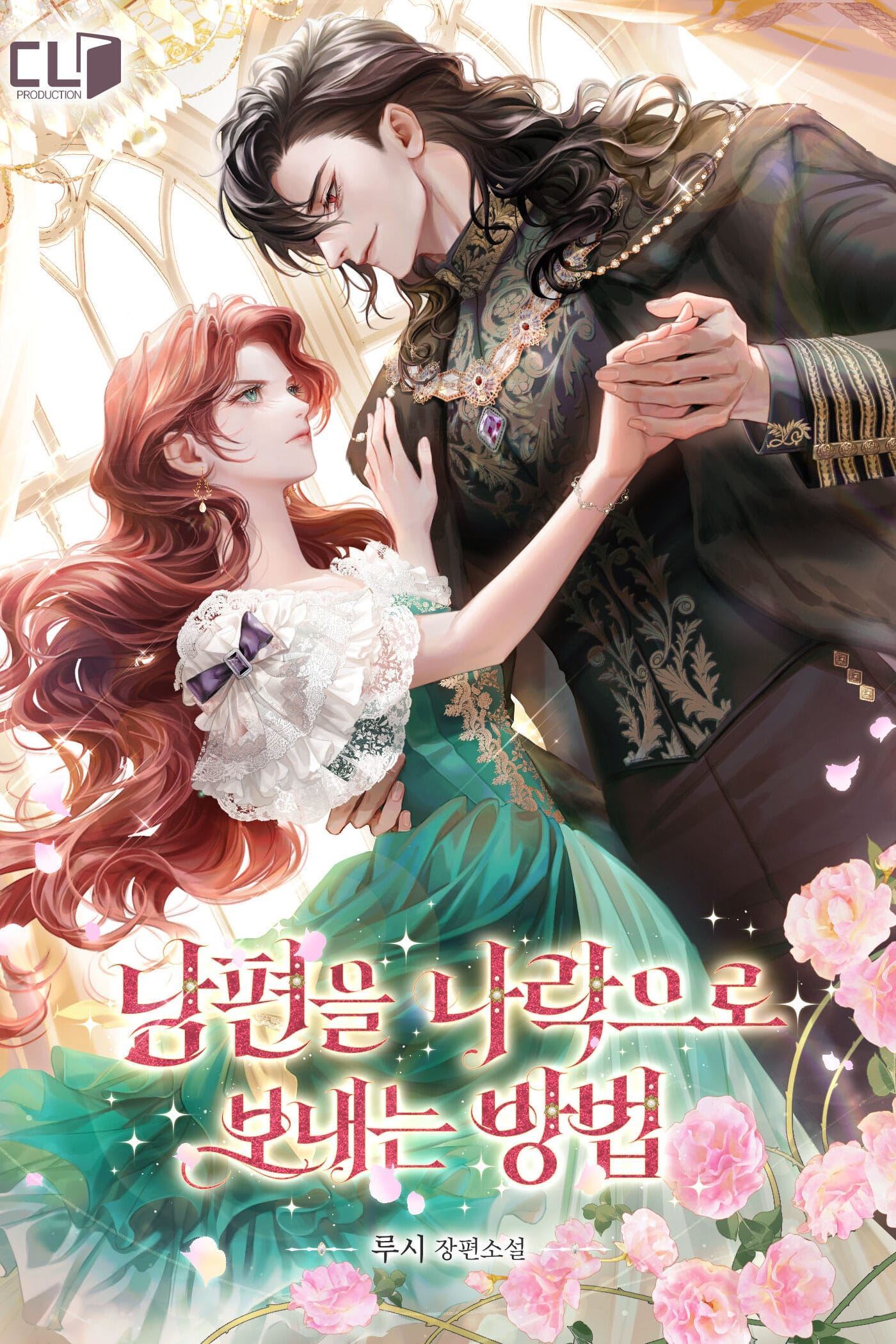
Exiled from My Family, My Ex-Fiancé Obsesses Over Me
+Add to Custom List
Genres:
Novel Info
  • Author:
  • Status:Ongoing

Summary

... Read More

The story begins with the Marchioness of Jiles, who is heavily pregnant and anxiously awaiting the return of her husband, the Marquis. A violent storm rages outside as she waits for her child to be born. Suddenly, a former maid named Sally, who was dismissed eight months prior for attempting to seduce the Marquis, breaks into the room. Sally is also heavily pregnant and claims the child is by a village boy, yet she demands financial support from the Marchioness. As the Marchioness struggles with this intrusion, her labor begins. She gives birth to a daughter named Ariel but loses consciousness shortly after. When she awakens three days later, the Marquis has returned, and the household claims no one saw Sally enter. The Marchioness is told that Sally disappeared and later died, leading her to believe the threat was neutralized.

Years pass, and Ariel grows up as the beloved daughter of the House of Jiles. She is engaged to Count Leonard, known as Lucas, a man she saved from near-death illness in her childhood. Their engagement was initiated by Ariel, who cared for the frail Lucas until he recovered. However, over the past seven years, Lucas has changed dramatically. He became strong, ambitious, and cold, distancing himself emotionally from Ariel. He treats her with polite rigidity, refusing to deepen their physical relationship despite Ariel’s persistent attempts to seek comfort and closeness. Ariel remains loyal, believing in their bond, but growing rumors plague the household: whispers that Ariel is not the biological daughter of the Marquis and Marchioness, but rather the child of Sally. The parents’ distant behavior fuels these suspicions, leaving Ariel anxious and insecure about her identity.

Parallel to Ariel’s storyline, the narrative introduces Rona, a beautiful but arrogant young woman working in a village bakery. Rona believes she is destined for nobility and encounters Lucas in the village. Misinterpreting his politeness as romantic interest, she intentionally injures herself to gain access to his estate. Lucas hires her as a maid, a decision Rona views as a step toward becoming his mistress. Rona is oblivious to Lucas’s existing engagement and his cold demeanor toward all women. Upon arriving at the Leonard estate, she is assigned menial cleaning duties and quickly realizes how difficult it is to catch Lucas’s attention. Despite this, she remains convinced of her eventual rise in status.

The two plotlines converge when Ariel visits Lucas’s estate for tea. While waiting for him, she wanders the mansion and encounters Rona. Ariel is struck by the maid’s resemblance to herself, noting the similar blonde hair and facial features. This sighting reignites her fear that she might be Sally’s daughter. When Lucas returns, Ariel tests him by asking about Rona, but he claims ignorance of the maid. Later, Ariel attempts to seduce Lucas, recalling advice from a friend. She initiates an intimate encounter, leading to a passionate exchange where Lucas momentarily loses his restraint. However, he abruptly ends the intimacy, citing the need for propriety before marriage, leaving Ariel confused yet hopeful that he truly desires her.

Meanwhile, Rona observes Ariel and is shocked by the fiancée’s striking resemblance to herself. She begins to suspect that she might be the one Lucas was meant for, or perhaps connected to the noble lineage in some way. The narrative establishes a tense triangle of destiny and deception. Ariel clings to her engagement and her identity as a Jiles, while Rona plots her ascent through manipulation and ambition. Lucas appears trapped between his duty, his past trauma, and his complex feelings toward both women. The story sets the stage for a revelation regarding Ariel’s true parentage and the lingering shadows of Sally’s past actions.

As the tension mounts, Ariel’s insecurity deepens due to the unchecked rumors and her parents’ avoidance of the topic. She desperately seeks validation from Lucas, who remains emotionally reserved despite their physical intimacy. Rona, entrenched in her role as a maid, continues to dream of nobility, unaware of the dangerous implications of her resemblance to Ariel. The House of Jiles remains fractured by suspicion, while the House of Leonard grows increasingly cold under Lucas’s rule. The narrative suggests that the secrets of the past will soon surface, threatening to dismantle the lives Ariel has built and exposing the true nature of her lineage. The convergence of the two women who look alike hints at a dramatic confrontation that will redefine their futures and the fate of the noble houses involved.

Latest Release
DateGroupRelease
2026-10-03dusk blossoms c51
2026-10-03dusk blossoms c50
2026-10-03dusk blossoms c49
2026-10-03dusk blossoms c48
2026-10-03dusk blossoms c47
2026-10-03dusk blossoms c46
2026-10-03dusk blossoms c45
2026-10-03dusk blossoms c44
2026-10-03dusk blossoms c43
2026-10-03dusk blossoms c42
2026-10-03dusk blossoms c41
2026-10-03dusk blossoms c40

Community Reviews

Rating(0 / 5.0, 39votes)
5 stars
0(0%)
4 stars
0(0%)
3 stars
0(0%)
2 stars
0(0%)
1 stars
0(0%)

Popular reviews

... Read More
Okay so I need to talk about this scene between Ariel and Lucas because WOW. First, let me just say—when Lucas suddenly kisses her in the purple rose garden, my heart actually dropped. Like, one second he's sitting there all cold and distant, barely looking at her, and then BAM, he's got his arms around her waist and this absolutely devouring kiss. And the way the author writes it? "He started with a careful touch, but soon his lips pressed firmly against hers. Then, he began to kiss her with a hunger that threatened to steal all her breath away." Chills. Actual chills. But here's what gets me—Ariel is completely reading this wrong. She's sitting there thinking "has Lucas ever kissed me so passionately before?" and she's thrilled, right? Like this proves he loves her more than ever. But then the author drops this absolute knife: "With her face buried in his chest, Ariel couldn't see his expression. She didn't notice the pain flickering in his eyes." AND I WAS SCREAMING. Because Lucas isn't kissing her because he's overwhelmed by love—he's kissing her because he knows something terrible is coming. Remember how earlier it says "His Majesty had summoned Lucas recently" and Ariel starts spiraling about the princess? This kiss isn't romance, it's goodbye energy. He's memorizing her. He's trying to hold onto her for just one more moment because he already knows their future is compromised. Meanwhile Ariel is down there beaming like "I want to be your bride soon" and her head is on his chest the entire time she can't see that his face is literally breaking. And then after the kiss, he promises her the wedding in the purple rose garden. "I want to have the wedding you dream of, Ariel." His voice was so gentle—so gentle and it made my stomach twist because we KNOW he's lying. Or at least, he knows he can't keep this promise. And Ariel? She's throwing her arms around him saying "You can't break this promise, okay?" Bro. You have no idea what you're asking. What kills me most is that Ariel genuinely believes their love is becoming eternal. Purple roses symbolize both incomplete love AND eternal love, and she specifically chose that meaning because "their love might feel incomplete now, but she wished it would become eternal." THE IRONY IS CHOKING ME. She's standing in front of a cursed mansion they'll never truly live in happily, talking about eternal vows, while the man holding her is already mourning their future. I went back and re-read the part where Lucas sighs and says "The day we'll be together is coming" with that wistful smile. WISTFUL. Not hopeful. WISTFUL. That's a man who knows the ending already. And meanwhile Rona is over there acting like some delusional rom-com protagonist who thinks becoming a maid means she'll magically become the count's mistress. Like honey, bestie, you're not the female lead—you're the warning label. But back to Ariel and Lucas—what I love is how unpredictable their dynamic feels. One minute he's distant and tense, the next he's pulling her into this almost desperate embrace. And Ariel? She calls his unpredictability "attractive." I mean… same, honestly, but also this is exactly why she's going to get wrecked. She mistakes urgency for devotion every single time. I just keep coming back to that final image of her face buried in his chest while pain flickers in his eyes. That is the single most devastating romantic beat I've read in months. The tragedy of it all—the complete misalignment between what she thinks is happening and what actually is—absolutely destroyed me. I need to know what happens next and also I need a tissue.
... Read More
There are so many symbols in this chapter it's wild. Let me pick a few that wrecked me. The name. "Count Leonard" vs. "the Count." That shift in language is EVERYTHING. When Ariel says "about Lucas and me…" the Marquis cuts her off and reframes the relationship entirely—not as two people who loved each other, but as a social transgression that must be contained. His word isn't about truth, it's about hierarchy. The moment she becomes commoner, she loses the right to even speak his title. Her name itself is being erased from the narrative, and the document she signs is the physical proof. Then there's the carriage. Again. The same carriage she arrived in, now carrying her AWAY. It's a bookend moment that the author couldn't be subtler about if they tried. She came as a lady, she leaves as nobody. The physical distance between the Marquis estate and her birth parents' home (two or three days away) isn't just geography—it's the literal distance between two identities, two lives, two versions of herself. And Rona's address. Written on paper. Handed over like a gift but delivered like a sentence. "You promise never to go back… then I'll tell you." Knowledge as currency. The one thing Ariel genuinely wanted (to know where she comes from) is held hostage by the very person who stole everything else from her. What kind of story is this if even the truth has a price tag?
... Read More
Let me just say this: Rona is DELICIOUS. She's not just happy to be the real daughter, she's calculating, vengeful, and absolutely thriving on the idea of taking everything back from the fake. The way she describes Ariel as a 'thief who had stolen her entire life' gives me chills. And that scene where she deliberately acts spiteful at the dinner table just to torment Ariel? Chef's kiss. 'Haha. How satisfying. I'm glad I deliberately acted spiteful.' Meanwhile Ariel is just... surviving. She tried to ask about her birth parents and Rona flat-out shut her down. That hurt, y'all. Rona even uses her as a taste-tester for food—'Ariel, what about that? Is it delicious? It looks unappetizing, would you try it first?' The coldness is relentless. But what I find fascinating is how Rona's also slightly unsettled. She's bothered by the butler's vague answers about Ariel and Count Leonard's relationship. 'Did they both want the engagement, or was it an arranged one?' She needs to know EVERYTHING because this isn't just about reclaiming status—it's personal. There's something almost insecure underneath all that confidence, like she's terrified Ariel might somehow still win. And honestly? I get it. Rona is both the protagonist and a little bit terrifying to watch.
... Read More
The pacing of this timeline is absolutely brutal in the best way. We go from Lucas being on his deathbed—literally, the doctor says he won't survive—to an engagement, to two years of letters, to SEVEN YEARS of silence, all compressed into what feels like a paragraph. And then BAM, he's back. A completely different person. The author basically winks at us and says 'you had to have felt that loss didn't you?' Because honestly, the seven years where Ariel just kept writing into the void? That's the plot point that wrecked me. She never gave up. Never demanded anything. Just... waited. And when he finally shows up, he's armored himself in formality like a fortress. 'I only do as the Marquis commands.' As if their engagement means nothing to him. As if the boy who said her name with tears in his eyes was never real. Then the rumor subplot drops like a bomb—'Ariel isn't really their child'—and suddenly everything we thought we knew about her world gets questioned. The Marquis himself is wavering. That detail about Sally, the former maid, hangs over everything like a ghost. It's not just a plot device; it's a landmine that could detonate the entire story. And the transition to Rona in the bakery? Completely unexpected, totally disorienting. Is she connected? A parallel storyline? The author is building something massive here and I have zero complaints about how it's structured.
... Read More
I have to talk about how this chapter is paced because it's a masterclass in layering tension. The chapter starts with the revelation—switched at birth, big news—and immediately pivots to Rona's emotional response. But here's what I love: the author doesn't just let us sit with the big moment. They FAST FORWARD to the next day, and suddenly we're in this new normal where everything has shifted but nothing has resolved. Rona shopping for dresses, dismissing Ariel, the breakfast scene—all of it is just quiet, creeping cruelty that somehow feels worse than any dramatic confrontation. The pacing deliberately refuses to give us catharsis. There's no big climax here, no moment where Ariel fights back or the parents truly choose sides dramatically. Instead we get this SLOW, suffocating realization that Ariel is being squeezed out inch by inch. 'From now on, your living environments will be completely different.' Even the dialogue is paced for maximum discomfort—the way Rona cuts off Ariel mid-sentence about her birth parents, the butler's hemming and hawing, the Marchioness talking TO Rona but NOT AT Ariel. It's like watching someone bleed out slowly and there's literally nothing anyone can do about it. I couldn't look away.
... Read More
Let me count the stakes and I'm already exhausted. On the personal level: Ariel is fighting for basic emotional intimacy from her fiancé while sensing her entire family is hiding something. She's vulnerable, isolated, and barely has the vocabulary to articulate what's wrong. The conflict here is internal and relational—she wants closeness, she's getting caution, and she has no framework for understanding why. On the family level: the Marchioness gave birth to a storm. Literally and figuratively. A trespasser appeared, threatened her child, disappeared from everyone's memory except hers, and then died. But the Marquis was three days late. THREE DAYS. He missed his own daughter's birth and nobody questions it? What were they doing? What were they hiding? On the political level: there was a rebellion. Families were executed. The Marquis suppressed it but didn't participate. The kingdom can't punish him because he's too important. Lucas's family was on the losing side. He was saved by the man whose retainers killed his parents. That is a ticking time bomb of loyalty conflict and I am waiting for it to explode. The suspense technique here is interesting—the author doesn't rely on big action set pieces. The tension comes from information asymmetry. We know something is wrong but nobody is saying it. Ariel senses it. The Marchioness sensed it years ago. Lucas clearly knows more than he's saying. And the reader is left sitting in that uncomfortable space of knowing there's a secret without knowing what it is. What keeps me hooked is that every scene has multiple conflicts running simultaneously. The Sally confrontation isn't just a thriller moment—it's also a commentary on class, female rivalry, and reproductive anxiety. The engagement scene isn't just romantic tension—it's also about power, duty, and emotional manipulation. The political backstory isn't just worldbuilding—it's the reason Lucas can't be honest with Ariel. The stakes keep rising because they're not just external. The real danger here isn't rebellion or assassination—it's the slow erosion of trust within a family, the way secrets accumulate, and the question of whether anyone in this house has ever been entirely truthful with anyone else.
See all reviews

Custom lists

See all custom Lists