Excessive Unrequited Love - Reviews

Excessive Unrequited Love
+Add to Custom List
Sort
Add review
... Read More
So the Prince is coming to propose. That's the bomb dropped right at the beginning and everything that follows is basically characters reacting to this ticking clock. What's interesting is that nobody — not Chris, not Lovell, not even the Earl — seems to treat this as an actual imminent event yet. Chris says she'll at least go to the ball, which is the most reasonable response possible, but then immediately admits she doesn't know herself whether she wants this or not. Meanwhile Lovell has been building up to something for literally years — the stalking, the bothering, the physical escalation — and the whole thing collapses into a messy, desperate scene in a locked bedroom where he basically asks her not to marry someone else while she's literally touching him. The plot doesn't give us a clean moment of choice here. Chris doesn't say yes or no to anything. She just... exists in this space between obligations, between desire, between fear and whatever else she's feeling. And then — plot twist number two — Lovell kisses the Earl's daughter at the lodge as a protest. Like, what. He's deliberately making this more complicated. "I'm marking what's mine." The Earl's response to Lovell afterward, telling him to try harder for his own future too, is so loaded. Is he warning him? Blessing him? I genuinely cannot tell and that uncertainty is the story breathing down my neck.
... Read More
The pacing here is masterful and honestly kind of brutal. The author doesn't let you recover. You go from the intense, almost unskippable intimacy scene directly into Chris's aftermath — the physical pain, the anxiety, the dress, the bruises. There's no breathing room. Then it cuts to Lovell's POV a month later, which is this weird time jump that works because it shows how the obsession has only worsened for him while Chris is trying to move on. What I love is how the chapter transitions work. One moment you're in the aftermath of the encounter, the next you're reading about Lovell's backstory — how he was found as an eight-year-old, living alone, eating trash basically. This flashback comes at a moment when we're starting to understand WHY he's like this, but not forgive him. It's a delicate balance. The Chris-to-Prince-letter scene acts as a breather — slower, quieter, strategic — before the stakes hit again when she realizes she might be pregnant. And then the relief of her period arriving is such a perfect comedic beat in the middle of all this drama. It's a breath of fresh air that makes you laugh despite yourself. But the real pacing genius is the ending. We end on Lovell's POV again, still obsessed, still planning to go see her, and you just KNOW this isn't over. The tension is still coiled, waiting to snap.
... Read More
The dialogue in this section is *brutal* in the best way. Not because it's clever or witty, but because it's so raw and honest in a way that almost feels uncomfortable to read. Like, when Chris says "Get out, Lovell" five different times throughout the scene, each repetition hits different. The first time is tired. The second is angry. The fifth time — well, by then it's just a plea masked as a command. And Lovell's lines! "I'm going to touch more. The more you resist, the longer it gets." What kind of person says that casually?! But here's the thing — the author gives him other moments too, like when he says "I like you" and Chris basically laughs in his face. The dialogue between them has this terrible asymmetry: he means everything he says, and she can't believe she's hearing it. The narration also has such a distinct voice. It's mostly from Chris's POV and it reads like her internal monologue bleeding into the narrative. Things like 'That brute who's only strong…' and 'If I leave him alone, it'll never end!' — these feel like actual thoughts, not polished literary observations. Even the Prince letter scene has great voice: "perhaps she should put forward the opposite image. Pretentious, self-important." You can practically hear her typing those maximally boring sentences to make the Prince lose interest. Lovell's narration section is a whole different tone though — raw, hungry, almost stream-of-consciousness. The shift in voice between their POVs really highlights how differently they experience the same events.
... Read More
The dialogue here is deceptively simple but deeply revealing. Each character's speech pattern reflects their internal conflict and social positioning. Christine's lines are sharp, often laced with irony or passive aggression, mirroring her defensive posture. The Earl's words are measured and authoritative, designed to assert control while masking indifference. Lovell's silence is its own voice—his few spoken lines are sparse, almost economical, yet they carry immense weight. The narrative voice remains objective, letting readers infer emotions from subtext rather than exposition. This restraint creates a sense of intimacy, as if we're eavesdropping on private thoughts. The result is a prose style that feels literary yet accessible, inviting analysis without demanding it.
... Read More
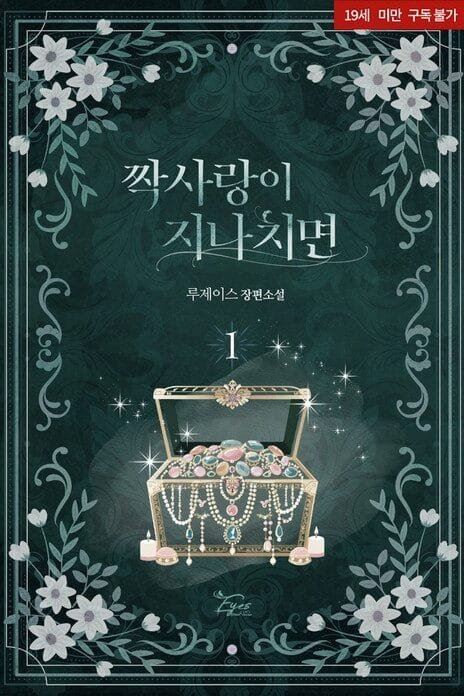
There's so much symbolic weight packed into these chapters it's almost suffocating. The treasure box is the big one obviously—Lovell's entire emotional life compressed into a wooden chest full of stolen items that once belonged to Chris. But it's not just about possession, it's about intimacy. Every item he collected had been in close contact with her body: hair ties, a finger-sized doll, a hairpin. These aren't random trinkets, they're artifacts of a connection he can't have in reality. He can't touch her, so he collects the objects that carried her scent and warmth instead. The author makes this crystal clear when Chris realizes 'everything missing had one thing in common—they were all items that had been in close contact with her body.' That line hit me like a truck. Then there's the red fountain pen. Her pen, engraved with her initials, sitting in HIS room. It's small but it mirrors the bigger theft—the pen represents something she gave value to, something she thought was lost, and it turns out it was never lost at all. It was always with him. And the scent! Chris recognizing that strange smell in his room as Lovell's own scent that she'd 'grown tired of on the night they'd been together.' What night?! The author drops this fragment of backstory like a grenade and then refuses to explain it. The olfactory memory becomes a symbol of their entire history—intimate, unpleasant, inescapable. She shudders. That single physical reaction says more about their complicated past than any exposition could.
... Read More
Let me lay out the stakes because this is where things get dangerous. Christine's conflict is multi-layered and honestly kind of suffocating. She's the heir to an Earldom — her marriage isn't personal, it's political. Her father is actively managing her suitor queue like she's a commodity. She's stuck at home while her peer group moves on to academy life, which creates this isolation that makes her vulnerable. And the text makes it clear she doesn't even know how to navigate basic romantic interaction — when the Prince touches her, she freezes. She has no defense mechanism because she's never been put in this position before. Lovell's stakes are even more precarious. He's a commoner living in a noble household on borrowed time. If his obsession with Christine gets discovered, he doesn't just lose his position — he could be exiled or worse. The fact that he's willing to risk everything anyway speaks to how desperate he is. He's playing with house rules he didn't write. And the Prince? His conflict is different but no less threatening. He's scandal-weary, recently dumped publicly, and clearly looking for something 'gentle and human-scented' to anchor himself. That's not love language — that's hunger. Christine just became the target of three different kinds of predators, none of whom have her best interests at heart. The real tension isn't whether she'll get married. It's whether she'll survive the process intact.
... Read More
A woman only reveals her true self in front of one particular man. Lovell says this line to his friends, and I think the author put it there specifically because it's wrong. Lovell believes Chris shows her true self to him—her anger, her glares, her clenched fists—but what he's mistaking for intimacy is actually hostility. He's interpreting repulsion as special treatment. The tragedy is that he might be closer to the truth than he realizes, because the intensity of her hatred IS a form of engagement, just not the kind he wants. Eyes are the recurring symbol throughout this chapter, and they're doing heavy lifting. Chris has violet eyes that redden with anger—only for him, according to Lovell. The Prince has deep blue eyes that harmonize with Chris's golden hair in the eyes of society. Lovell himself has blue-gray eyes that his friends notice but Chris seems to ignore. Eyes see everything. Eyes are seen. Eyes betray what mouths refuse to say. Windows appear three times: the window Lovell opens to air out his room after his private episode, the window Chris passes while eavesdropping, and the window metaphor of the corridor itself—a space between rooms where secrets leak. Windows are boundaries that can be opened. Doors are boundaries that can only be crossed. The white plane-tree fluff—"white snow-like pollen under the red sky"—is the chapter's opening image, and it's deeply uncanny. Snow in summer? Pollen that looks like snow? This is a world where natural order is inverted, and every romance follows an inverted script. The Prince courts publicly but writes privately. Lovell hates openly but desires secretly. Chris angers loudly but listens quietly. The word "filthy" appears in Chris's internal monologue after she hears Lovell through the door: "The Prince during the day and that guy too. They're all filthy!" She's drawing a moral line, categorizing men by their hidden appetites. But the line is arbitrary. The Prince kisses in daylight; Lovell masturbates in darkness. Both are consuming her. Neither asks permission. The distinction is social, not ethical. Lovell compares himself to "a black bug mixed in among a flock of sheep." This is the chapter's most honest metaphor. He sees himself as ugly, out of place, incapable of being mistaken for anything other than what he is. And yet—this is the paradox the novel keeps turning—bugs are everywhere. Bugs survive. Bugs notice things that sheep miss. Lovell's invisibility is also his advantage. The letter itself is a symbol: five or six sheets filled with "tremendous lengthy sentences and flowery style." Language as performance. Words as weapons. The Prince writes to possess; Chris wants to tear to shred. Both are attempts to control a narrative they didn't create. What happens when the bug finally speaks?
Leave a comment

You must be logged in to leave comments. or
