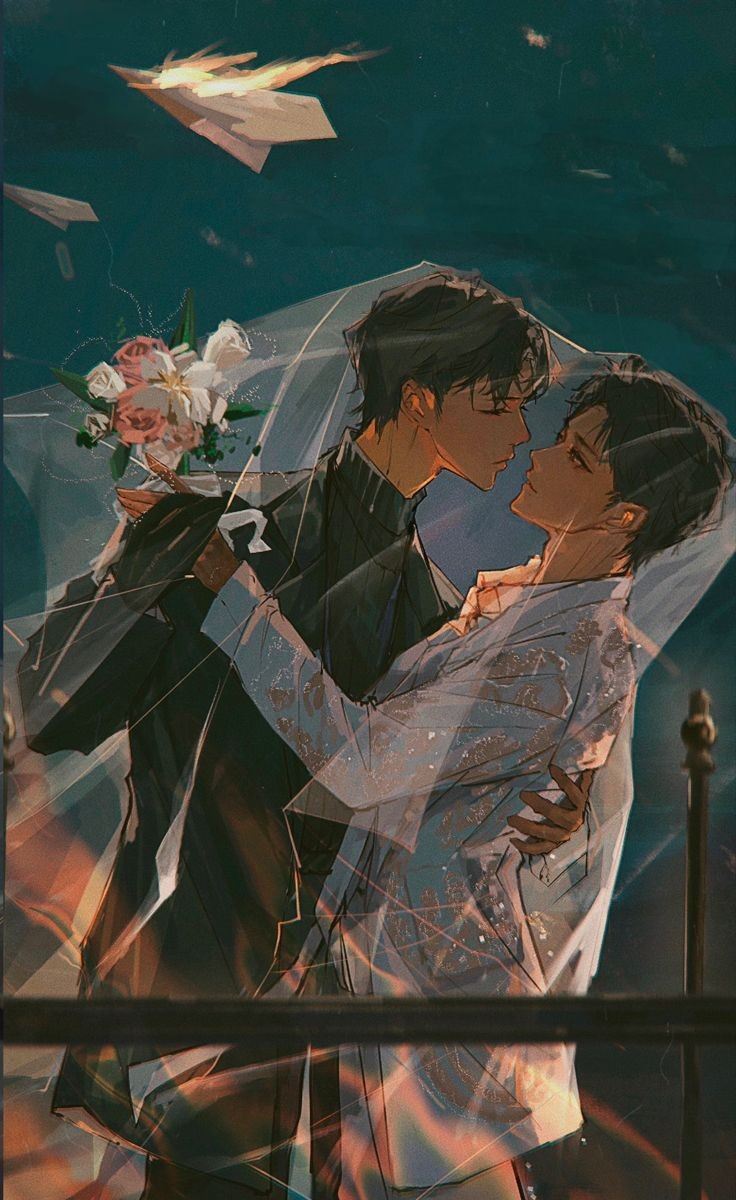
Everything I Have Is For You
+Add to Custom List
Novel Info
  • Author:
  • Status:Ongoing

Summary

... Read More

Estelle, the adopted daughter of Duke Pellia, lived a life of calculated utility within the Dukedom. Orphaned and raised without true kinship, she understood from a young age that her existence served a singular purpose: to secure a profitable political marriage for her father’s benefit. Her primary companion in this gilded cage was Raphael, the Duke’s illegitimate son who would eventually inherit the title. Though they shared no blood, their relationship transcended siblinghood through a secret, obsessive intimacy that began after Estelle discovered Raphael weeping over his true parentage. Raphael, tormented by his outsider status and deep longing for Estelle, had confessed his desires to her, binding them in a conspiracy of silence that evolved into a physical bond neither could escape.

As Estelle reached womanhood, Duke Pellia arranged her engagement to Duke Blythe, a widower with two sons, viewing it as the optimal transaction to legitimize his standing. Estelle, desperate to sever her entangled fate with Raphael and escape his possessive grip, agreed to the union. She attempted to flee the Dukedom by orchestrating a kidnapping scenario at a western villa, hoping to vanish across the border. Her maid, Emily, initially agreed to assist but betrayed her, selling Estelle’s location to the bandits for gold. The bandits were subsequently slaughtered by the Duke’s knights, leaving Estelle cornered on a dead-end path. Raphael arrived with his retinue, not to rescue her, but to reclaim her, exposing the lies she had told about her motives.

Captured and confined to the western villa, Estelle learned the terrifying truth behind her former fiancé’s sudden death. Duke Blythe had fallen from a cliff under mysterious circumstances shortly before the engagement. Raphael revealed that he had manipulated Blythe into visiting the villa by leveraging the Duke’s greed for a hidden fortune tied to his late wife. Estelle realized she was now complicit in a murder she had witnessed the consequences of, trapped by Raphael’s devotion and the evidence linking her to his world. He offered her a month to decide between embracing him or destroying him, placing the emerald ring Blythe had carried as a token of his lethal dependence.

Unable to bear the thought of Raphael’s ruin, Estelle chose silence, hiding the ring and attempting to maintain her composure. However, Raphael’s intentions escalated beyond mere possession. He denied her access to contraceptive measures and openly declared his intent to marry her, regardless of the social scandal or legal prohibitions against incestuous unions. He envisioned a grand wedding, aiming to elevate her from a forgotten adopted outsider to his legitimate Duchess, a act that would strip her of her former life and condemn her to eternal infamy in noble society.

Estelle tried to reason with him, pleading that such a union would destroy them both and incur the wrath of the Imperial Family and her father. Raphael dismissed her concerns, asserting that he cared nothing for noble privilege or reputation. He viewed her hesitation as a rejection of his love, interpreting her silence as further proof that she desired him but feared the consequences. In a final act of domination, he forcibly placed a diamond engagement ring on her finger, declaring that her choice had already been made by her failure to turn him away. Confinned to the villa and subjected to his relentless advances, Estelle found herself with no escape from a future where she would become the willing, yet imprisoned, partner of a man who loved her with destructive intensity.

Latest Release
DateGroupRelease
2026-10-03dusk blossoms c27
2026-10-03dusk blossoms c26
2026-10-03dusk blossoms c25
2026-10-03dusk blossoms c24
2026-10-03dusk blossoms c23
2026-10-03dusk blossoms c22
2026-10-03dusk blossoms c21
2026-10-03dusk blossoms c20
2026-10-03dusk blossoms c19
2026-10-03dusk blossoms c18
2026-10-03dusk blossoms c17
2026-10-03dusk blossoms c16

Community Reviews

Rating(0 / 5.0, 43votes)
5 stars
0(0%)
4 stars
0(0%)
3 stars
0(0%)
2 stars
0(0%)
1 stars
0(0%)

Popular reviews

... Read More
Let's talk about Raphael because honestly I have SO many feelings about this man and what he just did. "Without hesitation, he knelt down on both knees." Okay first of all—Raphael KNEELS. This man who "would never kneel even to the master of the Dukedom" drops to his knees before his younger sister. Who does that? What kind of prideful, arrogant duke heir just... folds like that? It was devastating to read because it felt SO genuine in the moment. His dialogue after kneeling was almost begging: "If you tell me to just breathe, I'll only breathe." That's not the Raphael we've met. That's someone completely unhinged by fear of losing her. But then. THEN. "He realized almost unconsciously that he had knelt only to distract her." BRO. HE FAKED IT. He used humility as a weapon. He pretended to surrender and then struck her nape like some kind of predator. And Estelle—god, Estelle—she saw it coming but couldn't stop it. The knights grabbed her, he pulled the candy out, and she was completely subdued. What I love about this character beat is how it reveals Raphael's fundamental inability to let go. Even when he genuinely believed he was wrong, even when he was prepared to become someone entirely different for her... the moment he sensed danger, his instinct was control. Force. Deception. He couldn't just TRUST that she'd choose to stay. That's the tragedy of him right there—he genuinely WANTED to change but his entire nature is predicated on possession. And then later, when he finds out the candy was cracked and poisoned, the shift is terrifying. One second he's praying at her bedside, forehead pressed to her hand, and the next he's beheading knights and imprisoning doctors. The switch is so jarring it made me physically uncomfortable.
... Read More
I am genuinely trembling after reading Chapter 17. Not from the explicit scene—though God knows that was written with enough intensity to make anyone breathless—but from everything that came AFTER. The morning after. The carriage ride. The silence. There's this one detail that I keep circling back to like it's a heartbeat. Estelle 'licked her dry lips, recalling the candy hidden in her rich sleeves.' A piece of candy. That's all. Something small and sweet and almost childish, hidden away in the lining of her dress like a secret she was saving for later. She was planning to give it to him before they reached the capital. She was still trying. Still hoping, even after everything. And he was killing people. The emotional whiplash between chapters is absolutely brutal. One moment you're riding this wave of feverish passion—'The sweetness of her cries made Raphael move even faster'—and the next you're watching a woman realize the man she's falling for might be beyond saving. Her emotional journey across these chapters is this slow, painful stripping away of hope. She tells herself: 'She had no expectations, but she must not nurture any hope anymore.' But then she ESCAPES. She climbs through a ceiling hatch, jumps from a moving carriage, sprains her ankle, and runs toward the sound of dying men—ALL to save people who aren't even related to her. That's not resignation. That's love acting through devastation. And Raphael? He picks up her scattered shoes with trembling fingers. His hands shake. The man who ordered executions can't stop shaking over a single shoe. What does that say about him?
... Read More
There's a line in Chapter 16 that I cannot stop thinking about: 'That although she had been brought in as his father's blood, not a single drop of it actually ran through her veins.' Blood as belonging. Blood as inheritance. Blood as curse. This single sentence contains the entire thematic architecture of the story. Raphael fears he is becoming his father—not because of genetics, but because of BEHAVIOR. He vows to protect her with respect, to embrace her with love, and then he fails. He repeats the pattern. The 'blood' he fears isn't literal; it's the inheritance of cruelty, of possession, of treating women as objects. And Estelle—who has no blood connection to the family—becomes the mirror in which he sees his own corruption most clearly. Then there's the CANDY. Why does the author include this detail? Estelle hiding a piece of candy in her sleeve, saving it for him, planning to give it to him before they reach the capital—it's such a small, almost absurdly innocent gesture. It represents everything naive and hopeful about her love. And the author places it RIGHT BEFORE the carriage turns into the forest. RIGHT BEFORE Raphael starts ordering executions. The candy and the blood exist in the same scene. One is childhood sweetness; the other is adult ruin. They occupy the same moment, and that contrast is the entire theme of the story compressed into two images. The CEILING HATCH is the final symbol I want to touch on. Estelle escapes through the oldest, most hidden part of a remodeled carriage—a gilded cage held together by centuries of tradition. She literally climbs OUT from above, from the hidden structure that nobody looks at. Her freedom comes from the parts of her world that are unseen, forgotten, neglected. And Raphael's recurring thought—'He should never regret it. Regretting would shake the very foundation of his care for her'—this is the thesis statement. The story isn't about whether love conquers all. It's about what happens when love and obsession become indistinguishable, when the foundation itself is built on blood.
... Read More
The visual storytelling in these chapters is insane. Every scene is soaked in light and shadow — candlelight flickering on Raphael's unreadable face, moonlight filtering through windows at night, the darkness of Estelle's bedroom where she wakes up alone after passing out. The most cinematic moment has to be Raphael appearing in the doorway after Estelle wakes up. He picks up the candle, lights it, and she sees his face emerging from the dark like some kind of gothic vision. "Estelle, you're awake now." Said so casually, like he hasn't been watching her sleep. The candle becomes this whole metaphor — he's the light source in her life, but also the thing casting all these shadows. Then there's the retreat villa where Duke Blythe fell. We never actually go there in these chapters, but the author drops enough details to build the entire atmosphere: steep cliffs, a place associated with his dead wife, no servants around, a mysterious letter. It's terrifying because of what we DON'T see. The tea table toppling during their encounter is another moment that's purely visual — wood crashing, fabric, bodies, the floor stained with evidence that someone quickly cleaned up. The author isn't shy about painting these scenes in high definition. But the scene that lives rent-free in my head is the final one: Raphael drunk, leaning into her doorway at midnight, mentioning their first time in the annex drawing room. He's weaponizing nostalgia. The way he speaks about that space — not as a place of power or control, but as somewhere they spent "happy times" — completely reframes everything. It's gentle and manipulative at the same time. The world feels suffocating. Closed doors, hidden conversations, servants who won't speak, windows with moonlight but no escape. This is a story where every room is a trap.
... Read More
Raphael's dialogue is a masterclass in menace disguised as charm, and I need to discuss every single line that lands. Start with the early scene where he says 'Since you answered, I'll let it go just this once. But mercy ends today.' The phrasing is so casually authoritative—it's not shouted, it's not dramatic. It's delivered with the weight of someone who has already made peace with his own destruction and is bringing Estelle along for the ride. 'Just this once.' As if this is a negotiation, not a threat. As if he has any right to grant mercy at all. Then the water scene. 'Is this fun for you?' she asks, and he answers with a smile: 'Yes, it's fun. It's thrilling, Estelle.' That word choice—'thrilling'—is everything. He's not lying about enjoying it, but he's also not just talking about the physical act. He's talking about the danger, the transgression, the fact that he's burning down his entire world for her and finding it exhilarating. It's the most honest thing he's said in the entire passage. And Estelle's voice! When she finally breaks formality and says 'Speak casually to me, Estelle,' Raphael's smile deepens because she complied, but her compliance itself is a tiny act of resistance. She's playing along to survive. Her line 'You know that the more you do this, the deeper you fall into the pit yourself' is practically her entire thesis statement for the novel, and he responds by kissing her forehead and continuing anyway. The Duke's off-screen presence also has a distinctive voice—commands Raphael to return, arranges marriage proposals, and even his absence is felt in every line Raphael delivers about him. The dialogue here operates on three levels: what's said, what's threatened, and what's swallowed whole.
... Read More
Okay so the structural move here is honestly brilliant and I want to dissect it because the author really knows what they're doing. Chapter starts with Estelle confused about Raphael's behavior — minor scene, terrace, night sky, two people talking. Very contained. Then Raphael drops the bomb about the empire. Then Estelle breaks down. Then she goes to bed. Then the intimacy happens. Each beat flows naturally from the previous one — there's no jarring shift, no forced escalation. The emotional arc does the heavy lifting. You go from confusion → shock → grief → exhaustion → surrender in about four paragraphs and it feels completely earned because each emotion is given space to breathe. What really sells it though is the physical environment. Night sky, terrace, then moving indoors, then the bedroom with moonlight through the window — the setting mirrors the descent from public composure to private vulnerability. And that last line before Chapter 16? "Perhaps tomorrow, she will also meet her end." Then Chapter 16 opens with That was one reason she could not refuse. It's a hinge moment — the sentence bridges two chapters like a door swinging open. The pacing is relentless but never rushed. Every pause, every breath, every silence between dialogue carries weight. That's craft.
See all reviews

Custom lists

See all custom Lists