Summary

... Read More

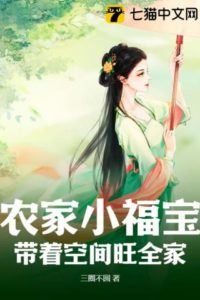
Su Yunnuan, the elite military medical agent of the military region, dies in a laboratory explosion caused by sabotage and transmigrates into the body of a twenty-one-year-old woman who shares her name. This new host is the neglected wife of Lu Mingxiu, the acting director of a steel plant in the 1980s. The original Su Yunnuan had sacrificed her college entrance examination to marry Lu Mingxiu, spending three years serving his entire family with unwavering devotion. However, her husband and his family were ungrateful, favoring Zhao Yunlu, Lu Mingxiu’s childhood sweetheart and a recent widow. When the original owner worked hard to secure an accounting position at the steel plant, Lu Mingxiu used his authority to give the job to Zhao Yunlu instead. Overwhelmed by despair and injustice, the original Su Yunnuan attempted suicide by hanging but was rescued by neighbors. Upon waking, the military agent realizes she has traveled through time and space, bringing her high-tech laboratory and its resources with her.

The core conflict arises from Su Yunnuan’s refusal to continue being a victim. Unlike the submissive original owner, she is a trained soldier and doctor with a vengeful streak. She immediately confronts the Lu family, who expect her to cook and serve them despite her near-death experience. When Lu Mingxiu’s sister, Lu Lizhi, demands she work, Su Yunnuan ignores her and goes to the Lu family’s home to demand her monthly allowance. She eats snacks bought for the family, slaps Lu Mingxiu when he scolds her, and announces she wants a divorce. Lu Mingxiu, arrogant and blind to his wife’s worth, believes she is merely throwing a tantrum to gain his attention. He refuses to divorce her, assuming she has nowhere else to go, while Zhao Yunlu secretly plots to replace Su Yunnuan as the factory director’s wife.

A pivotal turning point occurs when Su Yunnuan reports Lu Mingxiu’s corruption to the group company leadership. She reveals that he abused his power to force her to give up her job and that he has been embezzling family funds to support Zhao Yunlu. The investigation confirms her claims, and Lu Mingxiu is demoted from acting director to deputy director. Humiliated and angry, Lu Mingxiu returns home to confront Su Yunnuan, but she stands her ground. She demands three thousand yuan in compensation for giving up the job, which the family cannot afford. Su Yunnuan then reveals she plans to sell the accounting position to someone else, further angering Lu Mingxiu and Zhao Yunlu. During this time, Su Yunnuan reconnects with Zhou Momo, a colleague who had previously helped her during a medical emergency, and meets Zhou Momo’s brother, Zhou Zeyuan, a regiment commander who catches a thief on the bus and shows Su Yunnuan a hint of interest.

Su Yunnuan successfully sells her accounting job to Zhou Momo’s cousin, Tong Shu, for two thousand yuan, securing her financial independence. She then decides to pursue her true passion: medicine. Learning that the steel plant is establishing an affiliated military hospital, she applies for a position there, leaving the Lu family without her domestic labor. The Lu family’s life deteriorates as they struggle to manage household chores and cooking without Su Yunnuan’s help. Zhao Yunlu attempts to seduce Lu Mingxiu, but he hesitates, haunted by memories of Su Yunnuan’s accusations and his own guilt. Meanwhile, Su Yunnuan uses her laboratory resources to heal her malnourished body, improving her appearance and health. She shops for new clothes and begins to rebuild her life, determined to leave her toxic marriage behind. The story ends with Su Yunnuan starting her new career at the hospital, while Lu Mingxiu begins to realize the extent of his loss and the depth of his wife’s transformation.

Latest Release
DateGroupRelease
2026-08-11shanghai fantasy c30
2026-08-11shanghai fantasy c29
2026-08-11shanghai fantasy c28
2026-08-11shanghai fantasy c27
2026-08-11shanghai fantasy c26
2026-08-11shanghai fantasy c25
2026-08-11shanghai fantasy c24
2026-08-11shanghai fantasy c23
2026-08-11shanghai fantasy c22
2026-08-11shanghai fantasy c21
2026-08-11shanghai fantasy c20
2026-08-11shanghai fantasy c19

Community Reviews

Rating(4.2 / 5.0, 6votes)
5 stars
2(33%)
4 stars
3(50%)
3 stars
1(17%)
2 stars
0(0%)
1 stars
0(0%)

Popular reviews

... Read More
The pacing in this section is what I'd call surgical. The author doesn't waste a single scene, and the chapter breaks land exactly where they should. Chapter 14 opens with Su Yunnuan's transformation routine—bath, skincare, new clothes. This could easily have been a boring vanity sequence, but the author uses it to establish something crucial: Su Yunnuan is investing in herself for the first time. And it works as a pacing device too because it's slow, methodical, almost meditative. We feel the weight of each step. Then—knock knock knock. Lu Lizhi appears. The pace instantly accelerates. The confrontation escalates quickly but never feels rushed. Su Yunnuan slaps, pushes, closes the door. Three actions, three beats of escalation, and by the time Lu Lizhi storms off threatening to tell her brother, we're already at a natural stopping point. The chapter ends on this note of unresolved tension, which is perfect because it pulls us into the next chapter. Chapter 15 does something clever—it shifts from physical action to verbal confrontation. The family argument about money is longer, more dialogue-heavy, and it serves as the emotional climax of the domestic storyline. Lu Mingxiu's realization that he's been fooled is the chapter's turning point, and the author gives it room to breathe. We see his guilt, his defensiveness, his inability to fully accept responsibility. Then Su Yunnuan's response—refusing to wash his clothes, studying medicine late into the night—this is where the pacing shifts again, from domestic drama to forward momentum. Chapter 16 is the payoff chapter, and it moves at a completely different speed. The car ride is almost episodic—pick up Su Yunnuan, pick up Qin Lili, arrive at destination. But within that simple structure, the author packs three distinct emotional beats: the awkward silence with Zhou Zeyuan, the confrontation with Qin Lili, and the revelation about the doctor application. Each beat lands cleanly, and the chapter ends on a note of possibility rather than resolution. What's remarkable is how the author controls reader engagement through these pacing choices. The domestic scenes feel claustrophobic and slow, mirroring Su Yunnuan's trapped existence. The car scene feels open and mobile, mirroring her expanding possibilities. And the transition between them—her studying medicine at night, then leaving early the next morning—creates this sense of forward motion that makes you want to keep reading.
... Read More
I need to talk about the car scene because honestly it had me breathless. Not because of anything dramatic happening, but because of everything that ISN'T happening. The tension is so quiet it's almost unbearable. Su Yunnuan gets into Zhou Zeyuan's car, sits in the back, tries to keep her distance, breathes very softly. And he—Zhou Zeyuan—doesn't push her closer, doesn't make it awkward, just exists in the same space with this woman who's clearly trying very hard not to notice him. But here's what got me: she catches herself thinking about his face. "Sharp eyebrows, bright eyes, a straight nose, a square mouth and rosy lips, which makes people want to kiss him." And then immediately—bah, bah, bah. Stop it. She's married. She's not supposed to notice. This is such a tender, human moment. She's not some untouchable heroine who's above attraction. She's a woman who finds a handsome man attractive and then scolds herself for it. The fact that she's married adds this layer of guilt that makes the whole scene feel so real. She's not falling in love, she's just... noticing. And that's somehow more dangerous because it's so honest. Then Qin Lili enters the picture and everything shifts. This woman's hostility is so immediate and unmasked. She can't even pretend to be nice. "How could this woman with a pointed face and monkey cheeks sit with Zhou Zeyuan?" The internal narration is ruthless, and it makes me want to shake her. But it also makes Su Yunnuan's composure feel even more impressive—she just says "oh, okay" and moves to the front seat without a word. The moment Zhou Zeyuan stops her from getting out of the car—"Doctor Qin, if you have anything to say, let's talk about it at the hospital later"—that's when my heart actually skipped. He didn't have to do that. He could've stayed neutral. But he chose, quietly and firmly, to protect her space. And Su Yunnuan's reaction—"Su Yunnuan... Who should I listen to between the two of you?"—this internal panic is so relatable. She's caught between two authority figures and has no idea what the right move is. The emotional core of this section is really about Su Yunnuan's awakening. She's not just transforming her appearance or her career path—she's learning that she deserves to take up space. In the car, at home, in her own life. Every small act of defiance builds toward this moment where she can look Zhou Zeyuan in the eye and say she wants to be a doctor.
... Read More
The dialogue in this section is deceptively simple, and that's what makes it so effective. Every character has a distinct voice, and the author uses conversation to reveal power dynamics rather than just exchange information. Let's talk about Lu Lizhi first. Her dialogue is pure entitlement. "Take them off and let me wear them." "You have money to buy them? Everything you eat and drink is paid for by my brother." She never asks, never negotiates—she commands. And the author makes this clear through her speech patterns: short, declarative sentences, no hedging, no self-awareness. When she says "Woohoo, what kind of wife did you marry?" to her brother, it's performative. She's playing a role, trying to manufacture sympathy. Chen Xiuzhen's voice is different—she's more manipulative, more calculated. Her lines are full of deflection and blame. "If Su Yunnuan hadn't come, I don't know what I would have been tortured into by you guys!" She turns the accusation back on everyone else. And when Lu Lizhi exposes the family's financial secrets, Chen Xiuzhen's response is instant resentment: "You are so old, but you don't go to work. You just know how to ask for money. Don't you know how to reflect on yourself?" She attacks the messenger rather than address the message. This is a woman who has spent decades avoiding accountability, and her dialogue reveals every layer of that. Lu Mingxiu's voice is the most interesting because it's full of contradiction. He claims to be generous—"I give her ten dollars a month"—but he has no idea how much a family of five actually needs. He says he's hardworking but comes home late and expects service. His dialogue is full of self-justification: "I was just doing good things, and no one praised him. Everyone was criticizing him. What was wrong with this society?" This is a man who has convinced himself he's the victim, and the author makes us hear that conviction in every line he speaks. But Su Yunnuan's dialogue is where the real magic happens. After years of silence, her words carry weight. "You don't have to give me the ten dollars from now on. Go buy the food yourself and feed your family of four." This isn't just a refusal—it's a redefinition of her role in the family. And later, when she tells Zhou Zeyuan "I prefer being a doctor," it's delivered with such quiet firmness that it lands like a hammer. Zhou Zeyuan speaks the least but says the most. His lines are short, direct, authoritative. "Doctor Qin, get in the car!" "If you like it, you can try it." He doesn't explain himself, doesn't soften his words. And that's exactly what makes him compelling.
... Read More
The structural shift in this section is honestly brilliant. We go from a domestic squabble over clothes to a career-defining moment, and the author makes it feel completely earned rather than rushed. Let me trace the arc here. Chapter 14 starts with Su Yunnuan's physical transformation—this is the setup, the visual promise that something is changing. Then the confrontation with Lu Lizhi escalates the tension. The slap is the inciting incident of her rebellion. By the end of that chapter, she's already shifted from victim to someone who says "dream on" internally when he leaves his dirty clothes for her. Chapter 15 is where the plot really pivots. The family argument about money is the climax of the domestic storyline, and Su Yunnuan's response—refusing to continue funding a family that exploits her—is the turning point. She's not just angry, she's strategic. She's preparing for the hospital interview that same night, studying medical texts. The author doesn't waste a single beat here. Then Chapter 16 delivers the payoff. The car ride with Zhou Zeyuan is both a plot device and a character moment—she reveals she's applying to be a doctor, which shocks everyone in the car. Qin Lili's contempt, Zhou Zeyuan's quiet encouragement, Li Bing's practical mediation. Three different reactions to one revelation, and each tells us something about the characters. What I love most is how the author uses the steel factory job as a contrast. Zhou Zeyuan points out that factory work pays well, and Su Yunnuan's response—"I prefer being a doctor"—is deceptively simple. It's not just a career preference, it's a declaration of identity. She's not someone who settled; she's someone who chose to survive, and now she's choosing to thrive. The narrative also sets up a great tension: we know Su Yunnuan has reached "the pinnacle of medical expertise" in a past life, but she's forgotten some basics. This creates built-in suspense for the interview scene that's clearly coming next. Will she pass? Can she reconstruct what she's lost? The author is playing with dramatic irony beautifully here—we know more than the other characters, which makes every dismissive look from Qin Lili feel satisfyingly temporary.
... Read More
There's a symbolism running through this section that I can't stop thinking about, and it's woven through some of the most mundane details. The dirty clothes. This keeps coming back. Lu Mingxiu takes off his dirty shirt and leaves it on the chair, expecting Su Yunnuan to wash it. In the past, she would have done it immediately without a word. This time, she sneers internally. The dirty clothes represent everything she's been expected to do—unpaid labor, invisible service, the assumption that her time and energy belong to everyone else. When she refuses to touch them, she's not being petty. She's rejecting the entire philosophy that her purpose is to serve. Then there's the transformation sequence—the bath, the skincare, the conditioner on her burnt brown hair. This isn't vanity. It's ritual. Su Yunnuan is literally washing away the old version of herself. The "marks on her neck" fading, her skin becoming "much more moisturized," her hair looking "as if it was dyed on purpose"—these are all symbols of rebirth. She's shedding the identity of the neglected, abused wife and becoming someone new. The pink shirt and white pants aren't just clothes; they're armor. The money is another powerful symbol. Ten yuan a month to feed five people—that number is absurd, and the author knows it. It represents the systematic extraction of Su Yunnuan's value by her family. When she refuses to continue, she's not just saving money; she's reclaiming her worth. The revelation that the family has been hoarding Lu Mingxiu's salary for the youngest son's marriage while pretending to be broke adds another layer—this isn't just exploitation, it's calculated theft. And the hospital—the affiliated hospital where Su Yunnuan is applying for a doctor position. This is the ultimate symbol of her transformation. She's moving from a steel factory (manual labor, invisible, replaceable) to a hospital (intellectual work, respected, essential). The fact that she's applying as a doctor—a position that requires education, skill, authority—while the people around her see her as uneducated and insignificant creates this beautiful dramatic irony. We know she's more than capable. Qin Lili's contempt is funny because it's so misplaced. The car itself is symbolic. It's Zhou Zeyuan's world—military, authoritative, mobile. Su Yunnuan entering this space, even reluctantly, represents her crossing a threshold. She's leaving behind the domestic sphere and entering a world where she might be seen as an equal rather than a servant.
... Read More
Okay so let me just say this first—when Su Yunnuan SLAPPED Lu Lizhi's hand, I literally screamed at my phone. Like, after years of this woman being walked all over, finally someone put her in her place. But it's not just the slap that got me, it's everything around it. Lu Lizhi is the kind of character who makes your blood boil in the best way. She just barges in, sees Su Yunnuan looking fabulous, and immediately demands she take off the clothes. And get this—she genuinely believes she's entitled to them. "Everything you eat and drink is paid for by my brother," she says like it's some kind of cosmic law. The audacity is really something else. And then there's the whole family dynamic with Chen Xiuzhen, which is honestly exhausting to read about. This woman has been hoarding Lu Mingxiu's salary for years, pretending they're broke while secretly saving everything for the youngest son's marriage. When Lu Lizhi accidentally exposes this by asking where the money went, Chen Xiuzhen's reaction is pure panic masked as anger. Classic. But the real standout here is Su Yunnuan herself. She's not just standing up for clothes—she's drawing a line. "I won't stop you from eating any delicacies you want"—she's literally handing back the responsibility and walking away. The transformation isn't just physical, it's this quiet, steady reclaiming of herself. I also can't forget Zhou Zeyuan's subtle protectiveness. He shuts down Qin Lili's attempt to kick Su Yunnuan out of the back seat with literally one sentence. No drama, no explanation needed. Just authority. And Su Yunnuan's reaction to him—catching herself mid-thought about how handsome he is and immediately scolding herself because she's married—this is such a realistic detail. She's not some cold robot, she's a woman noticing attraction and choosing to suppress it. That's what makes her feel human. The family confrontation scene where Lu Mingxiu realizes his mother and sister have been lying about money his entire life? That's the moment everything cracks. He's not a bad person necessarily, just willfully blind. And now Su Yunnuan's refusal to wash his dirty clothes—that's not petty, that's the final straw of a lifetime of unpaid emotional and physical labor.
See all reviews

Characters

See all characters

Custom lists

See all custom Lists