Every Day After Marriage Is Really Fragrant - Reviews

Every Day After Marriage Is Really Fragrant
+Add to Custom List
Sort
Add review
... Read More
Let's be real — the dialogue in this is what sold me. Every character has a voice and you could tell who's speaking without name tags. Yu Antong's flirtation is effortless: "Husband, give me a loving kiss for extra strength!" He says it as a joke but he means it. And then when he's being genuinely soft — "Do you see how red my eyes are? I cried just now. Smelly husband, you are the best at bullying me." — that shift from playful to vulnerable and back again feels completely natural. He doesn't perform his emotions, he just lets them sit there. Xing Lixuan is the best though. His lines are short and loaded. "Don't do anything else at school except study, and don't be a flirty monster…" That trailing ellipsis is everything. He's worried but trying to sound authoritative and failing adorably. And his internal thought about being "thrown away after being used up" — that's not dialogue, that's narrative, but it reveals so much about how he sees himself in relation to Yu Antong. Pathetic in the most endearing way. Han Lele's voice is distinct — dramatic, self-pitying, but clearly loyal. "I'm also a victim, okay? I have avenged you already by sacrificing my family." Deadass. The financial management student begging for a job just for the food benefits is such a perfect comedic beat. And the old professor just yelling at Han Lele mid-conversation? Chef's kiss. This cast could carry a show.
... Read More
'Who knows my taste in men to be this shitty…' — I stopped breathing when I read that line. This whole ordeal is basically a masterclass in how Xing Lixuan shows he cares without saying it outright. He's furious, yes, but it's not because Yu Antong hired a prostitute; it's because Yu Antong didn't trust him with the information. The moment Xing Lixuan picks him up and says “I'll have someone delete all the news,” it's clear the relationship has this unspoken safety net. Yu Antong calls him “husband” while crying into his chest, and Xing Lixuan's internal complaint about his “taste in men” is just him being stubbornly devoted. Their dynamic is so well-realized: Xing Lixuan is the composed, capable partner who handles crises, while Yu Antong is the chaotic impulsive one who stumbles into disasters. But the author doesn't make Yu Antong purely ridiculous; his vulnerability shines through. He's genuinely ashamed, he avoids Xing Lixuan out of fear, and he's relieved when Han Lele agrees to help him face the music. The side character Han Lele works as a perfect foil—a fellow victim who's equally terrified but pragmatic. You really feel the depth of their friendship, and you root for both of them to survive this public scandal. It's rare to see a relationship portrayed with this much nuance under such absurd circumstances.
... Read More
OK so this section drops a genuinely interesting plot hook with the cooking show invitation. "Here Comes the God of Chefs!" — elimination-style format, government-backed, promoting Chinese cuisine. This isn't just random flavor text. The author is setting up what feels like a major arc, especially since Yu Antong brings it up to his husband rather than deciding solo. That detail about being married and pregnant flips everything — suddenly his choices have consequences beyond himself. The fact that Han Lele's company is behind it creates a nice web of connections. Is this show going to be a test? A trap? Or just an opportunity? I haven't forgotten that Han Lele has history with these characters. The stakes feel real now because Yu Antong literally can't ignore the risk. And honestly, the elimination system adds competitive tension that this story really needed. We've been in a comfortable domestic rhythm for a while and this shoves a plot device right into the middle of it.
... Read More
There's this recurring idea in the text about nourishment that goes way beyond food. When Yu Antong chooses ‘thin pork chops' because they ‘would take less time to stew,' it's a small detail, but it shows he's thinking about efficiency and care. He's not making something fancy; he's making something warm, something that will ‘strengthen the spleen and stomach and replenish qi deficiency.' This is Sang Yu, who is spiritually and physically depleted. The soup isn't just a meal; it's a metaphor for the gradual rebuilding of a self that's been fragmented by betrayal and public shaming. And then there's the corn—‘a fat corn with a sweet taste'—and the ribs ‘stewed until it fell off the bone.' These aren't just descriptive flourishes; they're sensory anchors that ground Sang Yu's emotional shift in tangible, bodily experience. He hasn't experienced ‘this kind of satisfaction brought to him by food for a long time,' and that moment of satisfaction is what reawakens his desire to live. The text later mentions ‘the small light of hope in this murky water he called his life.' That's the core theme here: hope isn't a grand revelation, it's a bowl of soup, a conversation, a promise of roasted chicken next time. Even the Weibo login sequence is symbolic. He's reconnecting with a digital space where he was once ‘drowned under spittle,' but now he's choosing to re-enter it on his own terms. The live broadcast isn't just a plot device; it's him stepping back into the world, tentatively, after almost a year of hiding. Every element—the food, the online presence, the promise of future meals—points to this quiet, stubborn act of choosing to rebuild. It's not about erasing the past; it's about adding new, nourishing experiences that gradually outweigh the old pain.
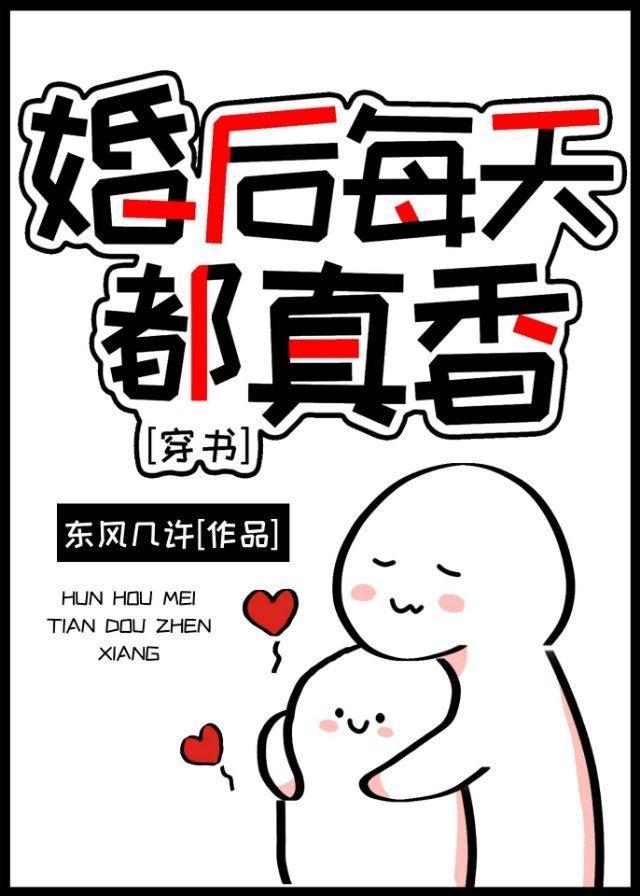
... Read More
this chapter is a masterclass in 'the confident underdog who was actually competent the whole time.' let me break down why the cooking competition scene works so well narratively. first, Yu Antong gets instantly dismissed—'your stuffing mushroom and meat size is too big, go practice your knife skills.' classic underestimation setup. but here's the thing: he doesn't argue. he just says 'you can evaluate it after tasting it' and gets to work. meanwhile he's apparently doing NOTHING—he finishes cutting early, asks for milk, gets a little apprentice to mix the dough for him, drinks one bag and pours the other into the flour instead of water. this reads like someone casually cheating and getting away with it, right? WRONG. the result? Zhao Juan herself admits defeat. 'Because of the stuffing's bigger cube size, there's some unevenness that actually made the taste more heterogeneous... the drastic heat change from high to low... it makes the overall dish have a more progressive taste. I'd say this change is ingenious.' And she just... concedes. 'I lost.' That single line is HUGE for the narrative. a graceful loser who then invites this boss to give her advice in the future. this isn't just a cooking scene, it's a power shift. the new boss has arrived and everyone—including the established authority figure—knows it. the parallel with the Xing Lixuan subplot is also tight plotting: just as Yu Antong establishes dominance in the kitchen, he tries to dodge domestic accountability by lying about a birthday party. both threads are about control and deception, just in different contexts.
... Read More
I need to talk about something that absolutely wrecked me in these chapters. Yu Antong's internal moment when he realizes he didn't earn second place fairly—it hit so hard. He admits he was arrogant about it. He knew the episode would count toward rankings but deliberately chose to make the most visually stunning dish instead of the tastiest one. 'It was precisely this arrogance that he felt short of first place.' That line? Devastating. There's this quiet self-awareness in him that's so rare in fiction. He doesn't make excuses. He just takes the loss and learns from it. Meanwhile Han Lele is venting on the phone about the whole Jia Sibo mess, and you can feel how much he cares about the integrity of the show—not just because it's his job but because he genuinely loves what they're building. And then there's Xing Lixuan, who's been quietly watching everything unfold, regretting not investing earlier. I don't know if there's a romantic thread here yet but the way he's positioned himself in the background? Someone's got eyes on more than just money. The emotional undercurrents in this book are so much richer than I expected.
... Read More
I need to talk about how the author builds suspense without ever raising their voice. The cooking show segment starts almost comically—the contestants are shocked, the host is smug, and the danmaku is losing its mind over Yu Antong's reaction face being edited with a giant 'SHOCK!!!' text. But underneath the humor, there's a genuinely tense setup: the rules have changed MID-COMPETITION, ingredients have been forcibly swapped, and everyone is scrambling to adapt. 'The difficulty would indeed increase sharply'—the narrator states this coldly, and that's when I sat up straighter. This isn't just reality TV drama for entertainment; these people have stakes. Yu Antong is pregnant, he's already dealing with swollen legs and exhaustion, and now he's being thrown into a high-pressure cooking contest with sabotage-level ingredient swaps. The host literally says 'The time for this competition is only one hour' and the camera pans to Yu Antong and Fu Fengxing being 'the first to act.' First to act—but does that mean first to adapt, or first to be targeted? The danmaku already flagged: '[I always feel that things are not that simple.]' And nobody disputes it. The text ends on a cliffhanger—the host approaching them, about to ask what they plan to cook—and you know from experience that whatever answer comes next, it's going to trigger something. The real conflict here isn't just the cooking competition; it's the collision between Yu Antong's vulnerable personal state (pregnant, traveling, tired) and the ruthless mechanics of competitive television. Every smile from that host feels like a weapon. Every 'smug' expression is a threat. And the reader is left wondering: can someone in Yu Antong's condition survive a game designed to break people?
... Read More
The dialogue in these chapters is deceptively simple. On the surface it's just couple banter — 'Kiss me' / 'Yes?' / *kiss* — but there's a rhythm to it that makes every exchange feel natural and effortless. Yu Antong's voice is particularly distinct. He's direct, slightly dramatic when he wants something ('Really want to go?' / 'You've been here before and you still won't let me go'), and has this infectious childish energy when he's excited. His internal monologue is equally voiced — the way he negotiates with himself about having another child ('Forget it, forget it, don't give birth, don't give birth!') sounds exactly like someone talking themselves down from an impulse. Xing Lixuan speaks less but each line carries weight. 'Have you forgotten about Judy?' is delivered so lightly — just a casual reminder that's actually a nuclear option in marital argument terminology. And his silence during the poker game while secretly engineering his own defeat says more than any dialogue could. The author's narrative voice has this warm, slightly ironic undertone throughout. The parenthetical note at the end where the translator admits to Googling 'fat swan' and being disappointed is such a meta, fun touch that breaks the fourth wall without ruining immersion. It's the kind of thing that makes reading feel like you're in on a secret with the author.
... Read More
I need to talk about the layers of conflict in this passage because on the surface it's a couple arguing about gifts and flowers, but dig one inch deeper and the stakes are absolutely massive. The PRIMARY conflict is Yu Antong's internal struggle with his pregnancy and identity. He's a cis man who carried a child—this is not a small psychological adjustment. The text is remarkably honest about this: Xing Lixuan thought Yu Antong had "accepted it easily" and was being resilient, but he was WRONG. The real conflict wasn't resolved; it was just buried under productivity and positivity. The argument about the coat is the pressure valve that releases all that buried tension. When he says "I've been a man since birth, and I finally overcame my psychological barriers to give birth for your family's sake," THAT is the thesis statement of his entire emotional arc. Every other argument in this chapter is downstream from that realization. The SECONDARY conflict is the external family situation. Mrs. Xing's acceptance of the relationship is confirmed through her willingness to include Yu Antong in domestic rituals, but there's also the subtext of the extended family—Judy's parents taking her back to the US, the distance between family members, the economic reality of red envelopes canceling out. These aren't side details; they're the infrastructure that either supports or strangles the main relationship. And the TERTIARY layer—this might be the most interesting one—is the rivalry tension with Gu Xingyan. Yu Antong admits to being a fan, Xing Lixuan is clearly uncomfortable with it, and yet Yu Antong also admits he wouldn't buy ANY of Gu Xingyan's products if they weren't good quality. The triangle here is so subtly drawn it almost disappears, which makes it infinitely more dangerous. The stakes? Yu Antong is fighting to be seen as more than his body's current function (carrying a child). Xing Lixuan is fighting against his own emotional clumsiness. They're both afraid of losing each other but expressing it through completely different languages—one through words and the other through silence.
... Read More
I need to talk about how this chapter goes from comedy to 'oh god this is real' so fast. One minute we're watching Yu Antong mess with He Bin's head for sport and the next it's Christmas-is-coming vibes with the hotpot post and cute couple nonsense and then Xing Lixuan's mom calls and suddenly everyone's at the hospital. The line 'She's temporarily out of danger' hit me like a truck. That's the most neutral way to say something terrible and I love it. Also the detail about grandma having advanced lung cancer — 'her body can't hold it anymore' when the temperature drops — that's such a specific, clinical way to phrase something that should be devastating. Yu Antong just goes with Xing Lixuan to the hospital because 'the old lady was kind to him.' That's the kind of small loyalty that matters more than any dramatic declaration. And before that, the personality test scene where Xing Lixuan calls Yu Antong a pessimist and Yu Antong says 'if I were a pessimist there would be no optimistic people in this world' — that's actually really sweet underneath the banter.
... Read More
Okay so let me just vent about this scene because my heart is still pounding. Yu Antong overhearing something about Xing Lixuan's ideal type and then spiraling into full jealousy mode? I GET IT so much it hurts. Like we've all been there right? That moment when your brain goes from zero to exploded and you just can't stop the thoughts. But here's what really got me — Xing Lixuan's reaction. He didn't brush him off or get defensive. Nah bro immediately realized something was wrong and went full explanation mode. And not just any explanation, this whole speech about how his past ideals don't matter anymore because Yu Antong IS now the ideal? Bro really said "every time I imagine what a perfect lover is, your face comes to mind" and I am NOT OKAY. What I love most though is how Yu Antong keeps being his chaotic self even when he's upset. He kicks Xing Lixuan under the table, refuses to talk, tries to walk away and literally runs into his arms. The fact that his nose starts bleeding and he still tries to push him away while crying?? This man is so stubborn it's adorable. He knows he's being unreasonable — even says so himself — but he can't help it. That honesty is what makes their relationship feel so real. Neither of them is perfect and that's exactly why they work. Also the ending? When Xing Lixuan says he likes Yu Antong's self-willfulness and petty temper? I screamed. Men should really learn from this.
... Read More
Let me just talk about one moment that completely sold me on Xing Lixuan as a character: "I have to wrong you this time. You are doing me a favor, so I will buy you whatever you want, okay?" This guy is navigating this impossible situation. His mother is testing Yu Antong, and the whole family dynamic is loaded. He could just let it go—he could tell Yu Antong to suck it up and play nice. Instead he acknowledges it directly: I'm putting you in an uncomfortable position, and I know it, and I owe you. And then the kitchen scene. He FOLLOWED his future wife into the KITCHEN. The text literally says: "they knew that their son never went into the kitchen." This man who apparently has zero domestic skills just rolled up his sleeves and helped cook because Yu Antong was being awkward and trying to make a good impression. That's not romance-novel fluff—that's actual partnership. Meanwhile Yu Antong is over here internally screaming about flowers and having to pretend to be deaf, completely unwilling to bend, and Xing Lixuan is just... managing it. Handling it. Choosing him every time.

Leave a comment

You must be logged in to leave comments. or
